The challenge of heritage is striking a balance between looking backward and moving forward. TAG Heuer’s Monaco, one of its most emblematic exponents and watchmaking’s defining icons, best captures this tension. With more than 160 years of chronograph history behind it, TAG Heuer possesses one of the richest watchmaking archives. Resting on its laurels was never the plan for TAG Heuer. The same spirit that pioneered the Monaco and the many other creations that came before continues to demand innovation. TAG Heuer’s heritage director, Nicholas Biebuyck, is responsible for preserving the Swiss watchmaker’s history and ensuring it remains relevant in the future. We spoke about evolving an icon like the Monaco and how groundbreaking innovations such as the Evergraph are helping to define its next chapter.
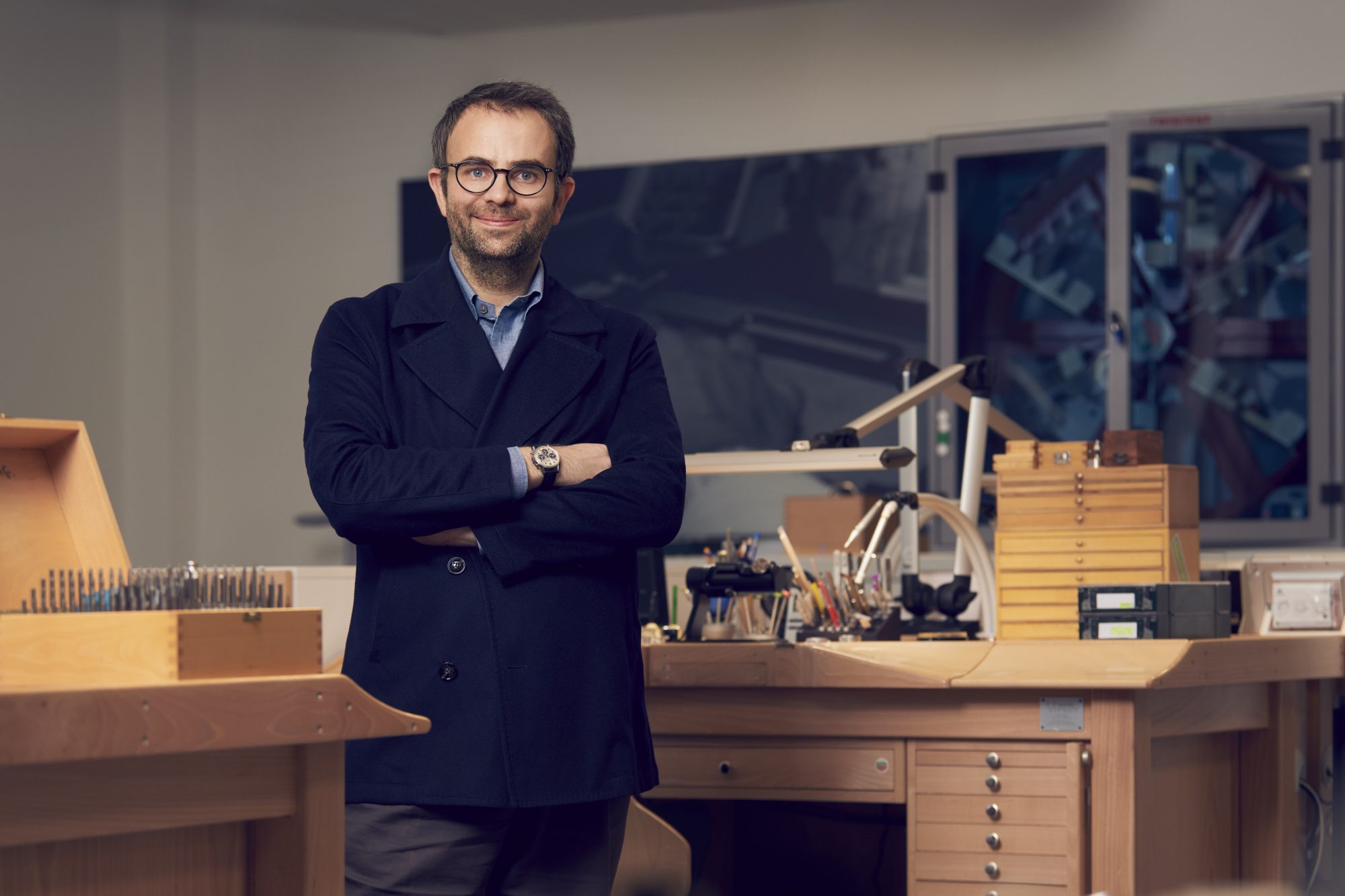
TAG HEUER HAS ONE OF THE RICHEST CHRONOGRAPH HISTORIES IN WATCHMAKING. FROM YOUR PERSPECTIVE AS HERITAGE DIRECTOR, HOW DO YOU ENSURE THE ARCHIVES REMAIN A LIVING SOURCE OF INSPIRATION RATHER THAN BEING A PURELY RETROSPECTIVE RESOURCE?
Preserving our heritage is the first and most important mission of the Heritage Department. For us, that’s more than 4,000 watches, 100,000 document assets, and 1,000 objects. Once those are secured and preserved, we need to leverage them rather than letting them idle. We send around 500 watches globally each year for photo shoots and exhibitions.
We’ve an unlimited amount of stories to tell; it’s a question of conveying them in the most productive way. The power lies in leveraging it across various platforms and, above all else, in inspiring our contemporary products. I always say we’re never going to carbon copy one of our historic designs. We always need to improve and move forward, and this is exactly what we’ve focused on for the new Monacos.
WHEN REVISITING AN ICON LIKE THE MONACO, WHAT ARE NON-NEGOTIABLE ELEMENTS THAT MUST BE PRESERVED, AND WHERE DOES TAG HEUER ALLOW SPACE FOR REINTERPRETATION?
Got to be a square! [laughs]. For me, a non-negotiable is having the crown at nine o’clock and pushers at the same location on the chronograph. The other thing to understand is that there are a lot of codes of the Monaco that aren’t necessarily obvious. The watch case follows the crystal profile, lying flat from 12 to six o’clock but curving from three to nine o’clock. As such, it’s never going to be a thin watch. With that, we took many elements from the original Monaco, such as the curved case back and chamfered edges and interpreted them to our advantage, making this new generation so much more wearable.
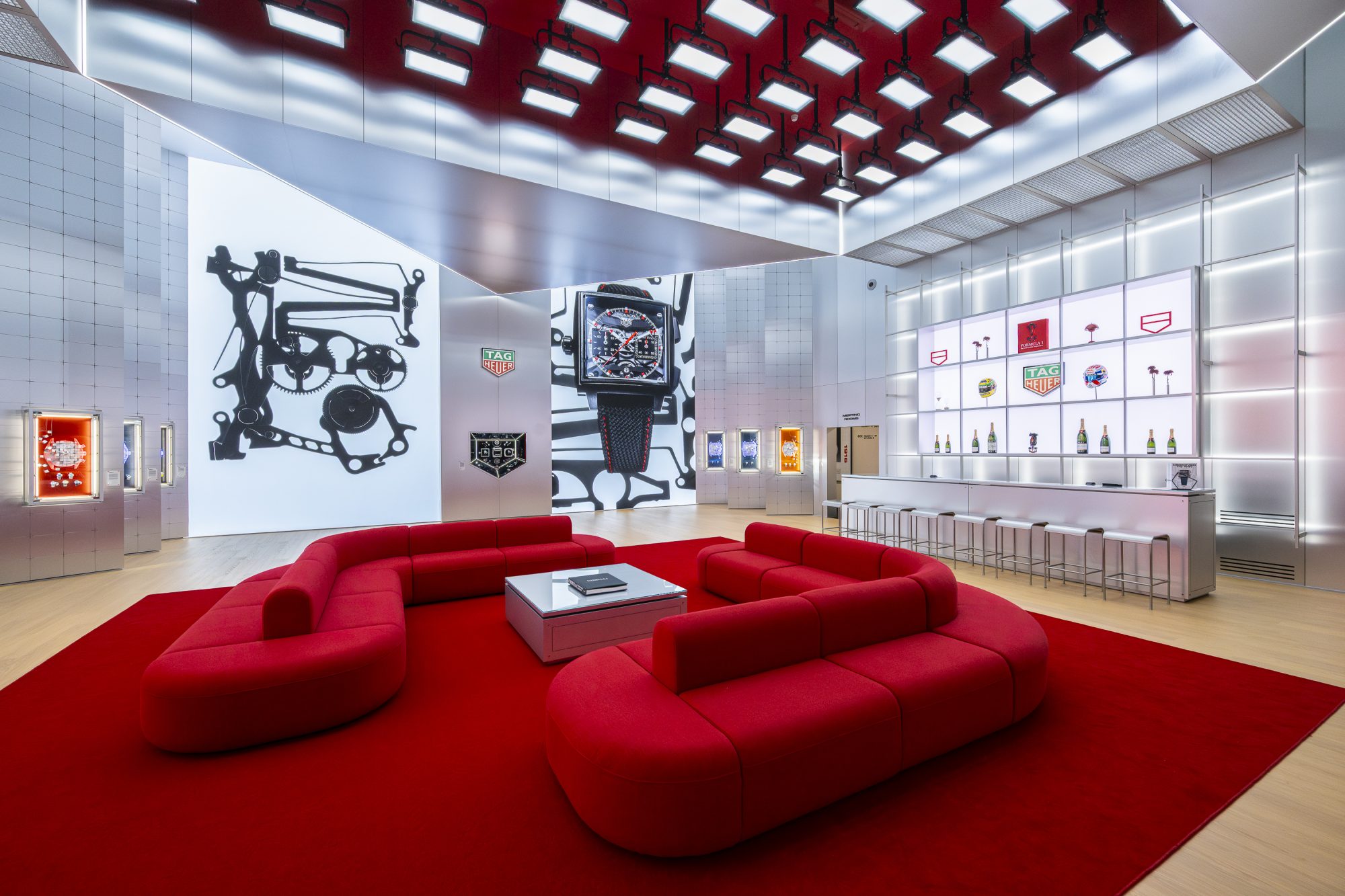
ARE THERE DETAILS OR DESIGN INTENTIONS THAT YOU FEEL HAVE BEEN MISUNDERSTOOD OVER TIME, AND THAT THIS NEW GENERATION SEEKS TO REDISCOVER?
The funny thing is, no one understood the Monaco when it was launched in 1969; it was a complete commercial disaster in many ways. However, visionary creators such as Steve McQueen, Stanley Kubrick and Sammy Davis Jr understood what a Monaco stood for. It was a true avant-garde icon unlike any other, which was launched three years before the Royal Oak and seven years before the Nautilus. At that time, the Monaco was too much of a design statement and was probably a decade ahead of the transition from watches as functional objects to watches as design objects. The other important thing to understand is that the Monaco was never a motorsport watch. It was always a design icon, and once you understand this philosophy, it’s easier to understand the Monaco today.
THE NEW MONACO CHRONOGRAPH REVISITS THE ORIGINAL REFERENCE WITH A MORE ERGONOMIC AND REFINED APPROACH. HOW DO YOU STRIKE THE BALANCE BETWEEN HISTORICAL FIDELITY AND THE EXPECTATIONS OF CONTEMPORARY WEARABILITY?
What’s interesting is that the original Monacao doesn’t look particularly wearable in pictures but sits extremely comfortably on the wrist. There were many elements we could transfer from the original into the new collections. The bigger thing we wanted to focus on was continuing to iterate on the original Monaco. The Monaco had a chopped-up history where the releases were few and far between. We thought, “What if it were like the Porsche 911, where it was introduced at one point and evolved all these years?” It was something we set out to achieve, clearly connected to the original yet fully updated and modern.
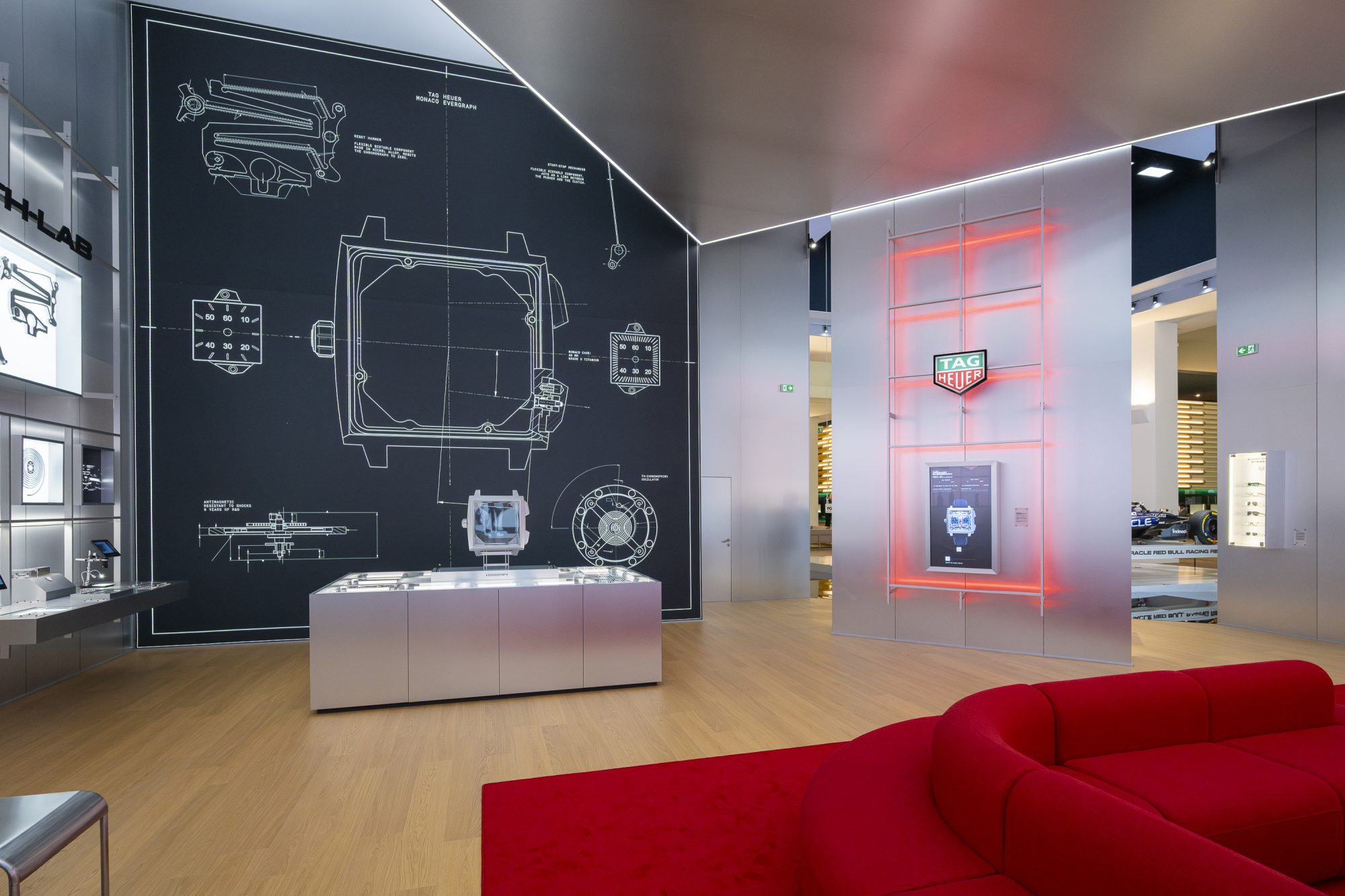
IN REFINING THE PROPORTIONS, TYPOGRAPHY AND CASE CONSTRUCTION, WOULD YOU SAY THIS REDESIGN IS ABOUT GETTING CLOSER TO THE ORIGINAL SPIRIT OR ABOUT REDEFINING WHAT THE MONACO MEANS TODAY?
Absolutely, the whole point was to go back to the beginning of the story. The previous case designs we had up until 13 April 2026 were designed in 1997 and had nothing to do with the original Monaco ref. 1133. And so, the TAG Heuer Monaco Split-Seconds Chronograph was the start of the mission. The team spent a lot of time in the archives exploring and dissecting the original’s 3D-modelled case to understand what the Monaco represented volumetrically. From there, it was refining that design to accommodate the new movement and make it much more comfortable.
THE MONACO EVERGRAPH REPRESENTS A SIGNIFICANT STEP FORWARD IN CHRONOGRAPH CONSTRUCTION. FROM A HERITAGE STANDPOINT, HOW DO YOU CONTEXTUALISE SUCH A RADICAL INNOVATION WITHIN TAG HEUER’S LONG HISTORY OF CHRONOGRAPH BREAKTHROUGHS?
I received a lot of laughs internally because I’m meant to like old watches as the Heritage Director, but I’ve been wearing the Evergraph almost every day for two months now. My first great love is high-end, contemporary, innovative watchmaking. I love what has brought us [TAG Heuer] to this point, but fundamentally, it’s about innovating and pushing forward. With that in mind, the Evergraph is an amazing project to be part of, and it’s perfectly aligned with our DNA: we are innovators. We’ve been about innovation since 1860, and we should keep pushing forward.
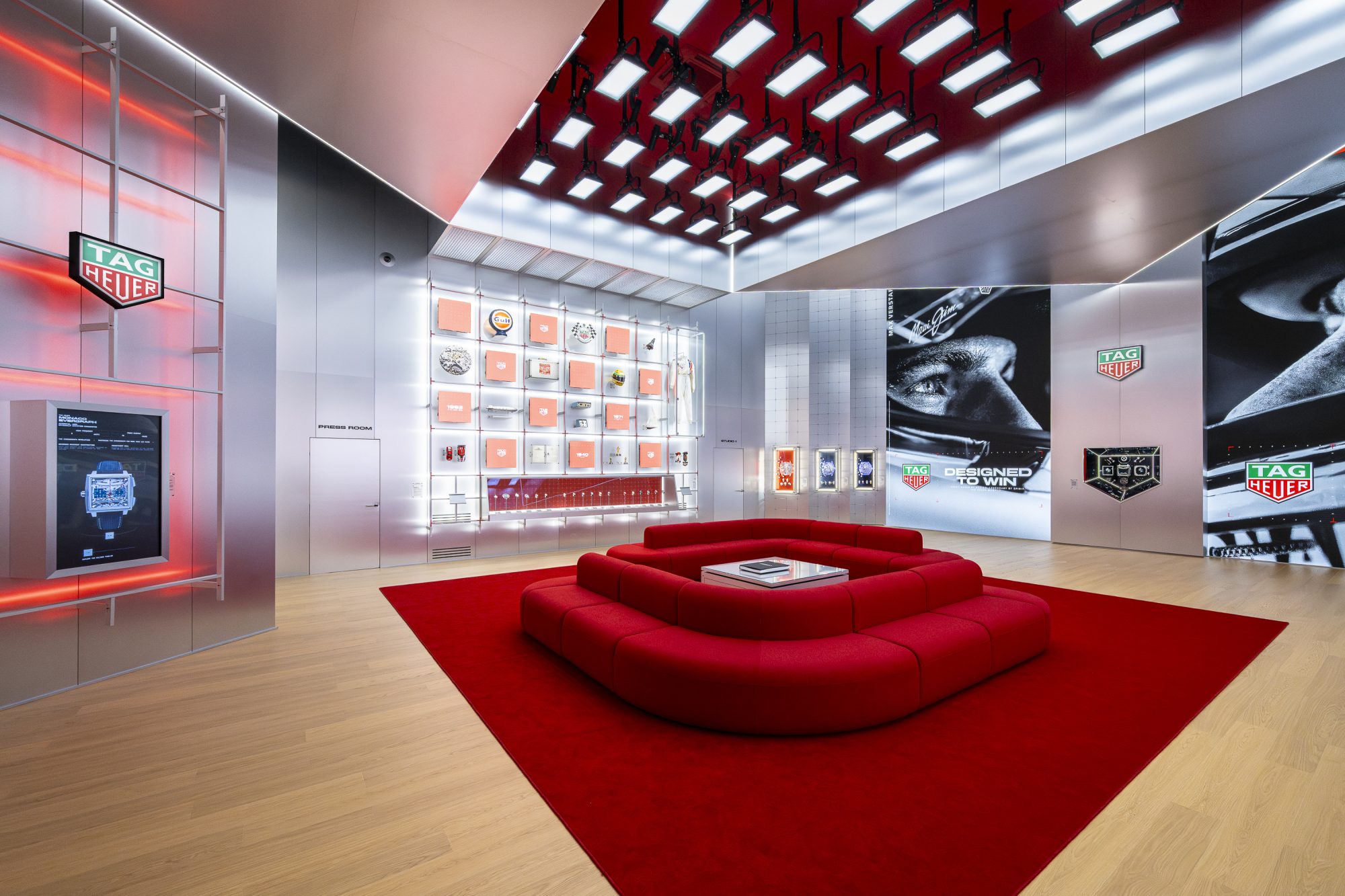
TAG HEUER HAS OFTEN PURSUED PRECISION EITHER THROUGH INCREMENTAL ADVANCES OR BOLD LEAPS. WHERE DOES THE MONACO EVERGRAPH SIT WITHIN THAT CONTINUUM OF EVOLUTION VERSUS REVOLUTION?
The Evergraph is a revolution. That was always the point; we weren’t trying to iterate on the existing chronograph. We wanted to create something entirely new that had never been seen before, and this is what we’ve been able to achieve with the Evergraph.
INNOVATIONS OF TODAY PAVE THE WAY FOR TOMORROW’S INNOVATIONS. HOW DO YOU THINK THE EVERGRAPH WILL CONTRIBUTE TO FUTURE ITERATIONS?
That’s a good question. With the Split-Seconds Chronograph, we had a chance to understand who our client was, what was of interest to them, and how to engage higher-end collectors, as this was a relatively new position for us. It also helped us understand how to work with a partner at Vaucher who has been super instrumental in the co-development of the Evergraph. It’s important to note that the IP belongs to us, even though it’s a joint development. This was another key learning point for us, giving us a foundation for an exciting future. This is the chance for the world to see TAG Heuer in a different way.
Yes, we’re still the gateway into Swiss watchmaking with the Solargraph and Formula One before moving into the Carrera Glassbox and the Monaco chronograph. There are many stepping stones that keep clients within this sub-10,000 Swiss Franc range, but we also want to allow them to continue their journey with us. This has been a historic problem for TAG Heuer; people come for one watch and leave for somewhere else. We want to give people the opportunity, beyond just encouragement, to continue their collecting journey with us in a way that makes sense for everyone. The Evergraph and Split-Seconds Chronograph are part of this story, and there will be other chapters that will fill in some of these gaps in the future.
AS TAG HEUER CONTINUES TO EVOLVE ITS CHRONOGRAPH EXPERTISE, WHAT DO YOU BELIEVE WILL DEFINE THE NEXT ERA OF THE MONACO COLLECTION FROM A TECHNICAL PERSPECTIVE AND CULTURAL STANDPOINT?
Fundamentally, it’s about repositioning ourselves without forgetting who we are, and knowing we have every right to produce a watch like the Evergraph, Solargraph, Formula One, and Aquaracer.
Let’s be honest, we’ve had a lot of transitions over the last 25 years; we’ve done entry-level, high-end, heritage, and avant-garde watches, all made possible by Stéphane Bianchi, Frédéric Arnault, and now Beatrice Goasglas, who will carry this torch. We’ve been able to strike a balance across these domains that allows us to be true to who we are and appeal to those who resonate with us as a brand.
Once you are done with this story, click here to catch up with our latest issue.