Someone recently dropped US$5.5 million on what may be one of the world’s greatest vintages: a fossil specimen of a young Triceratops. For 66 million years, give or take a hundred thousand years, its fossilised remains lay dormant in the American West waiting for modern men’s discovery. Trey, as it was affectionately named, was discovered in 1993 near Lusk, Wyoming. Sixty-six million years is an awful amount of time; heck, 66 seconds of planking is excruciating enough to endure. Suppose we lived in the dystopian future of sci-fi action thriller In Time (2011), the economics of that dinosaur deal will set you back a dollar for every 12 years, a darn good deal considering Will Salas (played by Justin Timberlake) is paying US$39.6 to stay alive for an hour (according to a Reddit calculation).
Here is a fun fact to expand about Trey: we live closer to it (and the Tyrannosaurus rex) than they did to the Stegosaurus. Roughly 66 million years separate us from the former two prehistoric creatures (Late Cretaceous period), while approximately 80-90 million years separated them from the Stegosaurus (Late Jurassic Period). Taking these periods into consideration, you wonder whether time has a starting point and, if so, when it began? Theology aside, some experts believe that the dawn of time (measurable time) began 13.8 billion years ago with the Big Bang, while others argue otherwise; time existed before the Big Bang.
There are multiple definitions of time. A scientific take on time defines it as a continuous progression of existence that occurs in irreversible succession from past to future through the present. Within this scope, time dictates action, age and causality, and is a quantity of measurement to sequence events and quantify rates of change in material reality. Measuring time is possible in linear periods such as hours in a day and days in a year with the aid of clocks, watches and calendars. However, differing observations and measurements of time necessitated some forms of standardisation, especially in crucial operations such as coordinating international flight times. After much bickering and lobbying over differences and concerns, which still happen to this day, multiple standardisations of time occurred throughout history. These include, but are not limited to, establishing the 24-hour day in the 14th century CE, the Gregorian calendar in 1582, Greenwich Mean Time in 1884 and then recognising the second as a SI Unit (International System of Units) of time to standardise measurements globally.
Nature, The Original Clockmaker
One of the most iconic images of Mount Fuji is captured from the Chureito Pagoda vantage point, basking in the soft glows of dawn or dusk. Logistics planning is fairly straightforward: a bunch of apps provide sunrise and sunset times for precise coordinates. Unlike today’s advancements and conveniences, ancient humanity’s understanding of time was far less mechanical and far more instinctive. Nature was the original timeteller. Before civilisations could measure time precisely, they learnt to observe and recognise patterns. The Sun rises in the east and follows a fixed traversing pattern across the sky before setting in the west. Our circadian rhythms were intrinsically connected to the Sun’s motion, which determined work and rest periods.
Ancient Egyptians later began studying the shadows cast by objects under sunlight. A gnomon, or an upright stick in layperson terms, would cast a shadow on marked surfaces, which was then used to indicate the time. These were later known as sundials, and even though they had obvious limitations when the Sun was not out, they gave humans a semblance of time. A later experimental sundial variant, with a T-shaped bar set into the ground by the Egyptians, was calibrated to divide the interval between sunrise and sunset into 12 parts. Why 12, though and not 10 or any number? This was possibly due to the number of lunar cycles observed in a year, which reflected the duodecimal system favoured by the Egyptians and the significance of the number 12 in their society.
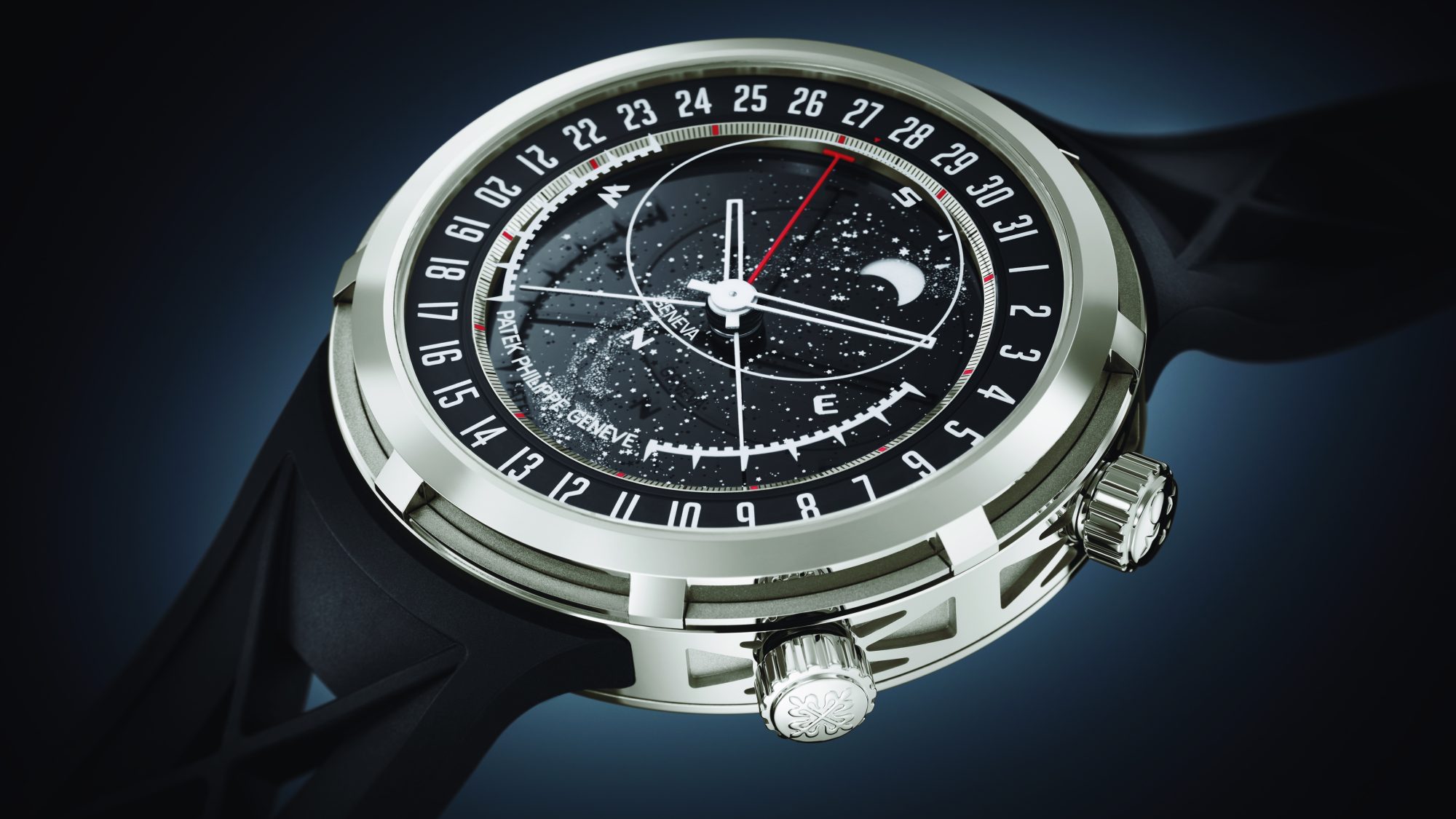
Patek Philippe’s grand tradition of uniting astronomical displays with various complications sees the grand dame unveil the Patek Philippe Ref. 6105G Celestial Sunrise and Sunset. As its name suggests, the masterpiece’s headlining complication is the sunrise-and-sunset display, the first in Patek Philippe’s rich and deep astronomical and celestial pursuits. At the heart of its 18k white gold case lies the Calibre 240 C LU CL LCSO that charts the sunrise and sunset times, sky chart, angular movement of the moon, and moon phases from Geneva’s position (or from any other city located on the same latitude in the northern hemisphere, 46° 12’ North). Two oval cams mimicking Earth’s shape allow the watch to track the inclination of the Earth’s axis in relation to the plane of its orbit around the Sun. Given the time difference between summer and winter time, with the latter recognised as legal time, Patek Philippe devised a patented synchronised corrector system for the changeover. The two corrector push-pieces at nine and 10 o’clock allow the owner to correct the civil time display and sunrise and sunset times simultaneously without risk of damaging the movement.
Mysteries Of The Night
NASA’s recent Artemis II mission to the moon reflects humans’ long-running fascination with the night sky, dating back millennia. Along with the Sun, the Moon was one of civilisation’s most accurate celestial references. If the foundation of the Gregorian calendar is the Sun, then the lunar cycle is integral in religions and cultures. Across the period of a lunar month spanning 29.5 days, the moon traverses the waxing and waning phases from new moon to crescent to gibbous to full moon and back again. Even though the Moon is 384,400km away from Earth, its influence on Earth is critical as its gravitational pull affects the tides, biological rhythms, and agricultural cycles. The world’s oldest Mesolithic lunar calendar was discovered in 2004 at Warren Field, Scotland, dating to 8000 BC. It contained 12 pits that most likely represented the moon’s 12 phases. The Greek Antikythera mechanism, dating back to 205 BC, was one of the first pieces of evidence of a lunar phase display, while the astronomical clock in Prague’s Old Town Hall is the oldest operating clock of this kind. In horology, the moonphase complication transforms this ancient relationship into poetry, first in the pocket and then on the wrist. Jean Vallier’s pocket watch, circa 1630, was one of the earliest recorded portable examples of the moon phase, but it was not until 1925 that the celestial complication appeared on a wrist watch in the Patek Philippe Ref. 97975 wrist watch.
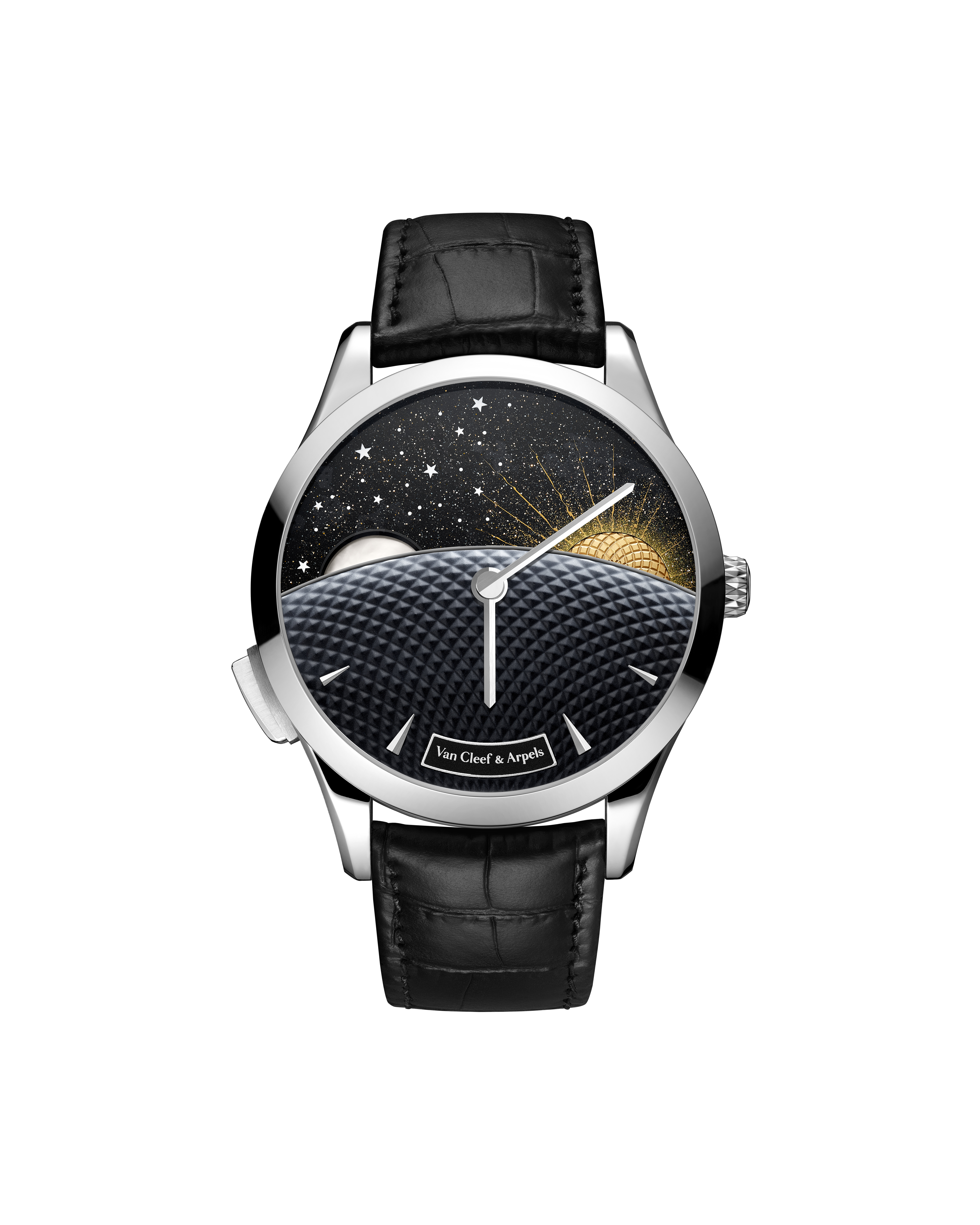
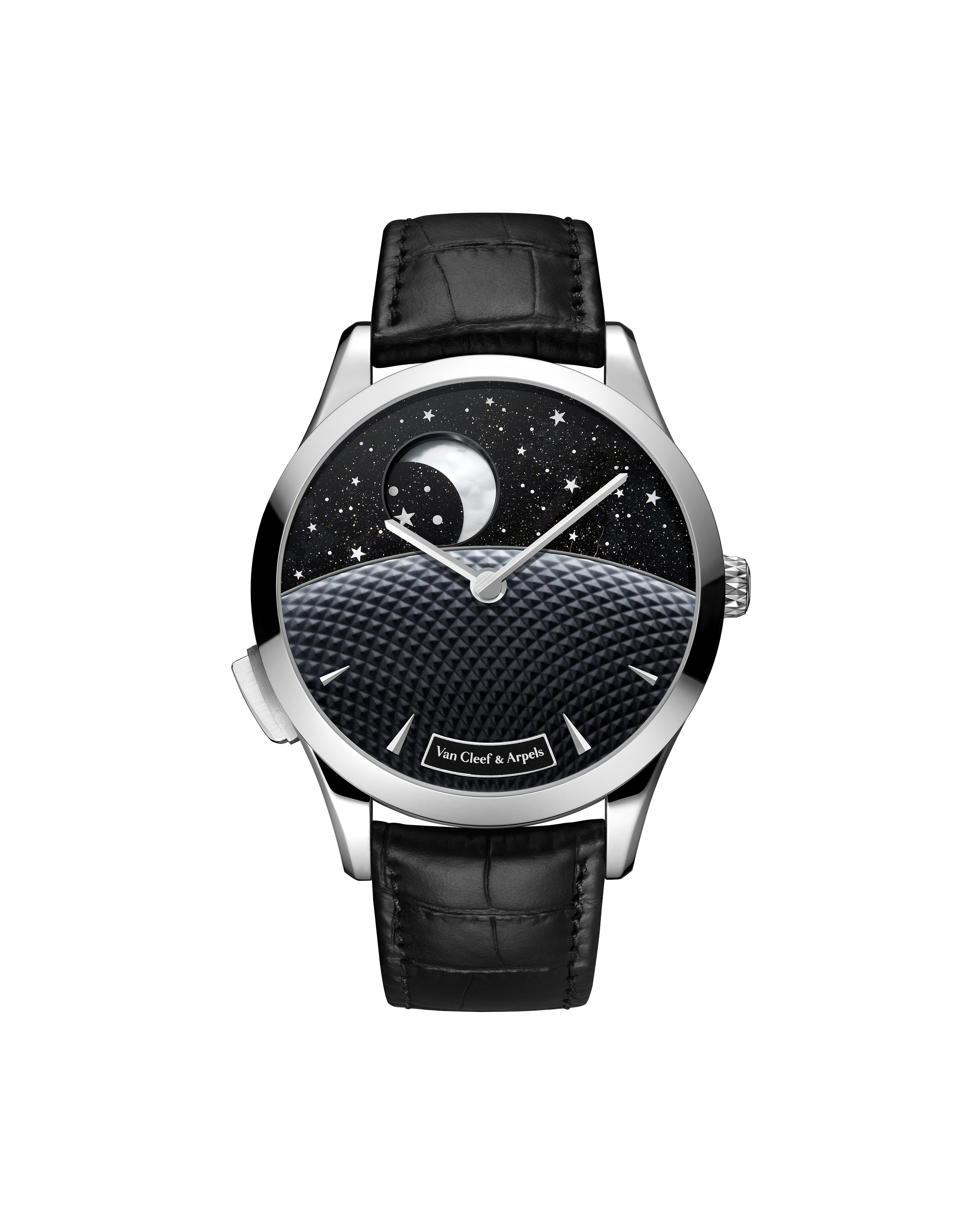
For more than a century, Van Cleef & Arpels has pursued the dream of living in time with the cosmos. The moon phase first entered Van Cleef & Arpels’ patrimony in 1929. This year’s lunar showcase at Watches & Wonders captures the phases of the moon in the double complication Midnight Jour Nuit Phase de Lune. As its name suggests, the first complication is the Jour/Nuit (day/night) display. As time passes, the guilloché golden Sun sets while the white mother-of-pearl Moon rises across the guilloché mother-of-pearl horizon. A second Phase de Lune (moon phase) complication captures the phases of the moon across the 29.5-day lunar cycle. Activating the pusher at seven o’clock animates the black Murano aventurine glass sky disc, which rotates 360° to reveal the moon on demand as a reminder of how we are tethered to cosmic rhythms older than civilisation on Earth itself.
Gregory’s Calendar
One of watchmaking’s most revered complications owes its existence to humanity’s long and often frustrating attempts at understanding the Earth’s journey around the Sun. Early civilisations realised that nature rarely moved in perfectly neat mathematical cycles. A solar year is not 365 days long, but 365 days, 5 hours, 48 minutes, and 46 seconds to be exact, resulting in calendars and seasons drifting out of synchronisation. The Gregorian calendar, which most societies adopt today, is a descendant of the chaotic Roman calendar. There were 304 days spread over 10 months in Romulus’ Calendar: Martius, Aprilis, Maius, Junius, Quintilis, Sextilis, September, October, November, and December. Roughly 700 BC, King Numa Pompilius reformed the calendar by increasing the number of days in a year to 355 days with the addition of Januarius and Februarius as the 10 months did not align with the four seasons. The reformed system was still filled with flaws, prompting Julius Caesar to mandate the Julian Calendar in 45 BC. More days were added to the year, bringing the total to 365 in line with the solar calendar. A final amendment was issued on 24 February 1582, as Pope Gregory XIII issued the papal bull Inter gravissimas. This allowed the realignment of events such as the Vernal equinox and Winter solstice and the accurate celebration of Easter. The system was later named the Gregorian Calendar in Pope Gregory XIII’s honour and averages 365.2425 days per year across 12 months each with 28 to 31 days. To keep the calendar aligned with the Earth’s orbit, a leap day is added to February every four years (leap year). However, to correct a slight drift, century years (e.g., 1900 and 2000) are leap years only if they are perfectly divisible by 400. Thus, 1600 and 2000 were leap years, but 2100 will not be. Perpetual calendars mechanically mirror this logic and automatically account for the irregular lengths of months and leap years with differently shaped cams and gear wheels. Due to the rule that 2100 is not a leap year, one manual correction is required from 29 February 2100 to 1 March 2100.
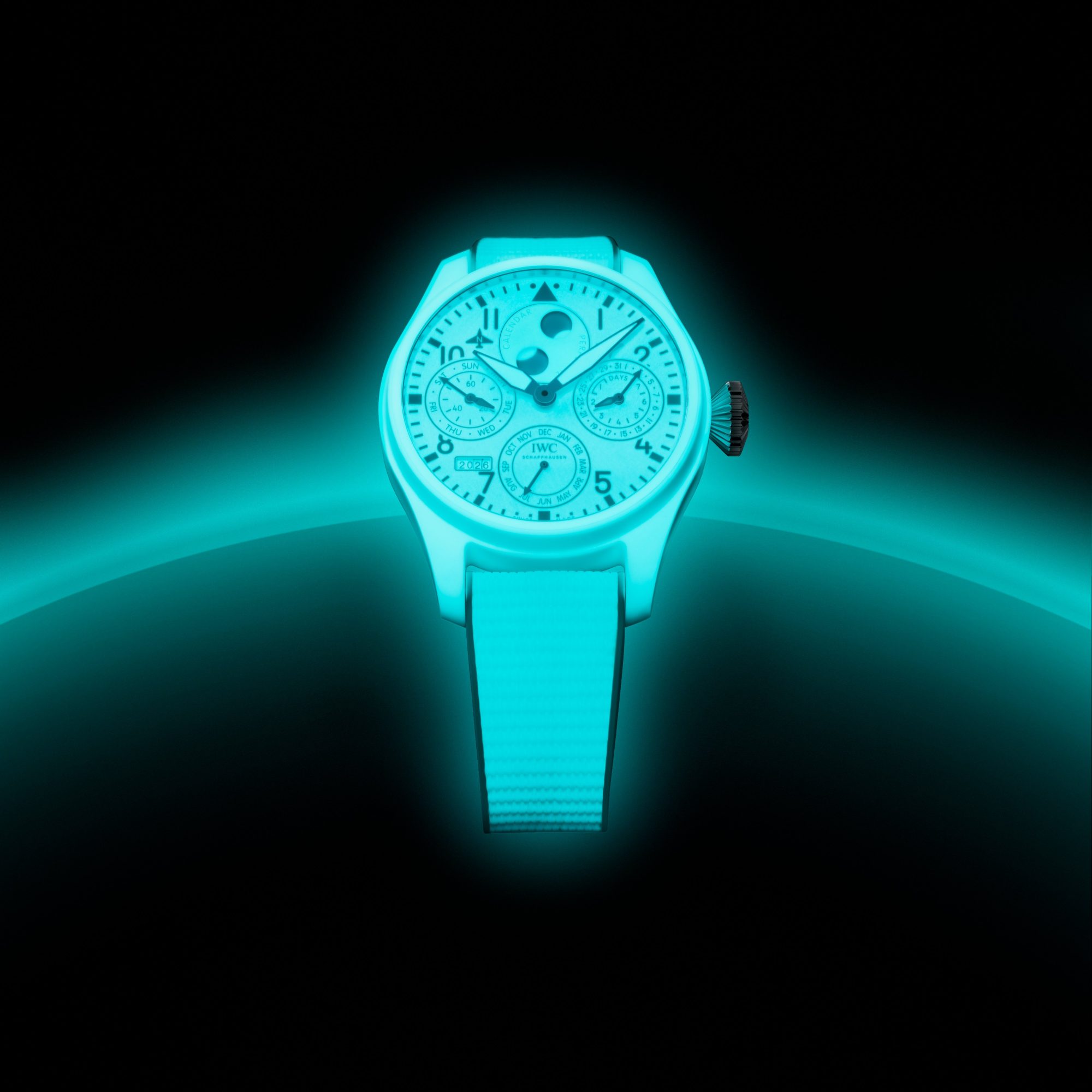
This year at Watches & Wonders, IWC Schaffhausen unveiled a futuristic rendition of the perpetual calendar complication that distilled the imperfect rhythms of nature into something orderly and precise. Under daylight, the stark white Big Pilot’s Watch Perpetual Calendar Ceralume® might come across as another of IWC’s coloured ceramic watches. As light falls, a fascinating, vivid blue hue emanates from the entire watch thanks to IWC’s luminous proprietary Ceralume® case. The magic was conjured by the minds in IWC’s engineering division XPL as Super-LumiNova® pigments are mixed with ceramic powders to demonstrate the manufacture’s ceramic making expertise. Super-LumiNova® pigments are doped into the white dial and rubber strap. Within the Ceralume® case lies the IWC-manufactured calibre 52616, a direct descendant of the legendary Kurt Klaus-designed crown-control perpetual calendar calibre. The key elements of a calendar, namely date, weekday, month and moon phase, are displayed across four subdials while a four-digit year display is located between seven and eight o’clock. Given how our perspectives of the moon vary from the two hemispheres, IWC’s signature Double Moon® display depicts the phases of the moon from both the Northern and Southern Hemispheres. Another bit of ingenuity and mechanical brilliance from IWC ensures the moonphase is accurate for 577.5 years before deviating by a day, thanks to a calculated reduction gear.
Traveller’s Time
As technologies advanced, nature’s rhythms alone were insufficient for an increasingly connected world. Before time zones were standardised, towns and cities referred to the Sun’s position for their respective solar time. A certain Scottish gentleman, Sandford Fleming, left his home country for Canada in 1845 at a tender age of 18 to take on the country’s train system with the blessing of his mentor. It was years later when an underlying frustration with varying railway schedules prompted Fleming to take matters into his own hands. Every major town’s interpretation of solar noon, for instance, made it virtually impossible to set up an efficient train schedule. Fleming’s solution was simple yet brilliant: divide the world into 24 time zones, each corresponding to a day’s hours. After much campaigning over the years, he finally found himself in the audience of international scientists and politicians, including then US President Chester A. Arthur. The International Meridian Congress convened in Washington, D.C., in October 1884 and decided that the Greenwich Meridian would be the prime meridian, marking the start of Greenwich Mean Time (GMT). GMT was calculated at midday based on mean solar time. Earth was divided into 24 time zones, each of one-hour duration and spanning a longitude of 15°. Standard Time and the 24 time zones went into effect on 1 January 1885. In watchmaking, the GMT complication emerged as a practical response to this increasingly globalised existence. The famous bicoloured Rolex GMT-Master developed in collaboration with Pan American Airways in 1954 allowed travellers to track multiple time zones simultaneously.
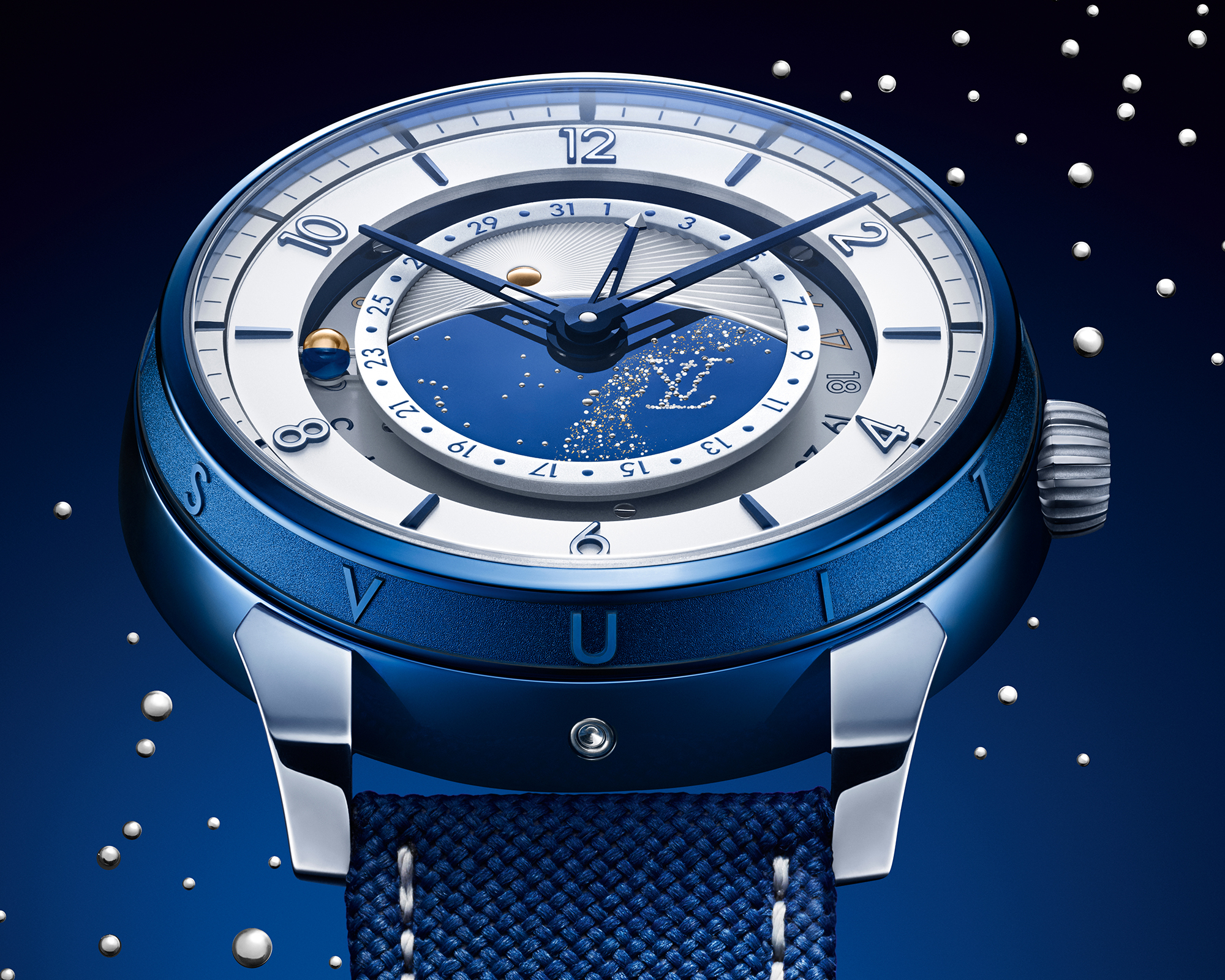
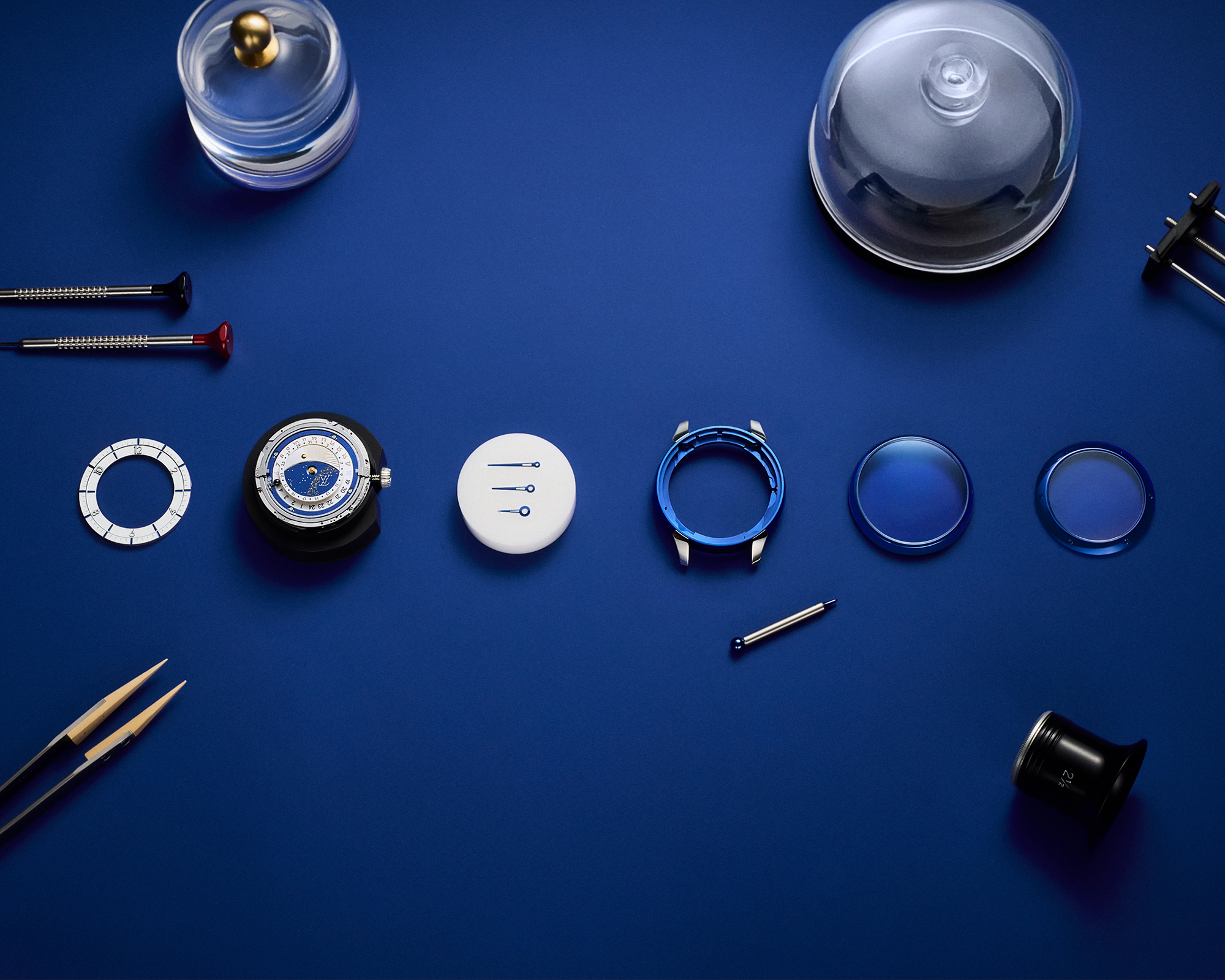
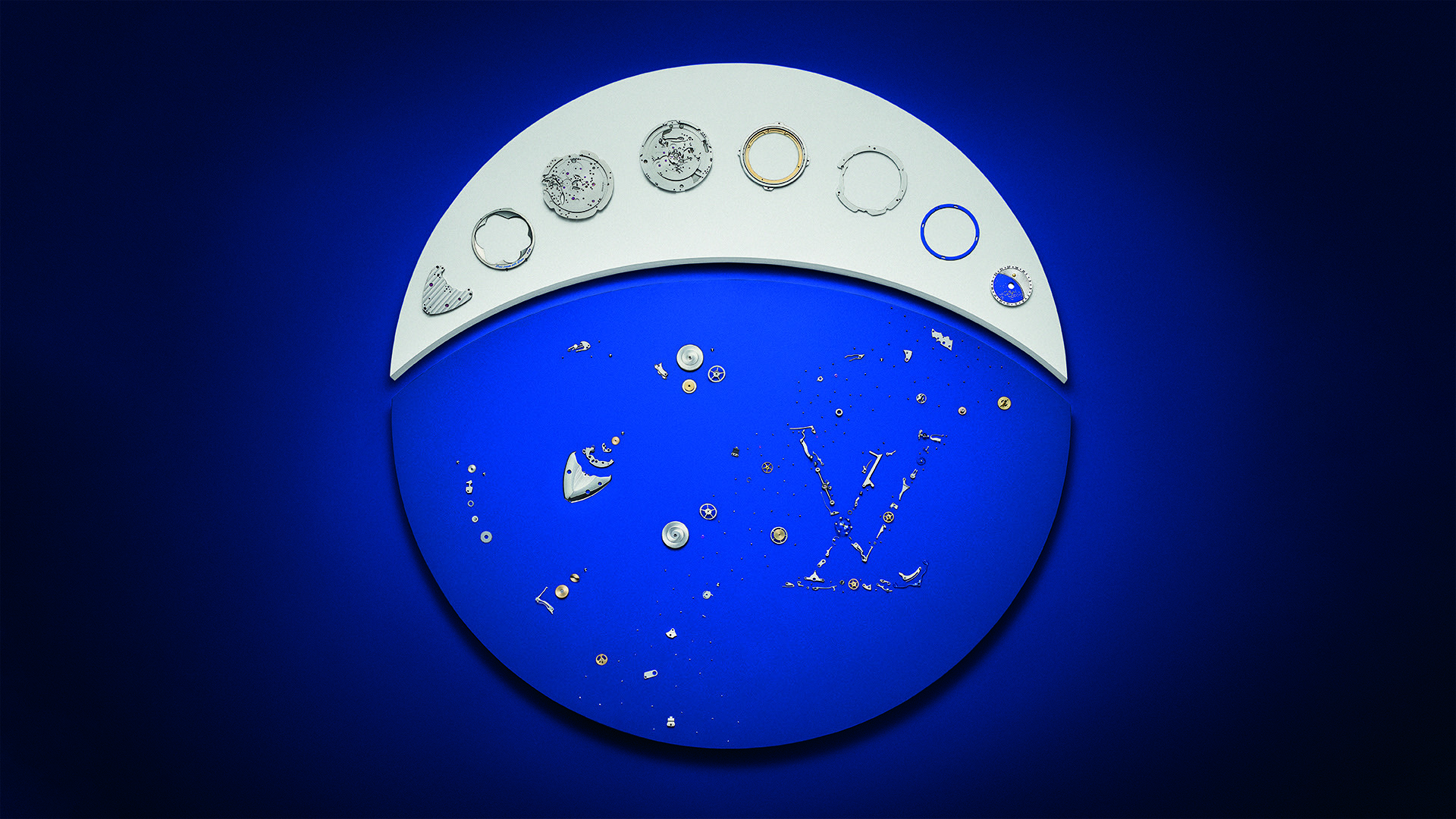
Part of Louis Vuitton’s latest collaboration with De Bethune reimagines the GMT complication in the LVDB-03 Louis Varius Project. The project taps the mind of Master Watchmaker Denis Flageollet, who united the Sympathique, an 18th-century horological marvel, and a unique version of De Bethune’s iconic DB25 GMT Starry Varius. Housed within Louis Vuitton’s Tambour Taiko case rendered in De Bethune’s signature blue, the manual-winding Calibre DB2507LV artfully captures Louis Vuitton’s Art of Travel philosophy with a GMT indicator, day/night indication (18k rose gold and blued steel sphere), and a jumping date. A Sympathique function, conceived by Abraham-Louis Breguet in 1795, that automatically synchronises a portable pocket watch with a more precise master clock, further deepens the LVDB-03 Louis Varius Project’s horological allure. The accompanying LVDB-03 Sympathique Louis Varius clock winds and sets the LVDB-03 Louis Varius Project’s time when it is placed within its cradle. Given the audacity and complexity of the Sympathique, only two complete examples of the LVDB-03 Sympathique Louis Varius and LVDB-03 Louis Varius Project are produced alongside 10 other pieces of the wrist watch.
Once you are done with this story, click here to catch up with our latest issue.