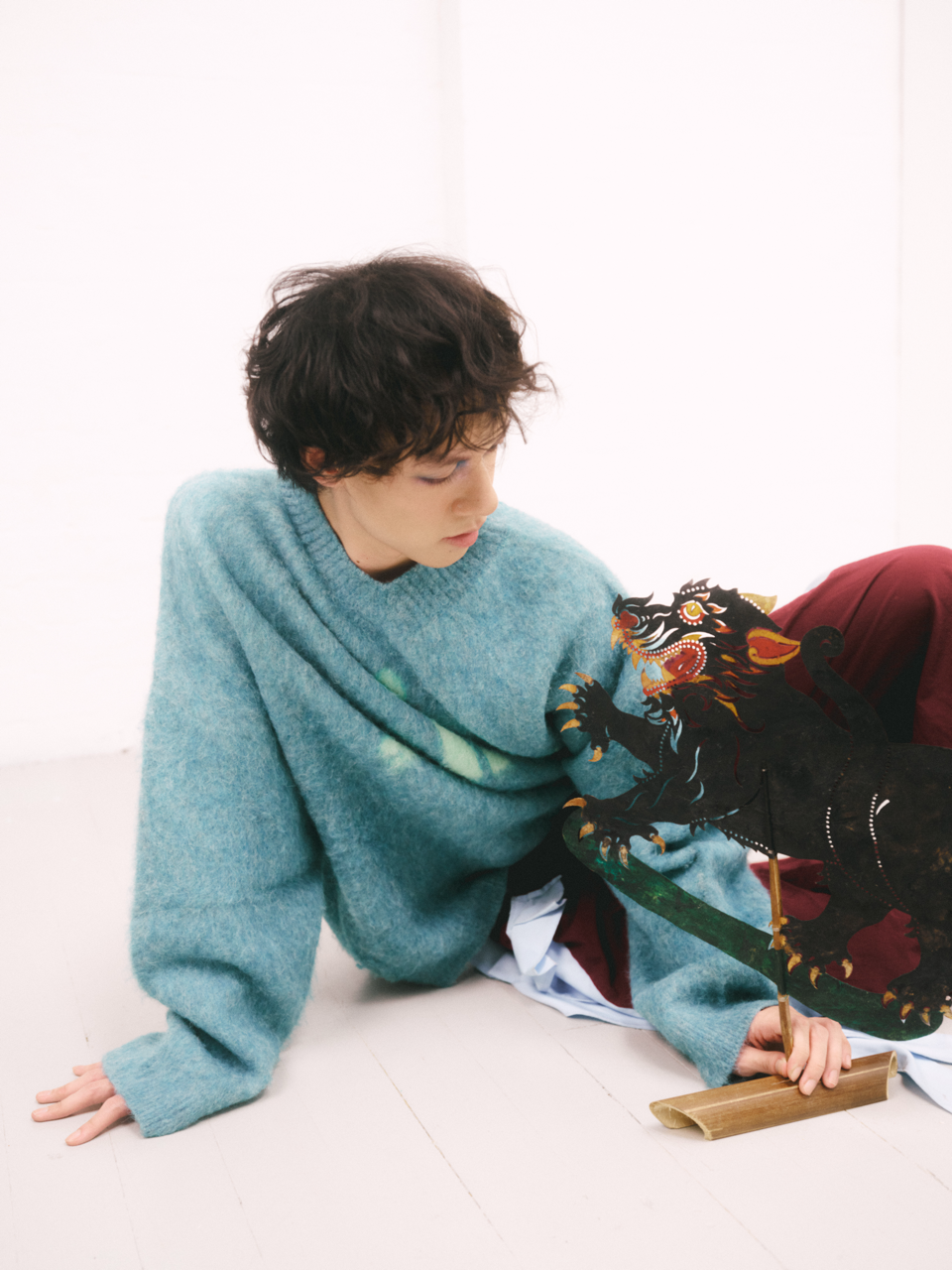
Sweater, Martine Rose; Pants, Troubled Waters
Some artistes lead their work with an unabashed frankness, enough to make listeners blush through an old pair of AirPods. “I met him under my sheets, zero to 90… I didn’t even know his name, but I knew his game,” are how the lyrics to “Love Me (He Says) go. There are no heavy-handed metaphors, just a straight delivery on the adrenaline- fueled, cortisol-spiking states experienced from love, lust, and unnamed emotions in between. In “back to me”, the lyrics ponder: “We haven’t been talking for some days, and I was wondering if you still wanted your VIP seat in the front row to my stage?” The themes of romance, yearning, and even intimacy are not novel in the pop landscape, but what makes Hoji’s penmanship a breath of fresh air is a stark vulnerability that makes it hard to look away, regardless of how bright the melodies are. As Hoji gears up for the release of his 14-track album, The Boy Next Door, Men’s Folio speaks to the 22-year-old singer-songwriter about his process of bringing this album to life, how he views Malaysia as a creative scene, and how he views the phenomenon of local artistes being unfairly compared to international acts.
Sonically, Hoji describes this upcoming album as “a lot going on, with each song feeling like its own little experiment.” The opening track, “I Wanna Dance With You”, carries J-rock influences, while “Boys Boys Boys”, the album’s breakout track that is currently sitting at the top of his most-listened-to tracks, takes inspiration from 2010s guitar pop. “Even when the genres shift mainly in the second half of the record from indie pop to city pop to soft rock, you’ll hear certain sounds and textures that make you think ‘Ah, that’s Hoji,’” he says. Thematically, he sees the album as a space he holds for himself. “It’s about deciding that this is the life I want and seeing how far I can go without holding myself back. That’s how I feel as a 22-year-old.” With a reprise midway through the tracklist that connects back to the opener, he describes wanting to imbue the record with a cinematic feel. “It reminds me of the moments in musicals where the main character has undergone a major change and suddenly sees their life differently. Overall, I see this project as a soundtrack to my life right now: I’m ambitious, excited, and pushing myself harder than I’ve ever been before creatively.”
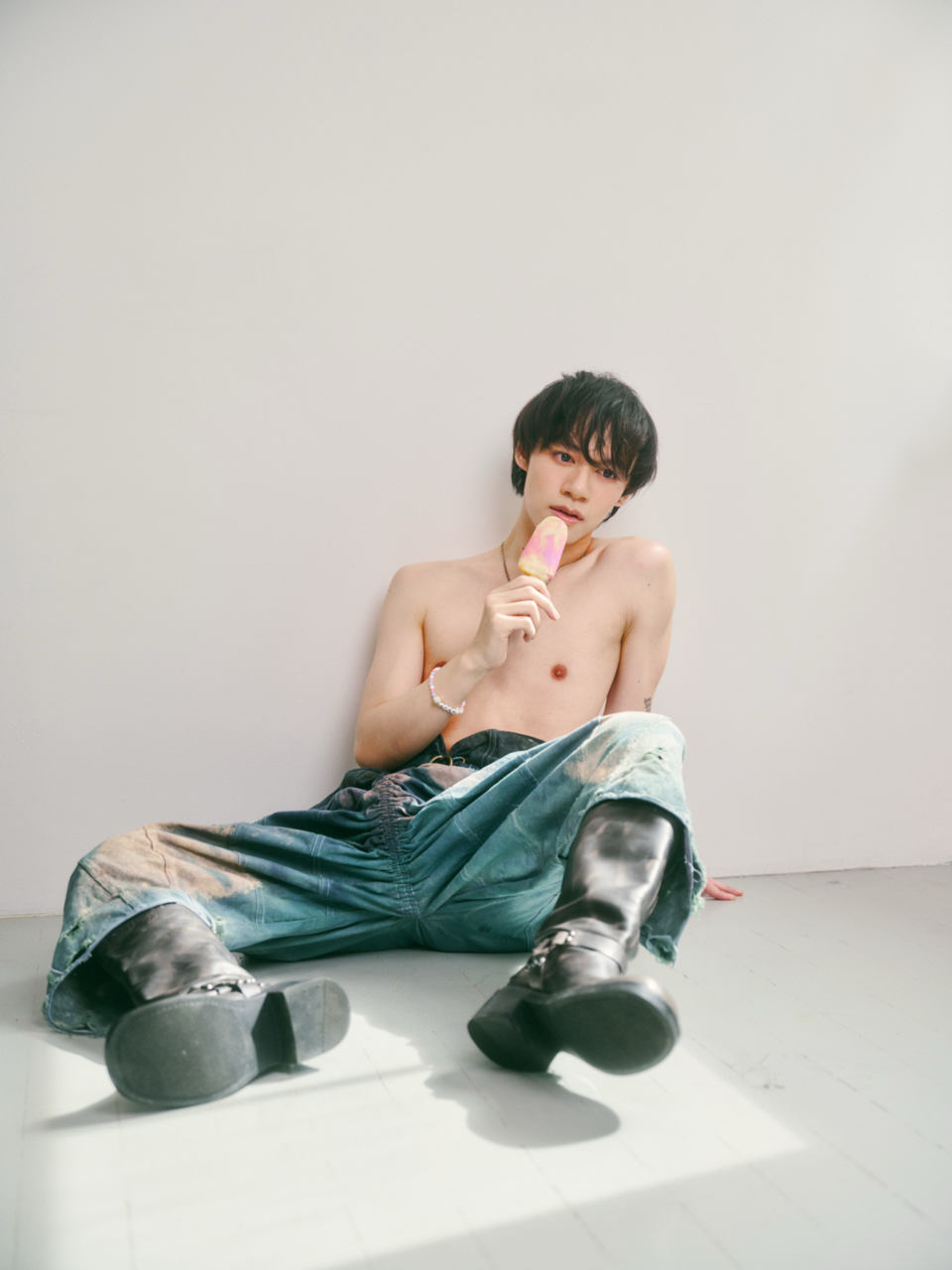
Pants, Michael Yuxiao Zhang; Shoes, Stylist’s own.
Hoji felt the weight of identifying what he actually wanted to say as a proper introduction to the world in his debut album. “At first, I was definitely overthinking it by having a different version of the album. I thought hard about which track should be the lead single and how the tracklist should look, even before half the songs were fully completed,” he confessed. He later learned to surrender to the process. “I didn’t have to force anything, as songs started revealing their purpose. When I stepped back to look at the bigger picture, I immediately knew what the album’s thesis statement was, along with the songs that needed to lead the story.” With a vision for the songs to arrive unapologetically, he ventured into new territories production-wise. “A lot of my previous work carried restraint: I liked the softer textures, drums and synths. This time, I found myself choosing the louder guitar instrumentals, the grittier sounds, and a more in-your-face drum sample,” he shares.
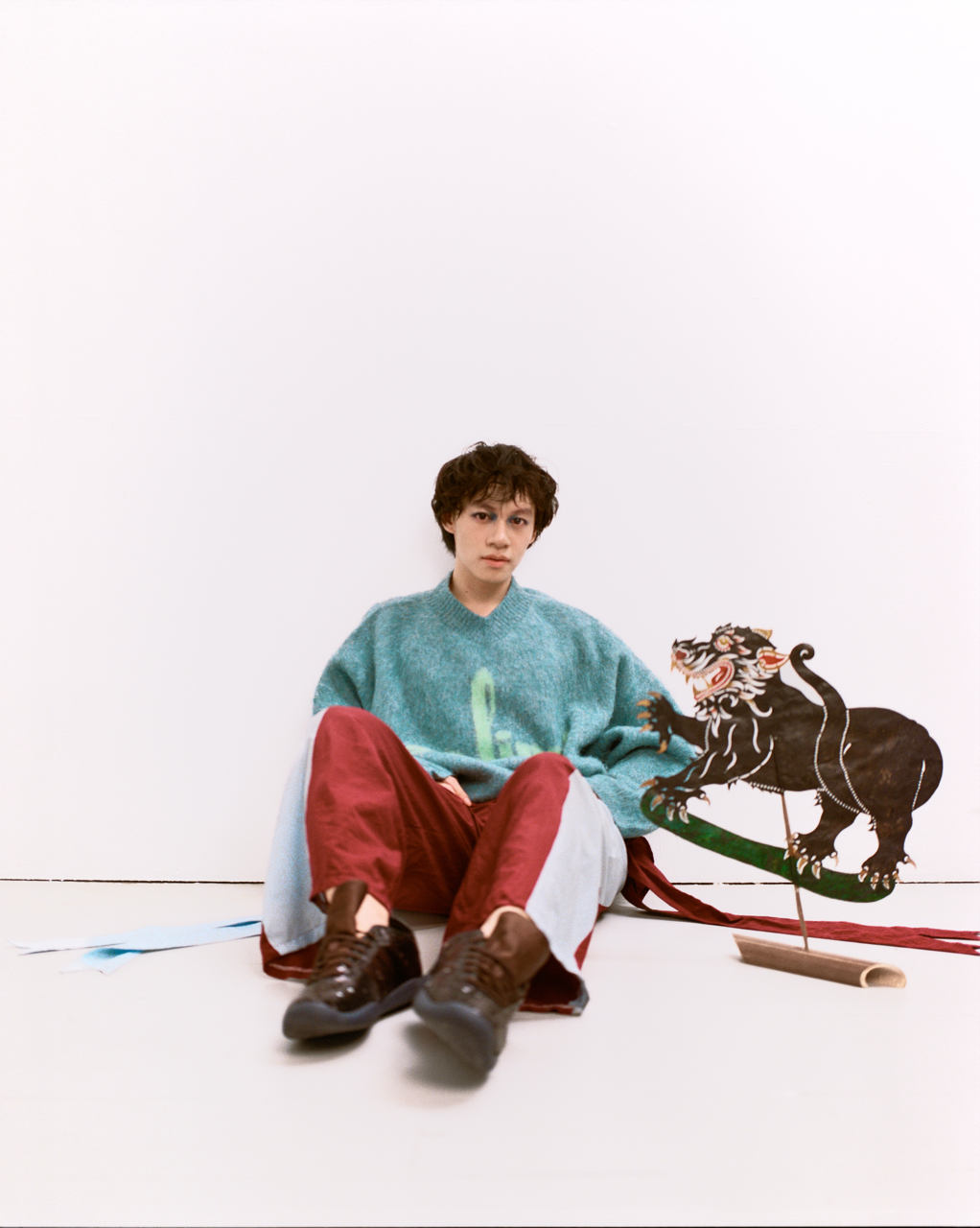
Sweater, Martine Rose; Pants, Troubled Waters; Shoes, Adidas by Wales Bonner
One thing that has carried through his music since his debut is his vulnerable lyricism. Has he ever caught himself second-guessing whether he has revealed too much? “To be very honest, I like being ‘too personal.’ Some of my favourite songwriters are the ones who go there — they say the uncomfortable thing that most people would rather keep to themselves. This, to me, is where the magic of songwriting lies, allowing others to feel seen.” As someone who already talks deeply about his thoughts and feelings, he is not interested in writing songs that do not delve beyond the surface. “I have the responsibility to say the human thing rather than concern myself with whether it makes me look good or bad. It is honesty. If there is a constant need to filter yourself, then it becomes much harder to make others feel something real.” Except for redacting details that involve real-life connections, nothing else is sacred.
While songwriting comes as a form of catharsis, not every track stems from something he is actively experiencing. “Sometimes when life is pretty peaceful, and nothing dramatic is happening, songwriting can be about capturing a feeling. It could be a TV show, and something about that really stuck with me.” His song, “Secret Affair”, draws parallels with the story of a pair of lovers who could not be open about their relationship, an experience that resonated with him. When asked if Hoji feels like a different persona than his real self, Hong Jin, he disagrees. “Hoji started as a practical thing. People always get my name wrong, like Honjin, Hojin, Hongji. It got annoying, so I shortened it to Hoji. Perhaps Hoji is a slightly more polished version of myself, but when you listen to the songs, it gets messy, human, vulnerable, and even ugly at times. So, I’m not entirely sure if that reads as polished, too.” To Hong Jin, Hoji is still him, but with a microphone.
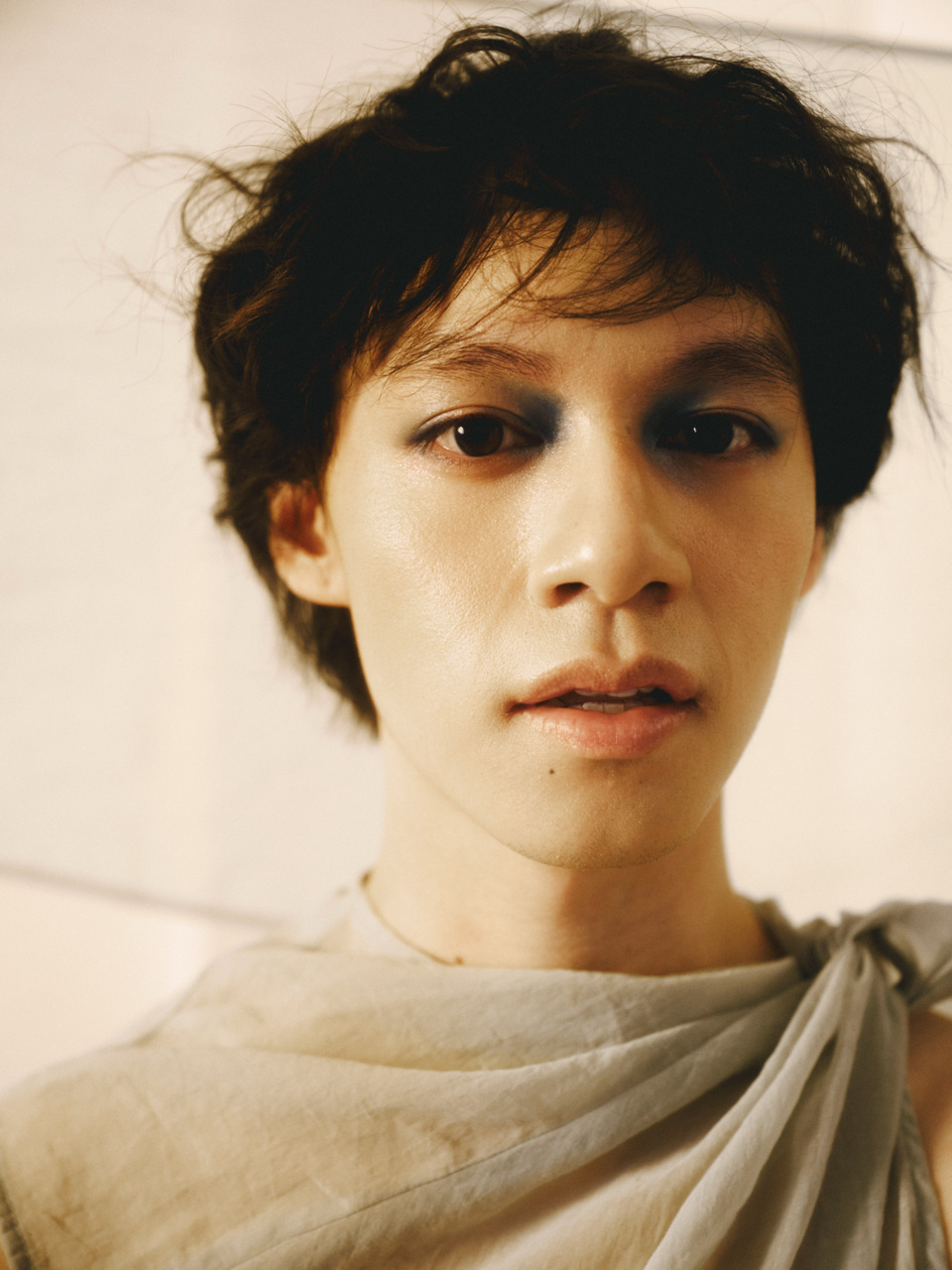
Top, Weihaoyong
The visuals of bold, expressive makeup (perhaps a nod to Hudson Williams’ MET look?), soft pastels and a draped blouse clearly subvert what it means to be the boy next door. “When you hear it, you immediately picture somebody familiar. But then, you take a look at the album cover, visuals, styling, and songs, and suddenly realise it’s not [familiar] any more,” he explains. He likes the tension of setting an expectation and then immediately challenging it. “In a way, it’s reclaiming what it means to be a boy. I was bullied for being too feminine, too girlish, too different from people’s expectations. That contributed to a lot of my insecurities and affected how I saw myself growing up.” Through his own volition, he gets to celebrate the things he was once teased for. “If someone scrolls past and thinks ‘That’s not how a boy should dress,’ well, I’m a boy, and this is how I dress. So, what now?”
So many local entertainers are cast with the unfair judgment of being a “watered-down” version of international acts. Any male artiste who wears sequins on stage or carries themselves with a dash of flamboyance is immediately relegated to someone who is trying to “reheat Troye Sivan’s nachos”. Hoji does not see comparison as inherently bad, but draws a line when audiences see it as a limiting factor that boxes artistes in. “Every art form is inspired by something else. Nothing exists in a vacuum; every artiste is influenced by another. The goal is not to pretend you’ve never been inspired by anyone. One of the fastest ways to develop your own voice is by trying the things you admire in others and seeing where these instincts take you.” Hoji cites examples of debuting artistes being compared to their seniors — Chappell Roan to Lady Gaga, Addison Rae and Tate McRae to Britney Spears — and simply sees it as a phenomenon of people trying to understand where to place him as an artiste.
“Sometimes it feels like people spot one obvious similarity and decide they’ve figured you out. I’m flattered to be compared to Troye, but I’m drawn to so many others besides him. If you’re willing to look at us wholly, fully, most artistes are a lot more faceted than you think.” The album may be heavier on pop than previous releases, but he hopes listeners are not quick to assume they will be served tracks that are more style than substance. “If anything, it takes skills to write a good pop song, because every line is designed to hit.”
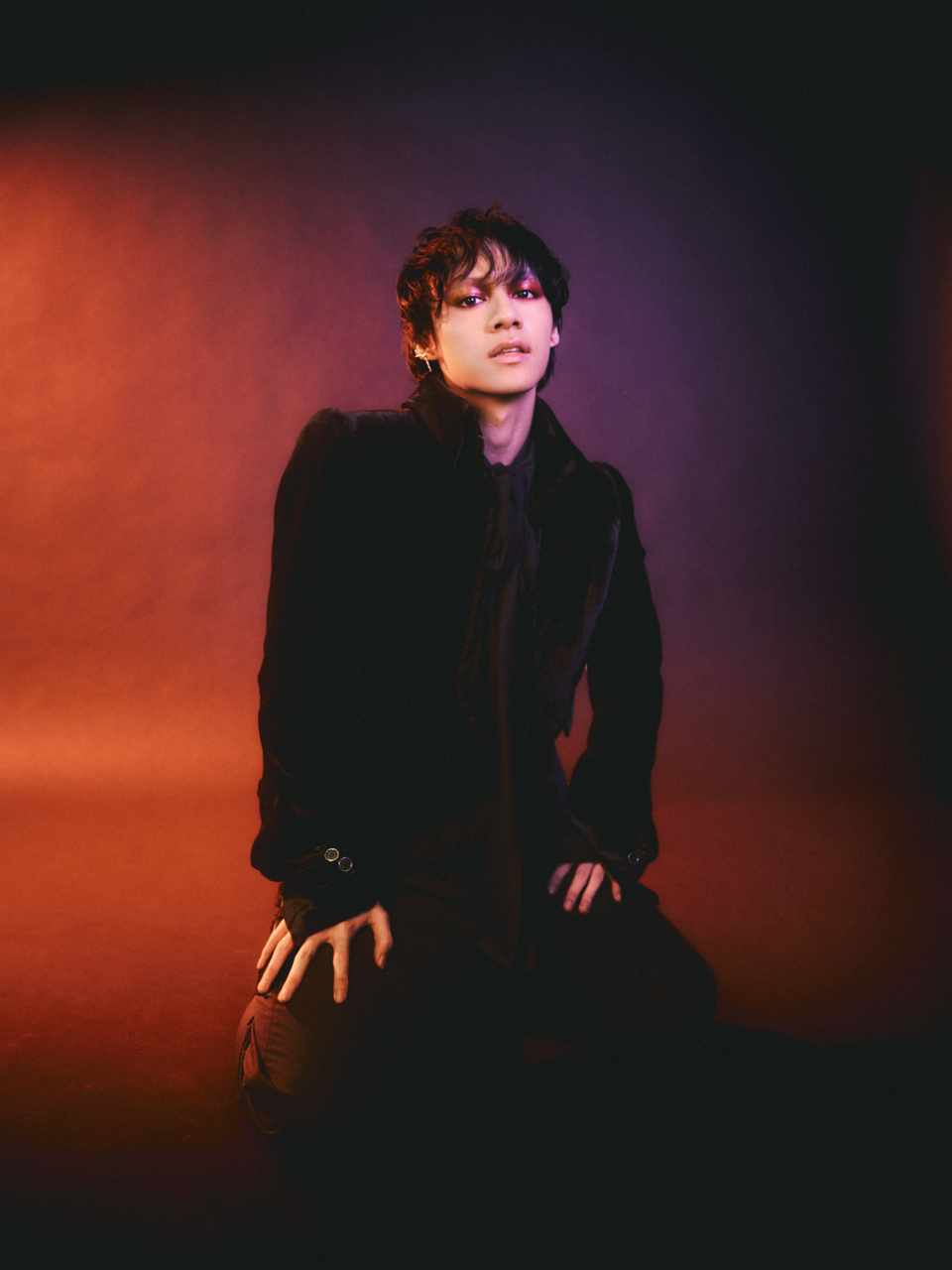
Top, jacket, all Manfred Wong; Pants, Juntae Kim; Jewellery, Loki Patera
As for Malaysian audiences, he sees the situation as a confidence problem. “Whenever I see comments saying, ‘I can’t believe this came from Malaysia,’ I respond with ‘Why do we think so lowly of our country?’” According to Hoji, the relatively small creative scene in Malaysia allows artistes to actually witness their impact. “Songs like ‘Boys, Boys, Boys’ allowed me to feel I’ve contributed to the conversation. Whenever someone brings it up, it shows that art can leave a mark on our culture.” The challenge, however, lies in moving forward without proof that success is possible. “There’s no blueprint. I’ve big ambitions for my career, but there isn’t anyone I can look up to and do exactly what they did, especially as a Malaysian artiste making original English pop music who wants to play internationally.” What propels him forward is faith in his own vision.
When the album drops, he hopes that listeners become “nerds” about the record by paying attention to the lyrics and how the song progresses from the first verse to the bridge before reaching the final chorus. “I hope they catch the little production choices, the ad libs, and how the song transforms into something unexpected. Maybe they discover something new when they relisten.” Ultimately, he hopes the album also serves as a soundtrack for his listeners. The experiences that inspired his tracks may be his, but he does not want them to stay just his. “I showed you my life; now go look at yours.”
Hoji is not keen to define exactly who the boy next door is. “To me, there isn’t one way to be a boy, or a singular way to demonstrate masculinity. Someone could picture this person in a football jersey or shimmering eye makeup. The album encourages you to consider: why are some versions of boyhood seen as normal, and others less so?”
Photography Arvin Prem Kumar
Styling Yuzhen Wang
Grooming Mikele Simone
Hair Zara Zust
Photography Assistant Ashleigh Mountford
BTS Videographer Jade Xuan
Assistant Khloe Yen
Talent Representation Avenue Creative Talent
Once you are done with this story, click here to catch up with our latest issue.