Gucci is not simply slumping. It is dissolving in plain sight, slowly auctioning off its identity as if the brand were being liquidated piece by piece. The decline over the last three years has been less a devastating plunge and more a drawn-out unravelling. For a decade, Alessandro Michele’s visionary eccentricity turned the brand into a Renaissance fair for the hypebeast, a dizzying, maximalist fever dream that redefined the 2010s. But then emerged the plateau. The design studio, left to its own devices after his departure, eventually stalled out, and the subsequent Sabato De Sarno era seemed like a rebound relationship that failed before the first date was even scored.
De Sarno’s “minimalist shift” was an excuse for maximalism that didn’t need one. By the third quarter of 2024, Gucci’s revenues were down 25%. They fell another 24% in the fourth. Over the same stretch, its Kering sibling Saint Laurent inched up 4%. Clearly, it wasn’t working.
Now, we have the “arranged marriage” to Demna, a dramatic move born of the kind of desperation that usually precedes a hostile takeover. We’re witnessing a strategic turn toward a man who understands that in 2026, fashion is part garment-making and part psychological warfare. In one stroke, since last October, Demna recasts Gucci’s identity: its physique becomes streetwise minimalism; its personality is irreverent yet cerebral; its culture tilts toward disruptive nostalgia; its relationship projects edgy inclusivity; its reflection mirrors the desires of a Gen Z audience seeking authenticity; its self-image evolves into a vessel of provocative reinvention in a way only Demna knows how. But in the cold, clinical light of the runway, we have to ask: does the house finally stand a chance, or are we just watching a high-budget simulation of its former glory?
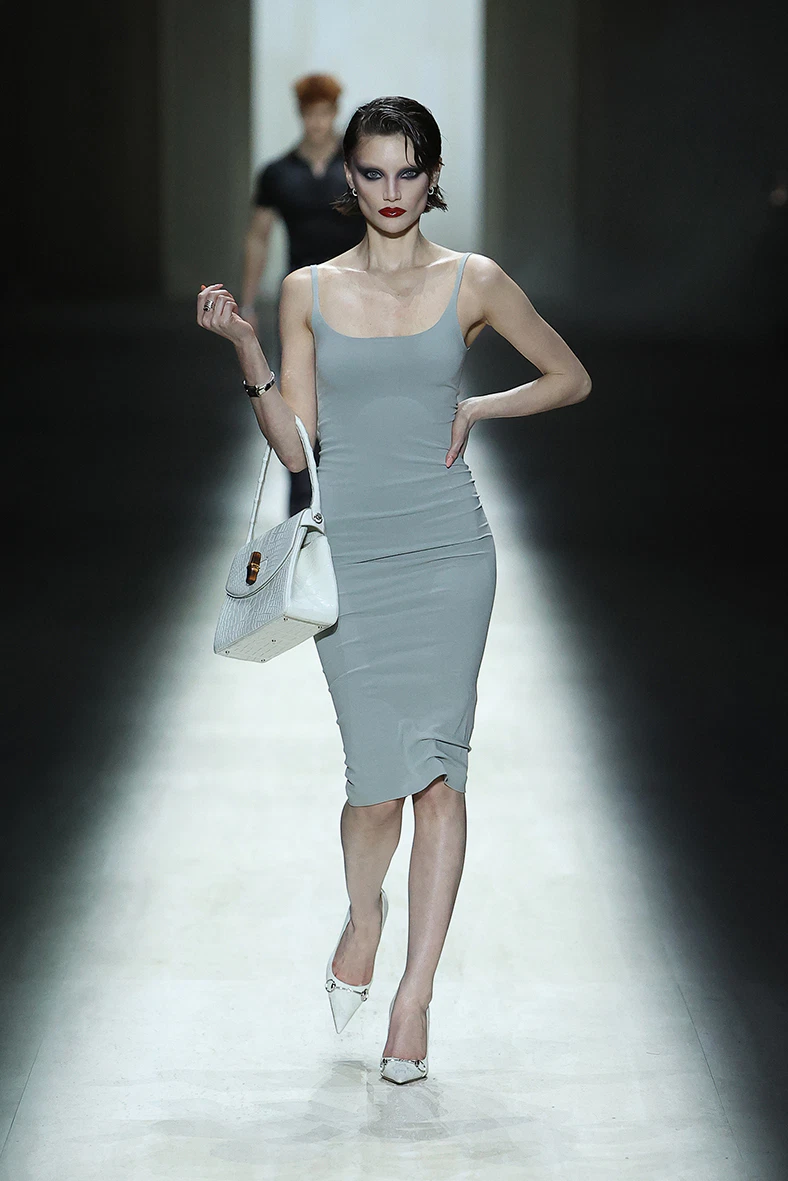
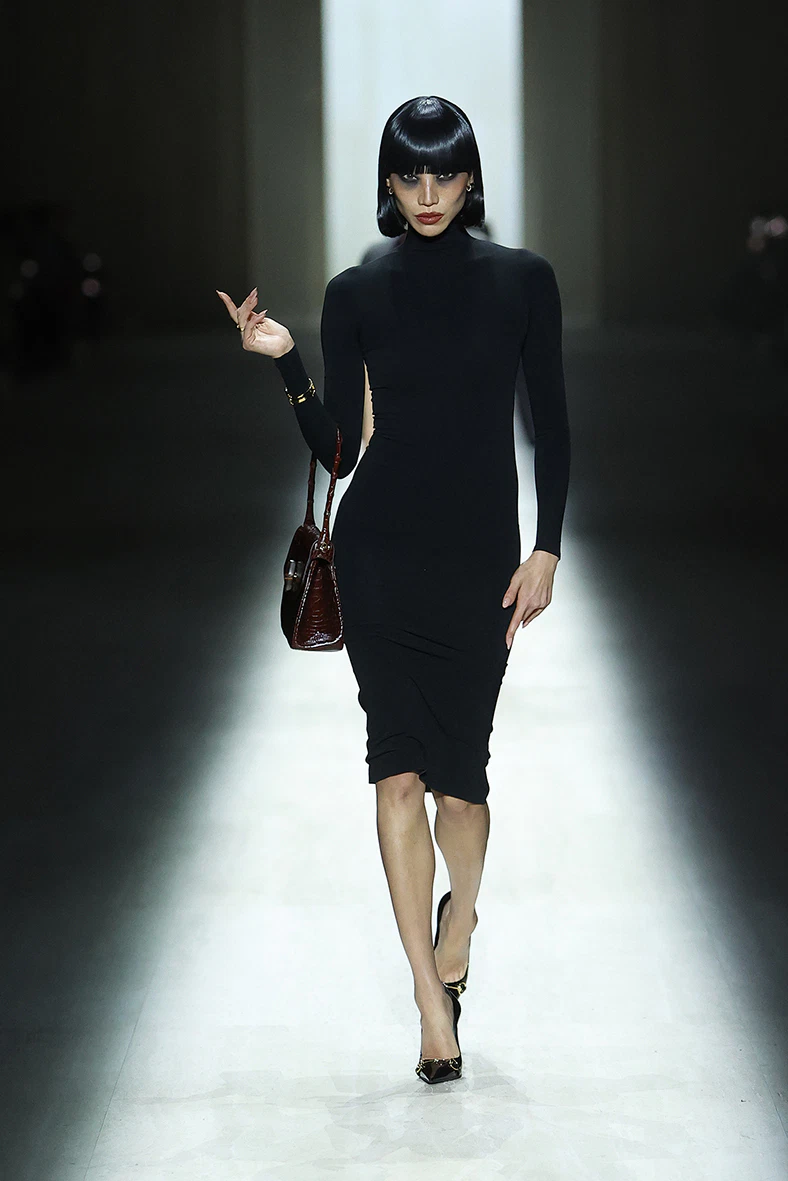
To understand the stakes, you have to realise that Gucci is a house that survives by burning itself down. It survived the 2008-2009 financial crisis, which plunged sales of luxury apparel into a dark abyss, yet within two years the house rebounded to positive double-digit sales growth, proving its resilience in driving the recovery. It survived being watered down by the “Logomania” cheapness of the 1980s and the infamous family feuds that Ridley Scott and Lady Gaga eventually turned into a campy caricature of Italian tragedy — both moments when the brand was counted out, only to reemerge as a market leader in profitability and brand value. This pattern of crisis and comeback is written into the company’s DNA. As revenues drop by nearly 25 per cent quarter over quarter today, Gucci faces another reckoning. Past precedent shows that survival is never just luck but a matter of strategic reinvention tied directly to KPIs that measure both brand health and bottom-line growth. As the era that actually matters, the one we can’t seem to move on from, is the Tom Ford decade.
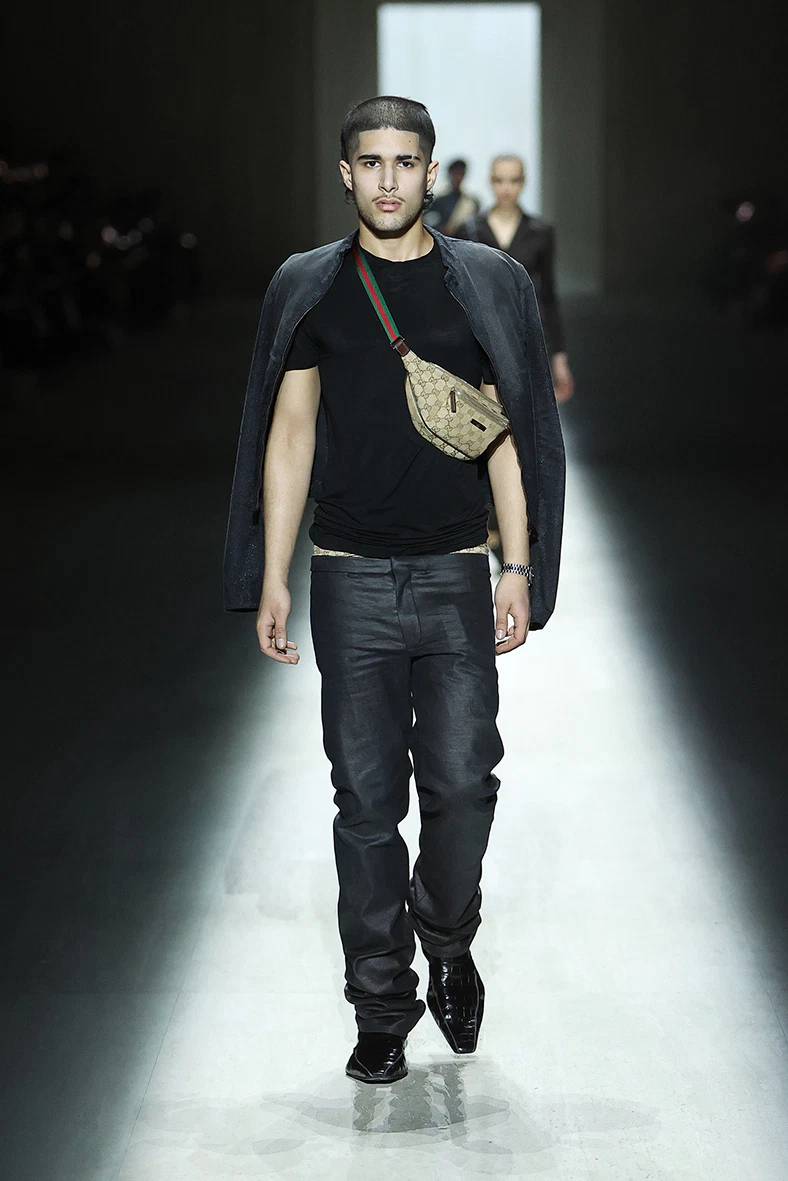
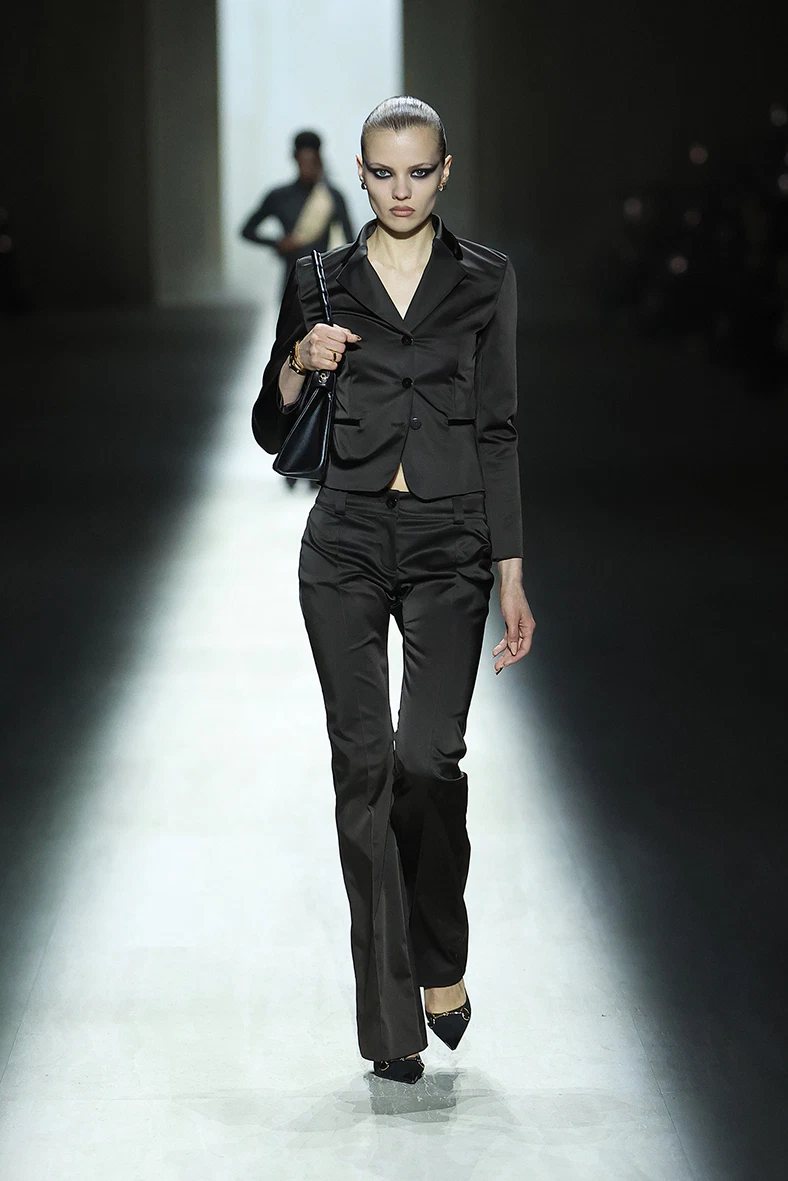
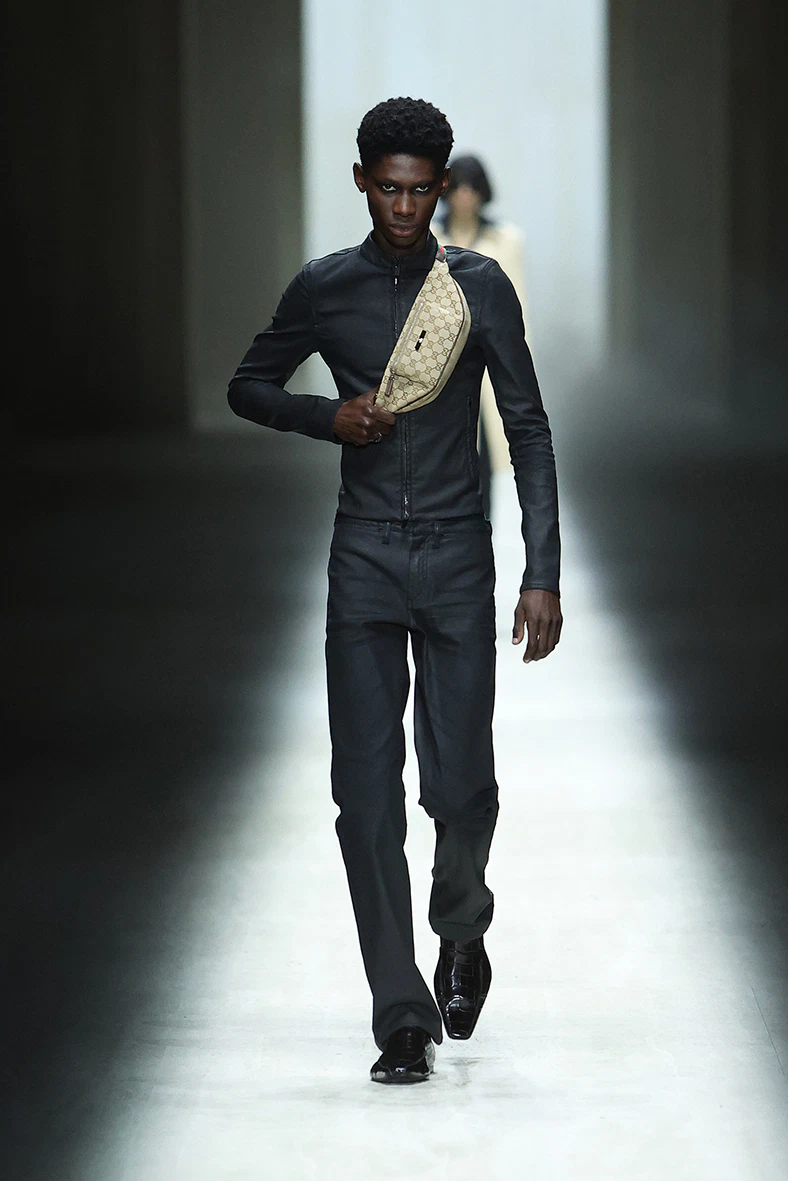
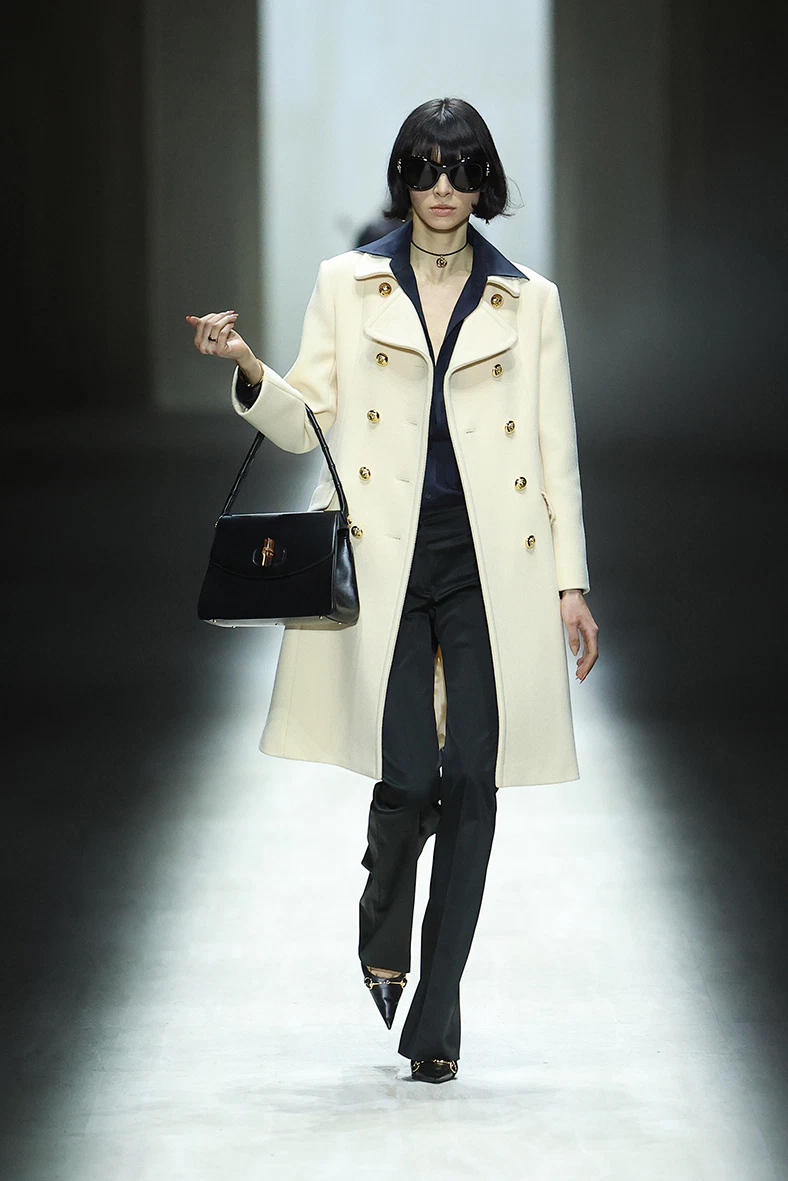
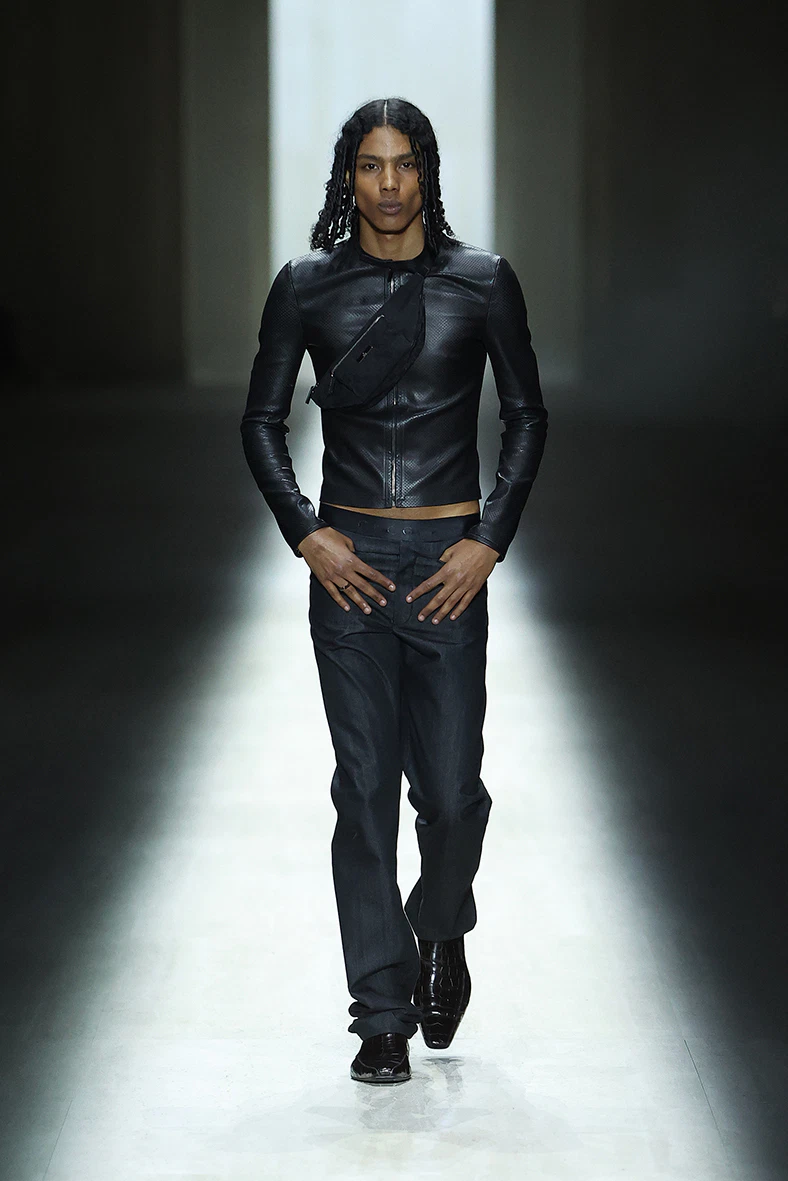
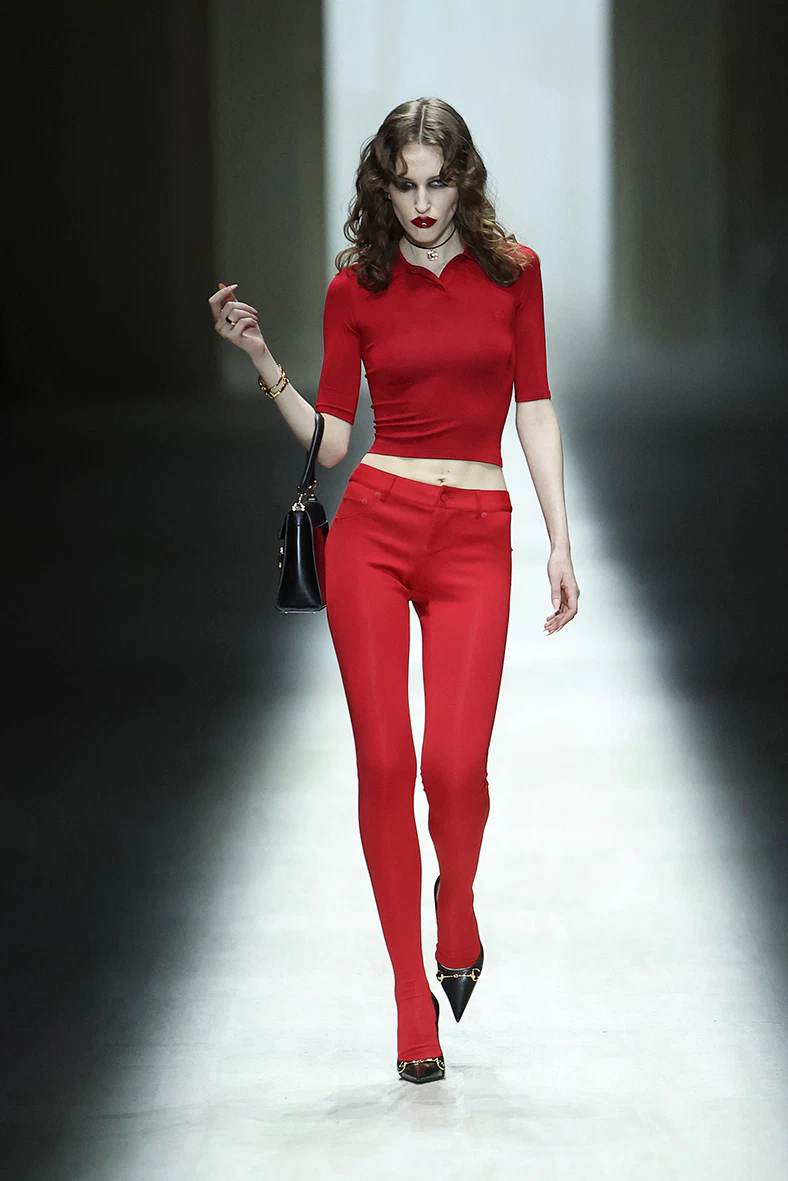
Ford sold a high-gloss, cigarette-stained aspiration that survived because it was authentic. He understood that Gucci is at its best when it is defined by danger, desire, and daring. Those three words— danger, desire, daring — became the pulse of his Gucci. He was the director of a movie everyone wanted to live in. Luckily for us, Demna appears to be a fan of the film.
With two seasons now in circulation, it’s clear that Demna is less an innovator here and more a highly skilled cultural processor. His work at Balenciaga proved he could turn irony and trash bags into a luxury commodity, but at Gucci, he’s playing a different game: The Nostalgia Industrial Complex. He understands that for Gen Z, “cool” is synonymous with “revival.” These youngling might not be looking for a future yet, but they want the 90s Carolyn Bessette-Kennedy fantasy seen through a 2000s lens of “Indie Sleaze.” They want the JFK Jr. love story, the minimalism that actually had some bite, and the sex appeal that seemed like a secret.
It’s timely, it’s calculated, and it’s arguably the most honest thing the brand has done in years. By leaning into the late 90s aesthetic for FW26, Demna isn’t pretending to be original — he’s admitting that in 2026, the most radical thing you can do is give the people the costume they’ve been begging for.
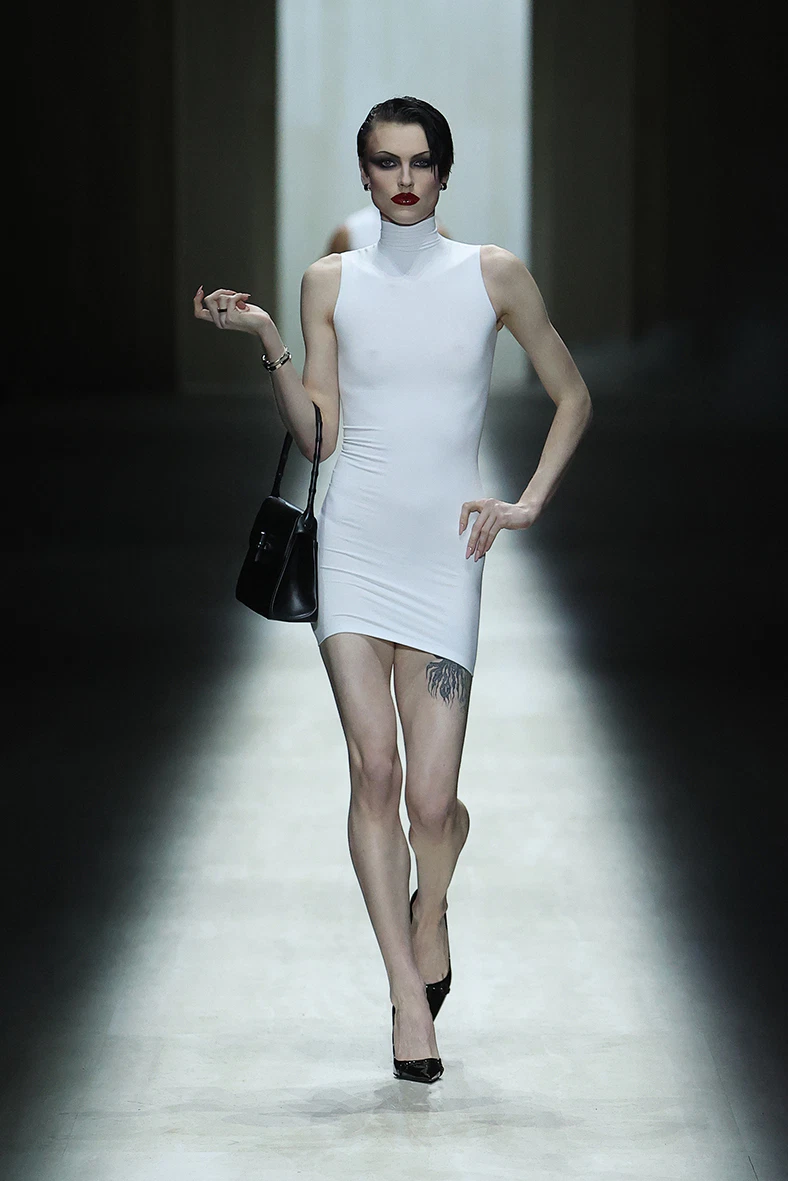
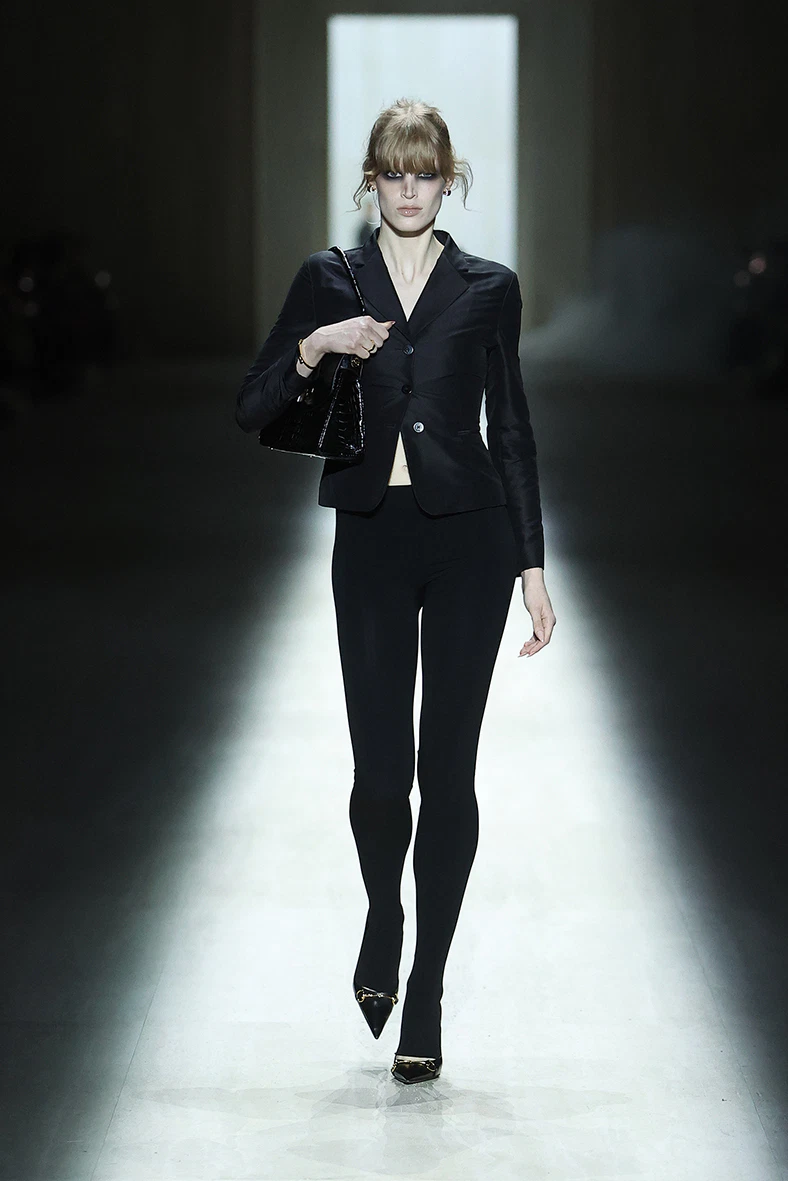
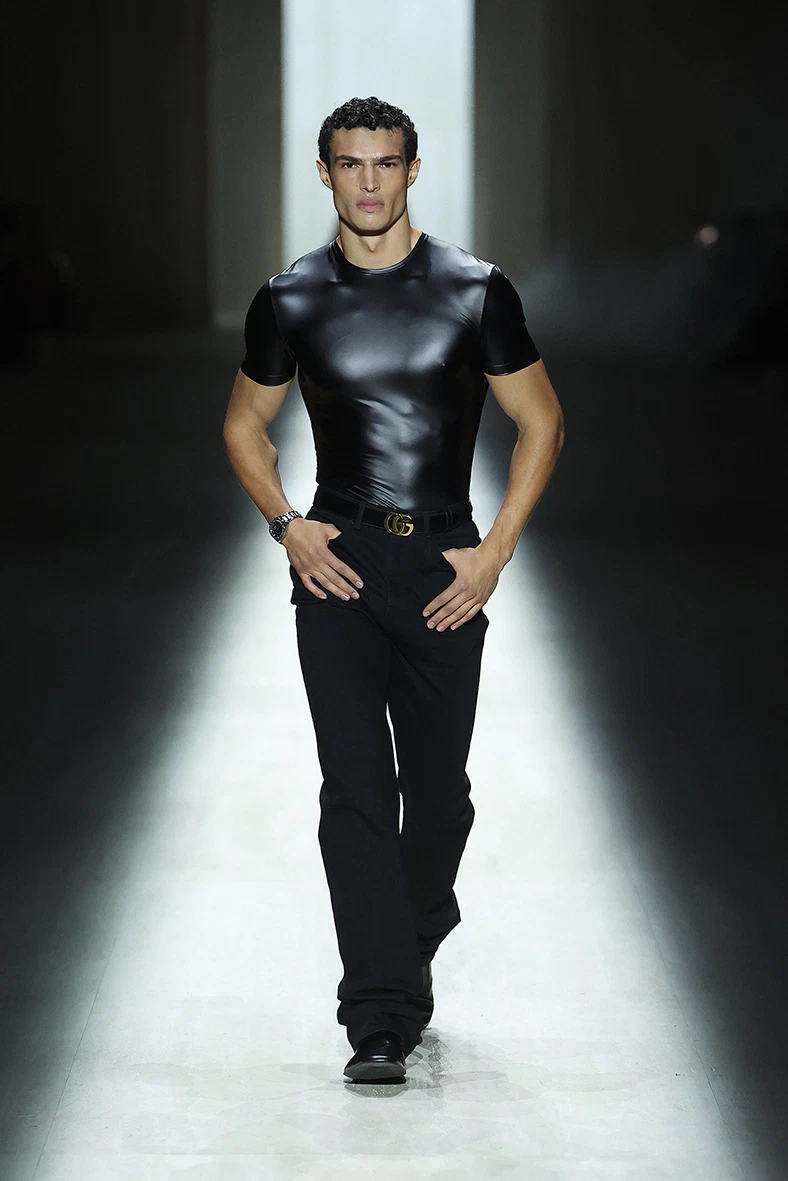
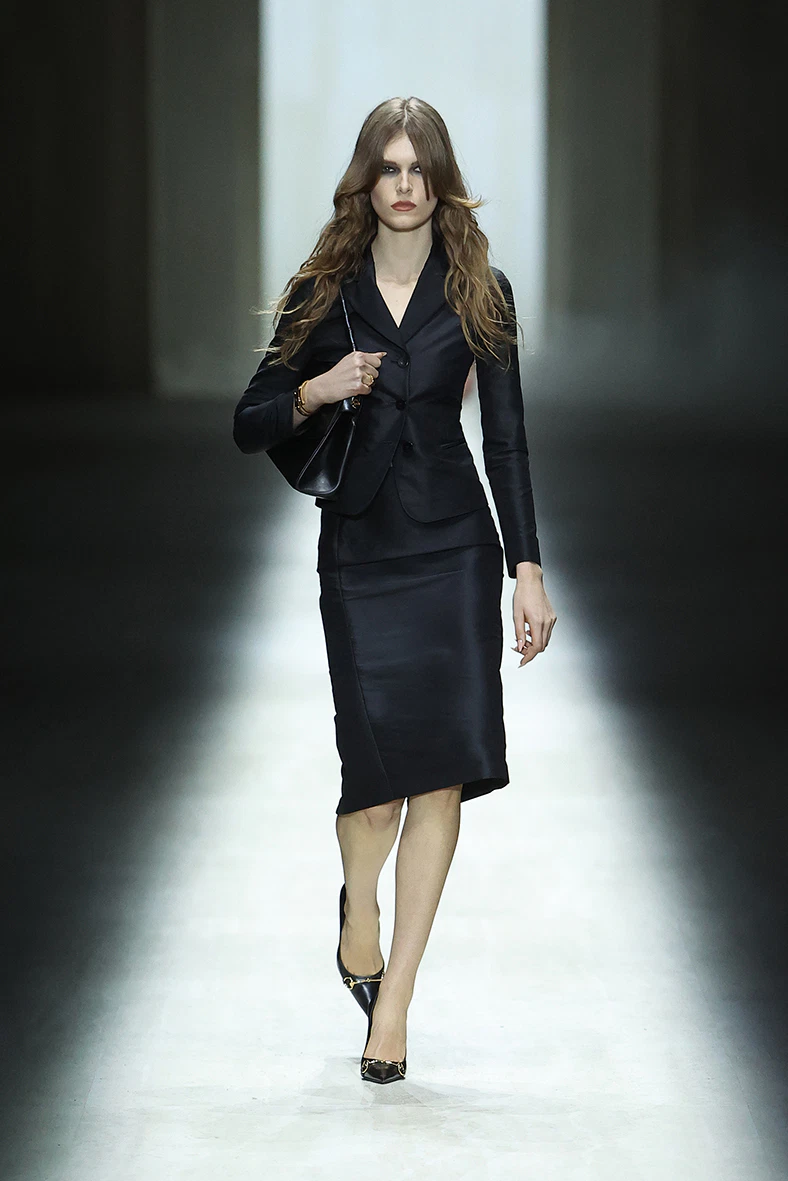
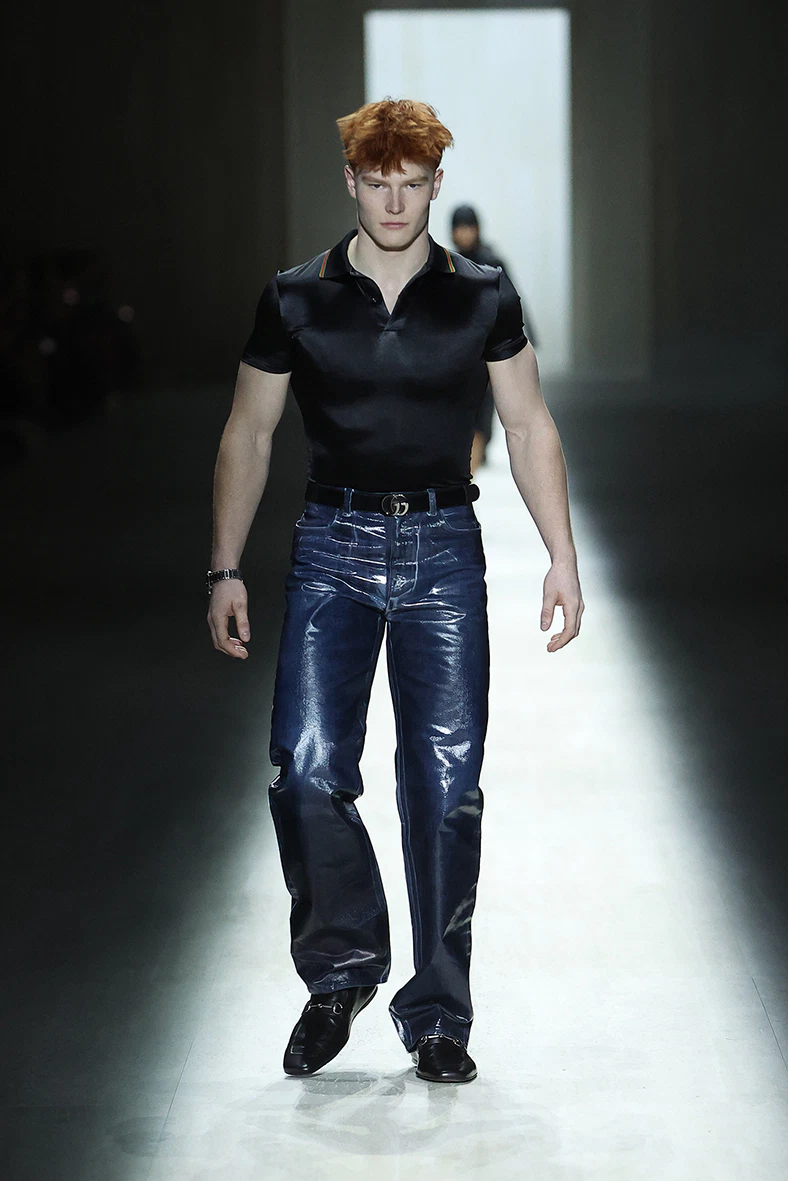
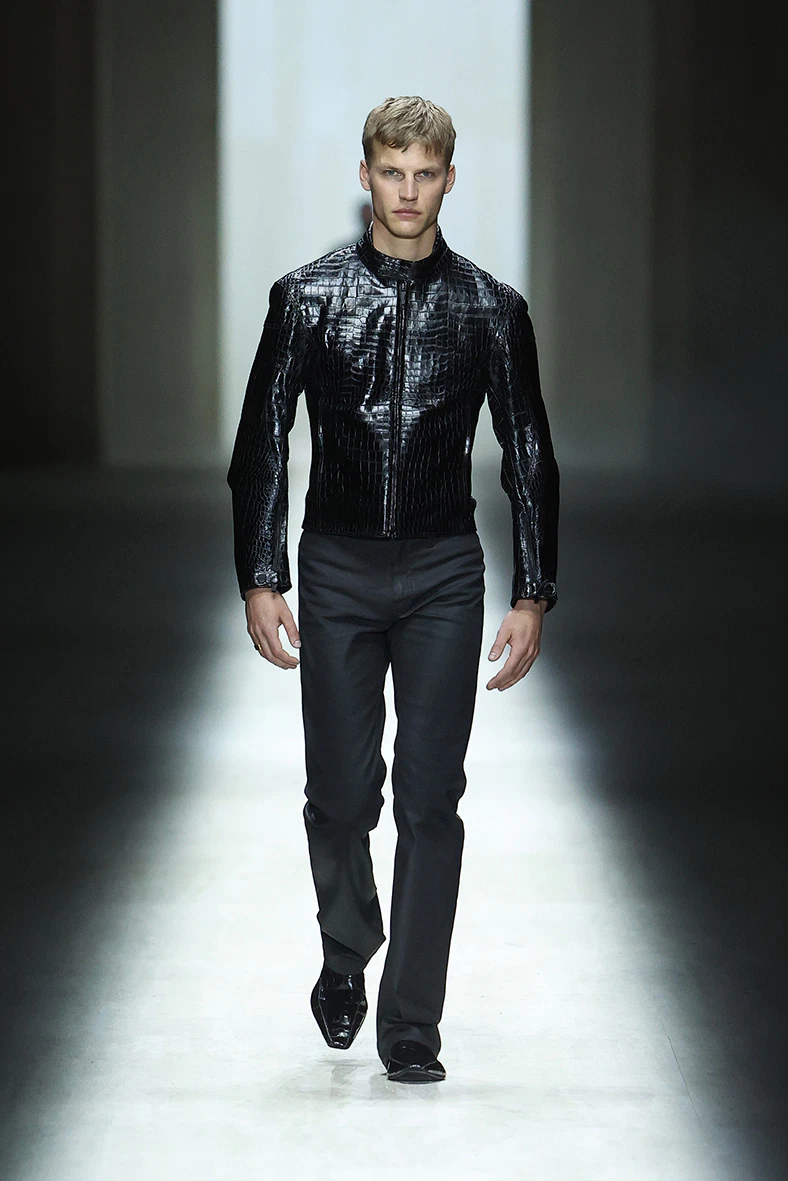
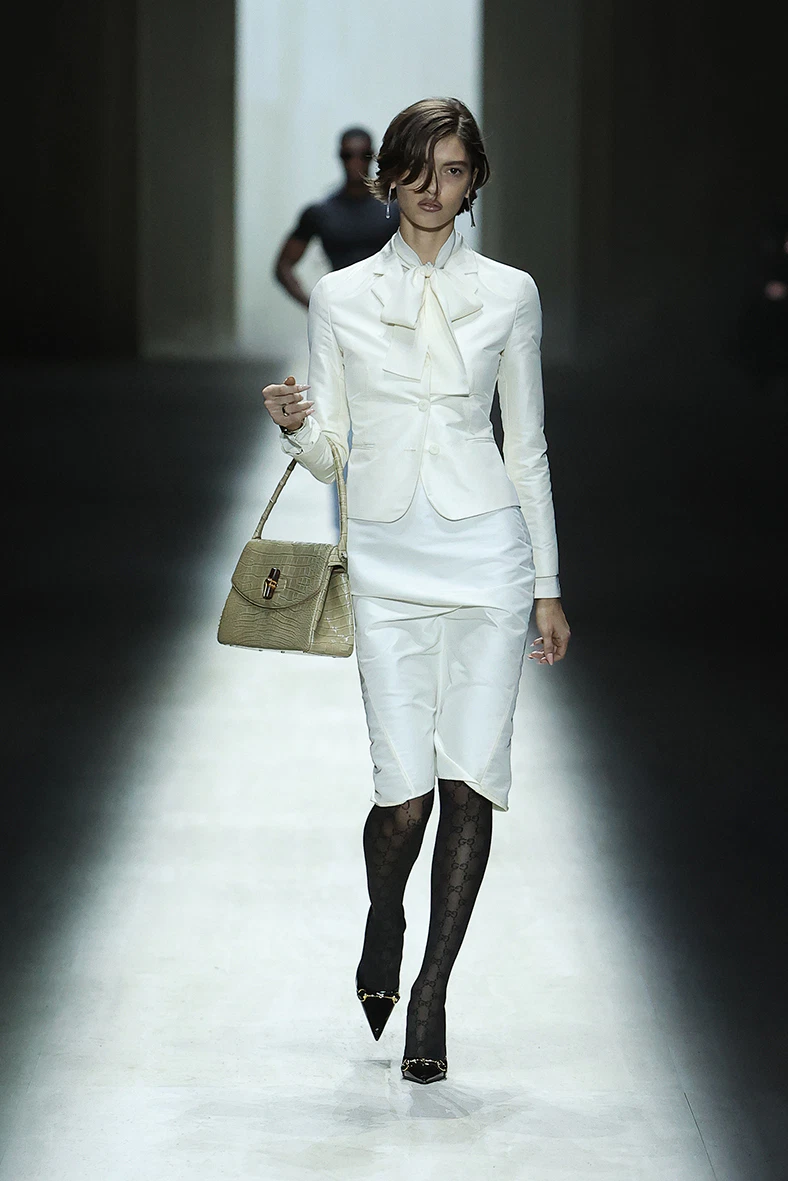
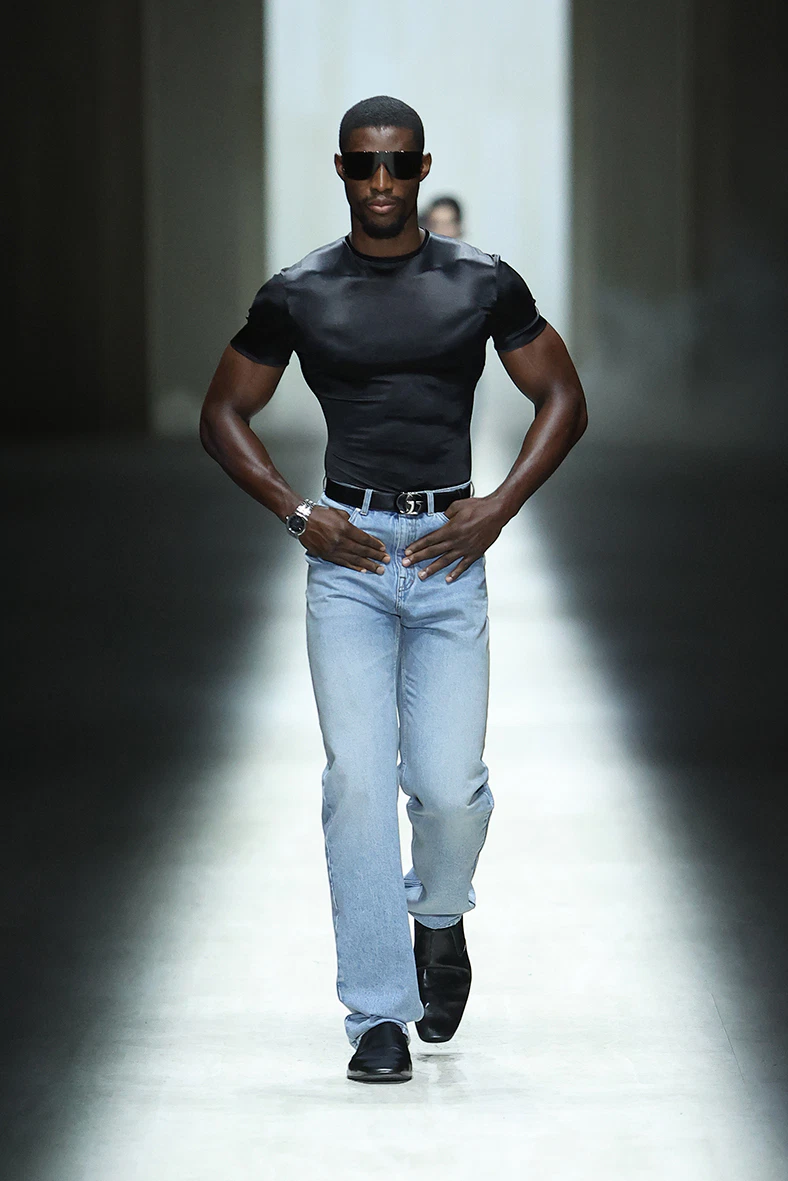
The collection itself was as predatory as it could get. If De Sarno’s tenure seemed like an apology for having a personality, this was a loud, unrepentant reclamation of the house’s most erotic archives. The silhouettes were liquescent, specifically channelling that 1996 Ford-era tension where the tailoring is so acute it borders on hostile. There was a particular focus on lascivious midnight leathers, which served as a clever palate cleanser after years of beige monotony.
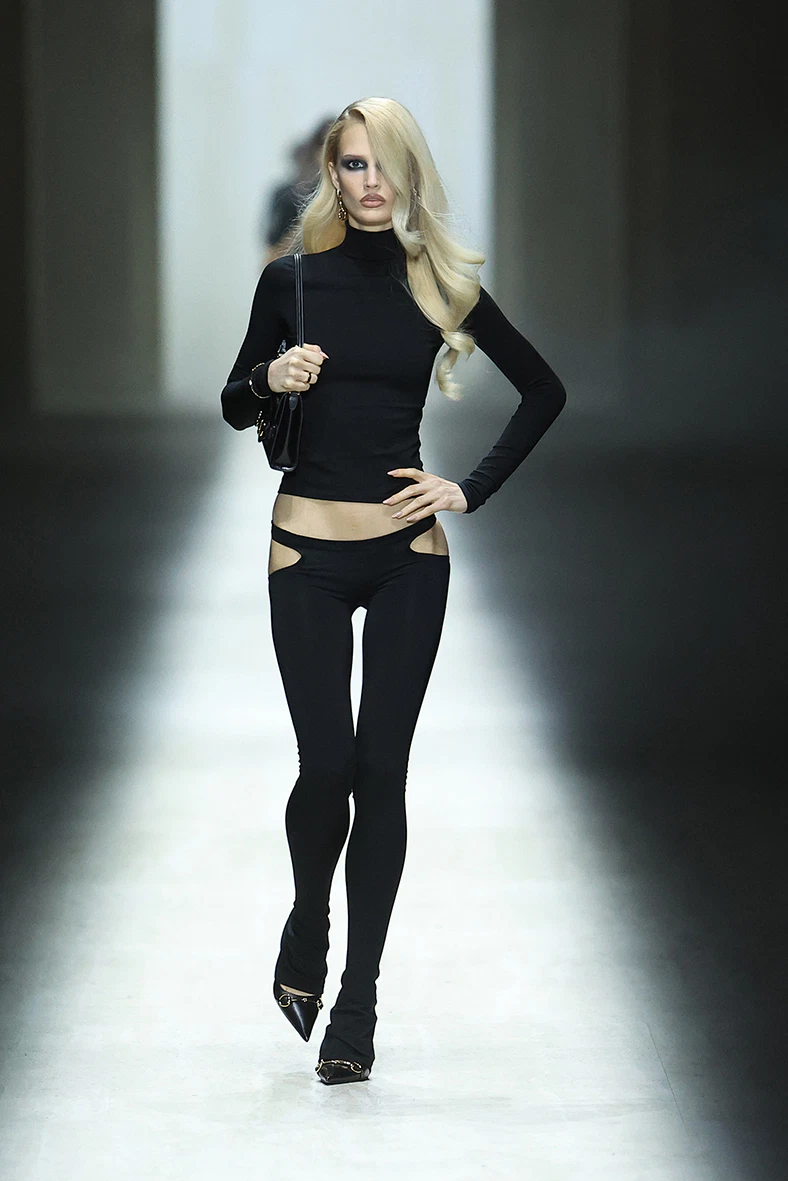
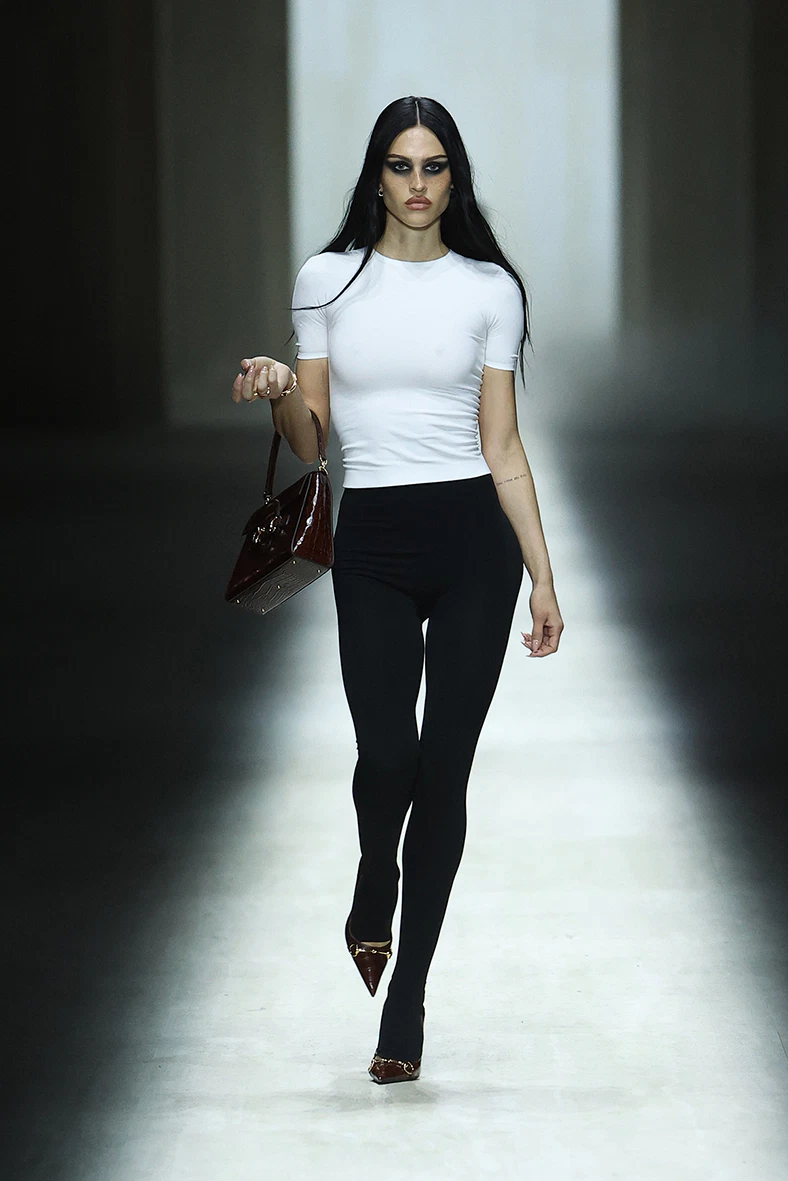
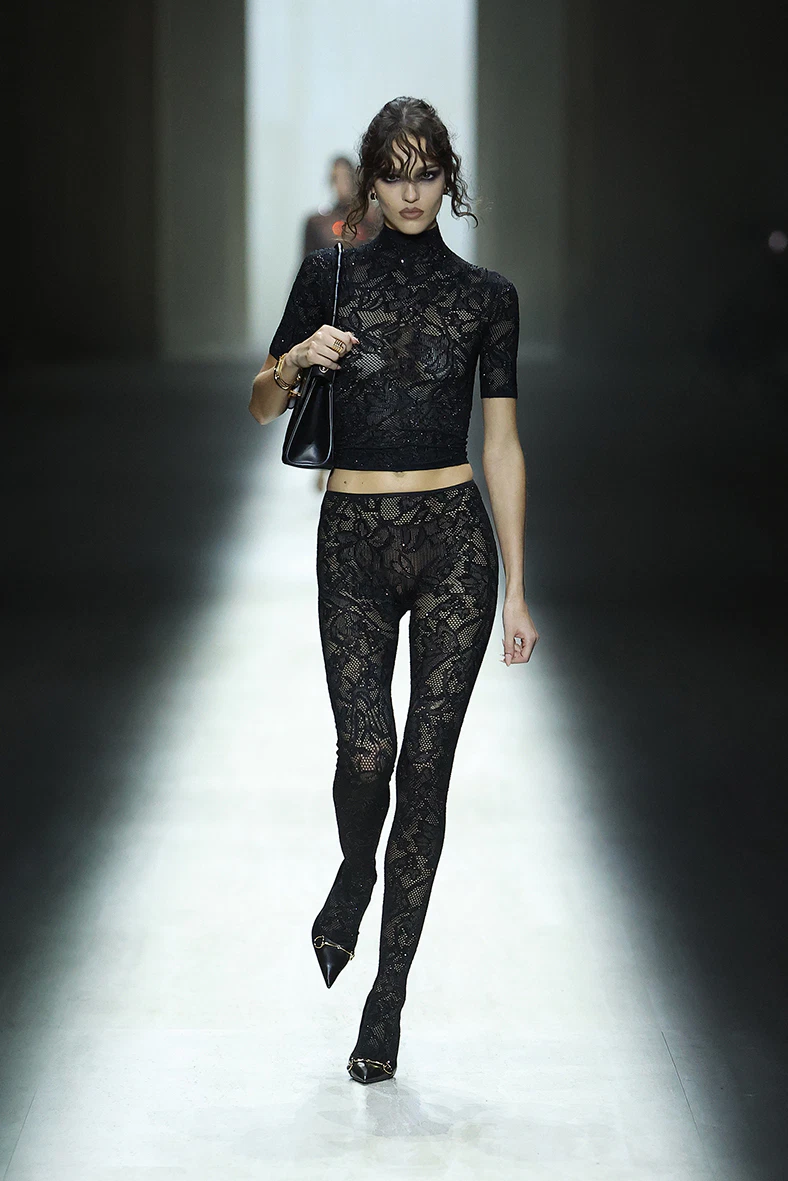
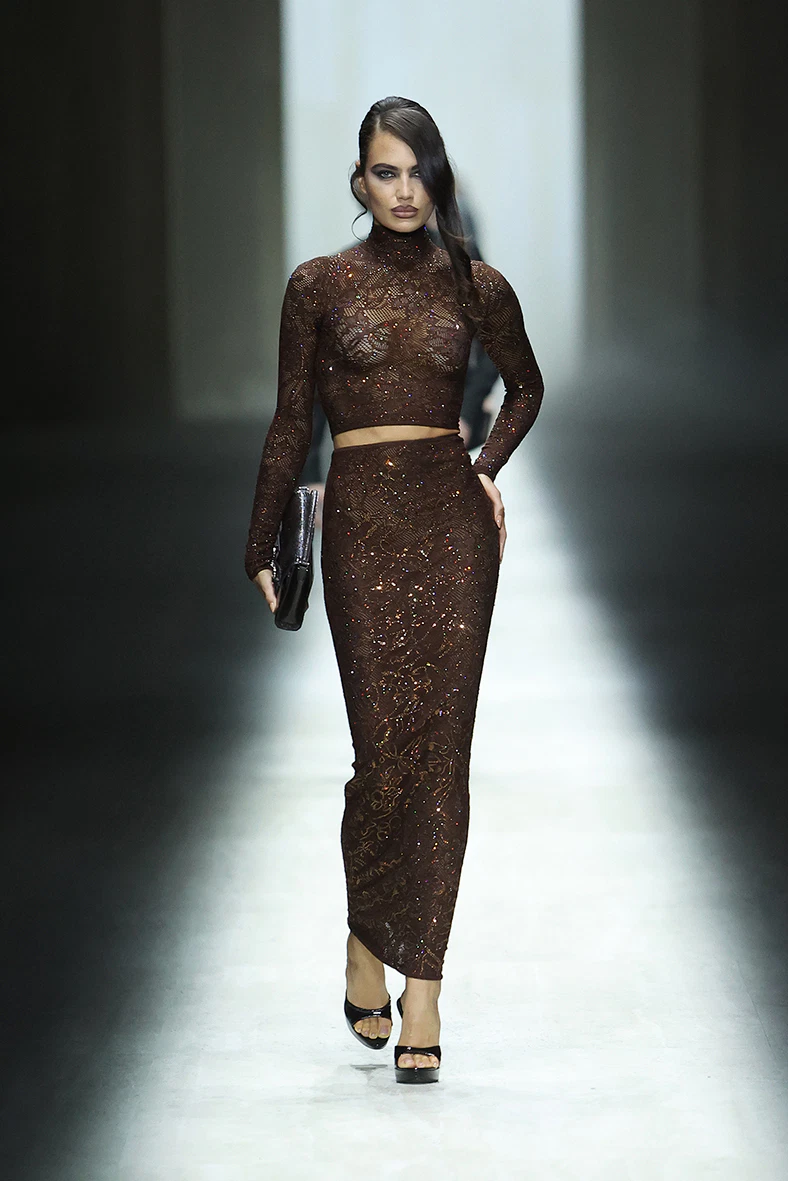
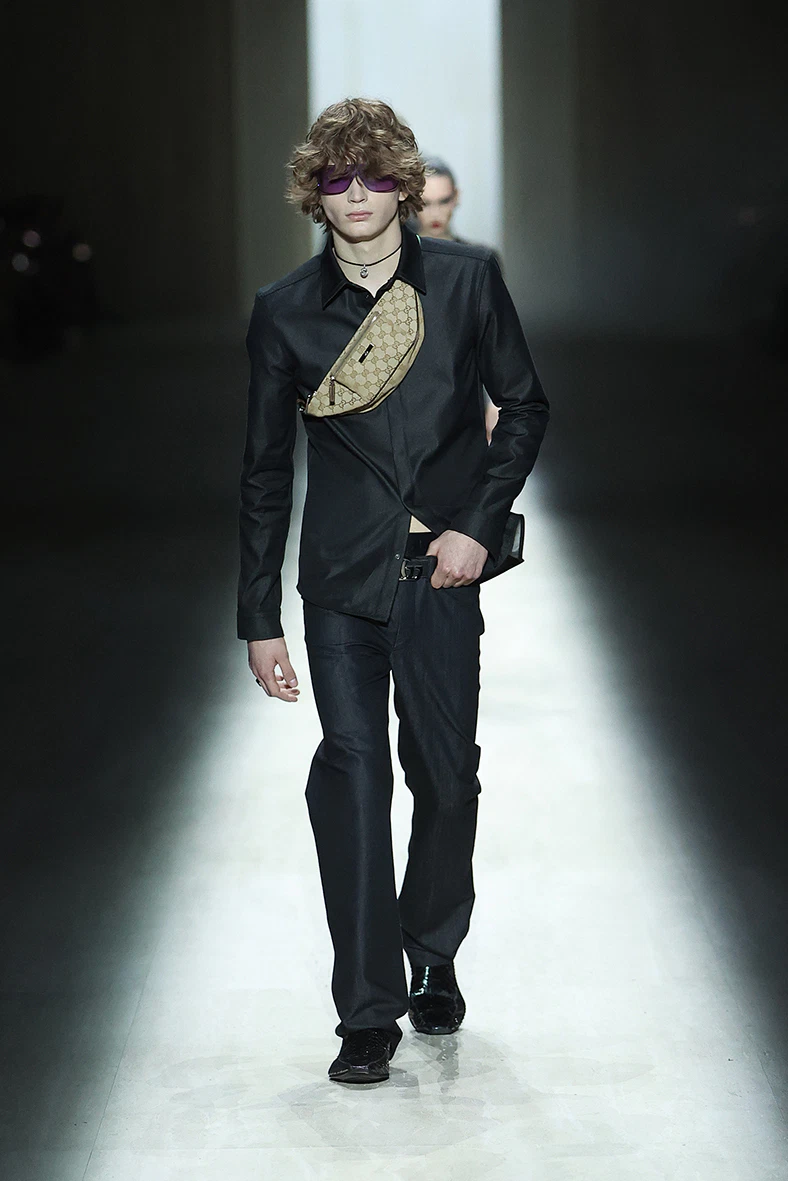
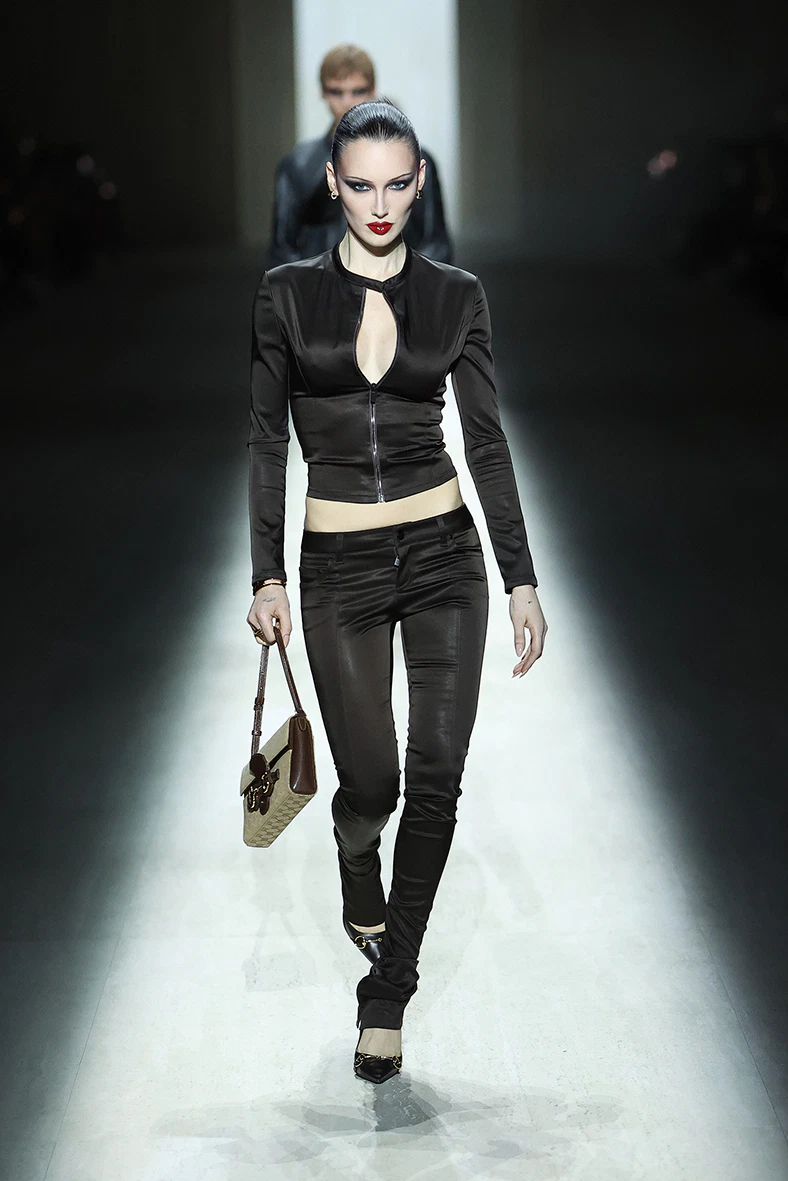
The opening look, a seamless white minidress in hosiery fabric, set a tone that was not so much about dressing a person and more about starting from a blank slate. You could almost hear the slick brush of heavy leather panels shifting with each step, the cool press of lacquered hardware glinting at the joints, as if every seam was welded into its own private shield. It felt intentional in its focus on the body and how clothes frame, follow, and expose it, a sharp departure from the lukewarm minimalism that almost sank the ship. We saw traces of Botticelli’s Primavera, but updated with a contemporary grit which felt more Berlin than Florence. It is the wardrobe of someone who has somewhere better to be, and probably someone they shouldn’t be with.
But here is the honesty: a debut is easy when you’re working with fire. The challenge isn’t whether you can make a cut outs on a sheer jersey dress look good — Tom Ford already did the heavy lifting thirty years ago. Sex sells when nostalgia falters, but when the archives dry up, the margin does too. The real question is whether this “arranged marriage” can survive the honeymoon once the well of archival support runs dry. Is there a soul behind the strategy, or are we just watching a very talented director play dress-up with a corpse?
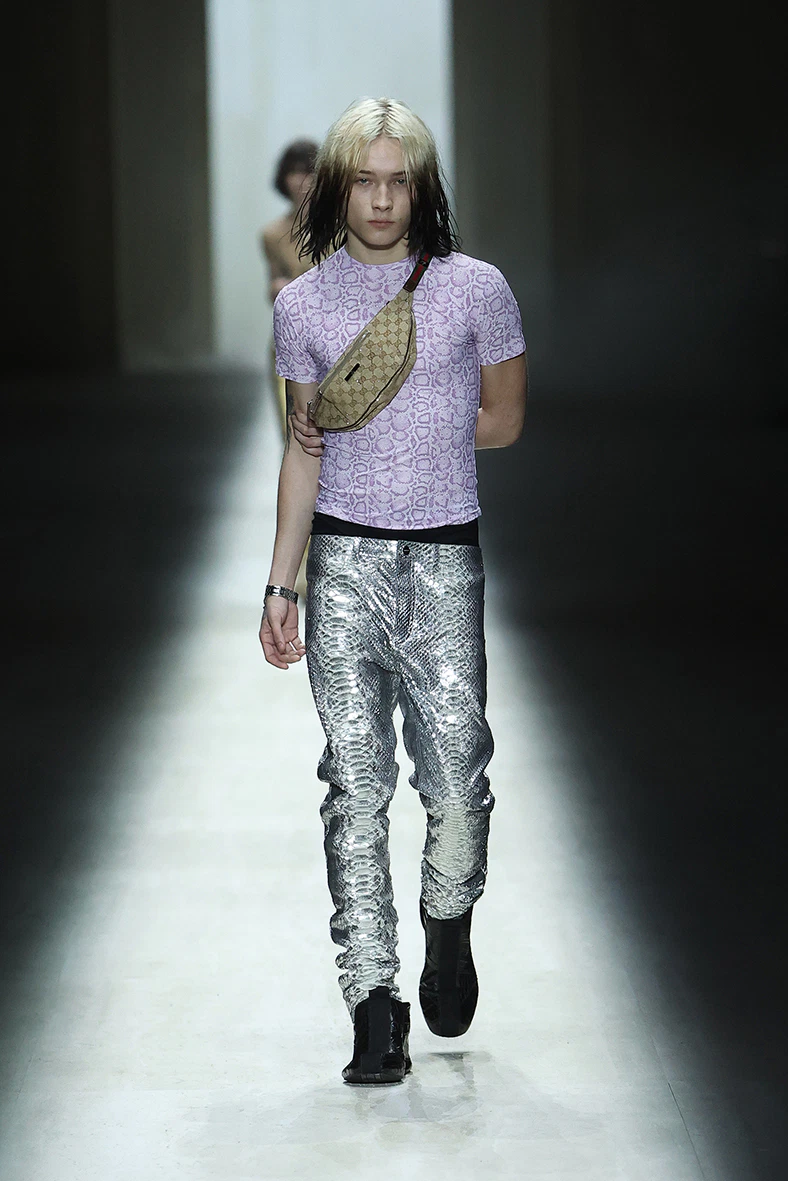
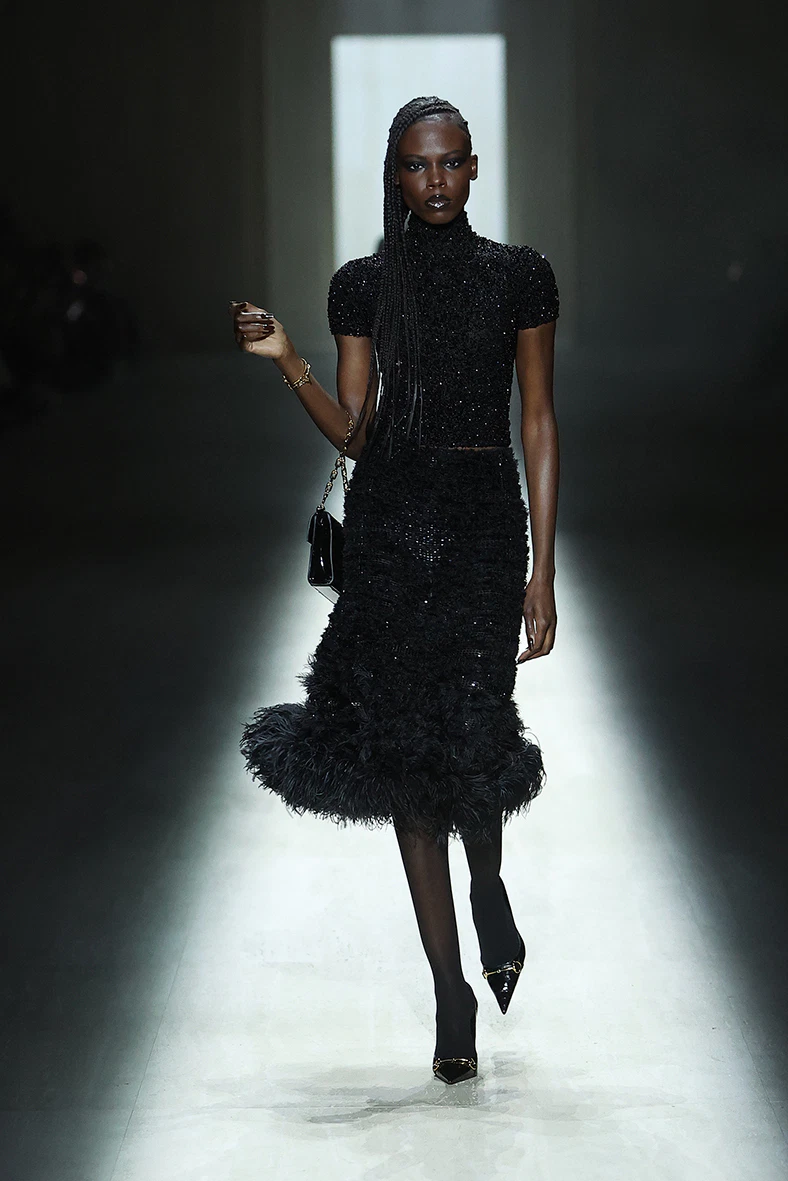
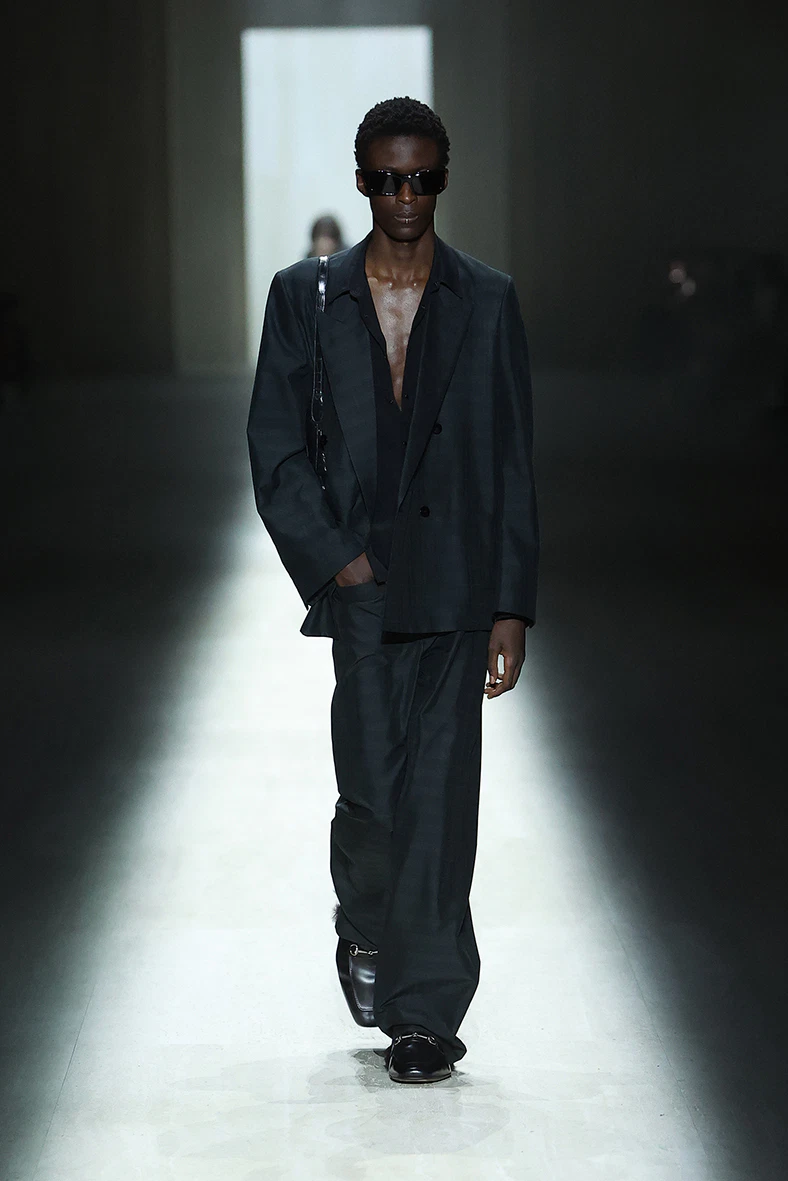
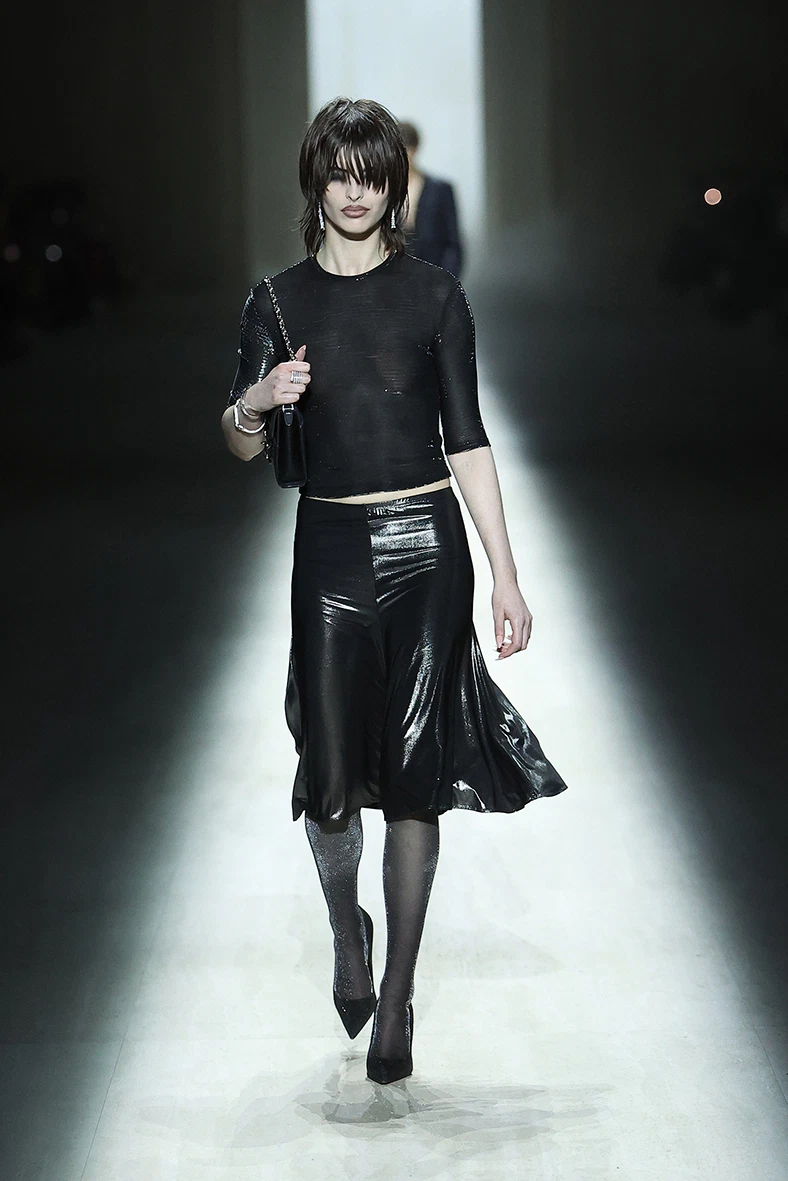
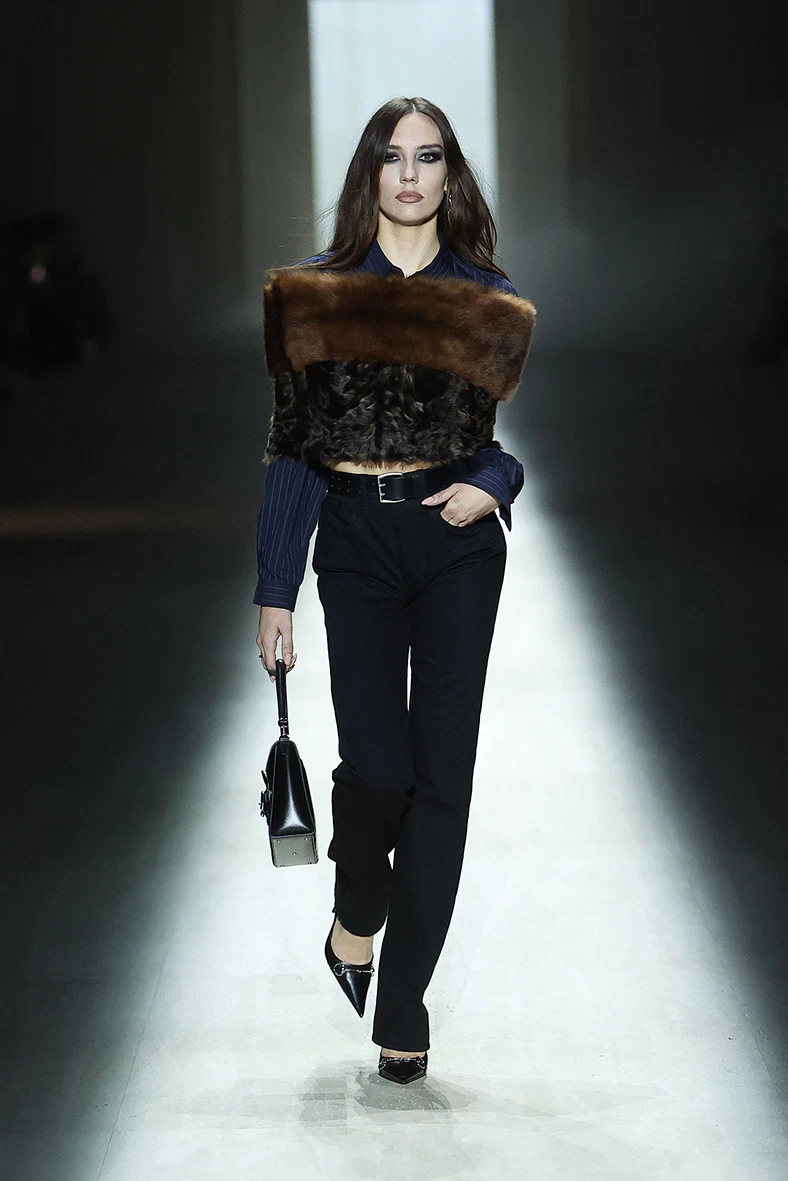
We’ve seen this gamble before. When Demna took over Balenciaga, the purists shrieked about the “death of grace,” yet he turned a dusty couture house into the most vital organ in fashion. Gucci is currently in facing that same emergency, now in the ER attended by Demna. This collection shows that, while the patient isn’t fully recovered, the pulse is now regular.
In a market currently terrified of its own shadow, a designer who has the gall to be this literal — and this unapologetically sexy — is a privilege we can’t afford to ignore. It’s a gamble, but at least the table is interesting again. For the first time in years, the “Gucci” on the label feels somewhat less like a corporate logo and more like a threat. It reminds us of the early days of Tom Ford at Gucci, where the friction was the whole point.
Ultimately, Demna’s Gucci is a reflection of where we are in 2026: tired of the new, obsessed with the “correct” version of the old, and willing to pay a premium for a feeling we recognise. If he can keep the tension high without letting it slide into parody, he might just pull off the greatest heist in Kering’s history. It isn’t a new story, but if the execution is this sharp, who cares? In fashion, as in any long-term relationship, sometimes you don’t need a soulmate — you just need someone who knows exactly how to keep you awake.
Once you are done with this story, click here to catch up with our February 2026 issue.