There is a looseness to Pharrell Williams’ vision here. Not careless, but deliberate. The collection unfolds like a walk through Central Park, where the city slows just enough for its many identities to overlap and intertwine. Tennis players cross paths with skaters, families settle into the grass, and somewhere between the Upper East Side and Harlem, style stops announcing itself and begins to register more quietly, shaped by use rather than intent.
That shift carries through the clothes. Tailoring remains, but it is worn with less insistence, opened up to something more instinctive. Jackets are cut lighter, often paired with pieces that feel incidental rather than resolved. There is a sense of “pre-dandyism” at play, where elegance is still forming, still unsettled. A Prince of Wales check lands on a technical blouson. Denim takes on the posture of a suit. Workwear borrows from tailoring, and tailoring returns the favour. It is less about constructing a look than letting it settle.
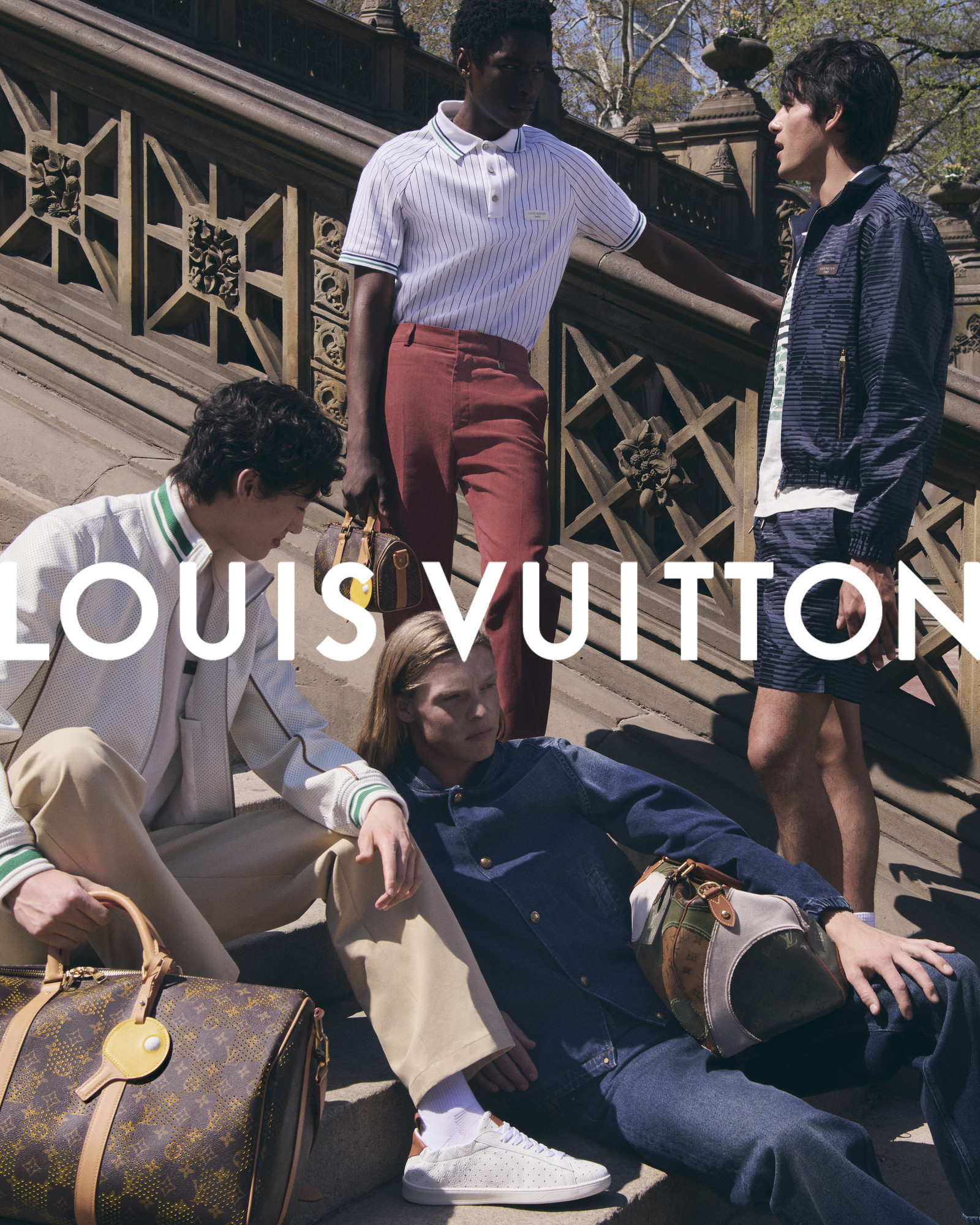
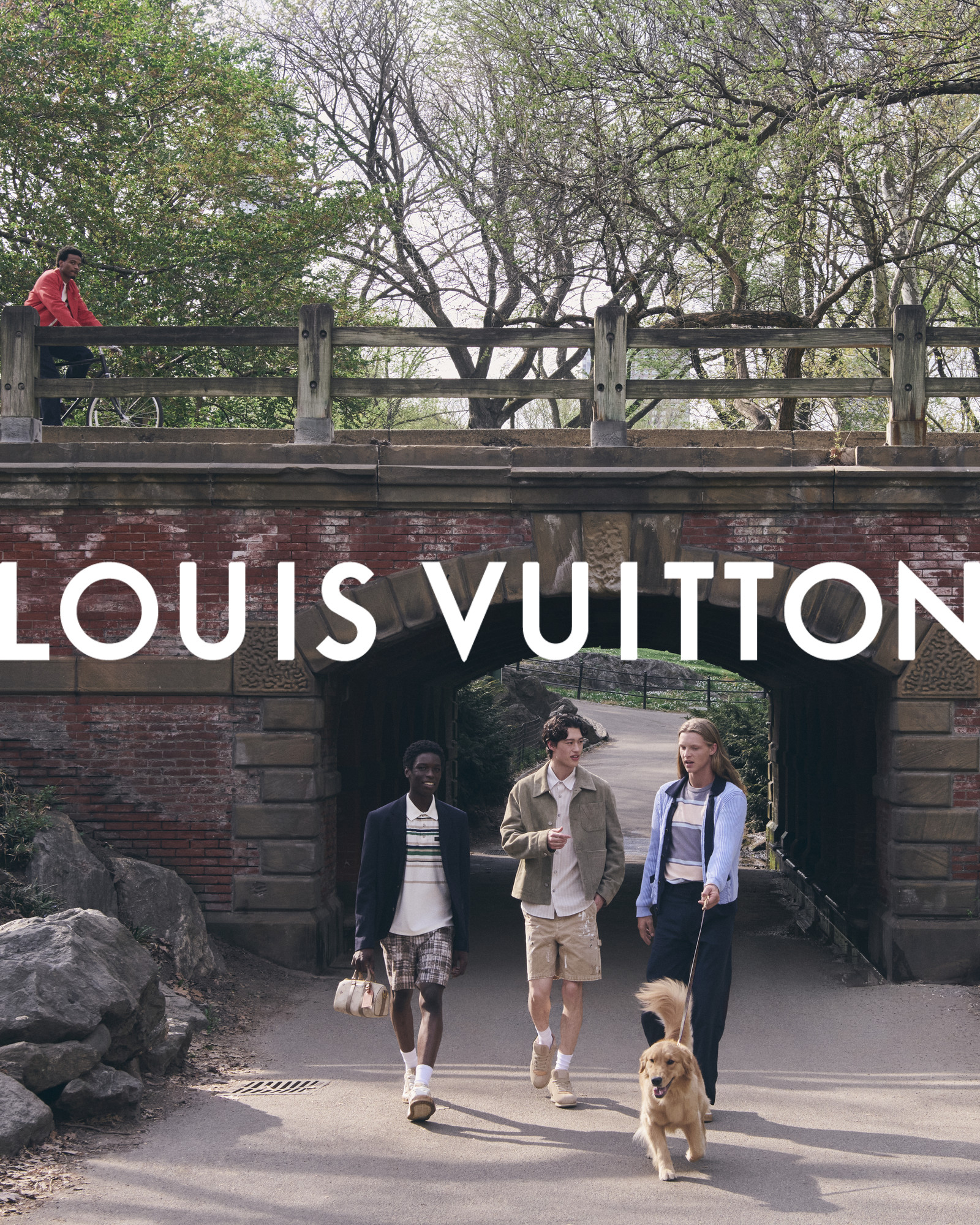
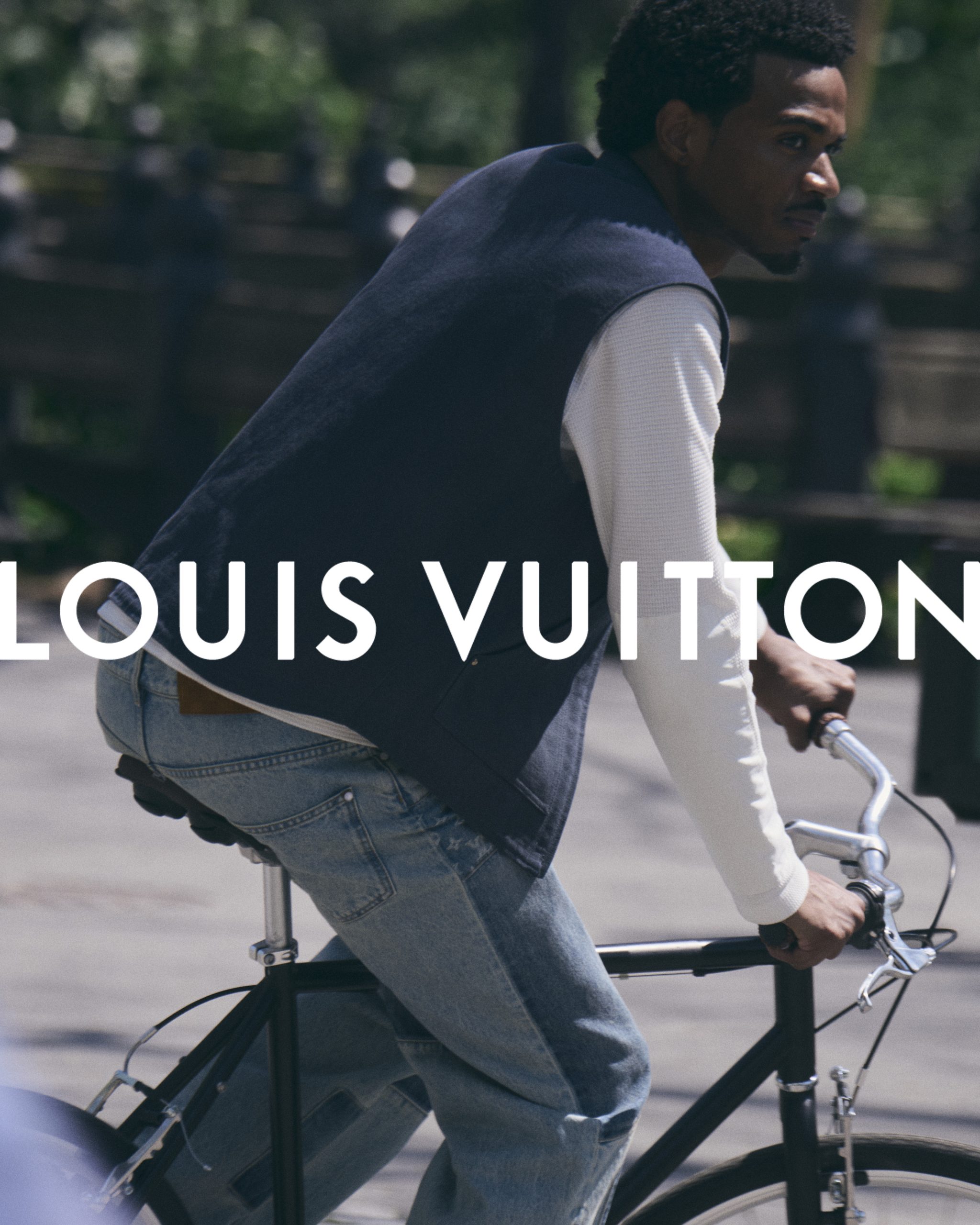
The palette follows that same rhythm. Blues, taupes, and soft neutrals sit alongside interruptions of texture — raffia knits and paint-splattered denim propose surfaces that feel handled rather than pristine. Even the Monogram shifts in tone. It fragments into stripes, dissolves into jacquards, or sits closer to the fabric rather than asserting itself on top. The identity remains, without the need to assert itself.
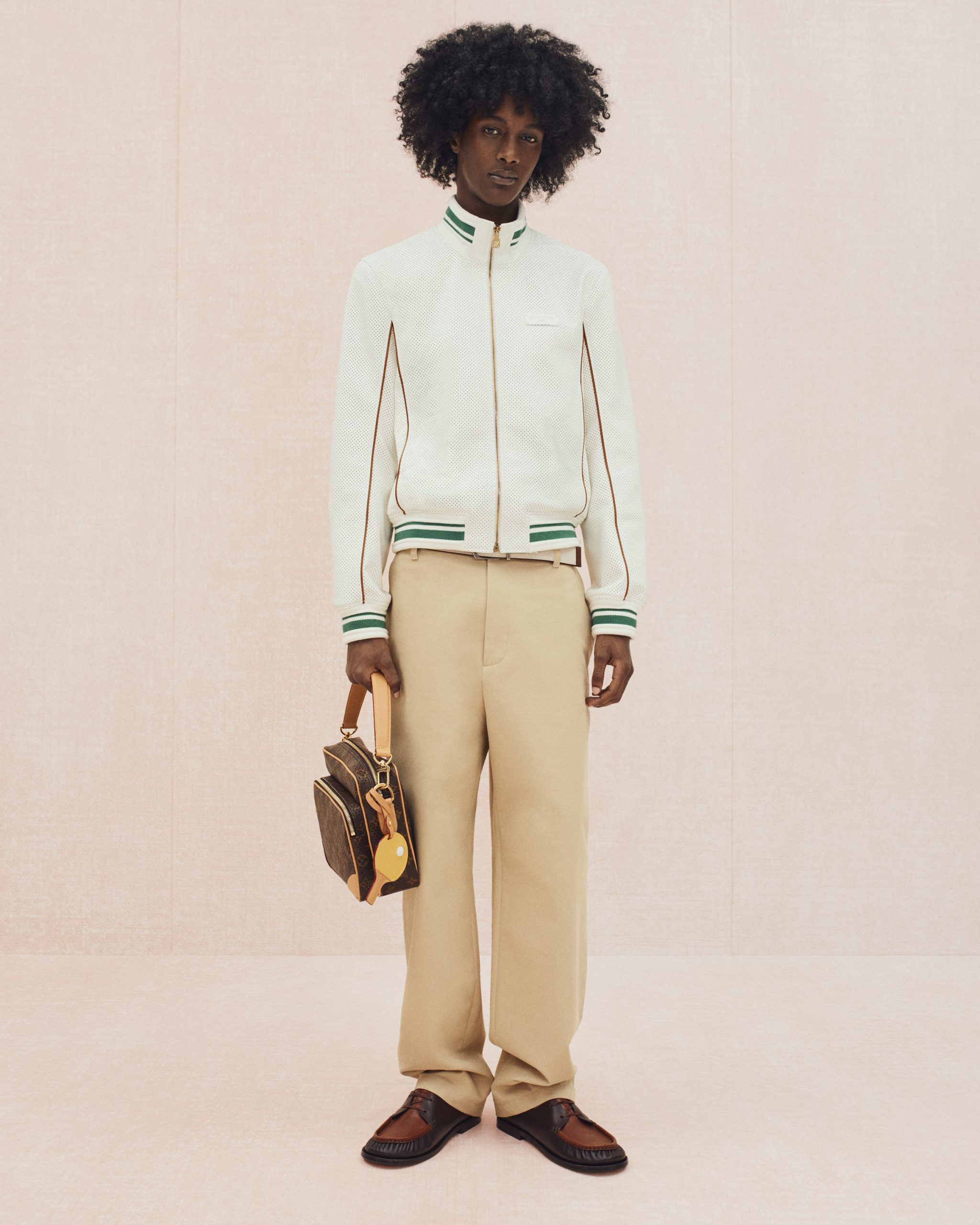
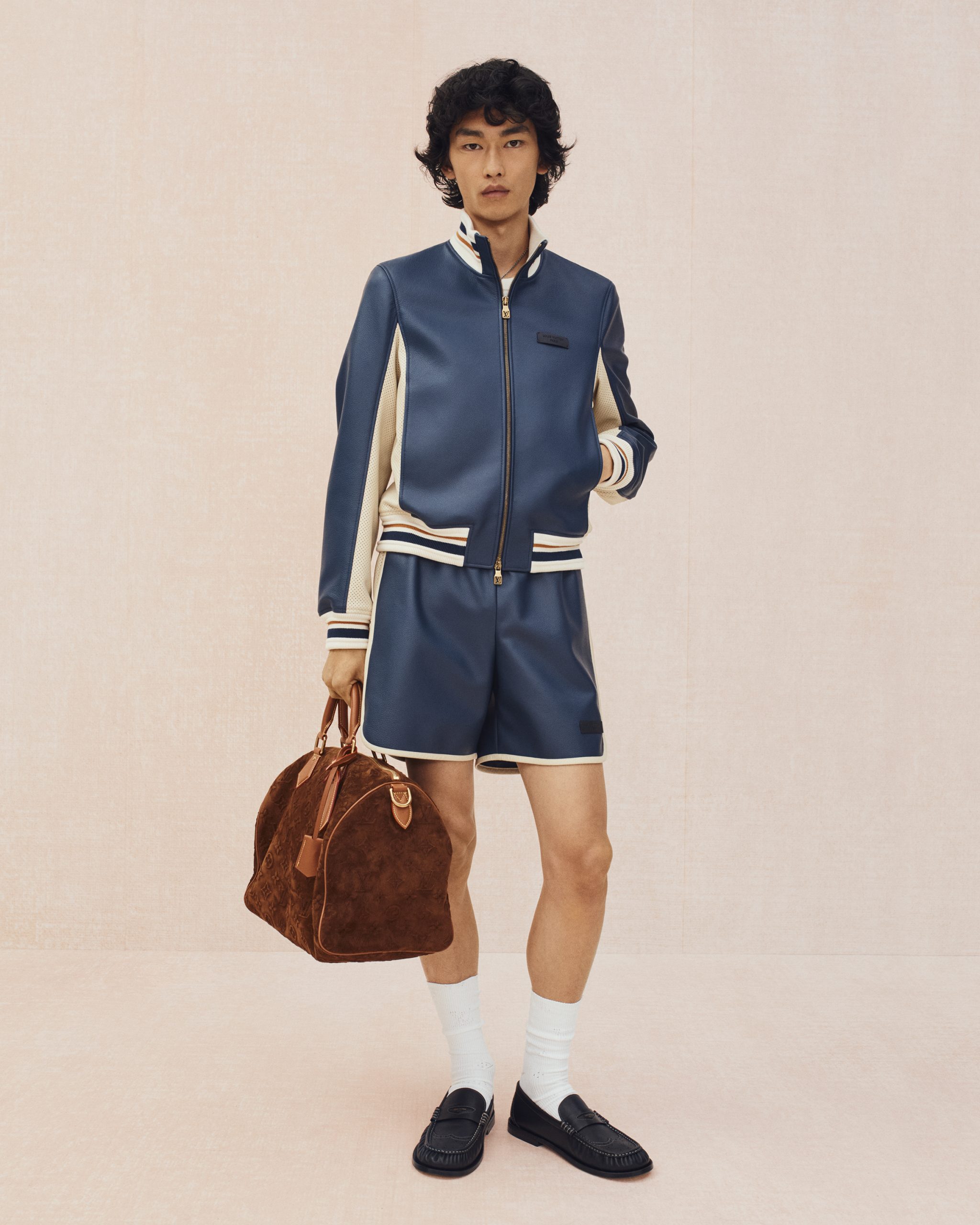
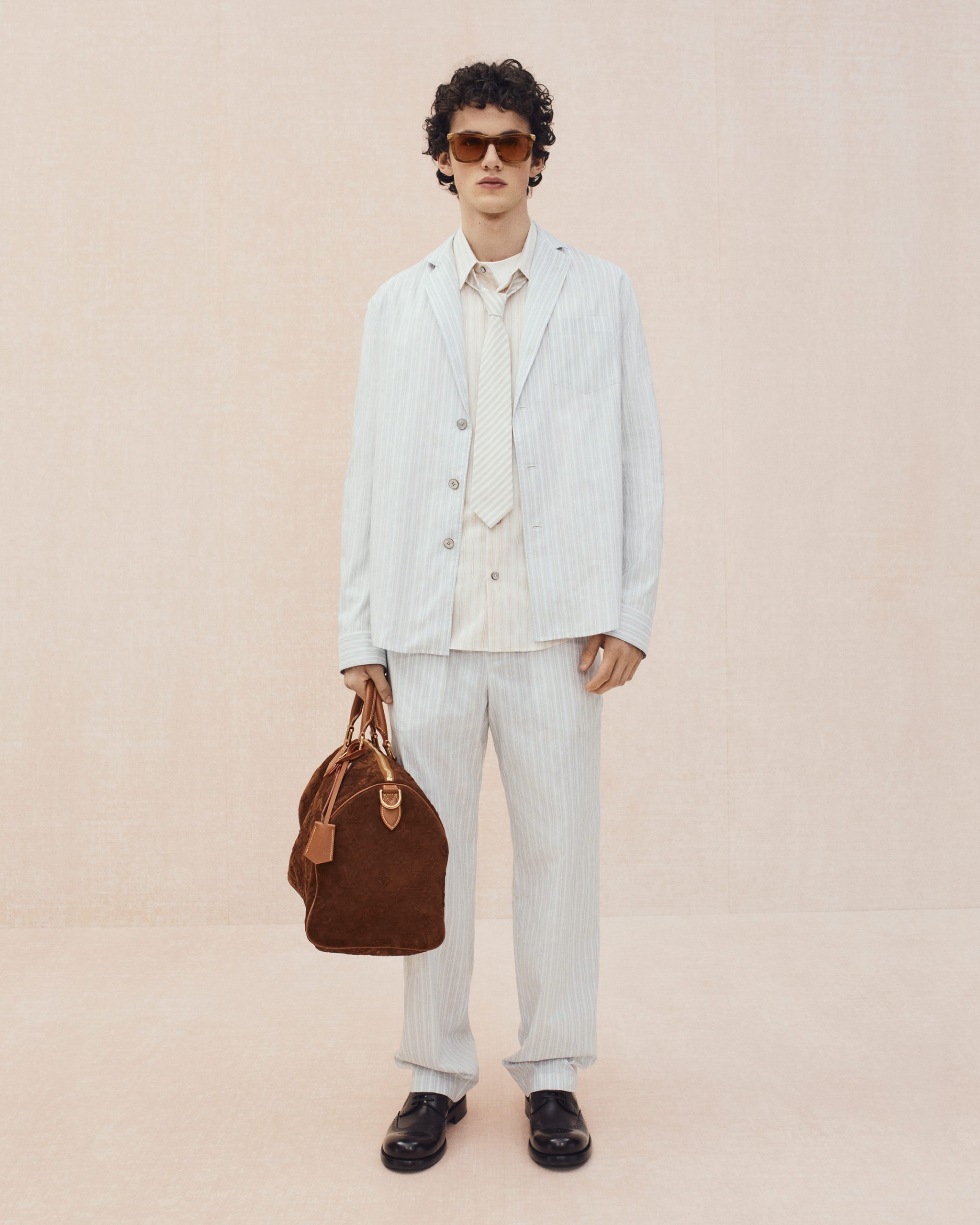
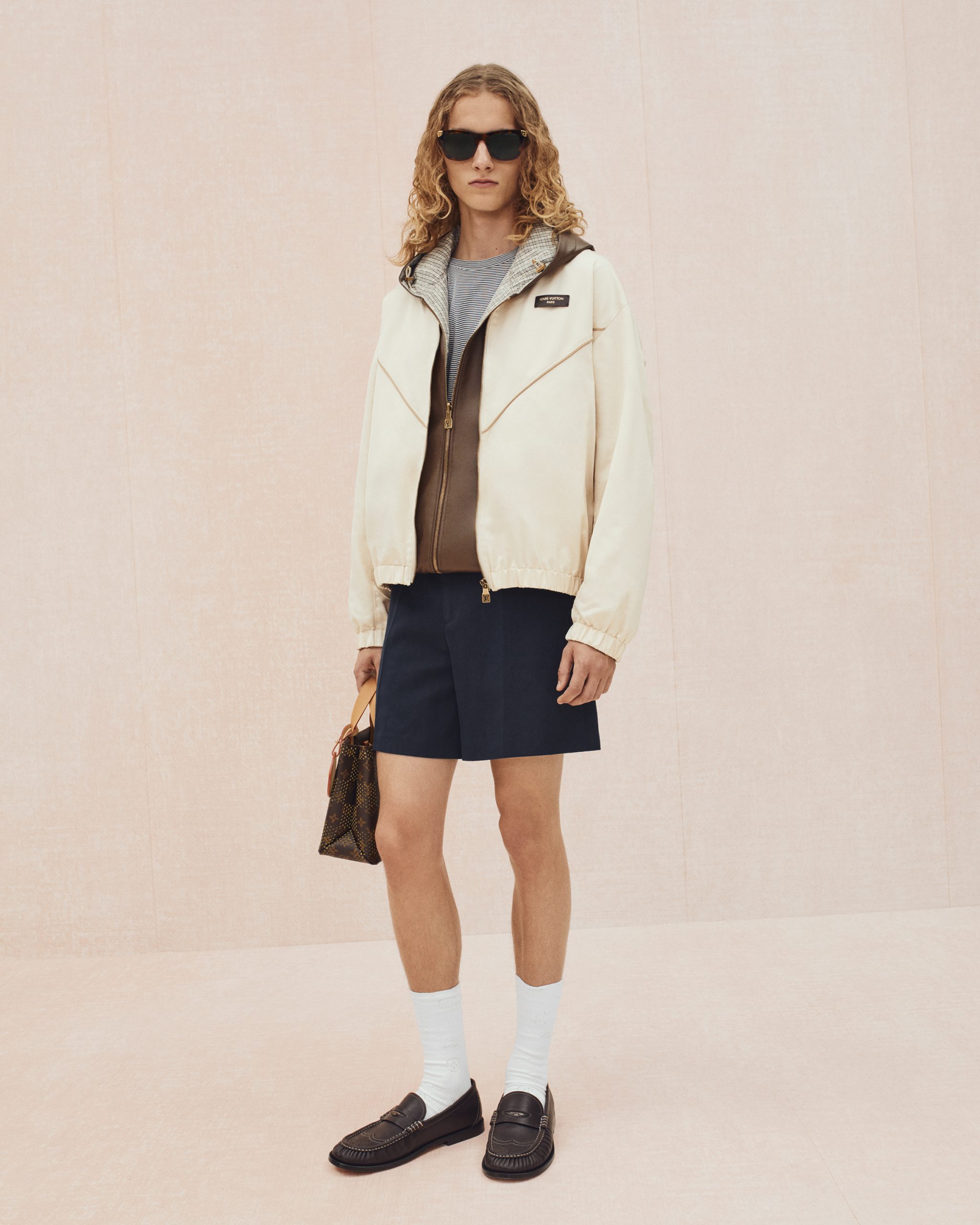
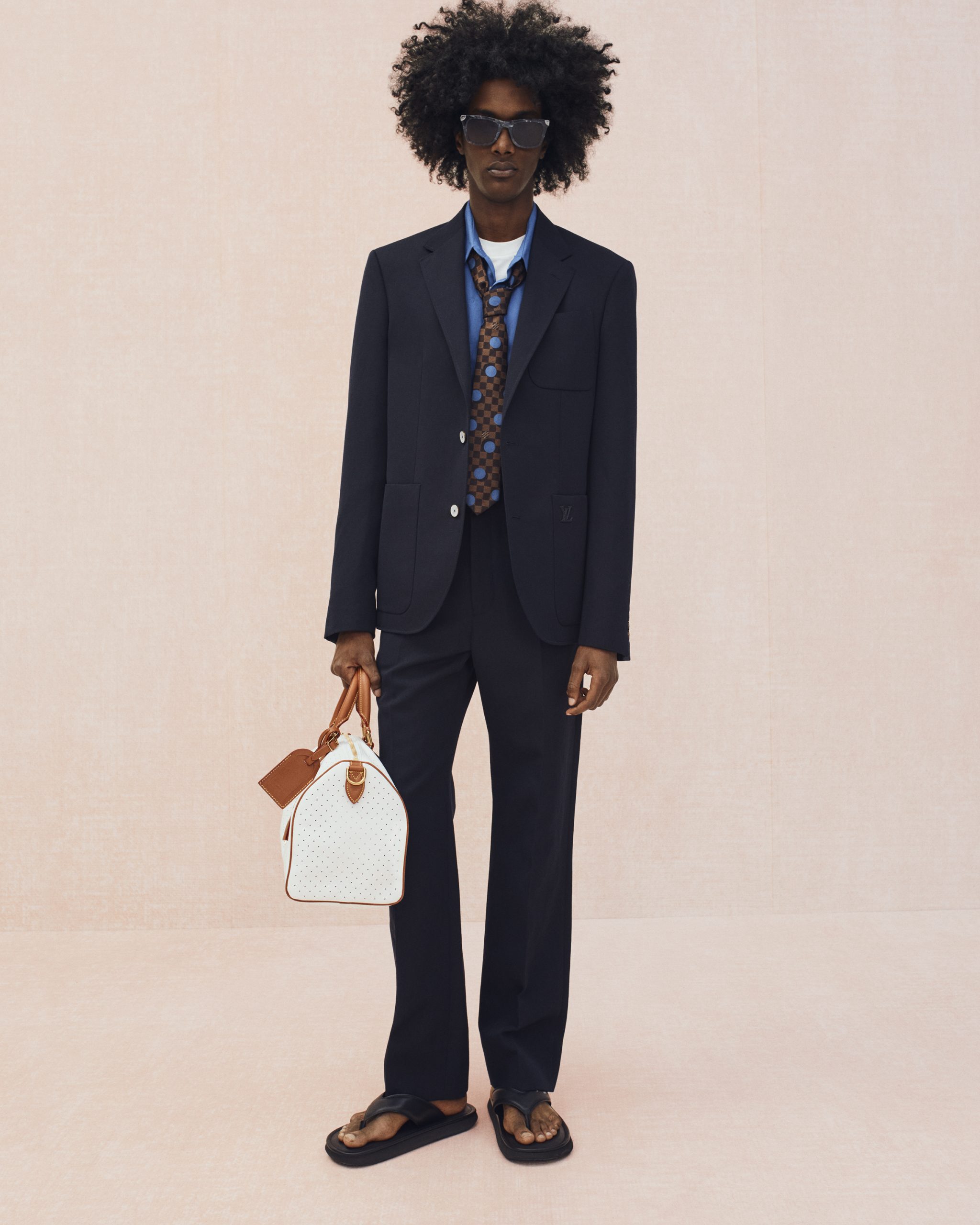
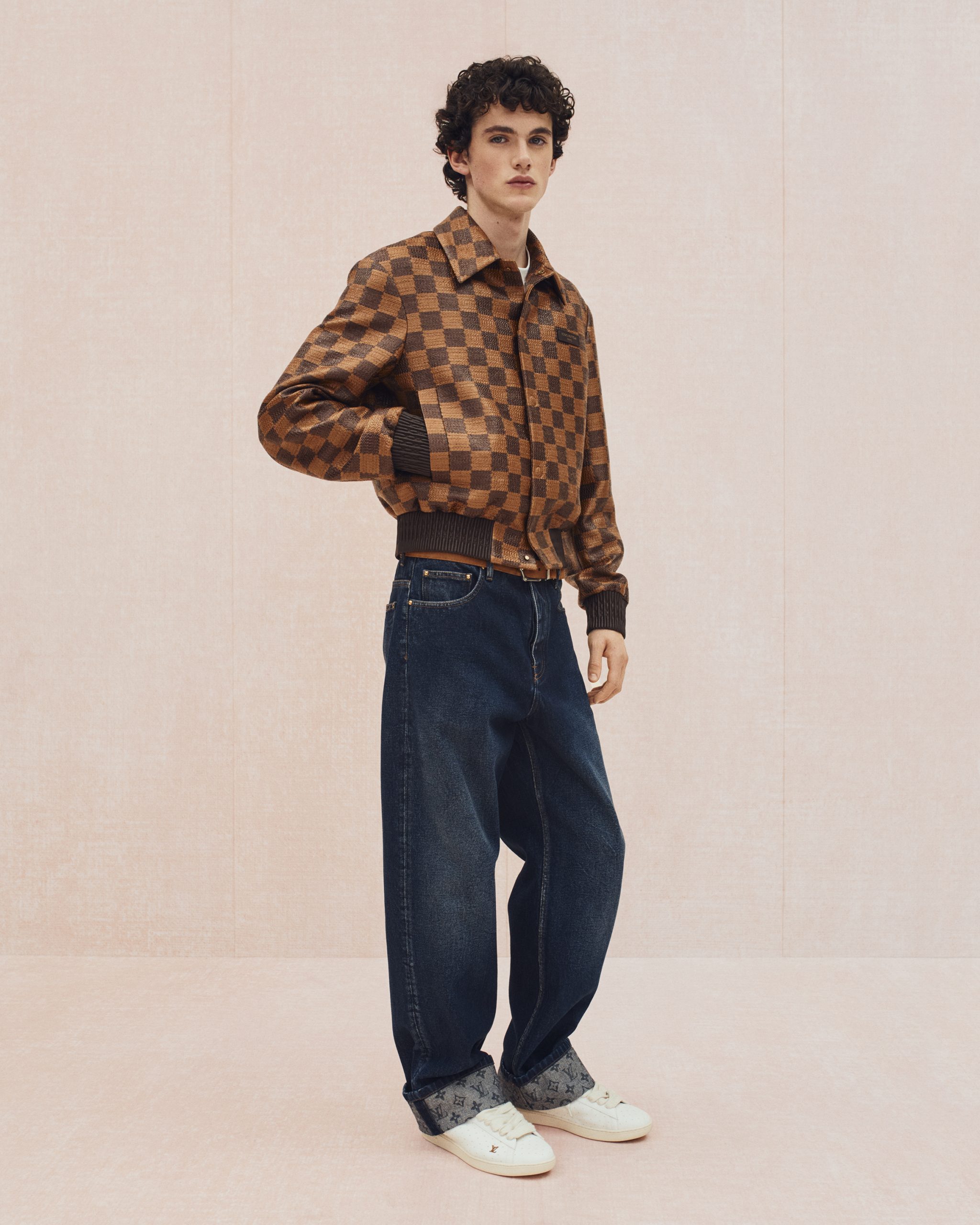
That restraint becomes more precise in the leather goods. This is where the collection finds its footing. Familiar forms return, but with clearer intent. The Monogram Surplus appears in beige coated canvas across trunks, totes, and everyday bags, while patchworked versions layer enlarged motifs over natural bases with an irregularity that feels intentional rather than decorative. Perforated Monogram Grid designs reveal flashes of colour beneath the surface, introducing depth without being loud.
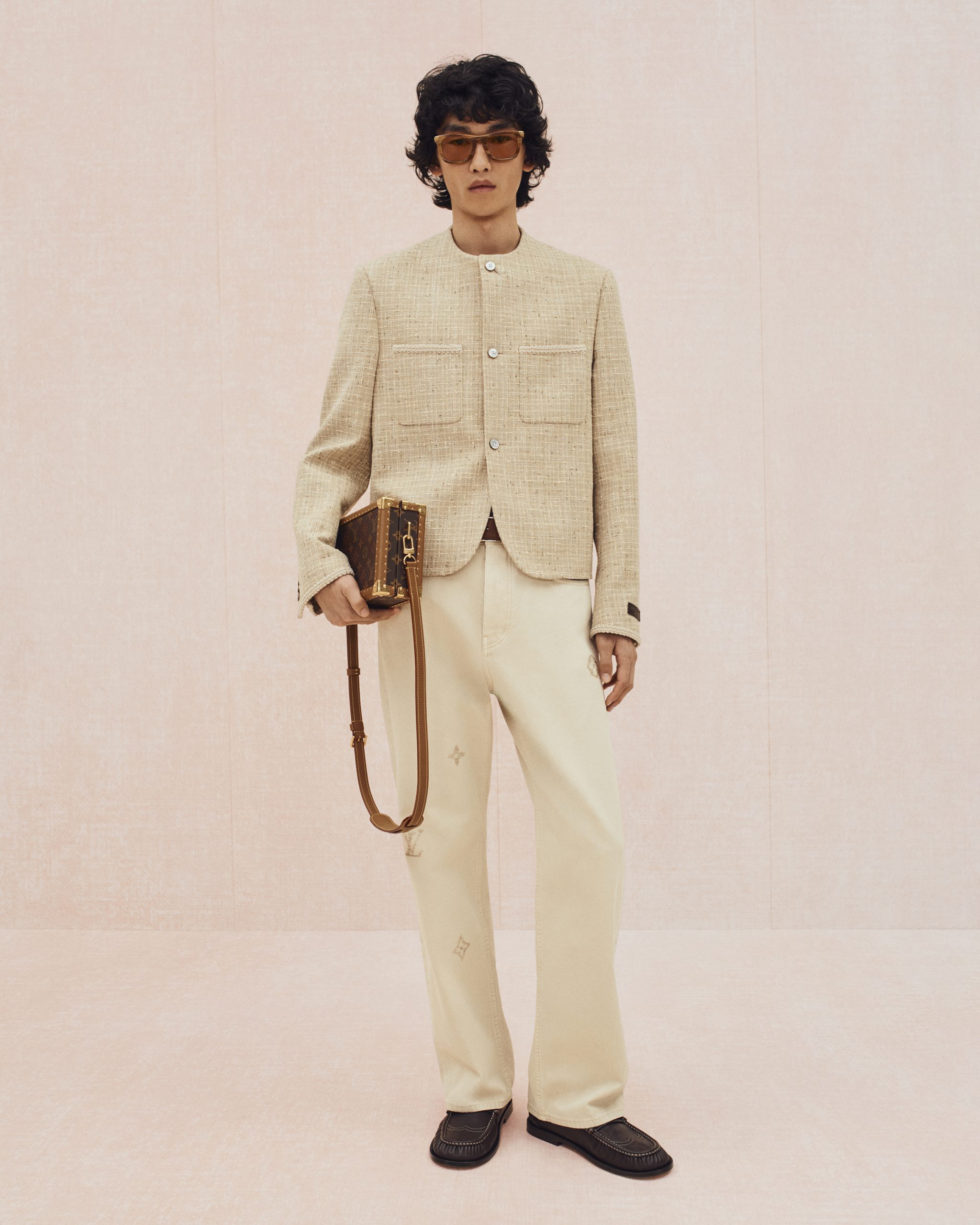
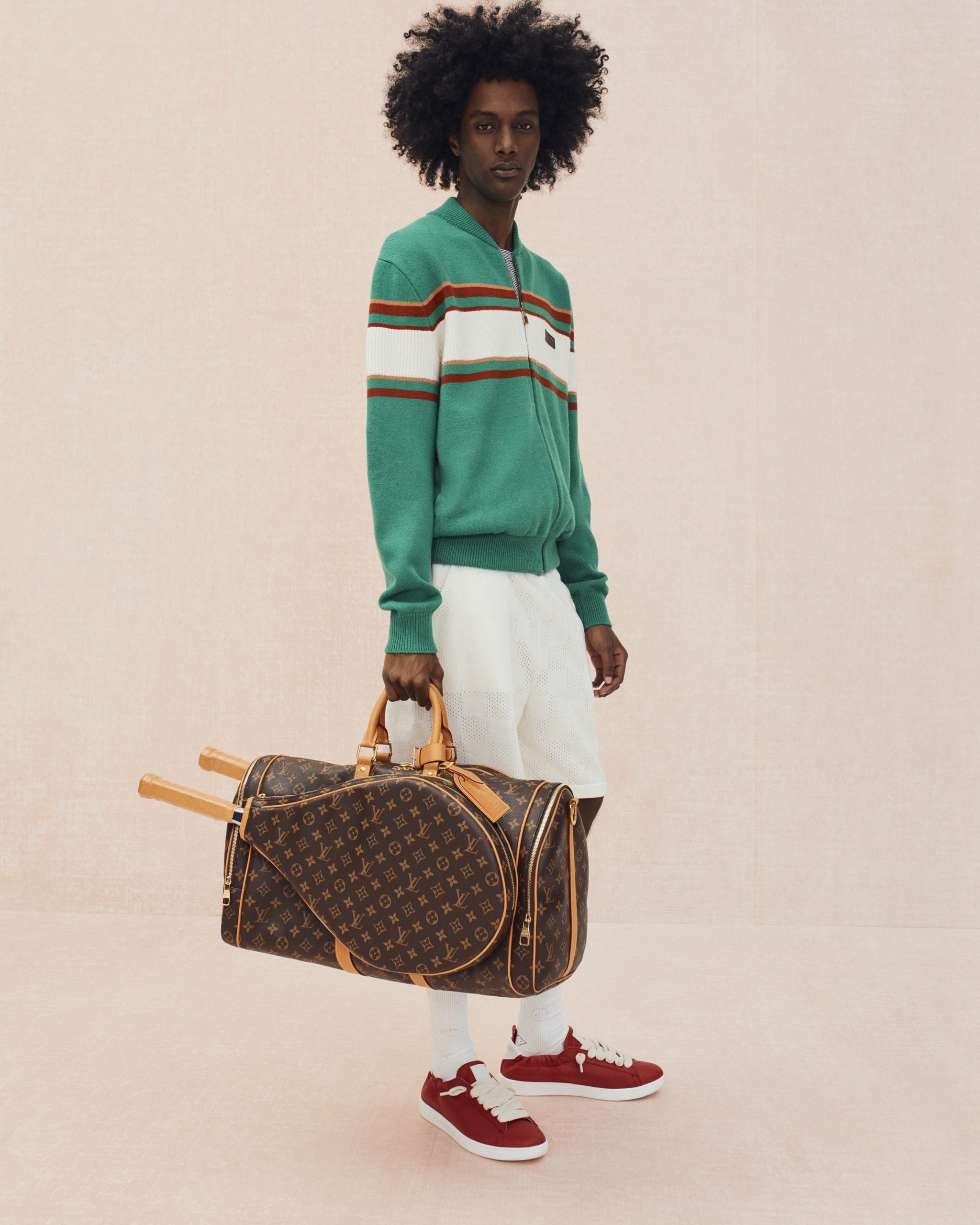
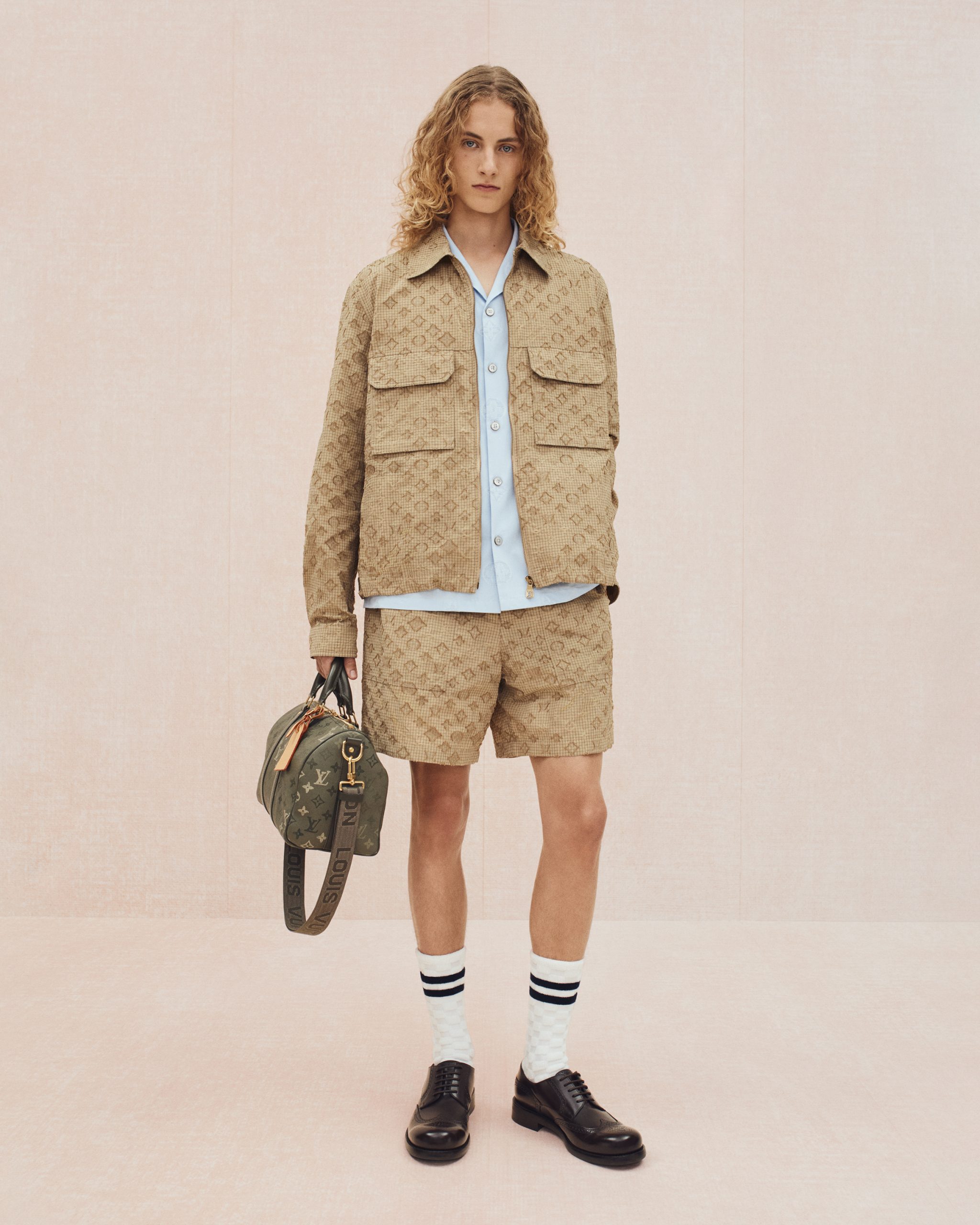
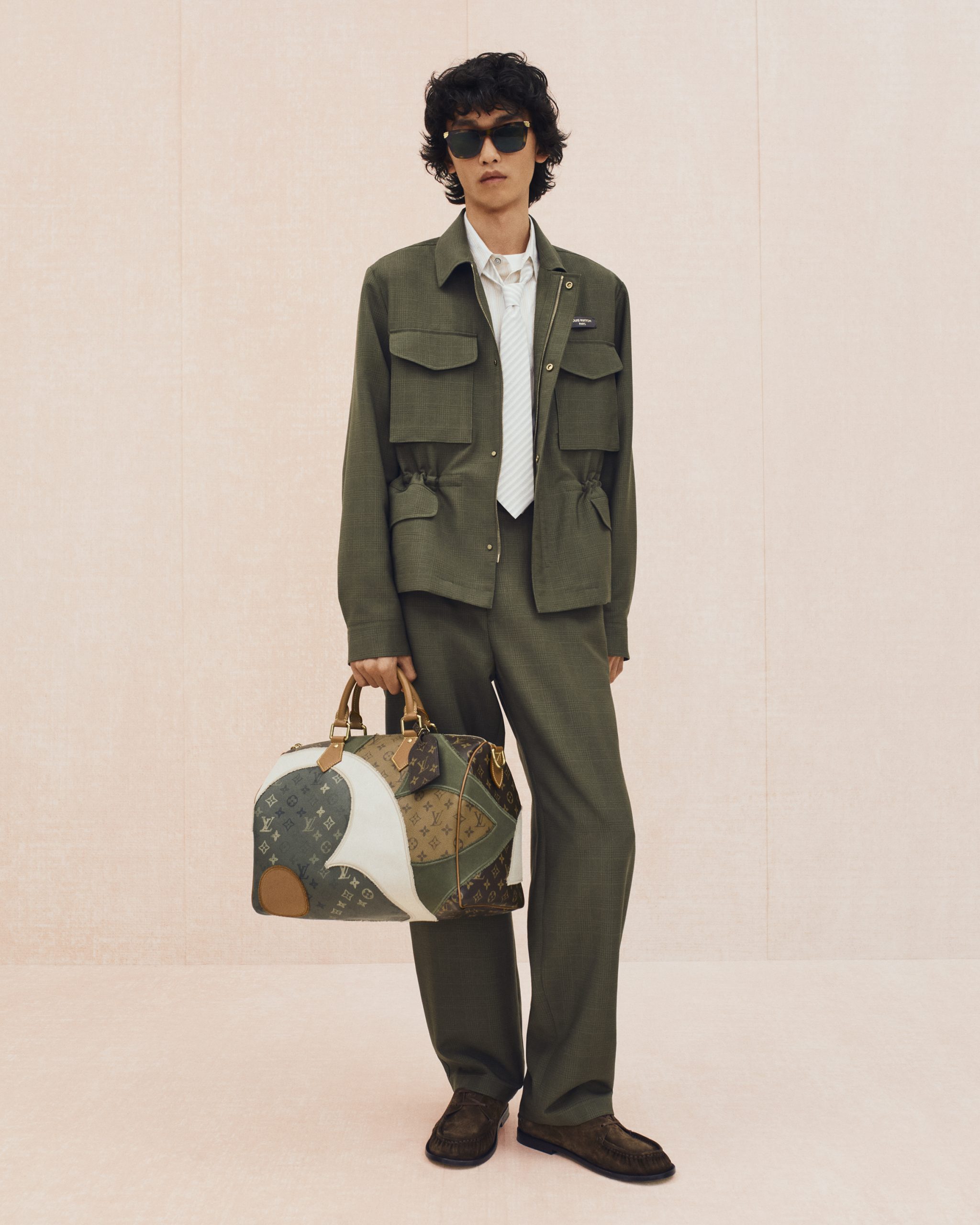
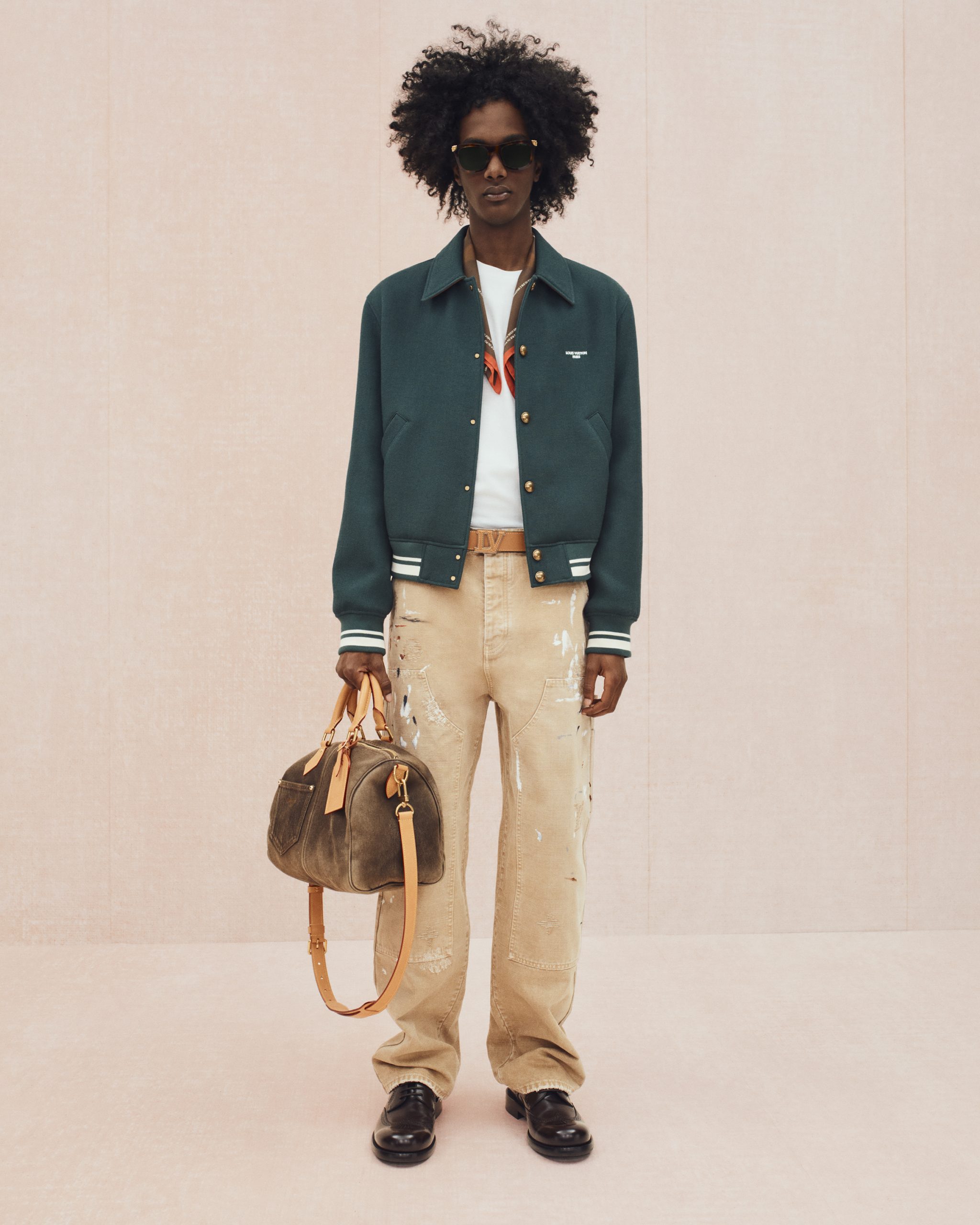
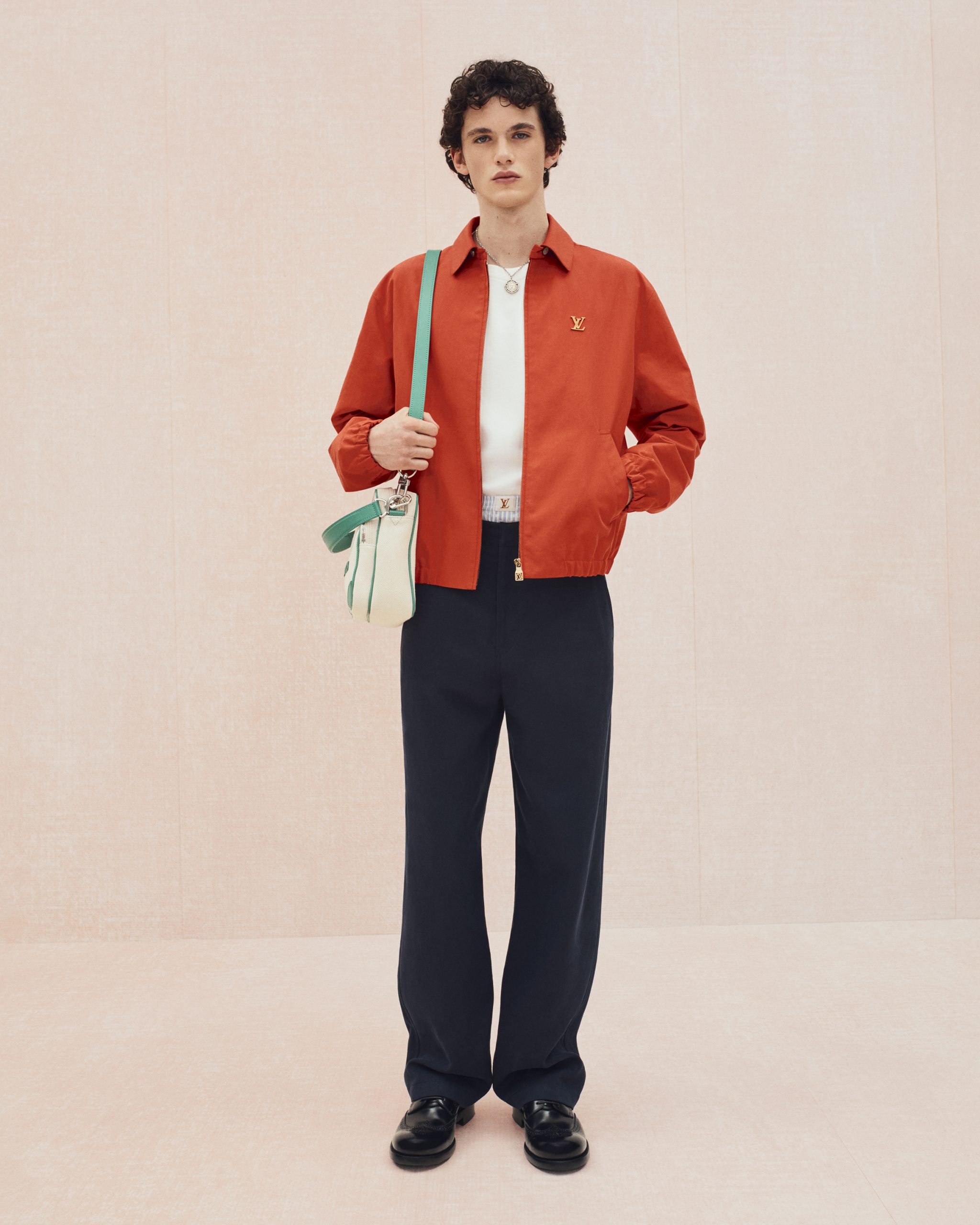
A quieter sense of play runs through it. Raffia Damier totes arrive with small charms, denim finishes echo worn-in garments, and softer constructions temper the rigidity typically associated with leather goods. Even the icons shift slightly. Speedy bags appear in suede or washed denim, while newer silhouettes like the Flaneur backpack extend a charm that is pared back.
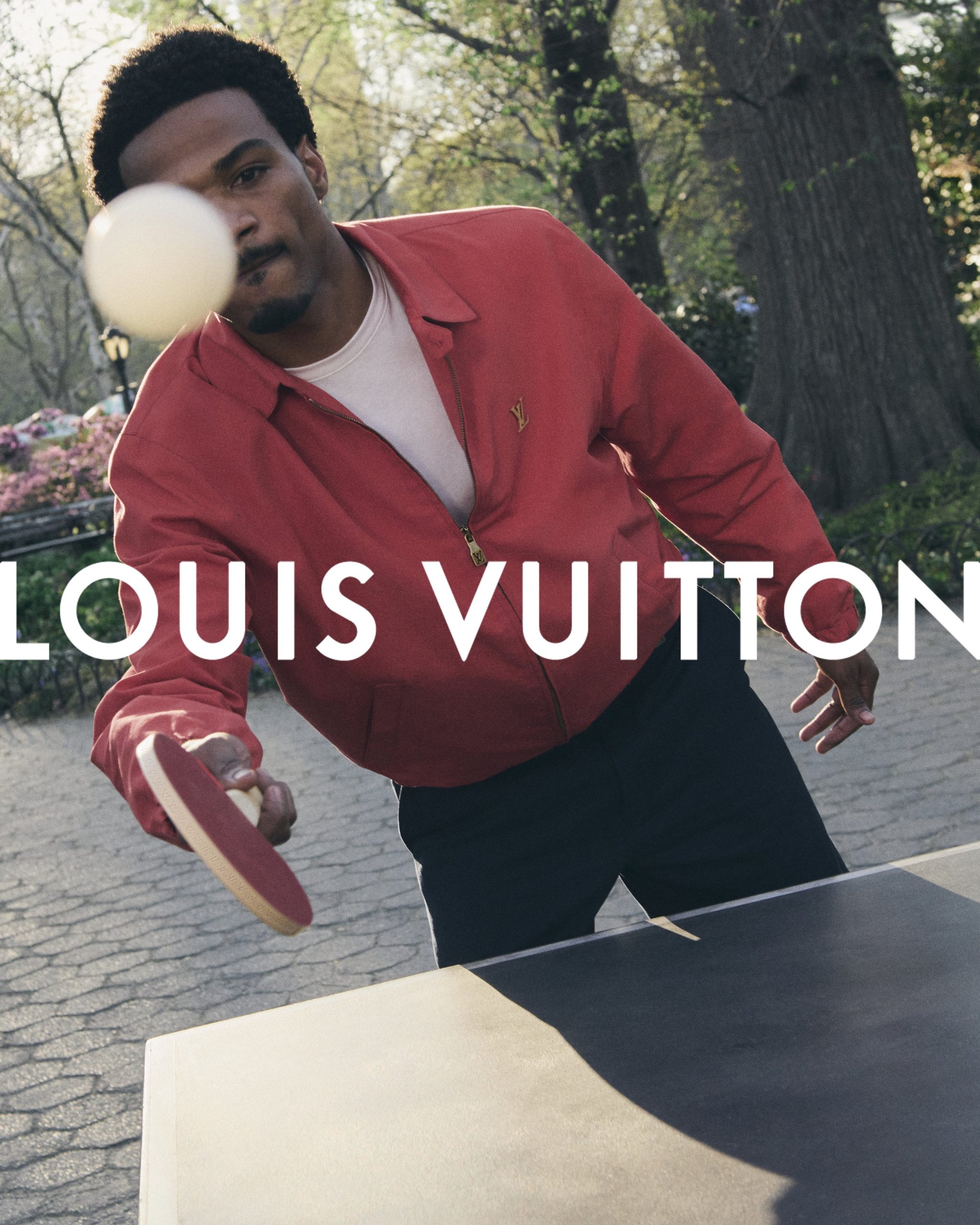
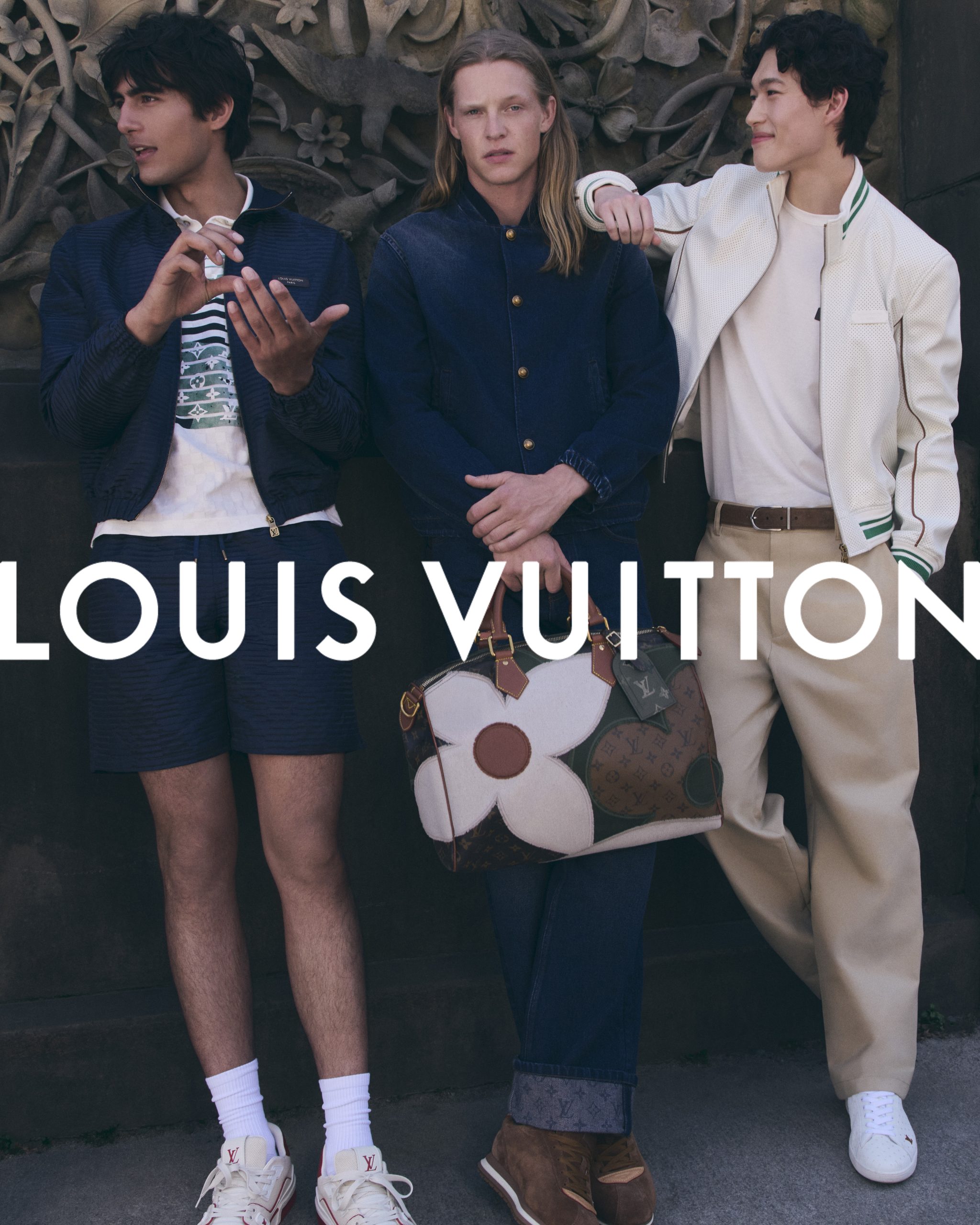
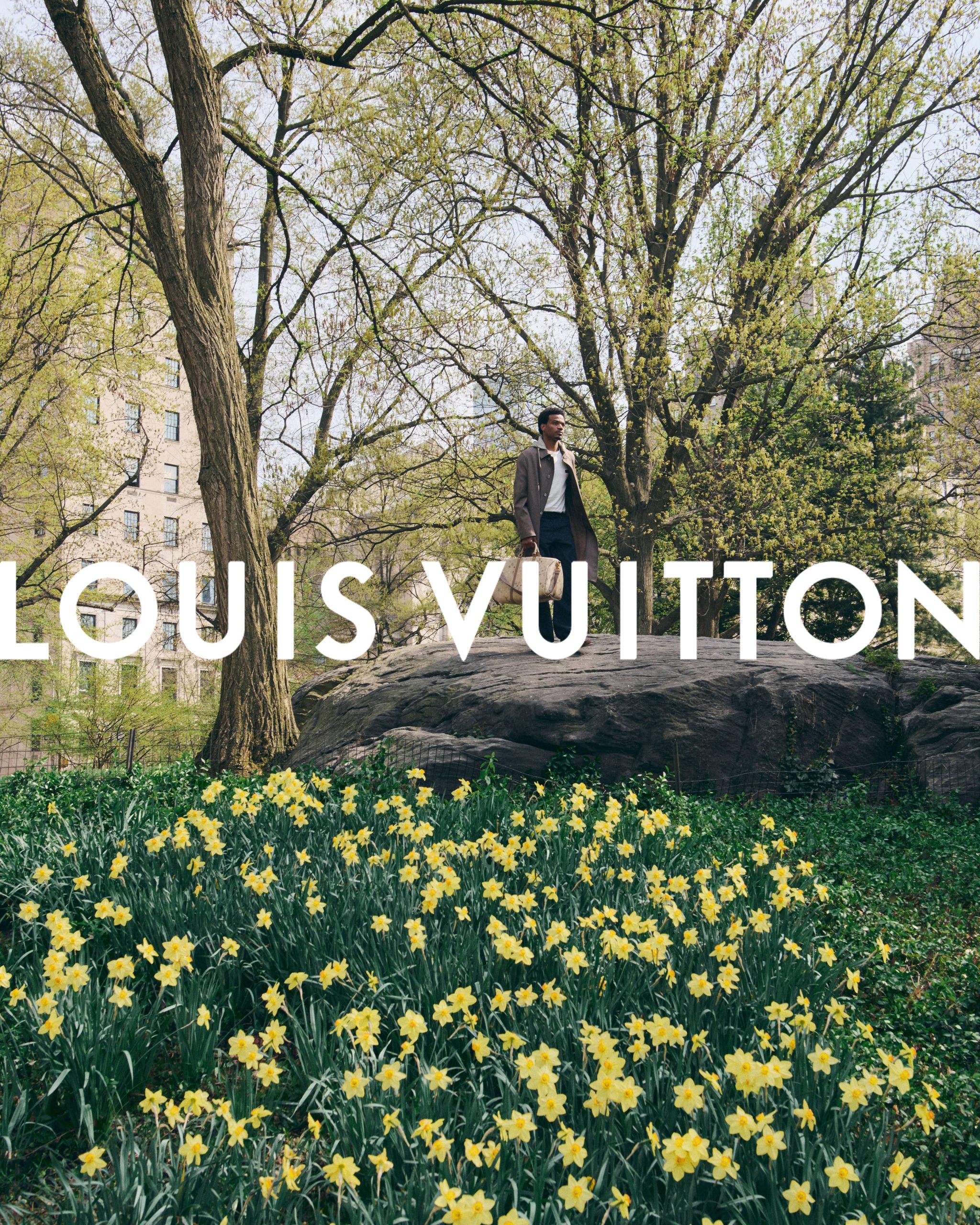
What emerges is not a fixed idea of the Louis Vuitton man, but one that feels more open, less prescribed. Like the park itself, the collection is shaped by movement, by overlap, by moments that do not need to resolve to feel complete. It does not dictate how to dress. It allows for interpretation.
Once you are done with this story, click here to catch up with our latest issue.