Whether it is a watchmaker commemorating its founding year, a stellar model or a good cause, the watchmaking community loves an anniversary or two. New brands from all over the world join the burgeoning watch industry every year with promise, ambition and claims of innovation. Yet every so often, the industry pauses to look back, not out of nostalgia but because certain creations have earned the right to celebrate and be celebrated.
Given that watches are made to measure time, there is something poetic about the rarefied few that have endured time itself to become markers of time. Most watches are relegated as products, but a handful cement their status as true icons. Some watchmakers fade into distant memories while others continue evoking memories or, better yet, conjuring dreams, at the zenith of watchmaking.
Certain anniversaries celebrate commercial success while others honour technical achievements. There is another form of celebration, albeit in a more meaningful way, and that is to recognise cultural permanence, especially in an age of transcience and impermanence. This year, jubilation is in order as we salute the centenaries of two of Hans Wilsdorf’s brainchildren and Gérald Genta’s masterful duo.
The World Is Our Oyster
The story of Rolex has always been one of human ambition, and it all began with Hans Wilsdorf in 1905. As with many great visionaries, Wilsdorf spotted a gap in the market: reliable and accurate wristwatches that were equally elegant as they were functional. That put him on the quest for chronometric precision even during an era when common time was not properly defined. In 1910, Rolex was awarded the Swiss Certificate of Chronometric Precision from Bienne’s Official Watch Rating Centre. It was later recognised in similar fashion in 1914 when the Kew Observatory awarded a Rolex wristwatch a class “A” precision certificate. After realising half of what he sought to achieve, Wilsdorf turned his attention to conquering reliability, which inadvertently paved the way for the Oyster in 1926. Wilsdorf devised a system that screwed down the bezel, case back, and winding crown against the middle case, creating a hermetic seal that rendered the watch dust- and water-proof. The storied invention was not the end of a series of research and development but the start of a revolution. Wilsdorf’s “proof by trial” philosophy meant that the watches had to be subjected to real-world testing, and, given the Oyster’s claim of waterproofness, a water-based challenge was the true litmus test.
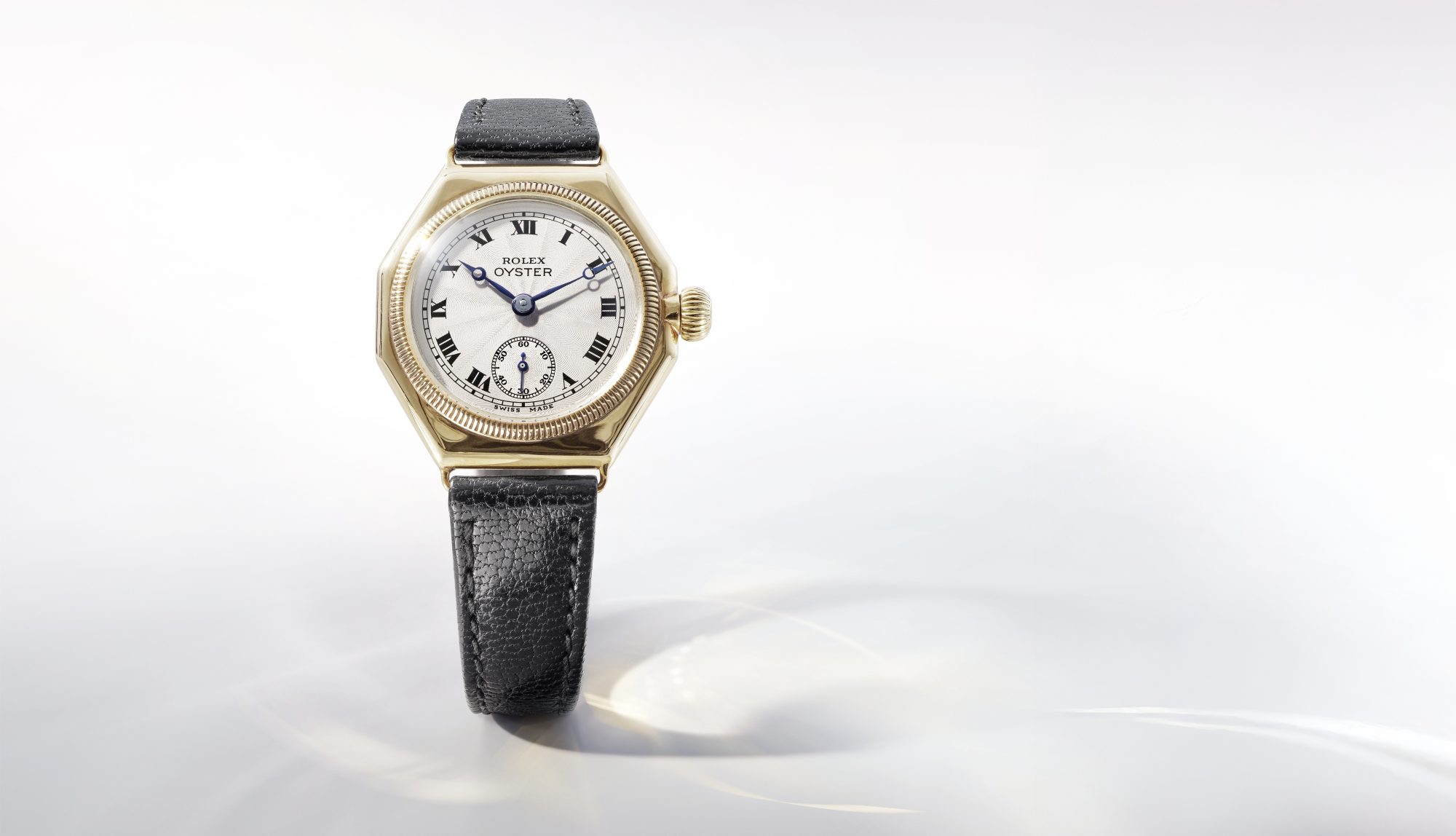
In 1927, Mercedes Gleitze’s attempt at swimming the English Channel presented a perfect storm. After her successful crossing on 7 October 1927 was refuted by the Channel Swimming Association, Gleitze announced to the world that she would attempt the Channel again two weeks later. Wilsdorf capitalised on the media spectacle and provided Gleitze with the newly invented Oyster wristwatch to wear during her second swim, which survived the entire crossing in freezing conditions. The feat solidified and demonstrated Rolex’s claim to waterproof reliability and marked the start of its numerous enduring associations with exceptional individuals. From Lord Clydesdale and Lieutenant-Colonel Stewart’s flight over Mount Everest in 1935 to Sir Malcolm Campbell’s World Land Speed record-breaking feat in 1935 to Sir Edmund Hillary and Tenzing Norgay becoming the first to scale Mount Everest and the Deepsea Challenges in 1960 and later in 2012 with James Cameron, the Rolex Oyster has been part of these successful expeditions.

Rolex unveiled the Oyster Perpetual 41 in yellow Rolesor to mark the occasion of the Oyster’s centennial. The watch’s predominant Oystersteel construction is accented by a yellow gold bezel and crown. Other commemorative details include the 100-digit stamp on the crown below the coronet insignia, the “100 years” inscription replacing “Swiss Made” on the dial, and Rolex’s name and small pad-printed squares around the minute track, all printed in the brand’s emblematic shade of green.
A Daring Spirit
Contemporaneously, Hans Wilsdorf trademarked the name “The Tudor” in 1926, the same year the Oyster was successfully developed. His vision was to offer reliable timing at moderate prices, and it marked the beginning of a brand born to dare. The brand’s enduring “Born To Dare” ethos today may be a modern slogan, but its spirit has blazed for a century, since the very beginning.
One of the defining symbols of the daring spirit emerged in the turbulent 1930s when unprecedented growth was halted during the Great Depression. The brand adopted the Tudor Rose from the House of Tudor, which shaped England’s history, and it represented Wilsdorf’s philosophy for Tudor. The rose symbolised refinement while the surrounding shield represented resilience. That same resilience paved the way into the 1940s when Montres Tudor SA was established as an independent company. The defining chapter in 1946 was not mere happenstance but a calculated move following the devastating years of war. The promises of a better tomorrow glowed bright as societies and industries rebuilt with cautious optimism. Demand for reliable watches at affordable prices soared, and Tudor capitalised. Armed with the formidable Oyster, Tudor’s independence was a declaration of its identity as the brand charted its trajectory with individuals who ventured beyond conventional boundaries.
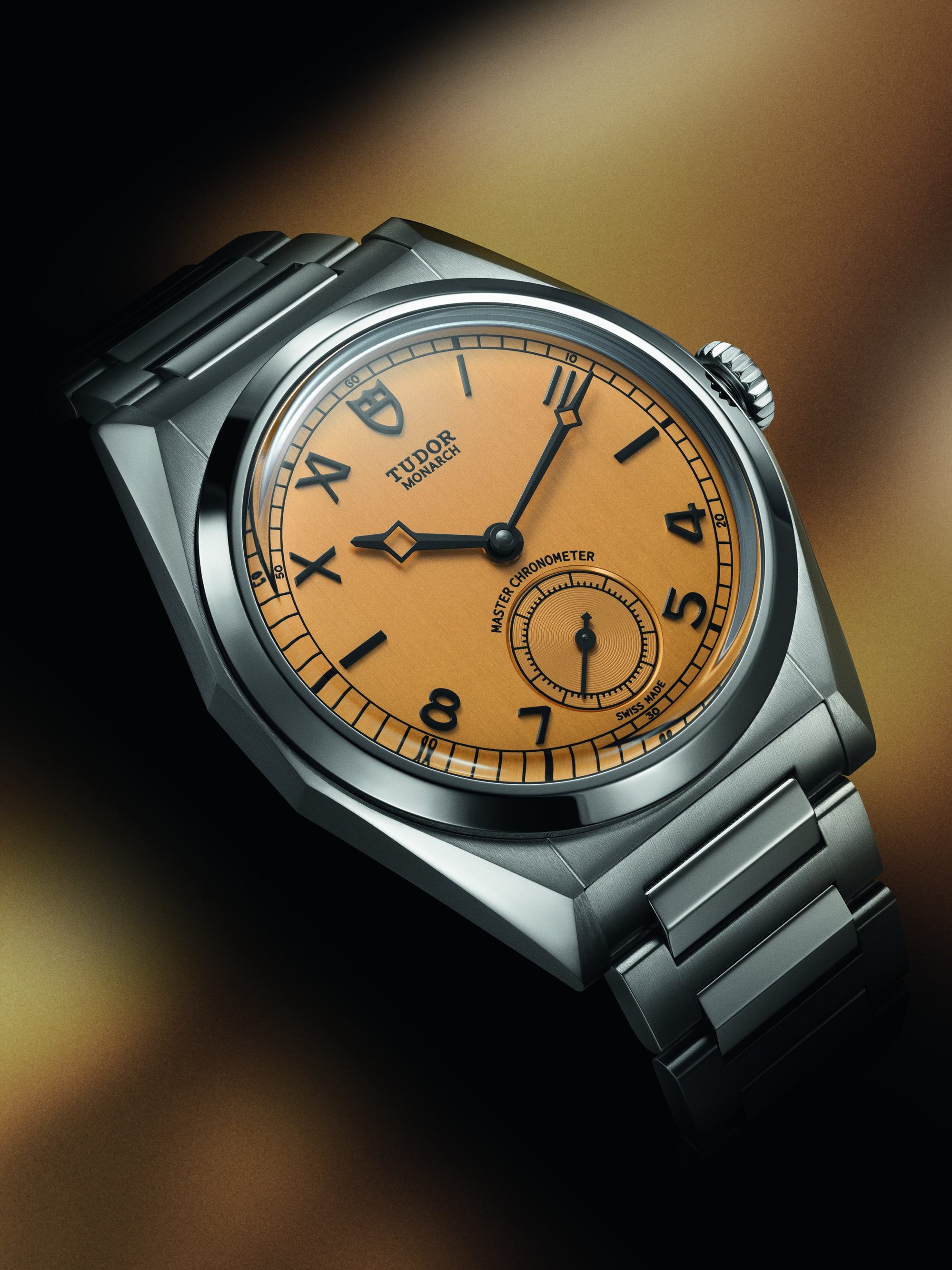
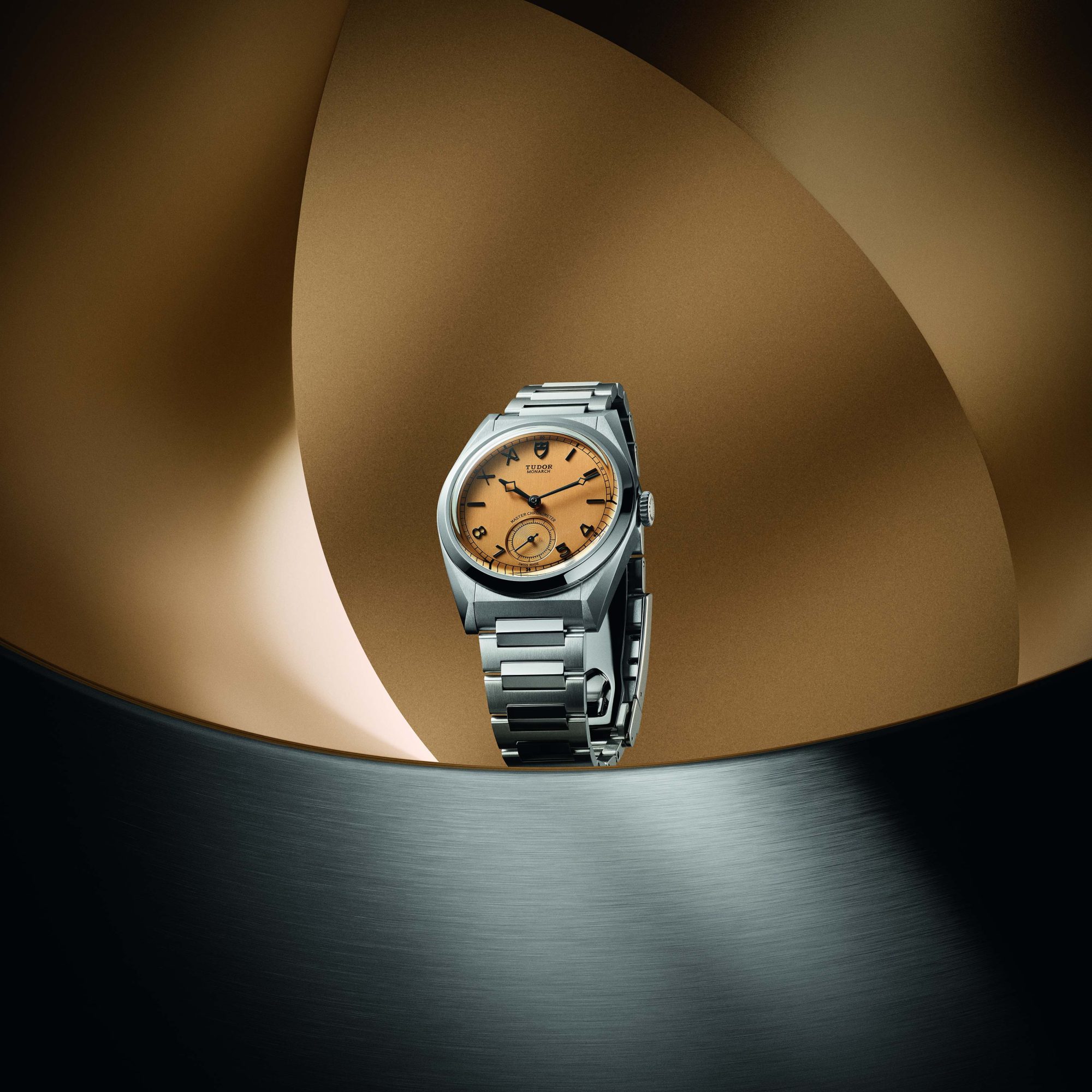
Today, Tudor’s daring spirit burns even brighter in an age dominated by algorithms, screens and artificial intelligence. The tangible values of reliability, purpose and adventure that accompanied Tudor over the past 100 years culminated in the inauguration of its fully integrated manufacture in Le Locle. That milestone in 2023 promises to deliver greater technical autonomy with COSC- and METAS-certified manufacture movements while maintaining the brand’s value proposition. Models such as the Black Bay, Pelagos and this year’s newly released Monarch continue to enamour individuals who choose to break away from conventions. If Tudor’s first century was shaped by those who dared to push boundaries, rest assured that the second promises much more.
Design Masterstroke
It is hard to look beyond the visionary influence of Gérald Genta, given the number of iconic watch models credited to his name. After all, his moniker “Picasso of Watches” was not for nought. During an era when classic dress, tool, dive and chronograph watches dominated the main categories, and precious metals were the norm, Genta seemingly carved a new segment: the now-ubiquitous steel sports watch.
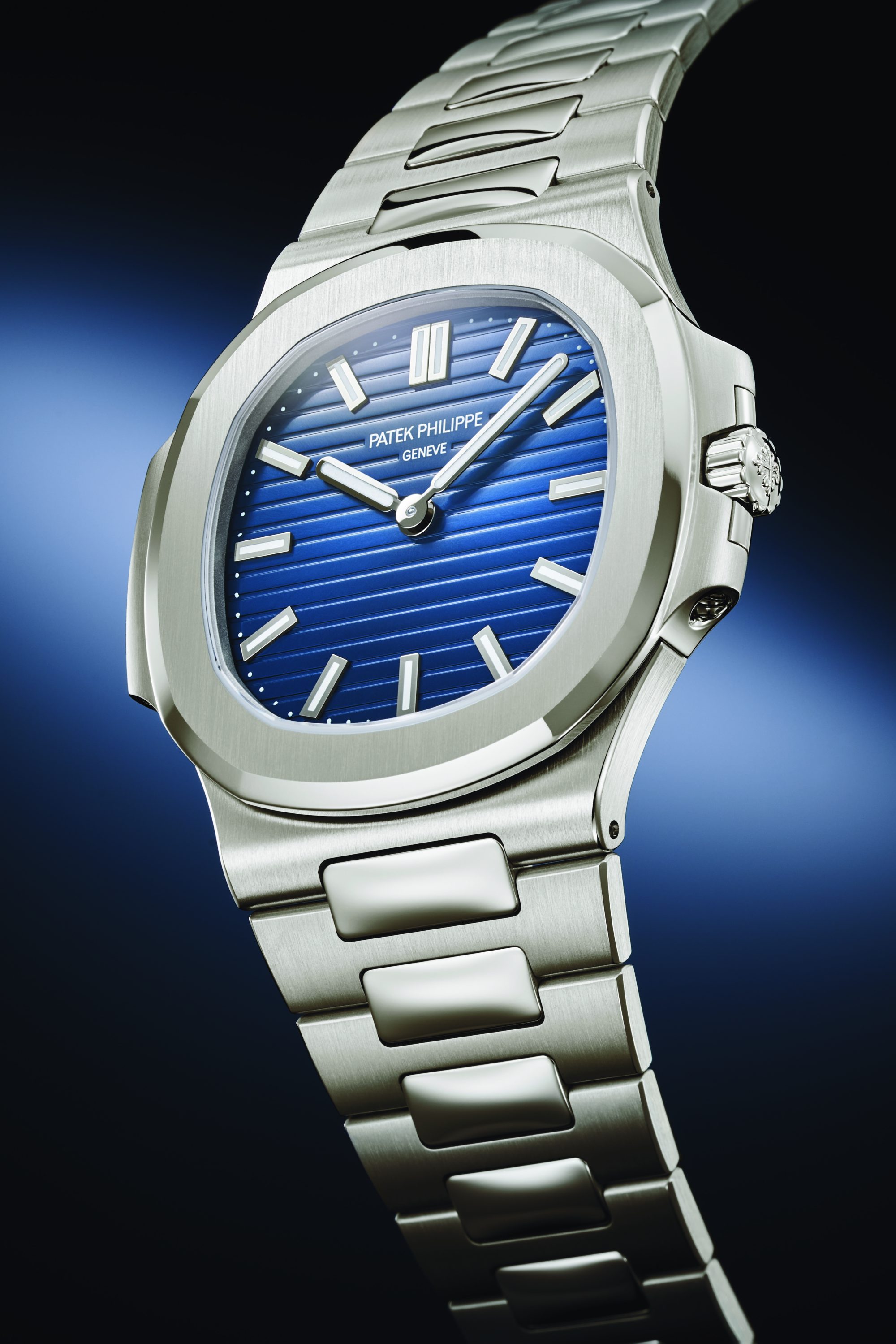
Even though two of his great designs celebrating their 50th anniversary this year — the Patek Philippe Nautilus and IWC Ingenieur SL — emerged from the same creative mind, each had its distinct identity. The porthole-inspired Nautilus was elegance personified, as the seafaring nautical emblem embraced elegance through sensuous curves. On the other hand, the Ingenieur SL expresses technical robustness through purposeful geometry.
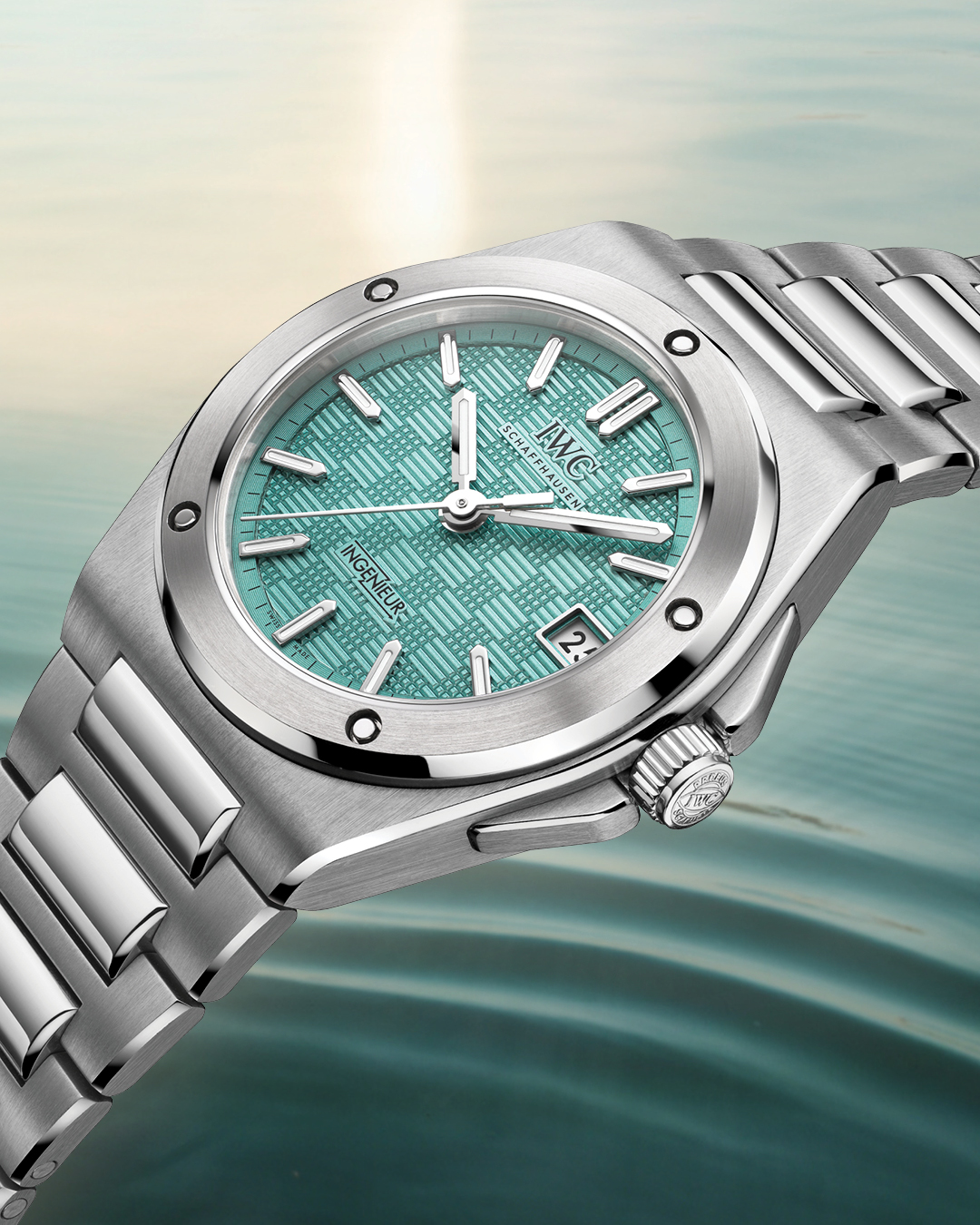
IWC Schaffhausen unveiled the Ingenieur SL’s direct descendant three years ago with the Ingenieur Automatic 40. The faithful recreation finetuned the Genta’s original ergonomics and wearability, and features a newly engineered middle-link attachment that allows the integrated bracelet to flow seamlessly from the case. A smaller Ingenieur Automatic 35 was later released as IWC expands the contemporary edition with a new expression of the luxury steel sports watch. The Ingenieur’s characteristic grid dial pattern is rendered in a refreshing turquoise shade dubbed Pool as a nod to the summer season.
Nautical Elegance
Rightly lauded as one of the most anticipated anniversary celebrations of 2026, Patek Philippe celebrates the Nautilus’ 50th with four showstopping references. Two quintessential “Jumbo” in 41mm white gold cases are paired with either a matching bracelet (Ref. 5810/1G-001) or composite strap (Ref. 5810G-001), while the smallest novelty of the quartet, the Ref. 5610/1P-001 packs an understated surprise with its platinum case and bracelet. Even though its dainty 38mm and slim 6.9mm profile case “disappears” on the wrist, the heft of its platinum case and bracelet is a constant reminder of its presence. As with all Patek Philippe models in platinum, this timepiece is adorned with a diamond, set into the hinge at nine o’clock for the first time. All three pieces are limited edition in varying quantities and finished with a “50 1976 – 2026” engraving on the 22k gold mini-rotor, which serves as a reminder of this truly special release. A fourth Nautilus desk watch Ref. 958G-001 completes the commemorative release, with the sports watch being reimagined as a desk watch for the first time in half a century. The two-part white gold case measures 50.65mm across and retains the Nautilus’ iconic silhouette even though it comes without a bracelet. Its emblematic measures 50.65mm across and retains the Nautilus’ iconic silhouette even though it comes without a bracelet. Its emblematic blue sunburst dial is finished with baguette-cut diamond hour indices and displays the power reserve, day and date. Its Calibre 31-505 8J PS IRM Cl J offers eight full days of power reserve and is visible through the case back. A circle mounted on the back of the watch is inscribed with the words “50th Anniversary Nautilus 1976 – 2026 Patek Philippe”.
Once you are done with this story, click here to catch up with our latest issue.