There are artists who make music with the ambition of reaching an international audience; there are also artists who make music to become icons within the borders of their own country. But what separates the ones who manage to exist in both worlds?
It is a common misconception that artists must choose between the two, and that global recognition requires abandoning the culture that shaped them. But is it truly a binary decision? When looking at the musicians who break beyond their origins, the opposite often happens. They take the sounds, references, and cultural identity of where they come from, then distort, reinterpret and rebuild them through a sonic language that allows them to travel beyond their original context.
Look at the artists who have managed to achieve this. M.I.A. built a sound from the collision of her Tamil identity, London rave culture, and electronic experimentation. ROSALÍA transformed Spain’s folklore, religious imagery and flamenco traditions through experimental pop. Even Bad Bunny, whose music remains inseparable from Puerto Rican identity, never adjusted his cultural references to fit international expectations. Instead, he expanded the space for the world to meet him, turning reggaeton into a sound celebrated by many.
The common thread between them is not the search for a universal sound. It is the ability to create something so personal and rooted in a specific place and moment, that people everywhere become curious.
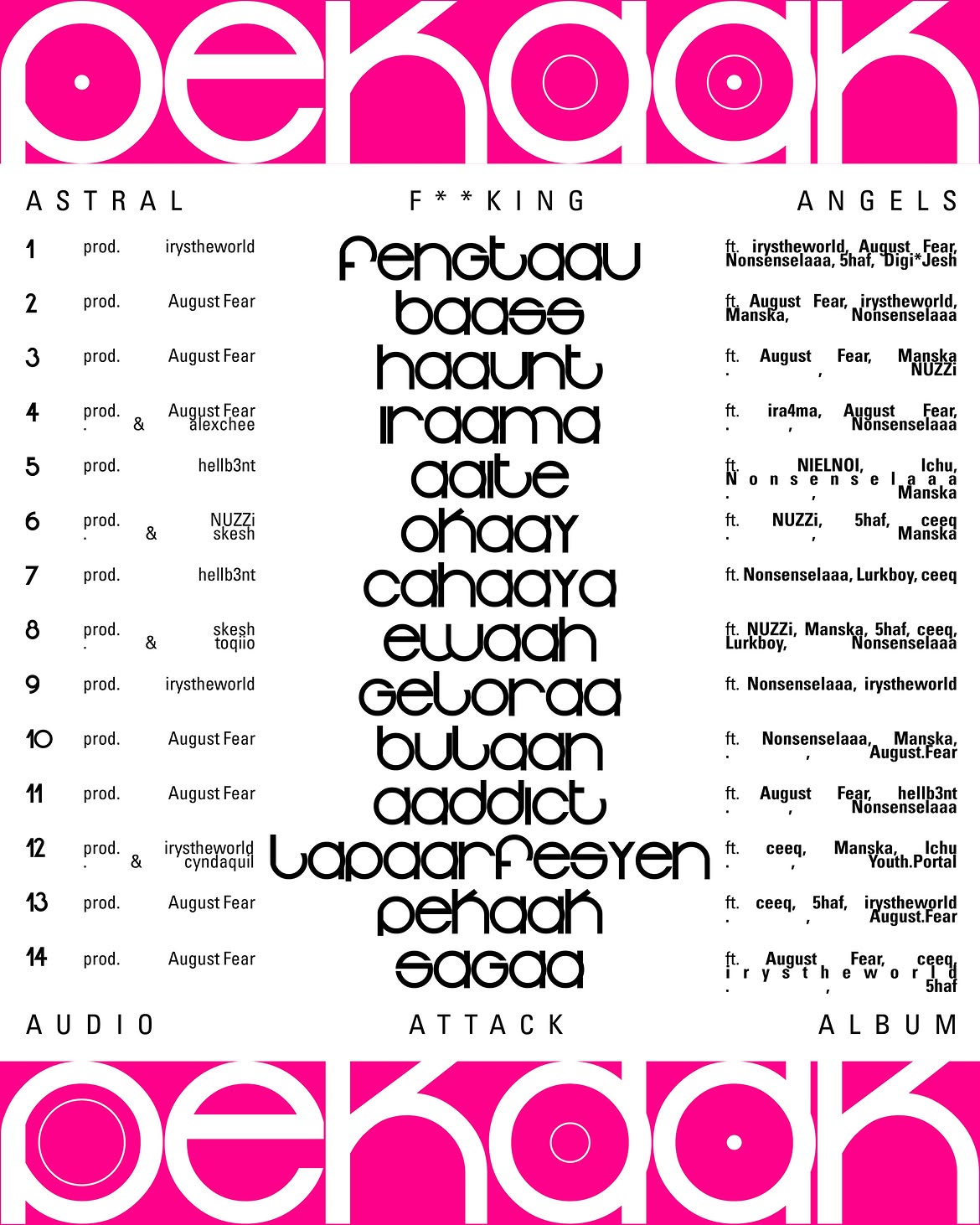
Astral Angels are exploring that same possibility from Malaysia. With PEKAAK, the collective looks inward at the cultural collisions surrounding them: Malaysia’s Feng Tau culture, dangdut influences from neighbouring regions, Malay rap and local internet lingo. These references are then filtered through hyperpop, rave influences, and maximalist production, creating a sound that reflects how young Malaysians consume culture today, without clear borders between local and global.
As one of the producers, August Fear explains, “We want to make raw rave music. And we want to make it sound like it’s made by us — 10 boys who make music in PJ, from Selangor, Alor Setar, and Miri.”
The 14-track album is described by the group as a refined return to the sound they began developing during their debut era in 2021. Rather than chasing a new identity, PEKAAK strips away the directions that pulled them elsewhere and returns to the core that first defined Astral Angels. Alongside the collective, the album also features collaborations with long-time creative collaborators including Ira4ma, Digi*Jesh, Ichu, NIELNOI and Youth Portal.

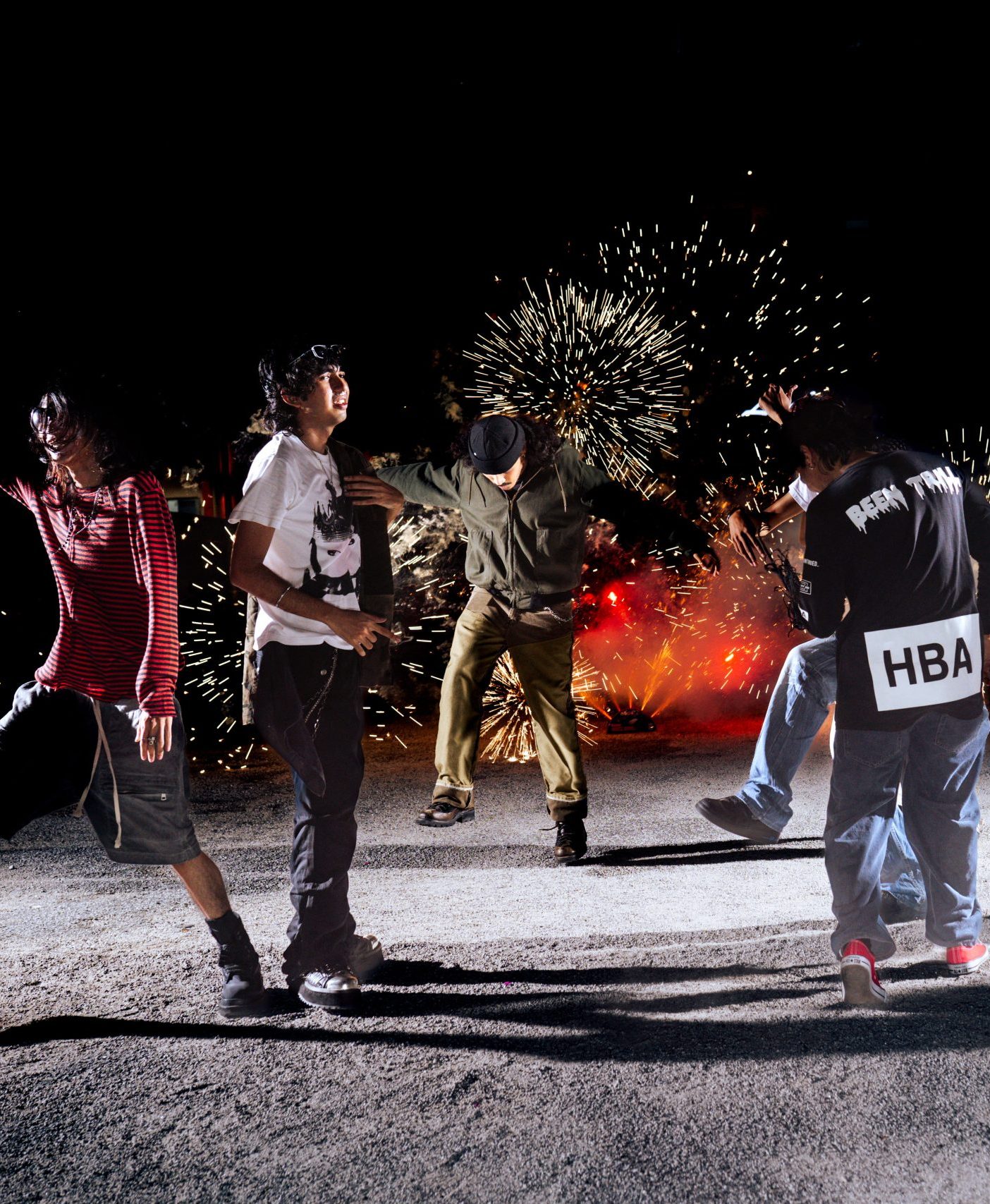

“In PEKAAK, we want to go back to who we were when we first started with AA LIFESTYLE (豪华). We started as party people, and as ravers, we had this really raw rave spirit in us. But after a few years, I realised all of us had made so many trap songs. So for this album, I said, no trap. No trap beats in this house.”
Returning to their roots as rave kids from Malaysia, the album opens with “FENGTAAU”, referencing the Cantonese term 揈頭, meaning “to shake your head”. The phrase became associated with Malaysia’s Chinese club culture in the early 2000s, particularly within the country’s electronic dance music scene. From there, PEKAAK moves through tracks like “BAASS”, “PEKAAK”, “HAAUNT” and “SAGAA”, embracing music as something physical: built for a crowded room with loud speakers and dancers head banging.
Since their formation in 2021, Astral Angels have often been associated with the rise of Malaysia’s hyperpop scene. I remember speaking to an Indonesian producer who described discovering them as “finding a hyperpop gem in SEA.” Yet the group themselves resist being defined by the label.
“We make pop music that is hyper… I guess you can call what we do hyperpop? It’s just that people put labels to music that just don’t make sense today. I think we do more than being boxed into that label,” says Ceeq.
Astral Angels’ refusal to belong neatly anywhere may be the most defining characteristic they have. Within the album, each member brings their own references into the collective. NuZZi introduces HipDut, the collision between hip-hop and dangdut, through “EWAAH”. While the genre has gained renewed attention alongside the rise of Indonesian artists in recent years, its development also extends into Malaysia, with NUZZi being one of the early artists exploring this sound since 2020.
What makes PEKAAK compelling is not only its genre-blending approach, but its ability to capture the cultural environment Astral Angels exist within. Through the rap verses of Nonsenselaaa, Manska, 5haf, Ceeq, hellb3nt, irystheworld and Lurkboy, the album becomes a reflection of Malaysia’s underground music landscape, where global influences are absorbed and transformed into a sound that’s distinctly local.
Once you are done with this story, click here to catch up with our latest issue.