You know the drill: another year, another MacBook launch. Some of you may have missed it completely — most of us have become numb to these upgrades. The truth is: you only pay attention to such news when your current machine is gasping for air and you’re in need of an upgrade. Nothing wrong with that. But this is a recent announcement you need to pay attention to before your next purchase, because Apple has quietly shifted the silhouette of its categories this time — especially surrounding its MacBook family.
If you’ve been searching for a new MacBook, you’d realise there’s a new family member — the Neo. Compact, light, and most importantly, the most affordable MacBook yet (starting at only S$849 — in comparison, that’s about half the price of a new iPhone Pro), it’s created a shift and a new, more democratic lifestyle category for Apple’s family of computers. But for the longest time, that position was given to the MacBook Air. Formerly the more “affordable” MacBook in the entire catalogue, designed light-as-air for those constantly on the move — the computer that signalled the death of heavy, brick-like artillery for creatives — the 2026 generation of the MacBook Air, powered by the M5, is now the middle child of Apple’s mobile laptops.
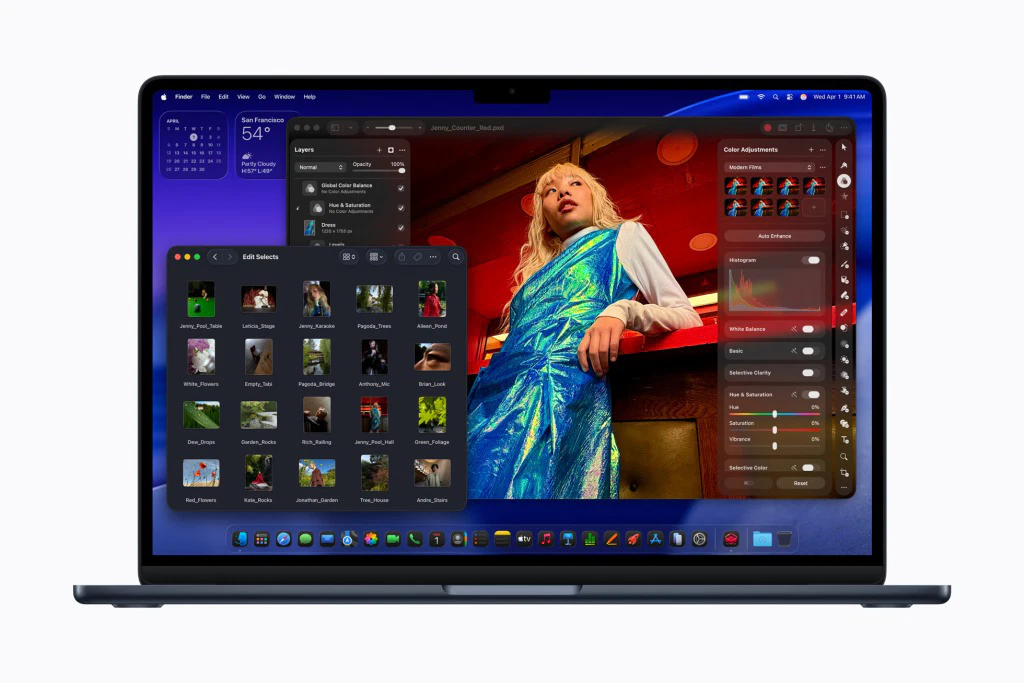
Sounds suicidal for the range, doesn’t it? If there’s already a cheaper and comparable version in the family, realistically, why would any of us still pay attention to the Air? Well, here’s the interesting part — the soul of the shift, so to speak. The move creates a true middle ground. Packed with the software capabilities of what was once a MacBook Pro, with a small cost top-up from the MacBook Neo, the Air becomes the perfect choice for those who don’t require the far ends of the options. After all, it’s been 18 years since Apple first introduced the MacBook Air, and this shift finally gives it a sense of purpose beyond just being thin.
But does this new hierarchy actually make the choice easier for you, or does the Neo make the Air feel like an expensive compromise? We spent a month on the new machine to see if it’s actually worth the purchase. Let’s break down the specifics.

Would you pay more, or pay less?
It used to be a battle of two choices. Now, there are three.
But before we start comparing, let’s set some rules. We’re talking strictly about the current generation — because the logic is simple: if you’re thinking long-term, and there’s a fresh generation on the shelf, you get the most updated architecture to ensure it doesn’t age before its time. And we’re generalising here, looking at the consumer without dissecting every specific personality or trade — we all have our needs, but this isn’t Pluribus, after all.
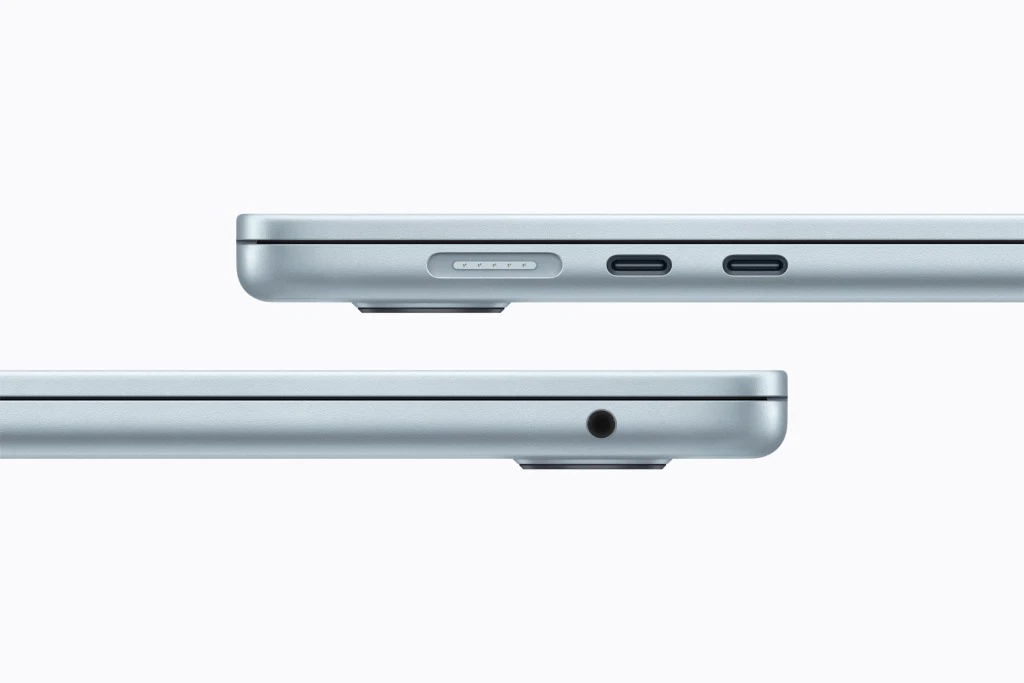
Say you need a MacBook. You’re more than welcome to start with the Neo. The price point is a seductive pitch, we know. But the functions have a hard ceiling. When you compare the most souped-up Neo to an entry-level Air, you start to see exactly where the polish wears off and the bare metal shows. At the top end, the Neo gives you an A18 Pro chip (an Intel-powered chip) and 8GB of RAM for S$849. It’s essentially the soul of an iPhone in a laptop’s body. You get a 13-inch sRGB display, but you lose out on the essentials — no backlit keyboard, no MagSafe, and a mechanical trackpad that feels like a relic.

On the other far end, there’s the MacBook Pro. Now, if we’re being honest, not everyone needs the industrial-grade power of a MacBook Pro. Just spend five minutes on Reddit and you’ll find a graveyard of people who realised, far too late, that they’ve purchased a laptop that is pure, overpowered vanity.
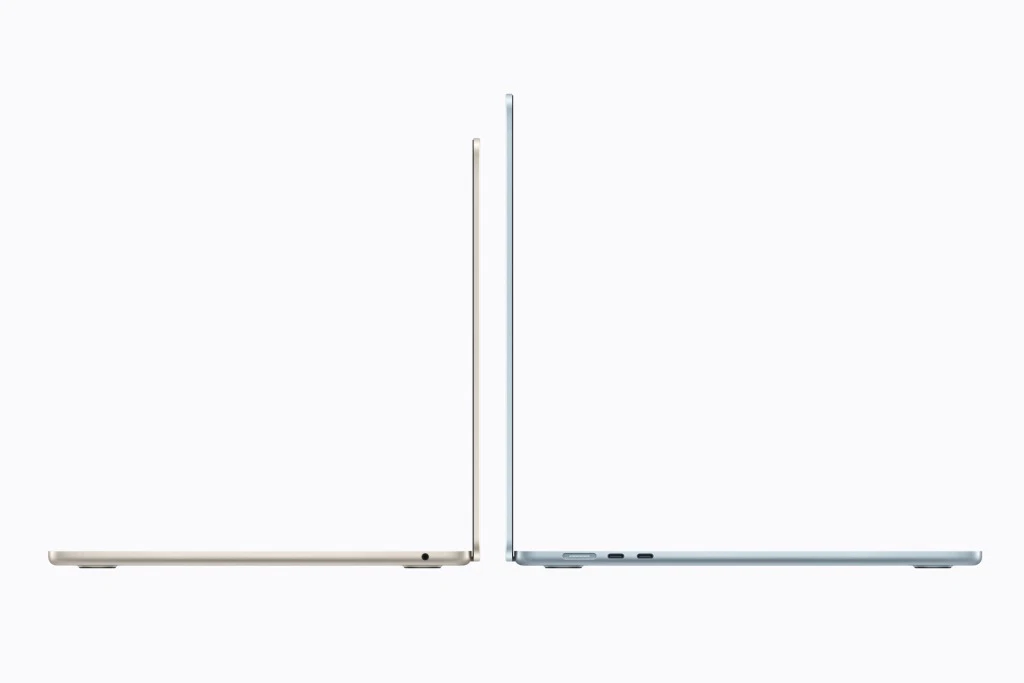
Step up to the base MacBook Air, and you’re looking at the M5 chip with 16GB of RAM as standard for S$1,599 — an 88% increase in price. But you graduate to a Liquid Retina display with P3 colour, a backlit keyboard, and the seamless Haptic Touch trackpad (you know, the one that actually makes your scrolling feel like you’re the most important person in the world). It’s the difference between a machine that just gets by and one that actually performs. And if the ceiling of your budget is higher, go with the Air. You’ll notice the difference immediately. Done deal.
What’s so good about it, anyway?
Okay, now you’re convinced by the Air. But what’s so good about it?
Let’s cut through the marketing fluff. As a MacBook Air user for years, a little honesty helps. For years, buying an Air meant making apologies. I loved the weight, but I also had to accept that it would inevitably choke if I pushed it too hard. Having three large-scale applications open at the same time would have killed the machine. But those days are gone.
Having tried the M5 MacBook Air, the math has clearly changed. Apple finally stopped being stingy and made 16GB of unified memory and 512GB of solid-state storage the absolute baseline. That’s as good as a MacBook Pro from about two years ago (crazy). With the new M5 generation, what you get is a piece of industrial-grade machinery housed in a chassis that still slips seamlessly into a tote bag. It’s completely fanless, which means it sits in dead silence whether you’re answering emails or chewing through a massive 4K video edit. It does the heavy lifting without breaking a sweat. I’d be lying if I said this is just “good for a thin laptop” — because it’s just undeniably good.
But let’s go deeper into performance. Premiere Pro runs smoothly, even while I unintentionally left InDesign and Photoshop open in the background (it happens). Even mapping out a sprawling project in MindNode while simultaneously batch-processing a massive folder of RAW files in Adobe Lightroom works seamlessly. You swipe over to Final Cut Pro to scrub through dense, high-bitrate video timelines, and the machine (surprisingly) runs smoothly. I even threw inZOI — a high-processing game — at it, and the Air handled it without any crashes. And because there are zero fans inside this chassis, it did it all in dead silence. It’s almost eerie — but that’s a good thing.
Convinced yet? Let’s not forget about AI.
It’s hard to ignore AI, even if most of us are still on the fence about it. But it can come in useful in ways you don’t even realise. With WebAI on the new MacBook Air M5 — a built-in intelligence that makes Apple Intelligence a workhorse, packing a dedicated Neural Accelerator into every single GPU core — instead of outsourcing your queries to a distant server farm and waiting for the cloud to spit back an answer, the Air processes these heavy AI tasks locally. You can run WebAI models directly on the hardware. It genuinely learns your workflow, cleans up your chaotic inbox, and pulls context from your messy screen to find exactly what you need — all while keeping your data strictly yours. Now, that’s the promised utility of AI, completely stripped of creepy privacy invasions and lag.

The verdict.
The reality of Apple’s new hierarchy is refreshingly brutal. It forces you to be honest about who you are and what you actually do. The MacBook Neo is a brilliant gateway drug into the MacBook family. On the far end, the MacBook Pro remains a beautiful, overpowered flex for the five per cent of users who actually run heavy production studios — and a very expensive vanity purchase for the rest.
But the M5 MacBook Air? It’s the uncompromising centre for anyone paying for exactly what you need: longevity, silence, and genuine power — without subsidising a bunch of ports and fans you’ll never use. If you want a tool that respects your time, your wallet, and your intelligence — one you can buy today and not have to think about replacing for the next five years — this is exactly where you put your money. For the first time in years, Apple has made a product that’s worth more than just a couple of upgrades. Trust us, you won’t be disappointed.
Once you are done with this story, click here to catch up with our latest issue.