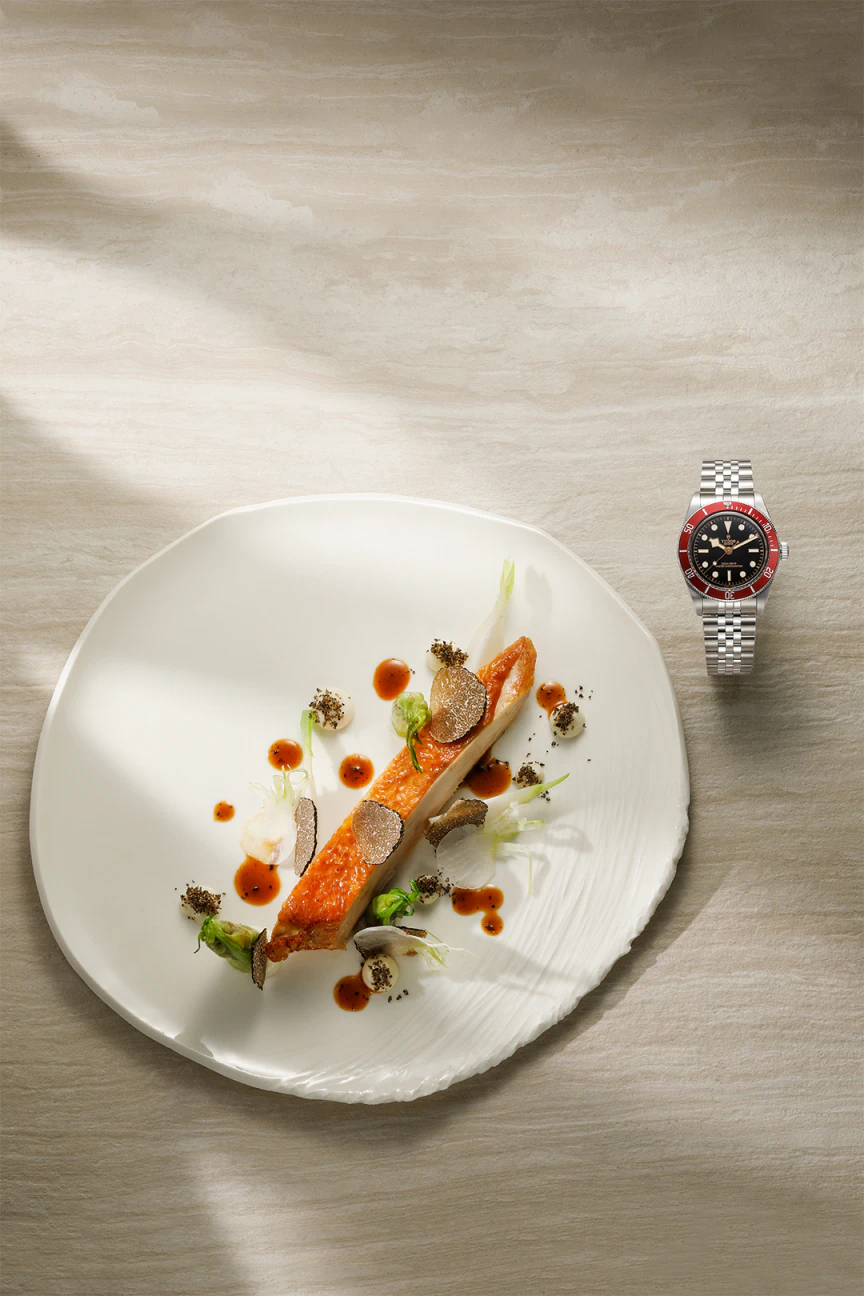
In recent years, the sight of a celebrated chef joining a watch brand as an ambassador or friend of the brand has become increasingly common. Last year, Tudor welcomed one Michelin-starred Swiss chefs Yoann Caloué and Franck Reynaud as friends of Tudor, while one Michelin-starred French chef Michel Sarran joined Zenith as a “Friend of the Brand”. At the recently concluded Watches & Wonders 2026, Jaeger-LeCoultre collaborated with two-Michelin-star Swiss Chef Gilles Varone under its Made of Makers programme. The artisanal community draws a parallel between horology and art, fostering collaborations with artists, designers and craftsmen from disciplines outside watchmaking who share the maison’s values of creativity, expertise and precision. Varone joins fellow culinary talents two-Michelin-starred chef Himanshu Saini, chocolatier Mathieu Davoine, and pastry chef Nina Métayer in the Jaeger-LeCoultre Made of Makers programme.
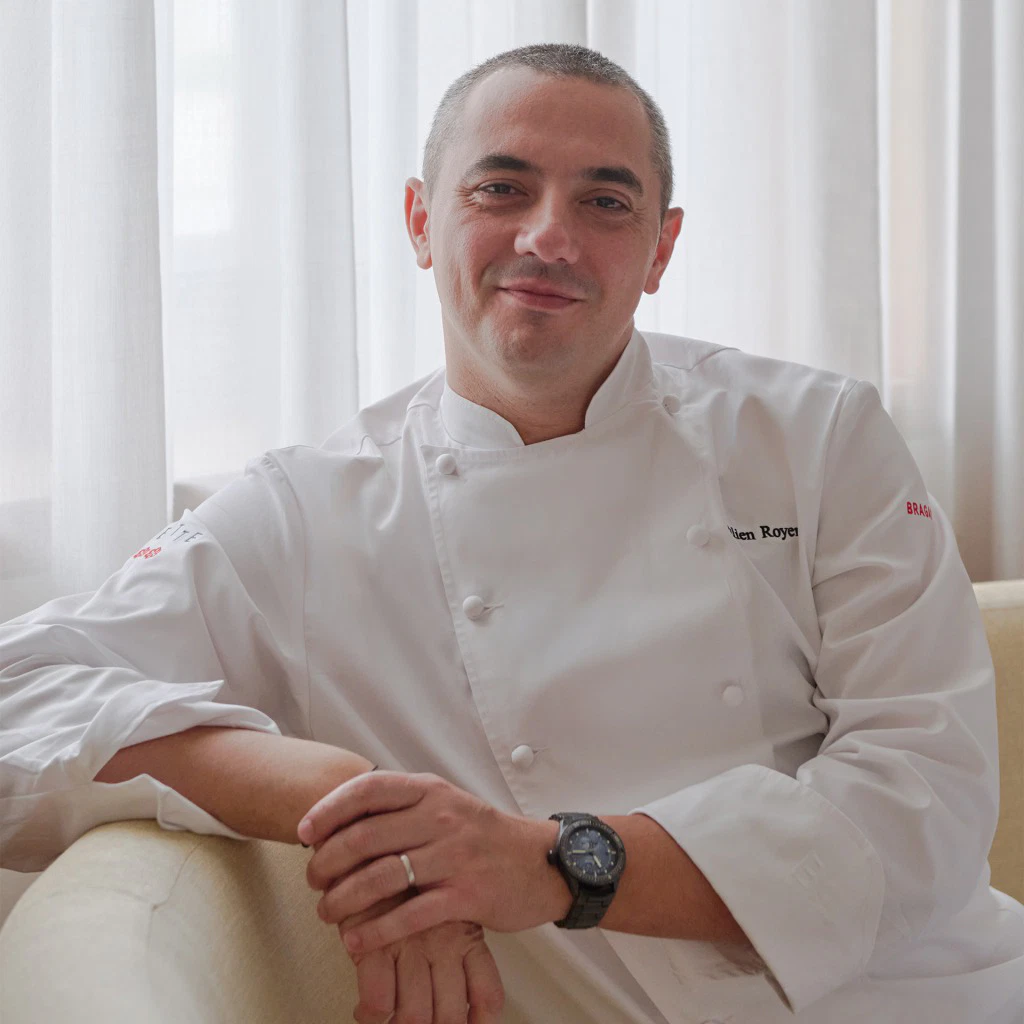
These engagements are not entirely new and reflect a steadily growing trend in the watchmaking industry. Blancpain can be credited with being the watchmaker that fully embraced the culinary world through its longstanding association with the haute gastronomy scene. Under its Art of Living partnership, which began in 1986, the esteemed watchmaker has built relationships with the world’s greatest Michelin-starred chefs and amassed more than 100 Michelin stars both past and present. South Korean chef Son Jongwon of L’Amant Secret, Eatanic Garden, and Culinary Class Wars 2 fame and chef-owner Julien Royer of Singapore’s very own three-Michelin-star restaurant Odette join legendary chefs Frédy Girardet, Paul Bocuse and Joël Robuchon in the stellar list.
How do the universes of haute horology and haute gastronomy align then, you may ask. While it is not apparent or obvious at first, closer inspection reveals a deep affinity. Values such as excellence, precision, patience and creativity are found in both disciplines, where margins for error are extremely small and unforgiving, and mastery comes from years of dedication and repetition.
Cultural Figures
From reality TV shows to movies, pop culture has shaped and framed our perception of chefs. Before Jeremy Allen White’s Carmy Berzatto set the gears of an Emmy Award-winning machine series in motion, French cooking “mousetro” Remy and food truck chef Carl Casper endeared themselves to the hearts of many. Gordon Ramsey and Jamie Oliver, or closer to home, Martin Yan and Alvin Leung, are household names thanks to the pioneering generation of Alain Ducasse, Joël Robuchon, Marco Pierre White, Nobuyuki “Nobu” Matsuhisa, and Wolfgang Puck. Prior to this generation’s highly dramatised productions, cooking shows such as Good Eats and Yan Can Cook in the late 1980s up till the 1990s were drama-free educational programmes. The Japanese competitive cooking show Iron Chef came into its own in 1993, becoming a genre-defining reality competition. It paved the way for titles such as Hell’s Kitchen and Top Chef in the 2000s, as cooking programmes pivoted from instructional to entertainment-focused shows, which, in turn, were foundational for future productions such as MasterChef, Chef’s Table, and the more recent Culinary Class Wars.
Among the numerous productions, cable networks recognised that chefs were central to their success. When Culinary Class Wars first aired, it was unlike any cooking reality competition the world had seen. Netflix amped up the wow factor to 100 per cent with an exceptional list of 100 elite chefs and imposing sets. The chefs were divided into white- and black-spoon categories and were judged by Paik Jong-won and Anh Sung-jae, South Korea’s only three-Michelin-star chef.
Beyond their, at times, dramatised or exaggerated on-screen personas, these individuals shape taste in the broadest sense. Their culinary creations have become dreams to taste, and references for others to study, and their restaurants are destinations for many to visit. To a watchmaker, these partnership avenues allow them to tap into a shared cultural currency of discernment and way of living. When positioned in a watchmaker’s universe, a chef becomes a storyteller of a century-old watchmaking institute, telling the stories of excellence, creativity and dedication through a universal language: food.
Precision as a Shared Language
While questions persist about how the two distinct disciplines align, closer inspection reveals deep affinities between them. Precision, for one, is the shared language of horology and gastronomy. “Cooking and watchmaking share essential values: precision, passion, and the passing down of knowledge. Every second counts in the pursuit of excellence. Joining Zenith felt natural — we’re driven by the same commitment to authenticity and innovation,” shared Michel Sarran in Zenith’s official presser about his appointment.
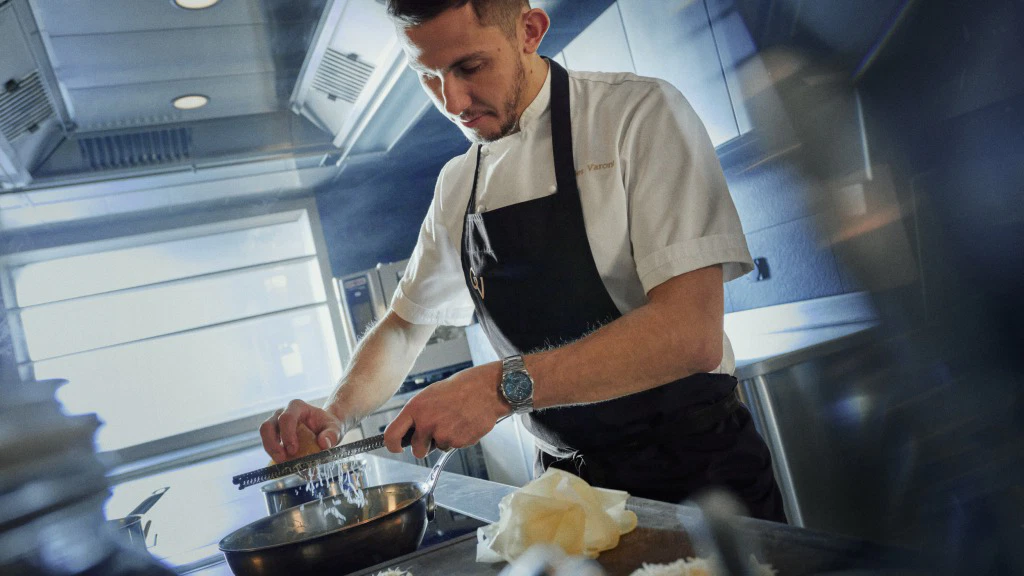
Before even attempting to julienne or tourné a carrot, try dicing it into equally-sized cubes. Alternatively, enrol in a watchmaking class to assemble a watch calibre if you have spare time to kill and plenty of patience to annihilate. Knife skills are foundational in culinary, while tweezers and screwdriver control are their equivalents in watchmaking. A watchmaker at his bench and a chef at his station continuously engage in acts of precision. Over time, repetition refines experience, which in turn sharpens execution.
Time as a Medium
If precision is the language, then time is the medium through which both disciplines truly express themselves. Components are painstakingly polished and assembled to measure, display and preserve time through mechanical ingenuity. In gastronomy, however, time is transformative. From flash frying to weeks-long dry ageing, time is an active force. There is also a shared reverence for patience in an age of instant gratification. Mediocrity from rushed outcomes is politely declined. Time is often invested rather than saved for artistry: broths are reduced longer to extract and intensify flavours, and watch components are polished to mirror perfection. But more importantly, there is a discipline that insists excellence cannot be rushed.
Beyond Function
Luxury today has evolved beyond ownership to the richness of experience. A watch, at its most basic, tells time; similarly, a meal, in its simplest form, nourishes. In the hands of a master, these fundamental purposes are transcended into profound vehicles of emotion, memory, and identity. Just as dining at Grant Achatz’s enchanting culinary theatre, Alinea, will forever be a core memory, the same can be said when listening to the melodious charm of a carillon minute repeater. At a time when experiential spending is gaining popularity over luxury spending, dining is poised to capitalise on the experience economy. Every detail about dining in a world-class restaurant contributes to a holistic narrative. It encompasses taste, atmosphere, sensory stimulation, storytelling, service and cadence of courses. In the watch world, strapping on a masterpiece carries with it decades of expertise and meticulous craftsmanship. These transform simple everyday acts, such as checking the time and sharing a meal, into unforgettable moments of significance.
More Than Endorsement
Whether it is a conventional endorsement or a partnership between a watchmaker and a culinary figure, such engagements do not garner the Internet-breaking frenzy of an international South Korean celebrity. These are instead meetings of philosophies rather than generating buzzworthy news. The pursuit of perfection is rooted in craft, an ethos that is reflected in a chef’s universe and fine watchmaking. From a brand perspective, these alignments help communicate their values through a deeply relatable medium. It is reflected in Lambert’s comments about Jaeger-LeCoultre’s partnership with Chef Varone. “We are honoured to collaborate with Chef Gilles Varone,” says Jérôme Lambert, CEO of Jaeger-LeCoultre. “As a craftsman of the highest order, his approach to his art embodies many of the values inherent in high watchmaking and underlines our belief in the convergence of craftsmanship across many disciplines. The originality and purity of his creations add depth and richness to our Made of Makers programme, and his passion, humility and dedication to craftsmanship make him a natural partner for us.”
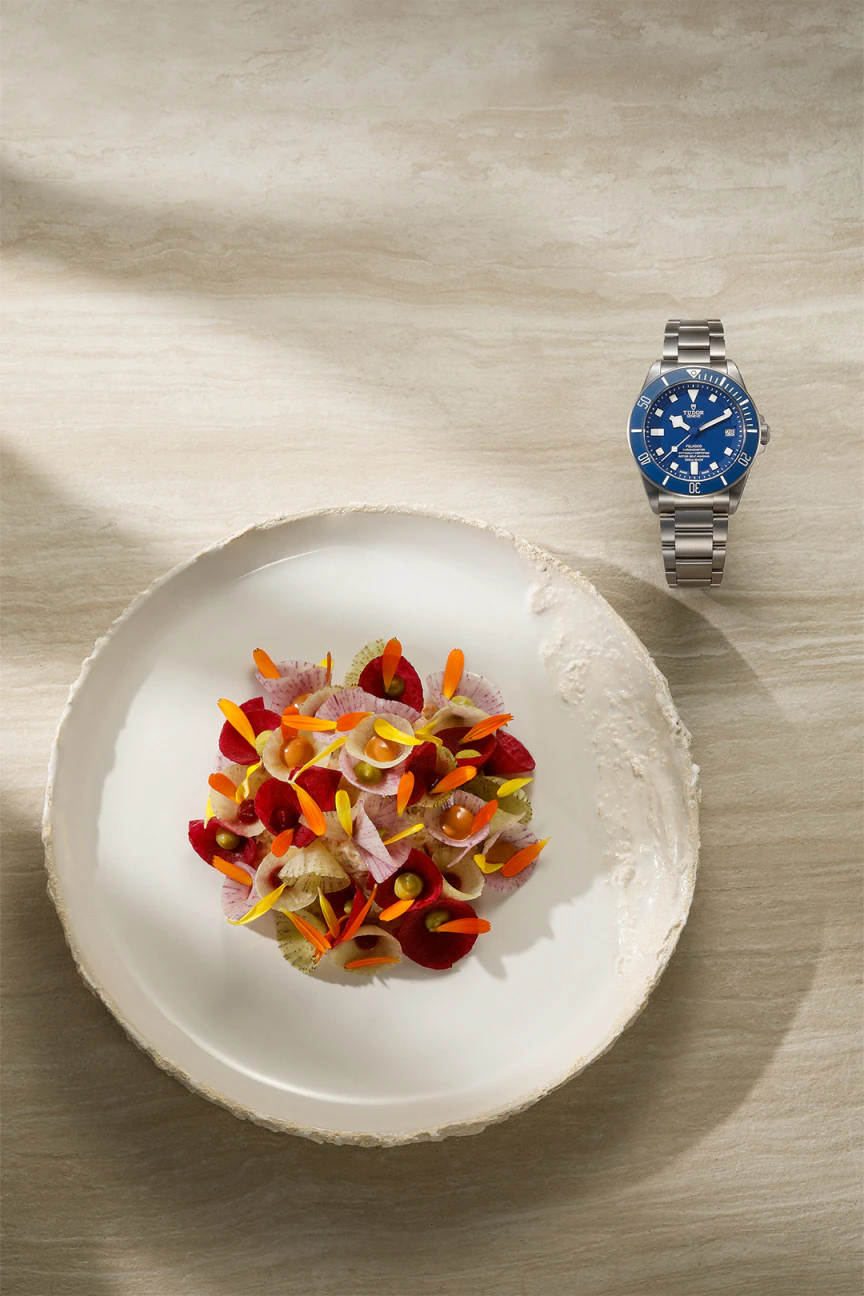
Let’s face it, not everyone can appreciate a watch, let alone what a tourbillon does exactly, but virtually everyone knows a comforting bowl of soup when they taste one. The associations between horology and gastronomy situate their work within a broader context of craftsmanship and legacy. Both disciplines enrich each other by providing a shared platform to explore ideas of time, precision, and artistry from complementary perspectives.
As watchmakers continue to look beyond their traditional sphere, and chefs extend their influence into the wider cultural landscape, the convergence of these worlds feels natural. One measures time with unwavering precision, while the other transforms it into moments that linger in memory. Together, they offer two distinct yet intertwined ways of engaging with the same intangible resource.
Once you are done with this story, click here to catch up with our latest issue.