For today’s youth, identity does not live in one place — it lives everywhere. It shows up in wardrobes and playlists, in moodboards and camera rolls, on For You Pages and in late-night group chats. As gaming becomes a natural extension of daily life, dressing an avatar feels as intuitive — and as expressive — as getting dressed in the morning.
Identity and self-expression have become ways to signal who you are without saying a word. It is no longer just about what you do or where you go; it is about what you wear, how you style yourself, and the small details that make you instantly recognisable. Every hoodie, pair of sneakers, or accessory becomes a statement, a piece of a personal language that others can read. Style is social and digital now, a way to flex personality, mood, or vibes online and offline alike. Choosing how to present yourself has become its own form of currency in communities where perception matters as much as reality, and where these choices accumulate into living archives of memory and experience.
Gaming has emerged as one of the most vivid platforms for identity exploration. Players curate avatars, customise virtual worlds, and experiment with aesthetics in ways that reflect inner selves, aspirational traits, or playful creativity. It is a space where experimentation is safe, immediate, and socially validated, allowing users to try on personas, moods, and styles in real time. For many, the digital self becomes just as meaningful as the physical self, providing a stage for expression that is both imaginative and authentic. The choices made in-game — from appearance to movement — become personal extensions of identity, influencing real-world style decisions while leaving traces of memory and personal history.
When the pandemic began, a cultural shift emerged as major fashion houses turned to gaming to maintain connection with their audiences. With physical stores closed and in-person engagement limited, brands sought creative ways to reach consumers, and digital worlds provided the perfect stage. Collaborations with games allowed them to place clothing, accessories, and style directly into spaces where identity is actively constructed. By bridging pixels and fabric, fashion engages a generation for whom self-expression flows seamlessly between online and offline life, carrying memories, milestones, and moods along the way. These partnerships demonstrate that style is no longer only about physical presence, but about influence and identity of growing up across multiple realities.
Gaming is no longer treated as escape. It sits alongside music, fashion, film, and social media as one of the main spaces where people shape who they are. Fashion once belonged primarily to streets, clubs, and cities; now it has expanded into virtual worlds, PvP arenas, and social hubs. Those spaces act as communities as much as they do stages. When someone selects a collaboration skin, they are doing more than customising: they are communicating. Taste, allegiance, mood, or humour are all signalled in these choices. The point is that the choice matters, and it feels natural to treat digital style as part of personal identity — a style that carries memories of the games played, the victories won, and the moments shared.
Younger audiences drive this shift. They move effortlessly between realities, never drawing a hard line between them. Their sense of identity is dynamic and multiplatform, blending gaming, fashion, humour, and youth culture. Influencers like Hamza and Martin from Slushy Noobz embody this mix, showcasing fits online that inspire how followers style their avatars before flowing back into the physical world.
Celebrities amplify the effect too: when Doja Cat plays Fortnite, streams it, and jokes about her skins, she treats avatar styling with the same ease as dressing up in real life. Fans respond, seeing gaming as a space for self-expression that is aspirational yet casual. These examples reveal how seamlessly today’s youth borrow from multiple realities when defining taste, and how fashion, gaming, and culture intersect to create a continuous loop of influence, where style exists across screens and streets alike.
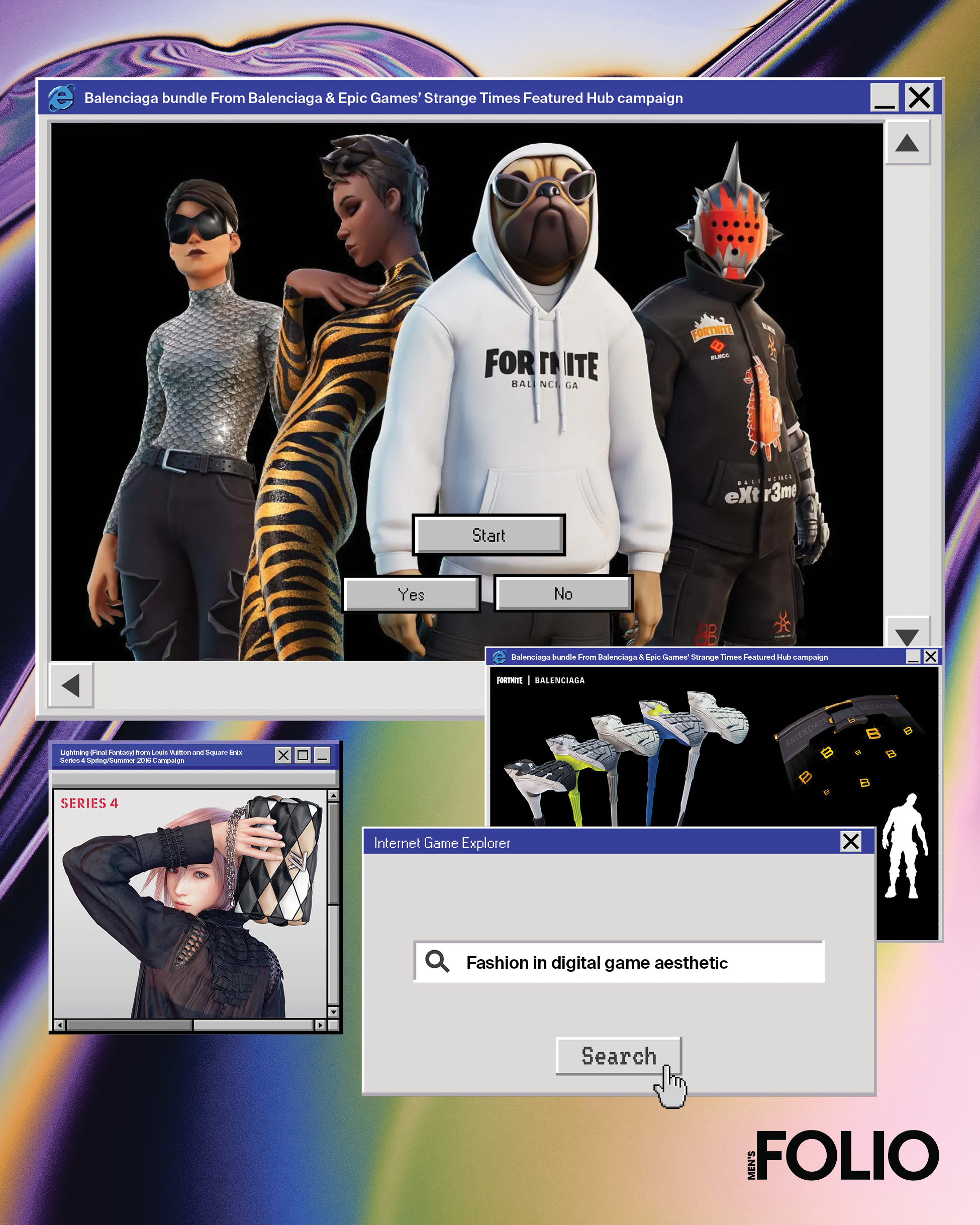
Balenciaga’s entry into Fortnite through the Strange Times Featured Hub illustrated this evolution. The brand created skins, accessories, and a virtual boutique, and even tied it to a physical capsule collection. It felt more than a marketing stunt, because it acknowledged the creativity within gaming communities. Billboards inside Fortnite showcased player avatars as if they were part of a fashion campaign. Suddenly, the hoodie worn by a character was not a joke — it carried the same mood and attitude as a Balenciaga hoodie on the street. Over time, that outfit became part of the player’s in-game memories, embedding the virtual garment into their personal history.
The bond between players and digital characters predates this wave of collaborations. Louis Vuitton demonstrated this when it featured Lightning from Final Fantasy XIII in its Spring/Summer 2016 campaign. Lightning appeared in editorial images wearing monogrammed looks, treated with the same seriousness as any supermodel, and fans recognised her instantly. She embodied traits players admired, and Louis Vuitton gave that admiration a visual space outside the game, proving that digital characters could carry the same cultural weight as human icons.
Years later, the brand extended this approach to League of Legends, adding another layer to how luxury behaves in virtual spaces. Nicolas Ghesquière designed skins for champions like Qiyana and Senna using LV monograms and gleaming textures, alongside a capsule collection and the official trophy trunk for Worlds. For players, wearing a Louis Vuitton skin was not about showing off; it felt like participating in a moment where the emotional importance of the game met the visual language of luxury fashion. It also highlighted the bond players have with their characters; for many, a champion is more familiar than a celebrity, and giving that character a couture-level wardrobe bridged two worlds fans already saw as connected.
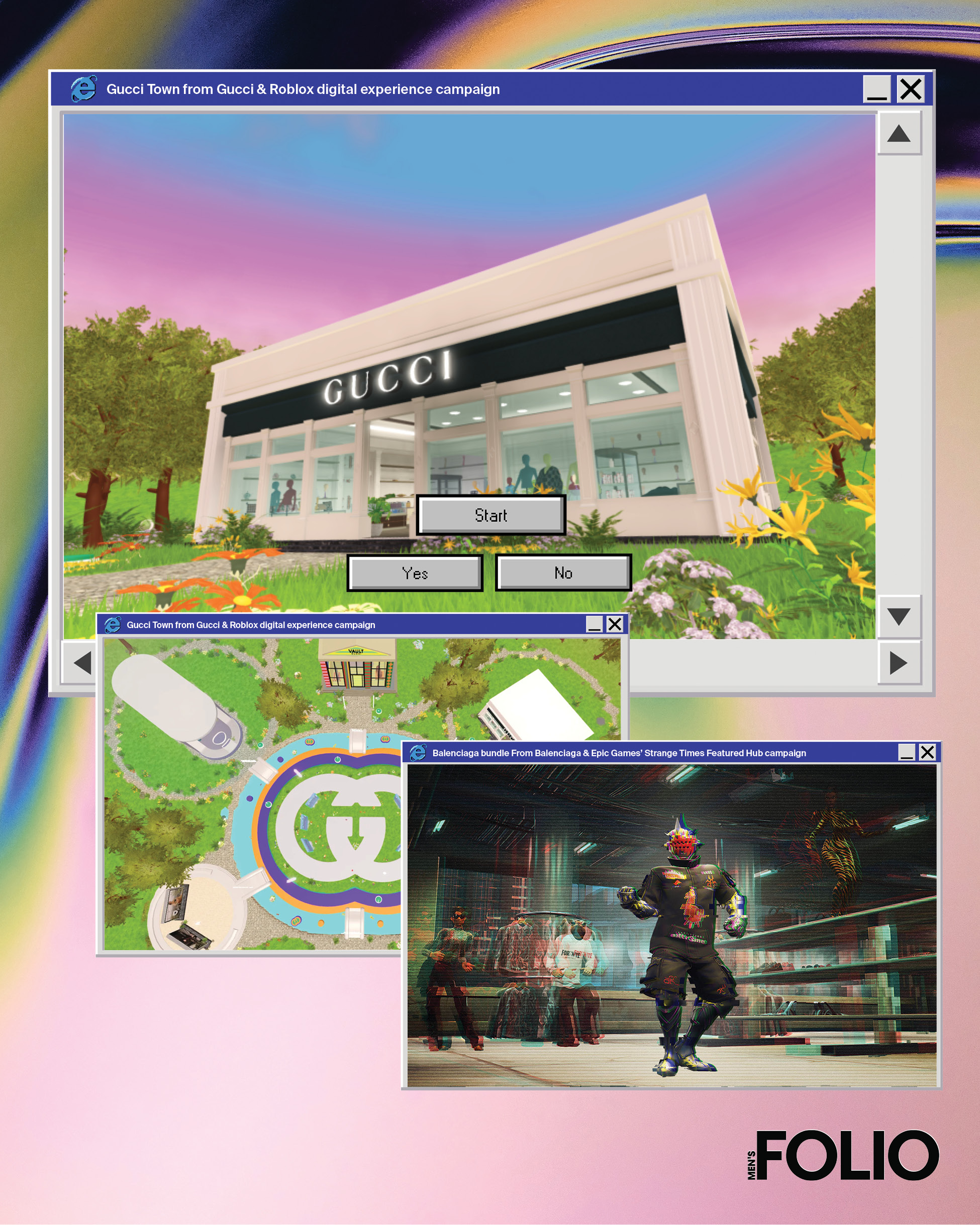
Different brands have experimented with different modes of crossover. Gucci’s collaboration with Roblox created the Gucci Garden and later Gucci Town, evolving into a persistent world rather than a single campaign. Players explored themed spaces, played mini-games, and collected virtual items. Some pieces became so desirable that virtual bags resold within Roblox for more than their real-life versions. Digital ownership felt legitimate; it was woven into the player’s personal story. Each collectible, each outfit worn by an avatar, carried the memory of where it was earned, the events shared, and how it was styled — creating a timeline of cultural participation that paralleled real-world fashion experiences.
Roblox itself has grown into more than just a collaboration playground — it is a full ecosystem for young creators. Many have turned their in-game shops into design studios, sketching outfits, testing silhouettes, and building collections before bringing them into the real world and vice versa. Some pieces start as digital fits worn by avatars, then get recreated as physical garments through small drops or custom orders; others begin as handmade items photographed offline and translated back into Roblox as 3D wearables. Each creation carries memory, traceable to a moment in gameplay, a design experiment, or a shared community experience. It is a creative loop that refuses to stay on one side of the screen, embedding style into personal and digital history alike.
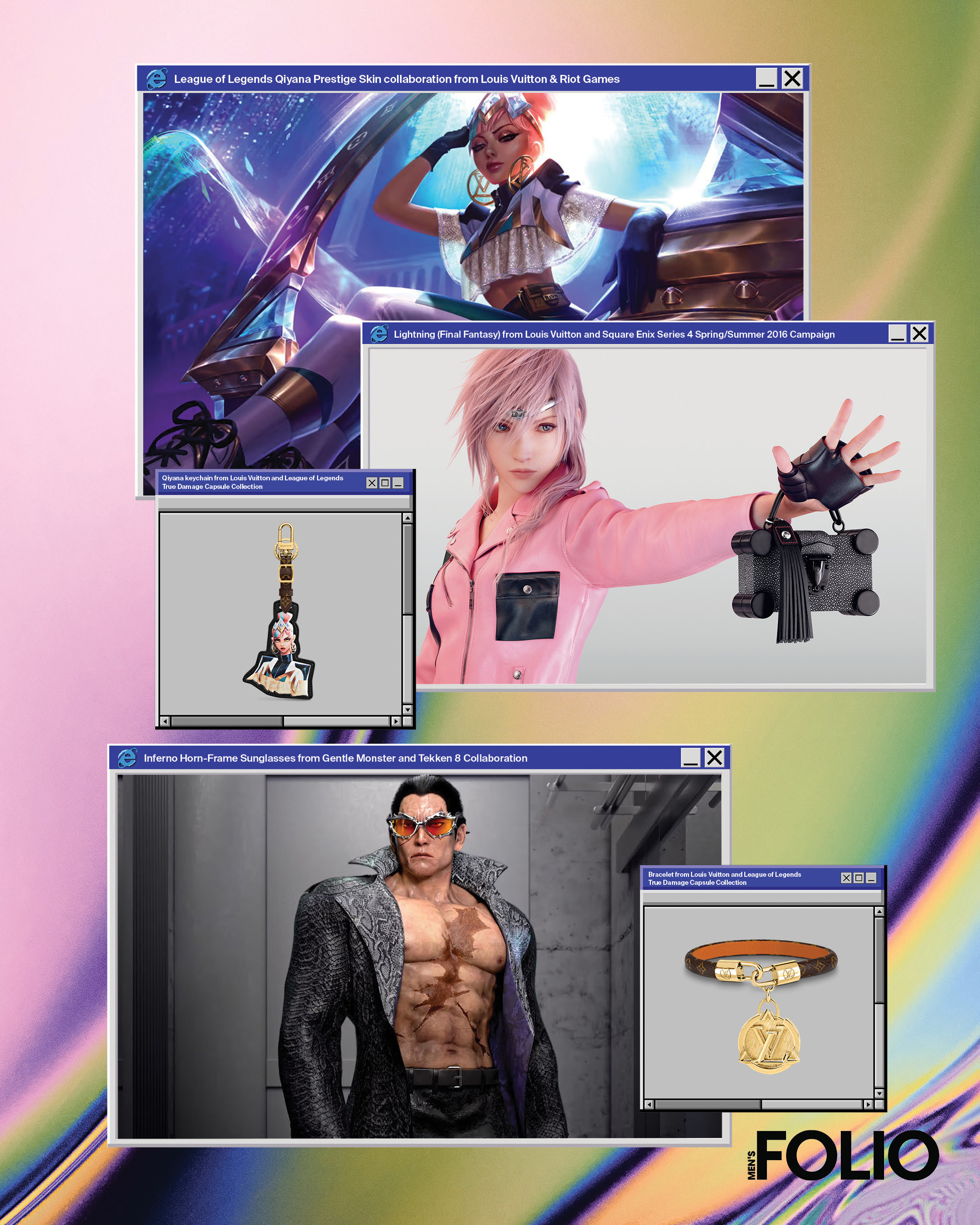
Some collaborations move in the opposite direction, bringing gaming aesthetics into real-world accessories. Gentle Monster’s Tekken 8 partnership translated the energy of characters like Kazuya and Jin Kazama into sculptural eyewear. These pieces were not costumes; they were artistic interpretations of the visual language of the game. Instead of dressing an avatar to express identity, players could wear something physical that captured the force and mood of a game that shaped them, expressing how the flow between digital and physical fashion can move both ways.
Fashion’s presence in games is deliberate, offering brands a space to engage audiences and extend influence while remaining authentic. Fashion collaborations with video games shape perception as much as they sell products. They allow brands to test ideas, measure engagement, and reach younger, digitally native consumers who increasingly see online and offline style as connected. Its reception has been largely positive, with players treating skins, virtual items, and in-game outfits as legitimate expressions of identity rather than gimmicks. These partnerships drive hype, encourage social sharing, and influence real-world sales. In that sense, fashion in games is simultaneously marketing strategy, cultural positioning, and experimentation, embedding style into the lived experiences and memories that shape a generation.
This sense of authenticity is tied to how digital fashion becomes part of personal history. An avatar’s outfit lives through matches, emotes, wins and losses. It becomes tied to memories, much like a song can become tied to a summer. Many players can describe exactly what they were wearing in their earliest gaming experiences. That outfit, even if pixelated, becomes part of the storyline of growing up. Few physical garments carry the same emotional timeline.
Ultimately, these collaborations demonstrate that fashion and gaming are not converging because brands decided it was trendy. They are converging because young people already treat digital environments as real spaces for self-expression, experimentation, and memory-making. Dressing an avatar can reflect mood, aspiration, or humour in ways that physical clothing sometimes cannot. Each virtual item, skin, or accessory carries experience, influence, and identity — proof that style today is as much about emotion and personal history as it is about fabric.
Once you are done with this story, click here to catch up with our latest issue.