What is the point of showing up to a restaurant you already know by heart? It is a peculiar feeling, walking into a space that feels settled before you have even taken your seat. The room does not need to be read. You already know where your attention will go, what will arrive, what matters. Even your reaction feels faintly rehearsed. By the time the first plate lands, little is being introduced. The experience does not open itself to you so much as resolve into something you have already understood.
Dining did not always move with this kind of certainty. There used to be a gap between expectation and encounter, a space where things could shift. You would arrive without a clear script and allow the room to reveal itself in fragments. The light might feel harsher than expected, the pacing slower, the dish you ignored on the menu might end up being the one you remember. Taste formed in motion, shaped by what unfolded rather than what had been anticipated. That gap has narrowed, almost to the point of disappearance.
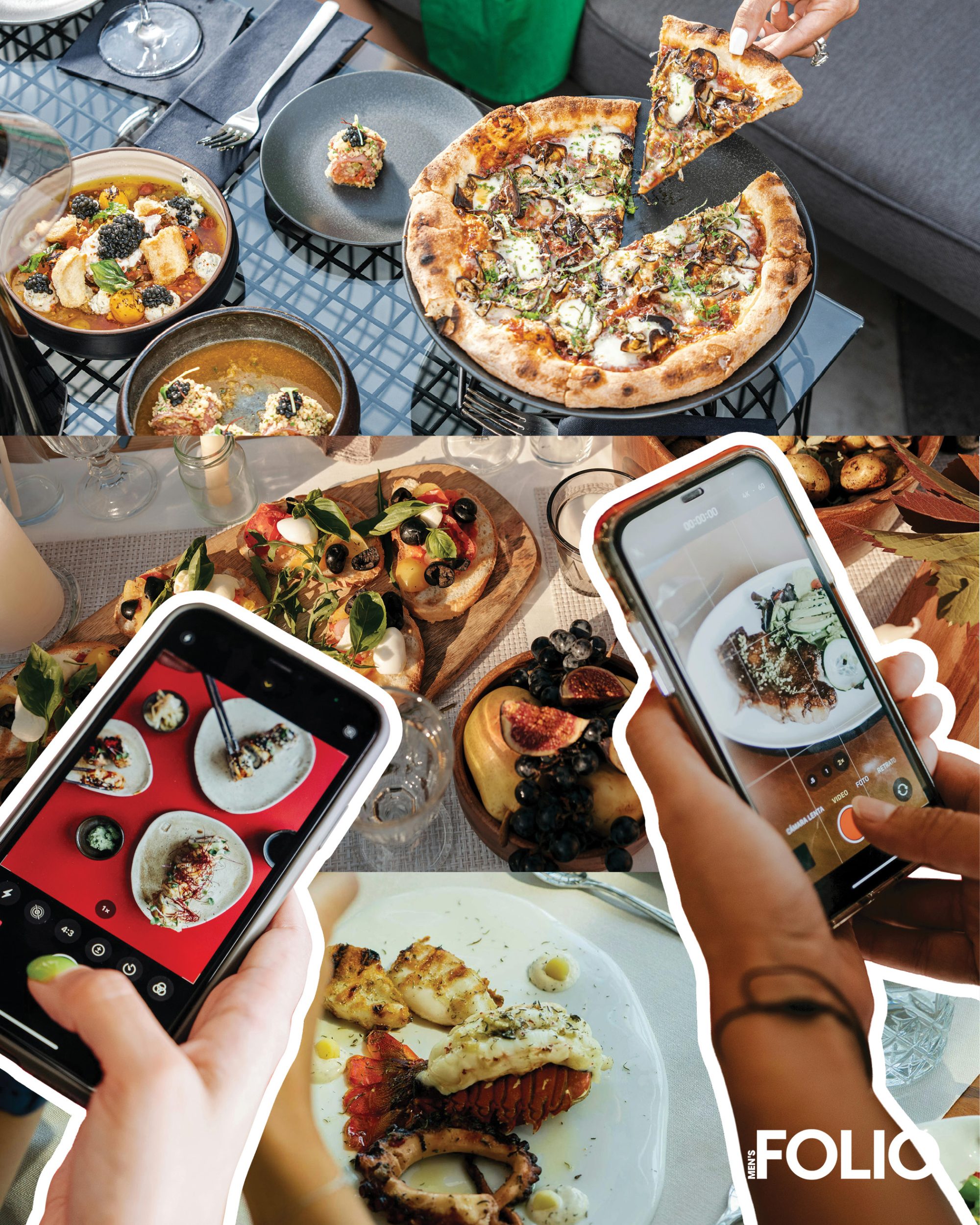
Restaurants now move ahead of themselves. They circulate as images, references, and recommendations long before they are encountered physically. A place appears once, then again, then repeatedly, until it stops feeling unfamiliar and begins to feel inevitable. By the time you decide to go, the experience has already taken shape. You are not stepping into something open-ended. You are stepping into something that has already been assembled.
At Carbone in New York City, the dining room is composed with a careful kind of theatricality. Red leather banquettes line the space, the lighting sits low and warm, and everything feels calibrated to hold attention without demanding it. Its spicy rigatoni arrives coated in a glossy vodka sauce, plated with a consistency that borders on uniform. It is not simply a dish. It is an image that has circulated enough to feel familiar before it reaches you. Ordering it does not feel like discovery so much as following through on something already set in motion elsewhere.
At Sketch in London, the experience becomes even more self-aware. The pastel pink dining room, the curved banquettes, the sculptural bathroom pods, all exist as images as much as they do as physical structures. They have been seen so often that they no longer require introduction. People arrive already oriented within the space, already aware of what to notice and how to frame it. The experience does not build gradually. It arrives largely intact.
Closer to home in Malaysia, Khairul Aming’s Rembayung operates through a different kind of anticipation, one built not on repetition, but on access. Reservations open in narrow windows and disappear almost instantly, leaving most people suspended between attempts, refreshing pages, waiting without knowing when they will be let in. When confirmation finally comes, it rarely aligns neatly with your schedule. The restaurant sets the terms. You rearrange yourself around it. By the time you arrive, the experience carries a weight that extends beyond the food, shaped by effort, timing, and uncertainty.
Across these places, the mechanisms differ, but the effect is shared. The experience is no longer something you arrive at and shape in real time. It is something that has already been structured, waiting for you to step into it.
It is easy to dismiss this as surface behaviour, to reduce it to visibility, to say that dining has become more about how things look than how they taste. But that reading does not hold for long. It overlooks something quieter and more practical, which is how difficult it has become to trust your own choice.
There are too many places, too many recommendations, too many overlapping signals about what is worth your time. The problem is no longer finding somewhere to go, but knowing whether you have chosen correctly. At a certain level, getting it wrong does not just mean having a disappointing meal. It can feel like misreading the moment entirely. Familiarity steps in to soften that uncertainty.
Seeing a place repeatedly, across different people and contexts, builds a sense of alignment. It does not guarantee quality, but it reduces doubt. Recognition becomes a form of reassurance, a way of narrowing choice until it feels manageable again. What looks like preference often begins there, shaped not only by instinct, but by exposure.
But recognition does more than steady decision-making. It places you within a shared understanding. Choosing a restaurant that is already widely recognised does not simply resolve uncertainty. It signals alignment, with a certain taste level, a certain moment, a certain way of being seen. The decision is not only about what you will eat, but about what your presence there communicates, to others and, more subtly, to yourself. The decision shifts almost imperceptibly. It is no longer driven solely by curiosity, but by the need to get it right, and to be seen getting it right.
That shift carries into how value is assigned. A dish gains traction, appears often enough, becomes easy to identify at a glance, and that recognisability becomes part of its appeal. It is not only something people enjoy. It is something people understand immediately. Ordering it becomes less about forming a taste and more about stepping into a shared agreement.
And once the meal ends, it does not quite end. It continues outward. Images appear, stories stack, and the same questions begin to circulate. Was it good? Worth it? Should I go? The experience folds back into the system that produced it, reinforcing the same patterns that made it feel worth pursuing in the first place.
You see this most clearly at places like Nobu. The sequence unfolds with near precision: the entrance, the sign, the table, the menu, the dishes. Each moment documented in a way that echoes what has already been seen countless times before. Set over it is probably that one Drake and Future song, looping the same line again and again. “Nobu, Nobu, Nobu, Nobu, Nobu, Nobu…” By the third or fourth story, little new is being communicated. The repetition itself becomes the point, not because it adds information, but because it confirms position. To be there is not only to experience the restaurant, but to be seen within it, at the right time, in the right context.
What appears as personal documentation begins to take on the structure of repetition. The experience is not being discovered from scratch. It is being replayed, almost instinctively, in a form that others will immediately understand. Restaurants are not separate from this. They are built with it in mind. Spaces are arranged to hold their shape when are built with it in mind. Spaces are arranged to hold their shape when reduced to an image. Lighting is adjusted, plates are composed, and layouts are structured to ensure that what happens in the room translates cleanly beyond it. The goal is not only to serve, but to register clearly, even at a distance.
This does not make the food irrelevant. It changes how it operates. The meal becomes one element within a larger system, one that includes access, familiarity, and the ability to participate in something that already carries meaning beyond the table.
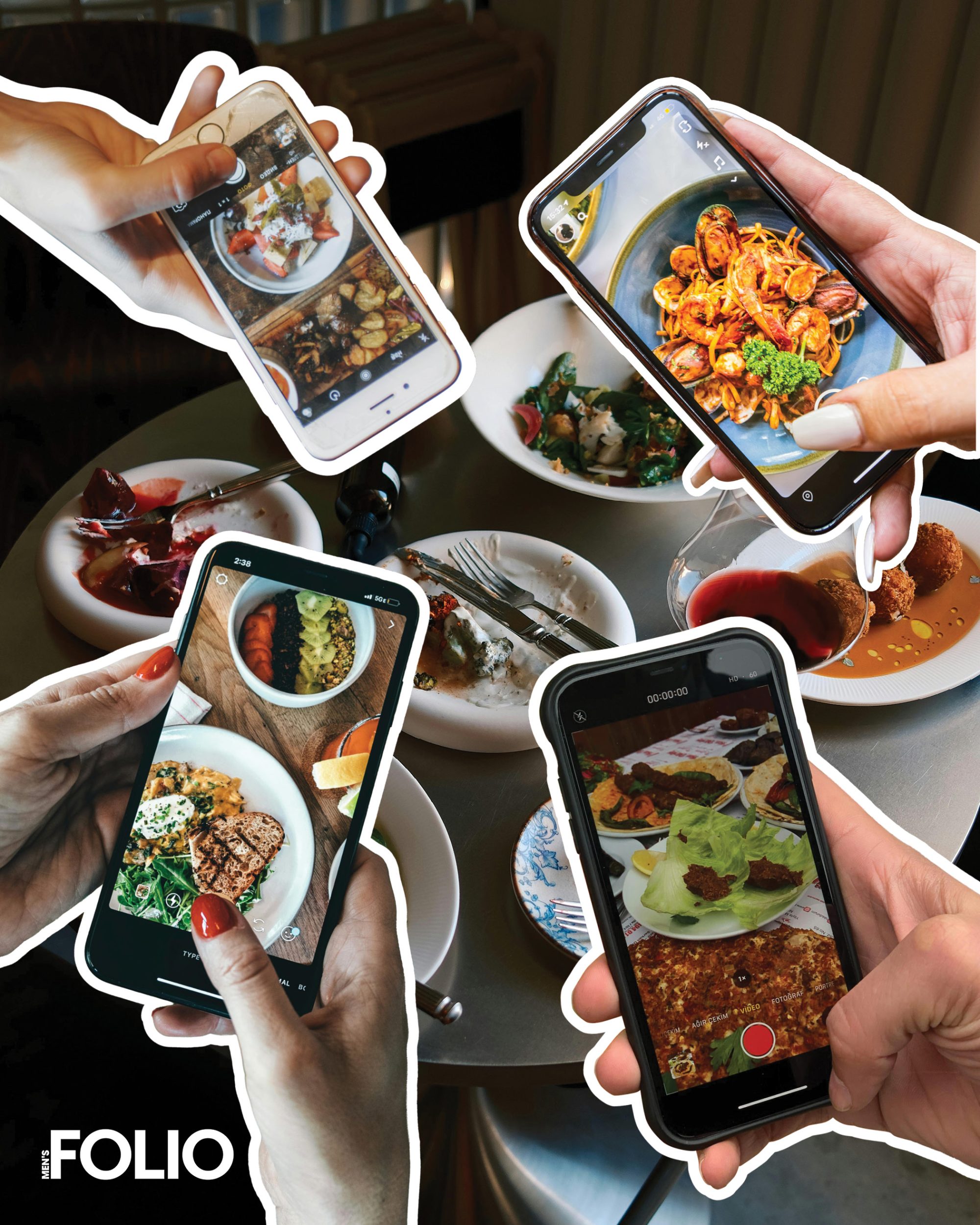
What shifts most noticeably is how taste itself is formed. It no longer emerges primarily through direct encounter. It is assembled in advance, built from what has already been seen, shared, and stabilised through repetition. By the time a decision feels like your own, much of it has already been shaped elsewhere. This does not eliminate personal taste entirely, but it changes where it begins. And that is where the difference settles.
When taste begins to feel inherited rather than formed, recognition starts to stand in not just for preference, but for position. What you recognise starts to feel like what you like, not only because it has been repeated, but because it places you within a shared cultural moment. The meal still unfolds. The food is still there. But you are not only eating. You are confirming where you stand.
Once you are done with this story, click here to catch up with our latest issue.