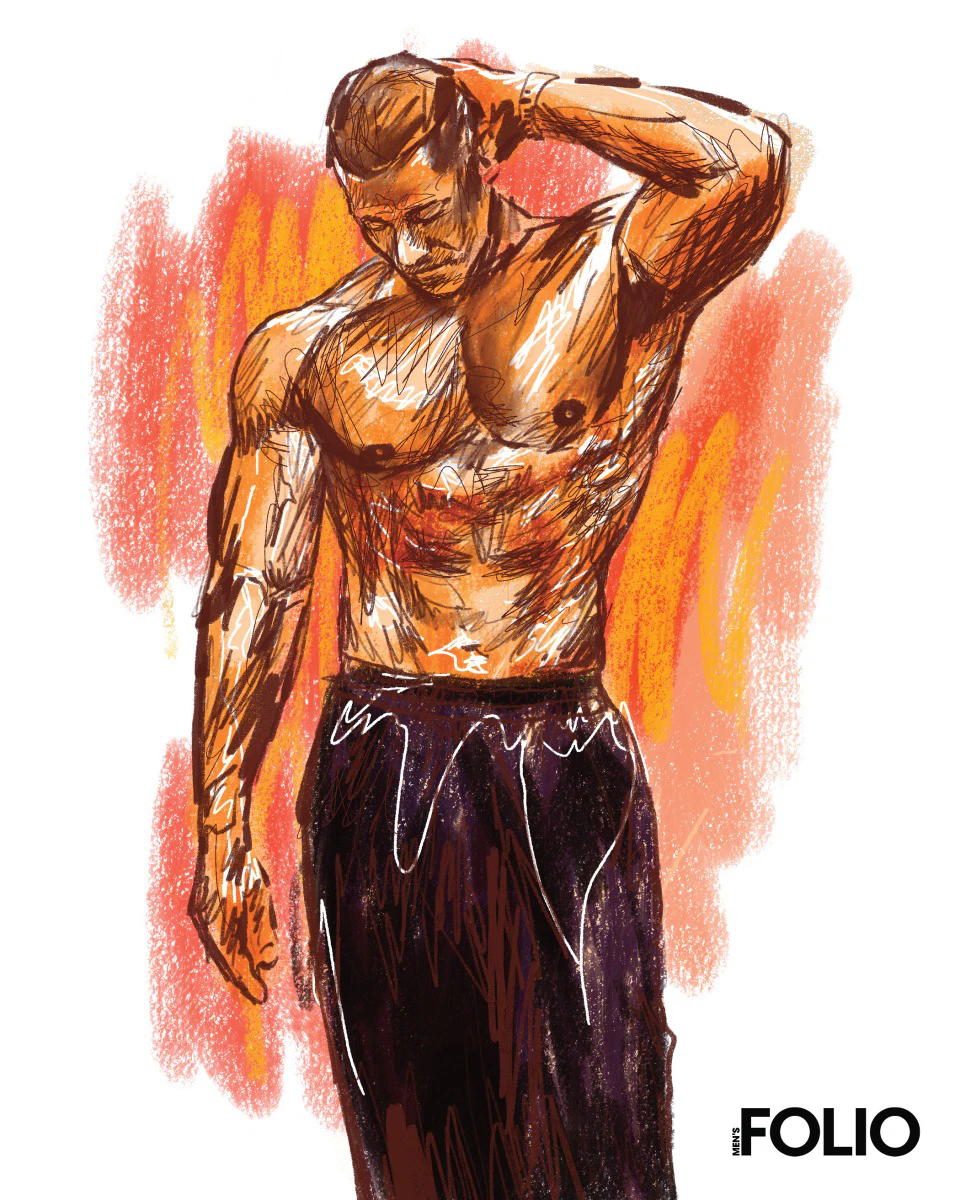
“Sorry, I think we’re going to have to ban the use of looksmaxxing in our stories for maybe a year,” was an actual sentence uttered in a meeting hours before this story was written. The same could be said about Chad, mogging, biohacking and peptides — words that have recently been added to the vernacular against my will. Vanity, a trait once weaponised for being a character flaw, especially against women, has now had its cover blown off, revealing itself to be a universal desire across the gender spectrum. After all, it is only human to want to be desired. What makes the pursuit of attractiveness sinister in the current zeitgeist is the incessant need to codify it as a way to rank society on a scale for comparison, even when there are unknowing and unwilling participants. The Sexual Market Value (SMV), a concept popularised by the manosphere — a growing community of incels (involuntary celibates), who share harmful and aggressive views on feminism and masculinity — promotes the idea that one’s physical attractiveness, material wealth and job titles are defining traits of one’s desirability. As both a reaction and a solution, the goal for these once- fringe, now-mainstream pockets of individuals is to take extreme measures to get ahead of this figurative curve. Said measures have included taking on unregulated supplements, performance-enhancing drugs, or devoting their lives to surgery and intense workouts. Clavicular, an infamous figure in this space, has been reported to self-inject backdoor testosterone at 14, and had a hammer confiscated by his mother for bonesmashing, an activity believed to give a squarer, stronger jawline by repeatedly tapping on the cheekbones, chin and jaw with a hammer.
At this juncture, the ouroboros of self-improvement, regardless of underlying intention, has a tainted reputation, imbuing all forms with a heavy tint of shame. Even before you notice them in the gym mirror, the sound of a shaker ball mixing up thick, pasty liquid in a plastic bottle is enough to conjure the image: a meathead in barely there, stringy suggestion of a tank top about to take up the squat rack for at least the next hour. Bodybuilders, and by proxy, serious gymgoers, by virtue of their interest in this social climate, have now been relegated by outsiders to being mere champions of superficiality who think they are better than everyone else. As a discipline that has origins that go as far as the ancient Greeks, and its modern form that began in the 20th century, could the enduring presence of bodybuilding be solely attributed to our relentless indulgence of vanity? Or is there something else that motivates these individuals? Technically defined as both a competitive sport to present musculature through diet and a weightlifting regimen, along with a colloquial association with strength training, Men’s Folio speaks to a community of bodybuilders — both competitive and casual — on their transformation, what drives them, and ways to navigate past the current adverse ties with the art form.
Admittedly, I code-switch when discussing my fitness routine with others. To friends with whom I attend workout classes, I call going to the gym strength training — as a point of differentiation from, say, pilates; to my relatives, I call it exercising; to my serious gym-going friends, I tell them I am training. “Most people think exercise, training, and bodybuilding are the same, but they are very different. Exercise is general movement: staying active, sweating, and enjoying the process. Training is more structured, with tracking of your performance and working towards progression. Bodybuilding, however, goes a step further. It’s physique engineering, intentionally sculpting the muscles to achieve symmetry and proportion,” explains Muhammad Marzlan (@marzlanbum), a 23-year-old coach and competitive natural bodybuilder. With a background in rugby and 11 years of working out, he has trained seriously with a bodybuilding approach over the past three years. Ultimately, bodybuilding is about achieving the X-frame: broad shoulders, a narrow waist, and well-developed legs. “At that level, everything becomes calculated, from training, nutrition, hydration, to sleep. It all contributes to the final result.” Personal trainer and casual bodybuilder Rahim Danial, 31, better known as Danny (@thegoldstandard.sg), who formerly competed in international bodybuilding, powerlifting and strongman competitions, no longer differentiates his personal journey between training and bodybuilding. While acknowledging that the former is a sport he no longer competes in, he still trains hard and watches his diet. “I’m kind of doing the same thing between training and bodybuilding, since my main purpose is towards strength, conditioning, and endurance-based sports,” he shares.
Depending on each individual’s priorities and goals, the bodybuilders interviewed currently have different routines. Content creator, model and barber Austin Yip (@austin.yip), 23, who does not compete, includes a five to 10km run in his regime: training up to six times a week with a four-day split that targets specific muscle groups. Marzlan takes his cues from legendary bodybuilding champion Dorian Yates with a push-pull-legs split, and mixes it up with high-intensity training. “I choose low volume with high intensity, and train until I’m close to failure. It’s a strong focus on execution and progressive overload,” explains Marzlan, who focuses on breaking his previous records through controlled, calculated reps. Leg day enthusiast, Danny, however, trains seven days a week. “Starting with legs, pool day — which trains my back, chest, legs again, arms, and back again. Sunday is for shoulders. Legs twice because I enjoy training them, and back because I think it’s my weaker body part. I mix it up with runs and bike rides too.” Chahrul Mustaffar, a 63-year-old semi-pro bodybuilder, trains every day except Sundays, which he reserves for his family and friends.
For younger bodybuilders like Marzlan and Yip, it is unsurprising that YouTube guided their start on this journey. “I started mostly self-taught through YouTube, but I focused on long-form content where there’s more depth and less misinformation. There is a lot of noise in short-form content today, and not all of it is accurate,” shares Marzlan. From there, he experimented with what worked for his body and gradually refined his approach. “I only hired a coach once, specifically for competition prep. It was to gain an external perspective, a second set of eyes to guide me objectively. I’ve transitioned into a much more structured, evidence-based approach over time and applied this to my clients.” Yip looked to fitness personality Greg Plitt’s 30-day transformation series and dared himself to follow the programme. Danny, however, first followed his older cousins with casual at-home exercises before going to the gym. “I started doing things on my own at first, and learnt a lot from reading materials online, but coaches have definitely helped me through my journey,” For Chahrul, a desire to train his legs at 27 years old after returning from a reservist call to serve in Brunei eventually led him to train competitively, earning runner up position in a national competition in 1991, first place in 1992, and representing Singapore at the SEA Games. Throughout the decade, he trained, relying on books, videos and professional coaches.
Before training, most of these men described themselves as large. “Weighing 130kg at 179cm tall, I looked like a potato — big belly, fluffy in all places, and pretty unhealthy overall. I didn’t fully understand nutrition, and there wasn’t much control over my lifestyle,” says Marzlan. To him, bodybuilding gave him a sense of structure and direction. As a fat kid, Danny felt insecure about his body. After being teased and bullied by peers, he resorted to layering a tighter T-shirt underneath his T-shirts just to hide his chest. Taking the first step to begin his fitness journey was a response to this appearance-driven insecurity. “In my household, nobody went to the gym, and nobody cared about their health until I became the first one to do so. It wasn’t easy,” he recalled. Early days required a “monkey see, monkey do” approach that yielded just-enough results. It was not until he received formal education through his Diploma in Human Anatomy and Physiology that he truly understood the human body, training and nutrition — lessons that would become valuable in transforming his physique. While Yip took about half a year to figure out what he was doing, it took three years of consistent dieting and training to materialise noticeable differences. “At that point, it’s not even something that motivates you any more. It just becomes a habit.” With the help of a competition coach, Marzlan got to dial in on his nutrition and properly structure his training, allowing him to observe significant changes. “The initial progress was very motivating. Once I saw that my body could actually change, it motivated me to push it more seriously. It’s a phase that really keeps you hooked.”
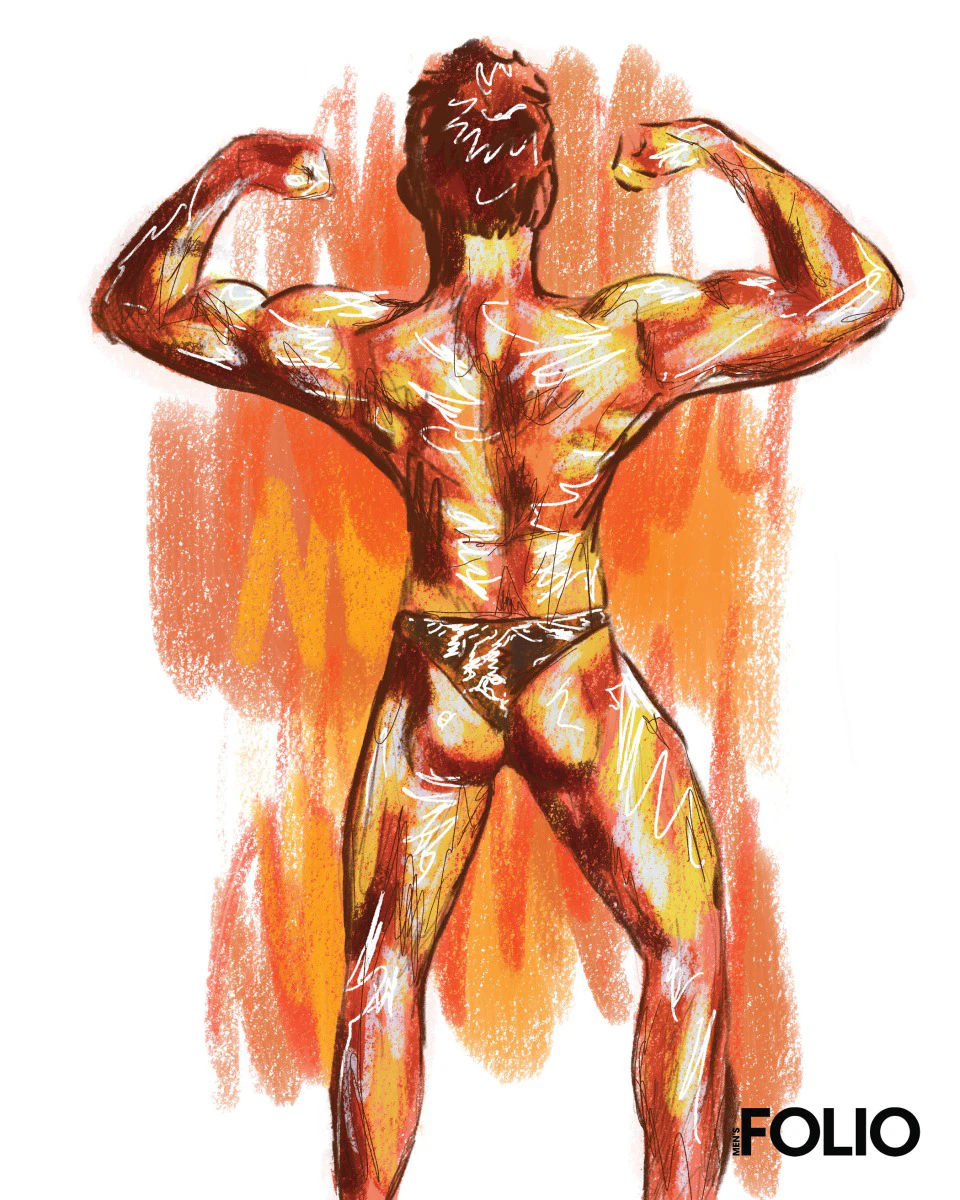
Beyond the perceptible aesthetic qualities, what has kept these men motivated enough to keep up with the rigorous training, perhaps even to the point of training others, is the transformative quality of the training. “It reminds you of your standards and what you’re capable of. Although it gets tiring, knowing that I would become my best self really is another form of self-love,” quips Yip. “I love it because I enjoy how it makes me feel, how confident it makes me. As a trainer, I also love seeing my clients’ results, beyond just the vanity standpoint. Their friends and spouses would tell me that they become much more active at home with their kids, stop smoking, and that their energy at home is much better. That kind of transformation means so much more to me than just a physical one, because you haven’t just transformed their lives — you’ve impacted their family and friends too,” Danny shares. Having experienced a ruptured ACL from rugby, Marzlan found himself spiralling into the lowest points of his life. He was sedentary for a year and struggled with binge eating. “That experience forced me to confront not just nutrition, but discipline, control, and the psychological side of eating. This has influenced the way I coach today,” recalls Marzlan. Both he and Chahrul find enjoyment in the fact that bodybuilding allows them to set their own targets and timeline, alongside the idea that you get exactly what you put effort into.
This sentiment also solidifies the idea that maintaining their progress requires sacrifice and reprioritisation. “I remember pulling out my meal prep at Texas Chicken while everyone’s having fried chicken and honey butter biscuits. It may not seem like a big thing, but it shows the level of commitment required,” Marzlan says. Acknowledging that bodybuilding is a selfish sport, Danny’s sacrifices involve bringing his own meals to weddings, dinners, and dates. “I go to bed by 8.30pm because I’m up by 4am, so I don’t ever go out late. My dinners are usually at 5.30pm, so I get to reach home by 7.30pm,” he shares. For Yip, dieting means never feeling as satisfied after meals; sacrificing nights out for better recovery; sacrificing sleep to train in the morning; and showing up at the gym at 6am or after a 12-hour shift. While their diets become pretty restricted during competition season, they still keep a semblance of mindfulness during the off-season. The men agree that being aware of what they eat will still affects their training and physique. “Just as you don’t put diesel in a Ferrari, you also don’t put junk in your body, right? During my bodybuilding days, I had more of a bulking, prep, or shredding season, but right now I’m happy with where I’m at, especially because my output is really high,” explains Danny.
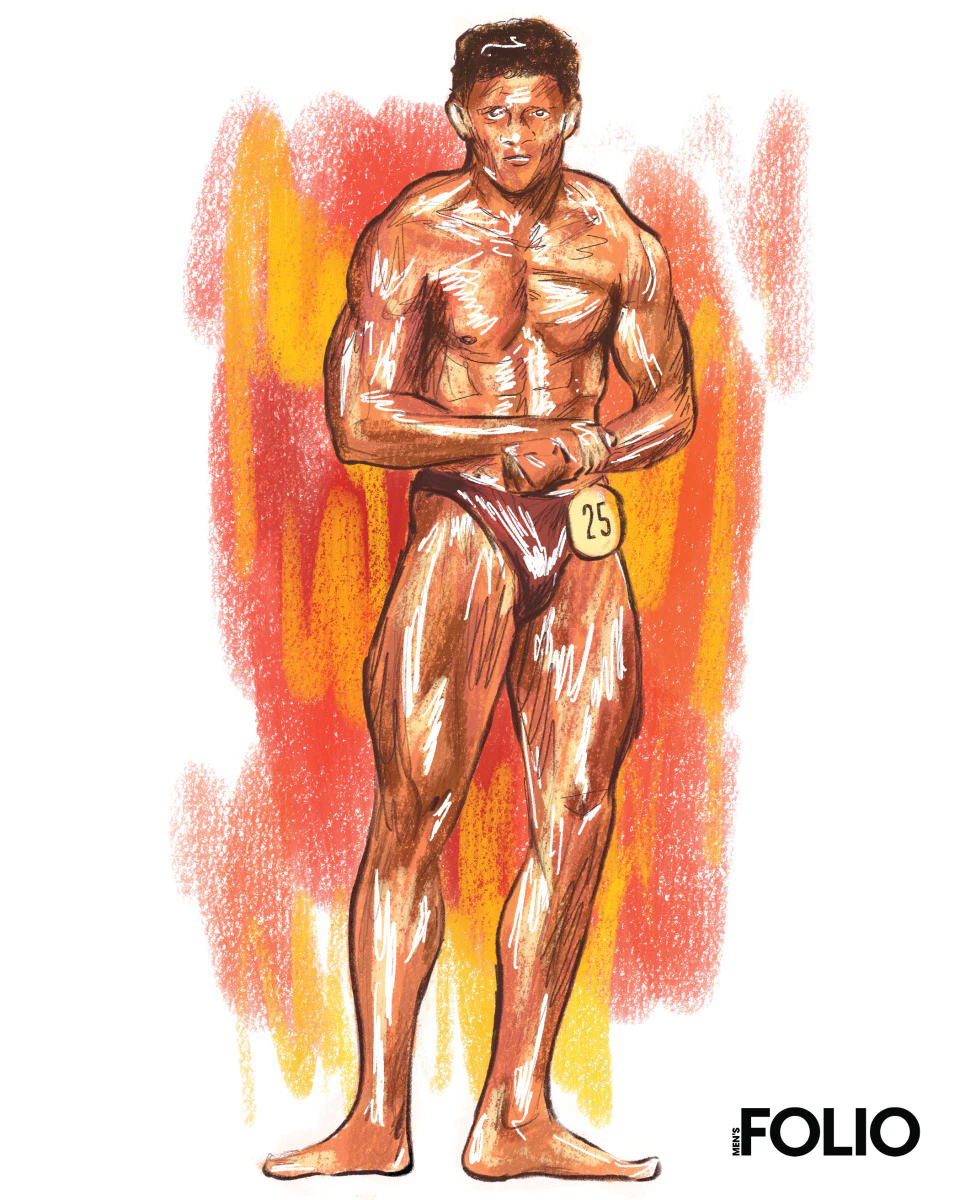
Speaking of input, the use of performance-enhancing drugs (PEDs) in bodybuilding has been a longstanding issue that intersects health, ethics, and integrity concerns. Does being natty or not matter? “It’s sad that youngsters use PEDs just to build themselves up quickly,” shares Chahrul. Both Danny and Marzlan feel that it comes down to personal choice outside of a competition setting. “In natural competitions organised by the World Natural Bodybuilding Federation, which I joined, it obviously matters. Otherwise, people should be educated before making these decisions. The issue is when shortcuts are taken without understanding long-term consequences,” Marzlan shares. “If you’re willing to sacrifice your health to look good, then it doesn’t matter, but all I know is that it loses meaning when you look fit, but your body is falling apart,” Yip adds on.
Given the current social climate that champions appearance above all, the phenomenon of looksmaxxers, who have gone to extremes with working out, abusing hormones and steroids, has given this interest a bad rep. Could bodybuilding take the blame for enabling these ideas, perhaps even perpetuating toxic masculinity? “Wanting to look good, to mog others isn’t wrong, but the problem is thinking that the fastest way to get there is through hormones or steroids, without fully understanding the consequences,” Marzlan shares. As a coach, he emphasises the importance of building a foundation first: gaining proper knowledge, learning how the body works, and working with a coach to guide the way. Another thing he stresses is the need to filter out the noise, whether it is negativity or unrealistic expectations, from social media. “The current beauty standards are often illogical. If you chase them blindly, you’ll never feel satisfied. You need to define your own standard.” To him, self-improvement comes down to eating well, sleeping properly, and training consistently, spending time outside, building a career, and presenting yourself well. Yip feels that it is always the “youngins” who fall prey to these tactics because they cannot understand that social media is fake. “Less of a thing with toxic masculinity directly, as these individuals are perhaps working towards their own well-being and seeking praise, but just found themselves headed in the wrong direction.”
Having worked this hard on their physique, moments of struggling with their self-image persist. “Even at this point, I still struggle with it every day. It is the greed in human nature that makes us want to always be better, but balance is needed for our own well-being,” shares Yip. While bodybuilding makes one more self-aware, the attention to detail can sometimes manifest as self-criticism. “I’ve always been confident and have never been overly concerned with how others perceive me. What helps me stay grounded is being clear about what I actually want, not what social media or others tell me,” Marzlan explains.
Reflecting a similar sentiment, Danny needed to take a step back from comparing himself to others. “I used to believe the whole ‘everyone has the same 24 hours’ thing, but not any more. Everyone has different challenges in their lives. As much as that is objectively true, someone might be working a 12-hour shift while juggling a newborn in their life, and struggling to go to the gym because they’re exhausted.”
Has the world perceived them differently since embarking on this transformation? Or has the shift been more introspective? While gaining additional glances has been a standard affair, it is truly the power of being in control of their lives that feels most substantial. “You attract more attention and compliments externally, but internally is where you get to see what you’ve achieved through hard work — and that becomes a form of momentum to reinforce the willpower to achieve other goals,” shares Yip.
Marzlan also finds that validation manifests in the form of credibility, as respect from the fitness industry has enabled him to inspire as many people as possible. “When I was younger, I enjoyed it a little bit. But now that I’ve been doing this for over a decade, I’m used to it, and I never want it to get to my head,” Danny shares. Most, too, confirm that this has drawn more attention from men than from women. “I think as a man, you just know the effort it takes to achieve a similar level of progress. It’s respect,” Yip says.

Despite having different careers and life stages, there was a resounding confirmation that bodybuilding will remain a part of their lives. “I WILL WORK OUT TILL I DIE,” wrote Yip in all caps. Sometimes, it is the chase they are after; other times, it is the way they cope with stress. To Yip, it is a form of validation in the humbling experience he calls life. Marzlan, however, foresees that this interest will evolve with time. “Currently, it’s more towards a competitive mindset and being performance-driven. In the long run, I’ll double down on coaching, educating and maintaining a high-level physique for personal satisfaction.”
When it comes to future fitness goals, a few, unsurprisingly, have included the ever-popular HYROX competition on their vision boards. “Maybe a lower body fat, too!” adds Yip. Identifying himself as an athlete at heart, Marzlan looks to other forms of activities that allow him to push his body. Danny, however, prefers to prove his goals to others rather than telling them. Chahrul keeps it simple, aiming to maintain his health without injury. Based on the insights shared, it becomes clear that, although the perceptible differences associated with bodybuilding as an interest, it takes a lot more than just an obsession with vanity to sustain. In fact, it is just a footnote that, for purists of the sport, wildly differs from the world of looksmaxxers that crawl through the corners of our algorithm.
Illustrations by Albert Raqueño
Once you are done with this story, click here to catch up with our latest issue.