For a long time, the runway was enough because it was decisive. It compressed a collection into a moment that moved quickly and left cleanly, a sequence of looks that announced themselves and then disappeared. What remained was an image, and that image travelled. Campaigns, retail spaces and editorials extended its life, but they all usually point back to that first encounter, that brief, controlled burst where the collection established its terms.
That structure has not disappeared, but it no longer feels complete. Over the past few years, brands have stretched their collections into formats that resist that kind of compression. Exhibitions allow the work to be returned to rather than remembered. Installations give it weight, letting it sit in space instead of passing through it. Temporary environments pull the audience inside, collapsing the distance that once defined the runway. The collection no longer moves past you. It gathers around you, asking to be experienced rather than simply observed.
Dining sits within this shift, but it does something more demanding. It doesn’t just extend the life of a collection. It reorganises the encounter. You are no longer positioned in front of the work, watching it unfold at a distance. Instead, you are placed inside a structure that holds you there, where time stretches and attention settles differently.
To sit at a table is to submit to a different structure. There is no clear beginning, no clean exit. The experience accumulates through pacing, through the arrival of each course, through the choreography of service and conversation. Time thickens. The room settles. The collection, in some form, remains present for longer than the runway ever allows.
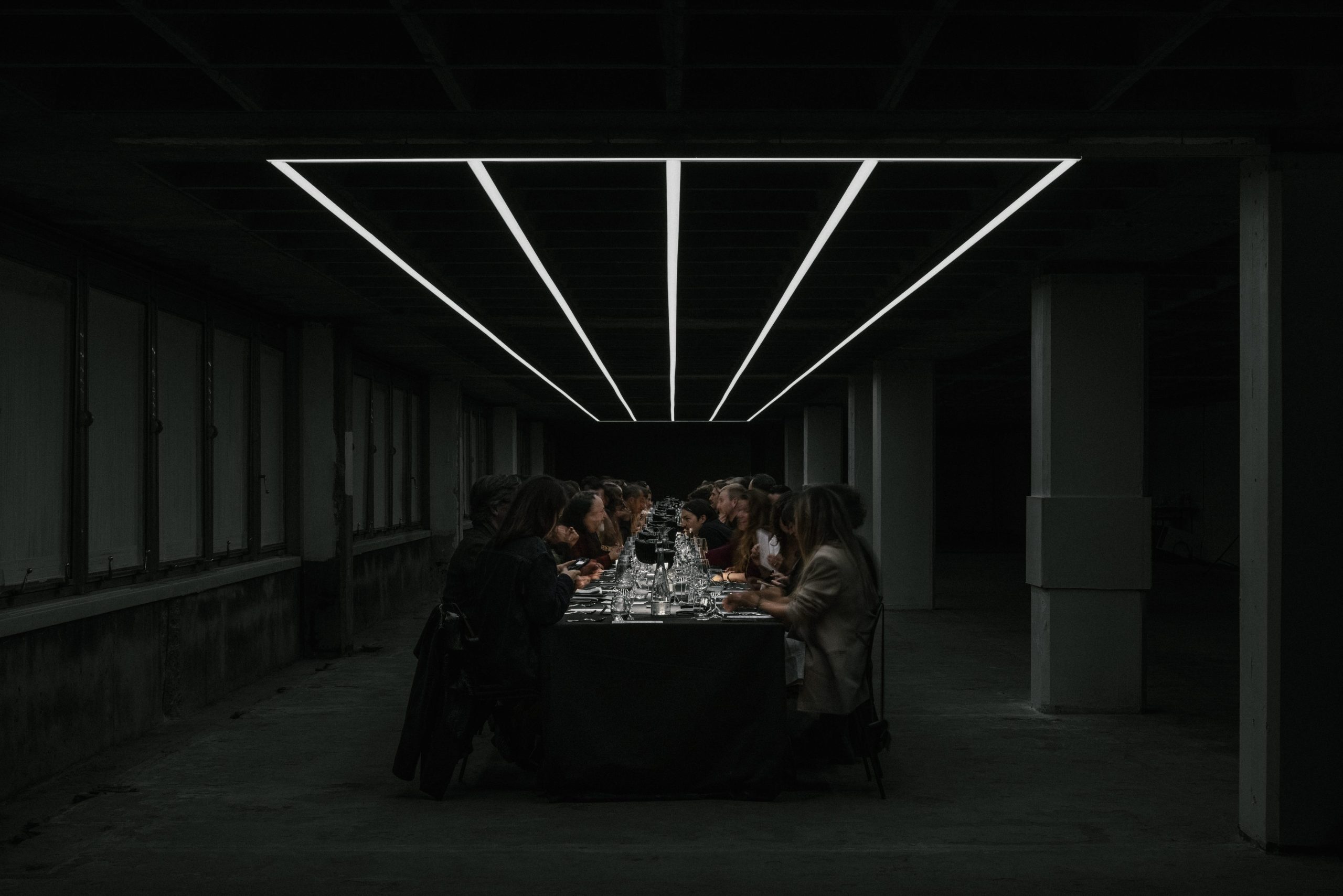
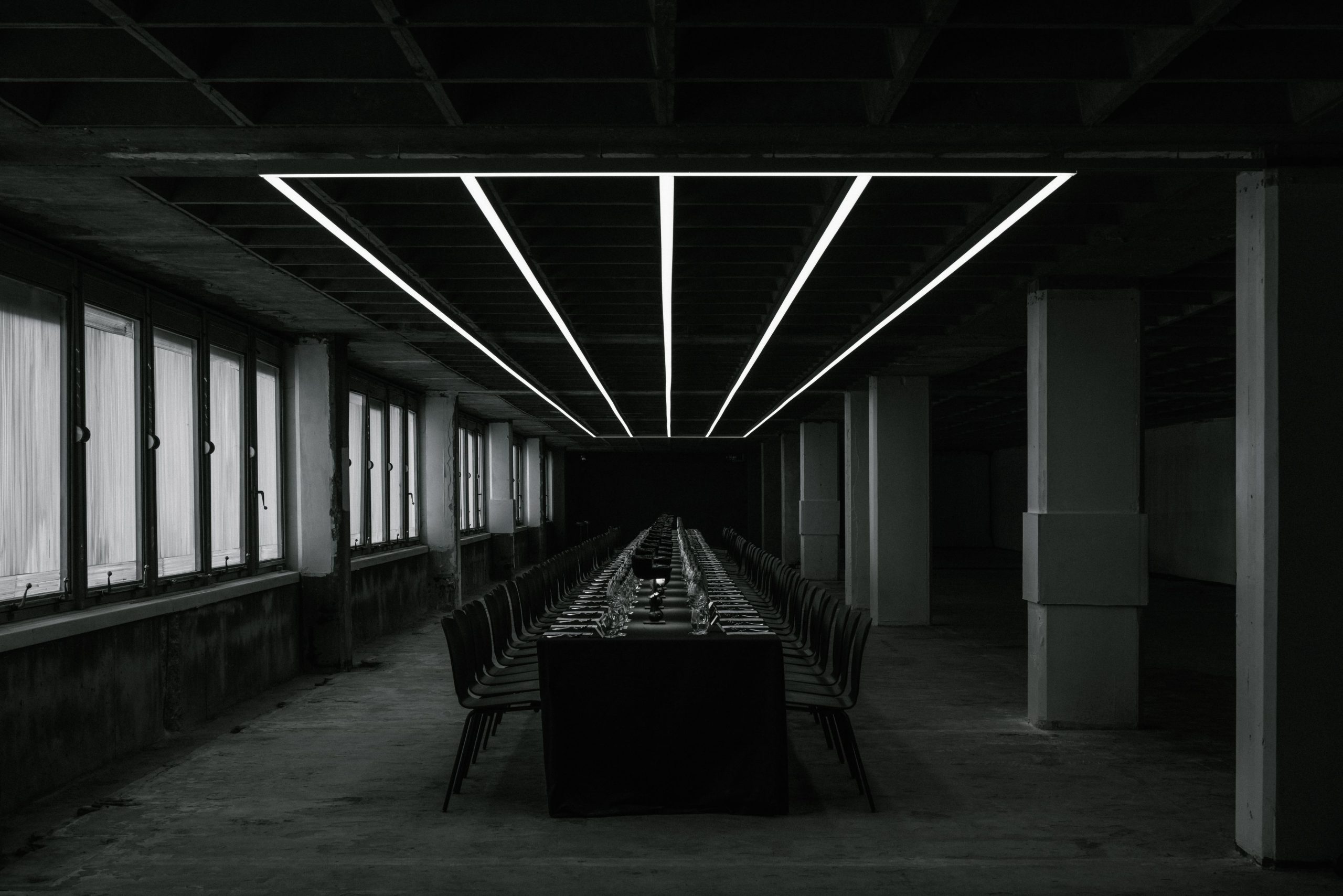
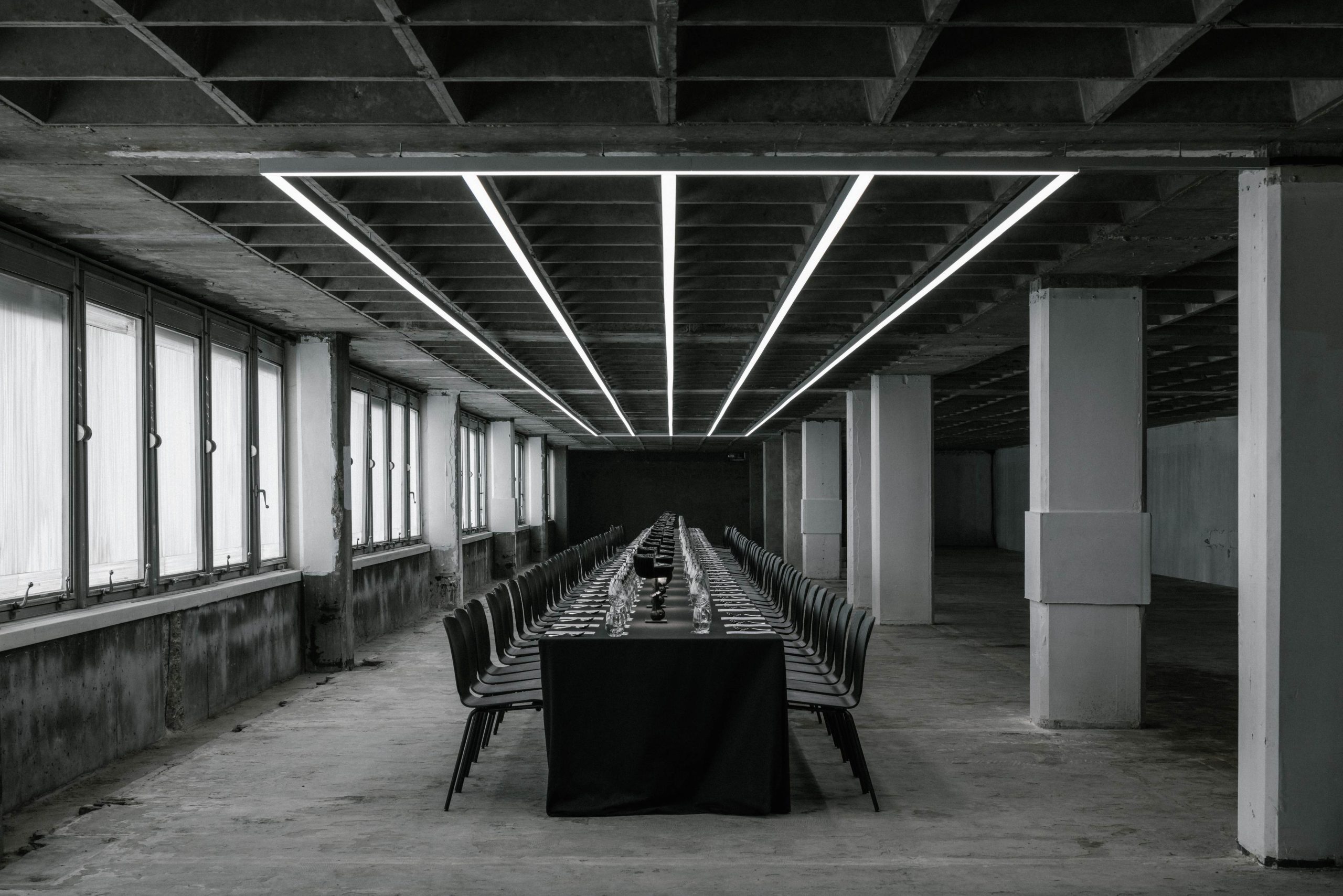
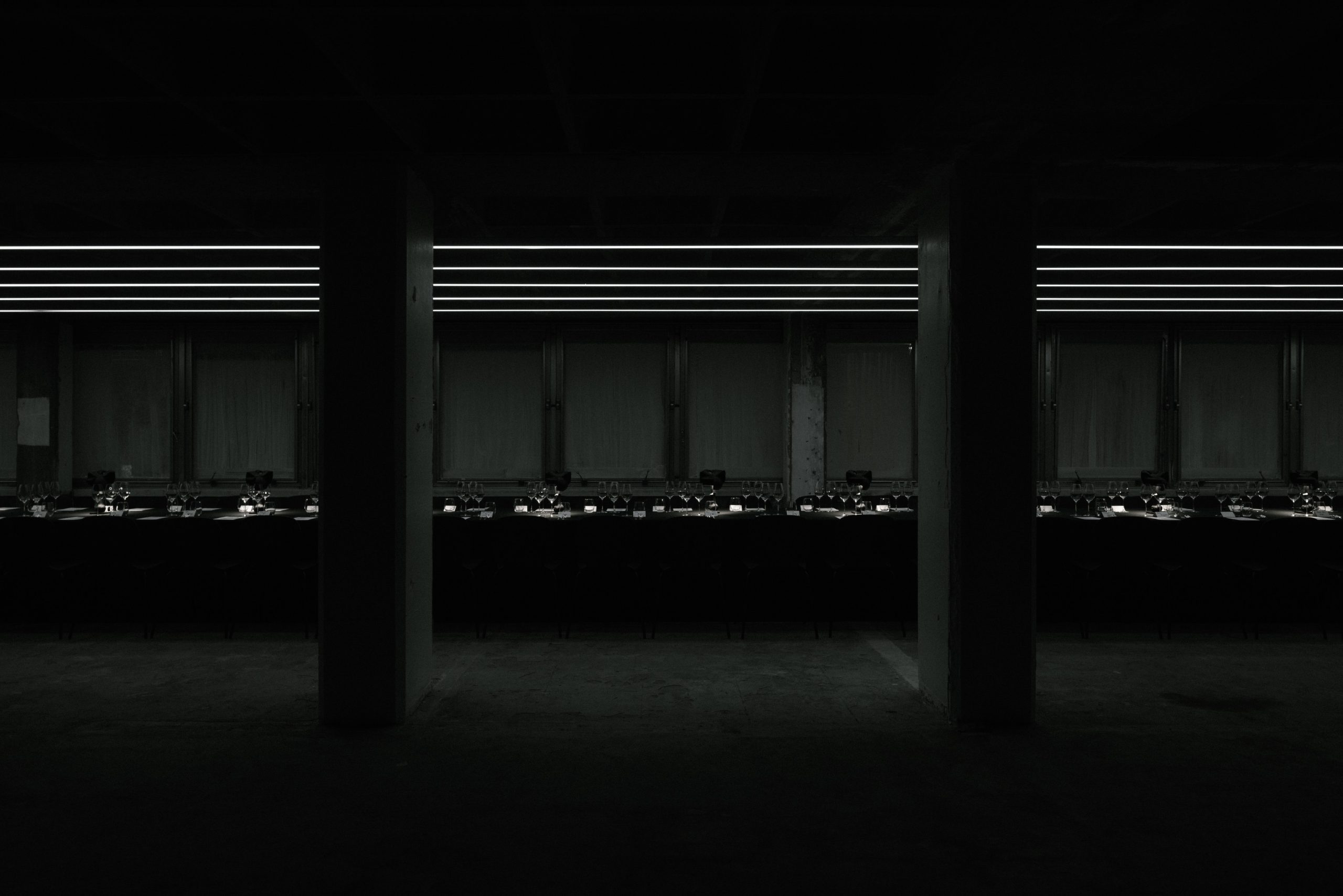
At a dinner hosted by Jacquemus at the Palace of Versailles, staged to mark its “Le Soir” capsule, that shift unfolds gradually. Guests move through the palace before the space narrows into a long corridor, where a single table runs almost the full length of the room. White linen falls cleanly to the floor. Candles sit low along the centre, their light catching on glassware without fully illuminating the space, while clusters of grapes rest directly on the table in loose groupings that feel deliberate without appearing staged.
The table does not rely on decoration to establish itself. It feels edited, as if anything unnecessary has already been removed. That restraint carries into the meal. When the food arrives, it does not disrupt the atmosphere but continues it, with colours kept muted and textures handled with the same degree of control. There is no clear break between the setting and what is served. It all operates within the same visual and material language.
And yet this is where the translation begins to strain. A garment communicates through form, proportion and movement. It exists in relation to the body, and crucially, it lasts. A dish operates differently. It is immediate, sensory, and then gone. The moment you taste it, it begins to disappear.
Which raises a more difficult question. If fashion is being translated into something that cannot hold its form, what exactly is being preserved?
It is tempting to draw parallels. A translucent slice might recall lightness, a denser plate might suggest structure. But these connections rarely hold long enough to feel convincing. They are fleeting, almost rhetorical. What lingers is not the translation itself, but the sensation of having experienced something constructed for you, something that unfolds in real time and then withdraws. In that sense, the meal does not replicate the collection so much as displace it. What holds your attention is not the clothes translated into food, but the immediacy of the experience itself, something the garment cannot match from a distance.
Paris-based culinary studio WE ARE ONA operates within this ambiguity, working with brands including Balenciaga, Jacquemus and Saint Laurent to construct environments where food, space, and timing move together. In these settings, the meal becomes another surface through which the brand can be expressed, even if that expression never fully resolves into something stable. What you are given is not the collection itself, but the experience of being close enough to feel like you have understood it.
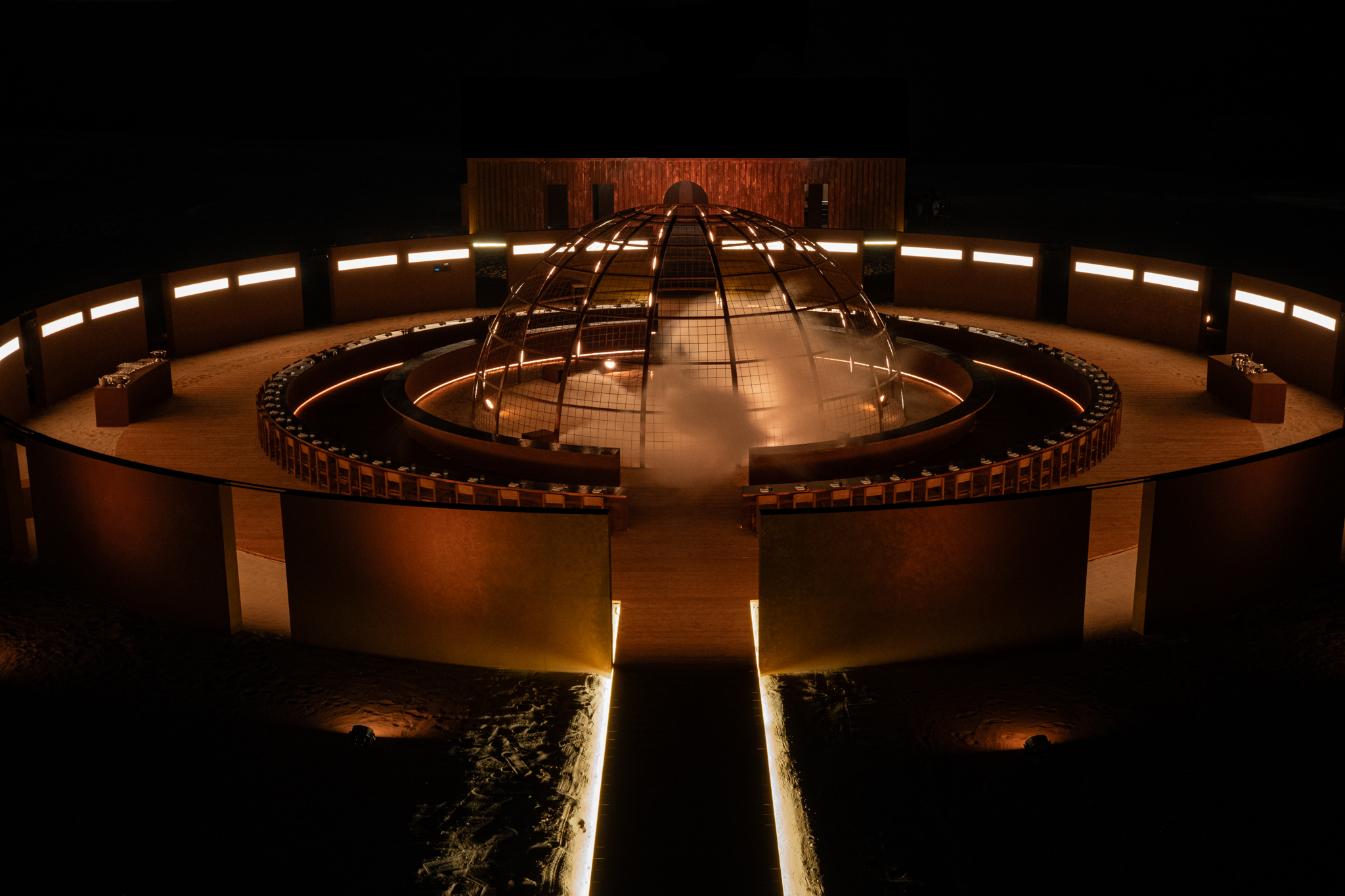
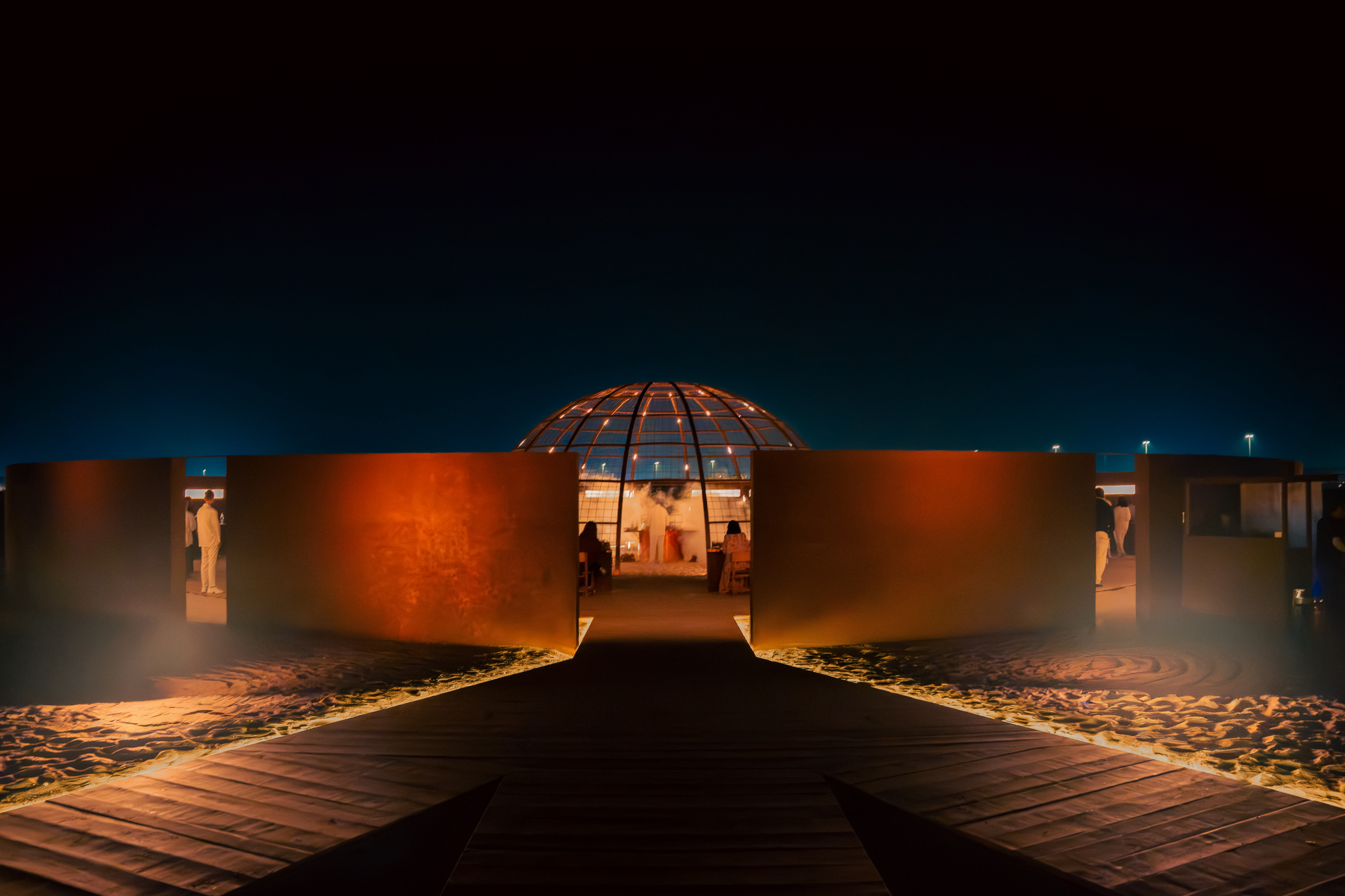

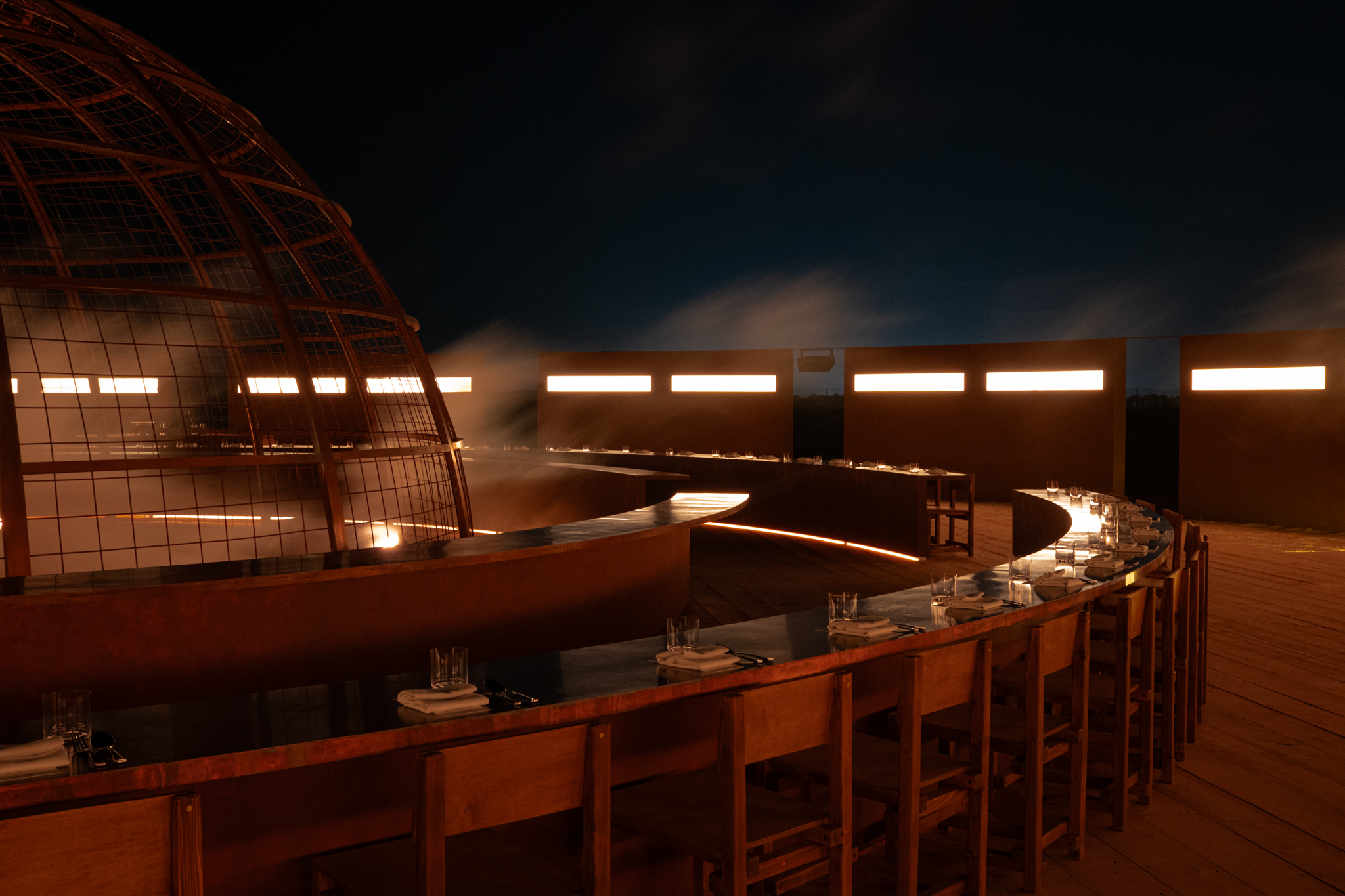
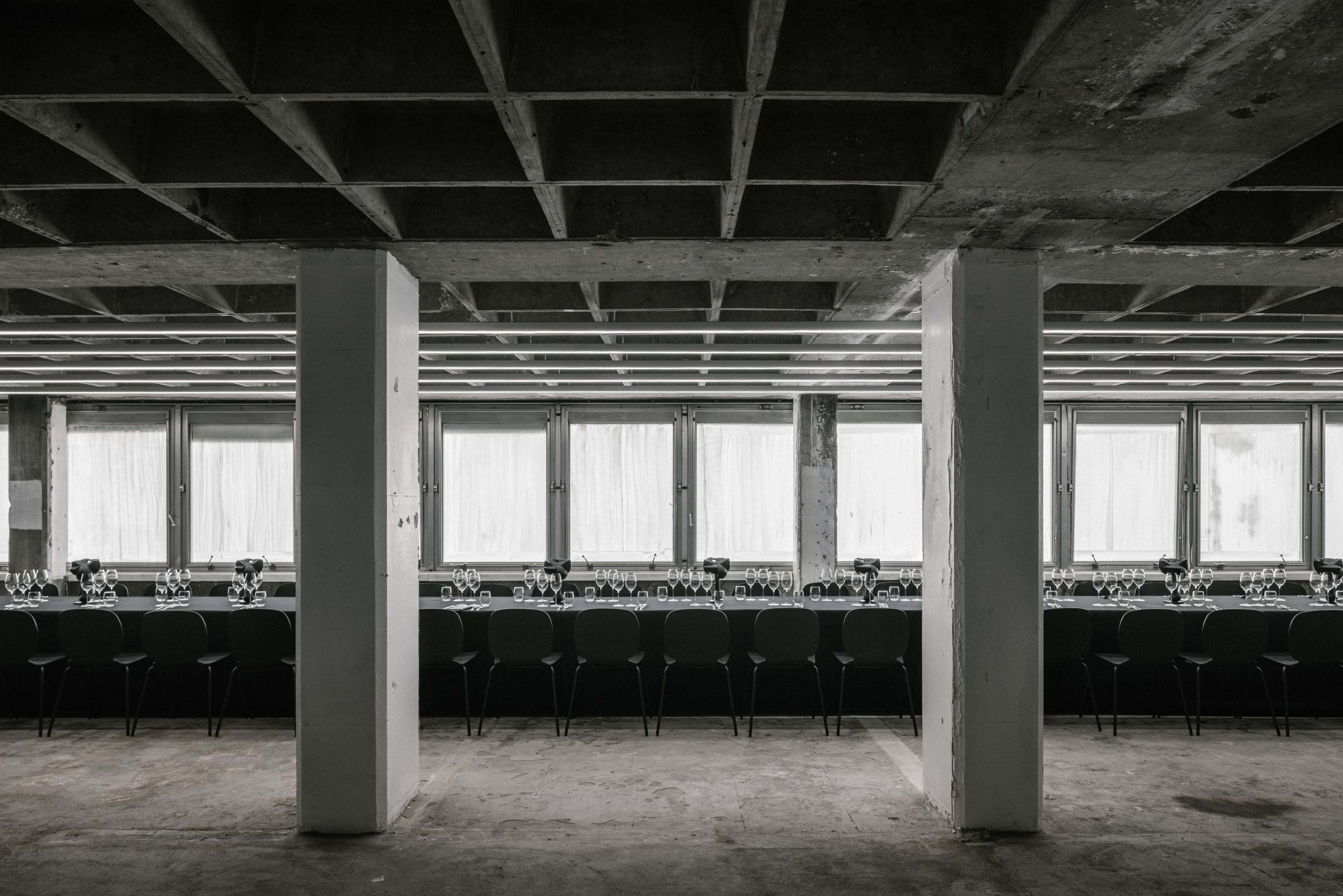
At a dinner held for Balenciaga’s Winter ’24 collection at Palais de Tokyo in Paris, that tension is made visible. A long table runs through the room, but its order does not hold. Plates tilt toward the edge as if caught mid-fall, cutlery slips out of alignment, and arrangements drag downward, some already collapsed onto the floor. Only sections remain intact, creating a divide between control and collapse.
Guests may sit along that intact stretch, eating within a narrow band of order while everything around them suggests disruption. The effect is not chaotic so much as suspended, as though the table is holding itself at the point just before collapse. It mirrors the instability often present in Balenciaga’s collections, where structure is pushed to feel unsettled without fully breaking apart.
To sit at these tables is also to occupy a role that goes beyond that of a viewer. You are not simply consuming the experience. You are part of how it circulates. Your presence, your image, your proximity to the brand becomes part of the event’s afterlife. To be there is no longer just to see the work. It is to be seen within it.
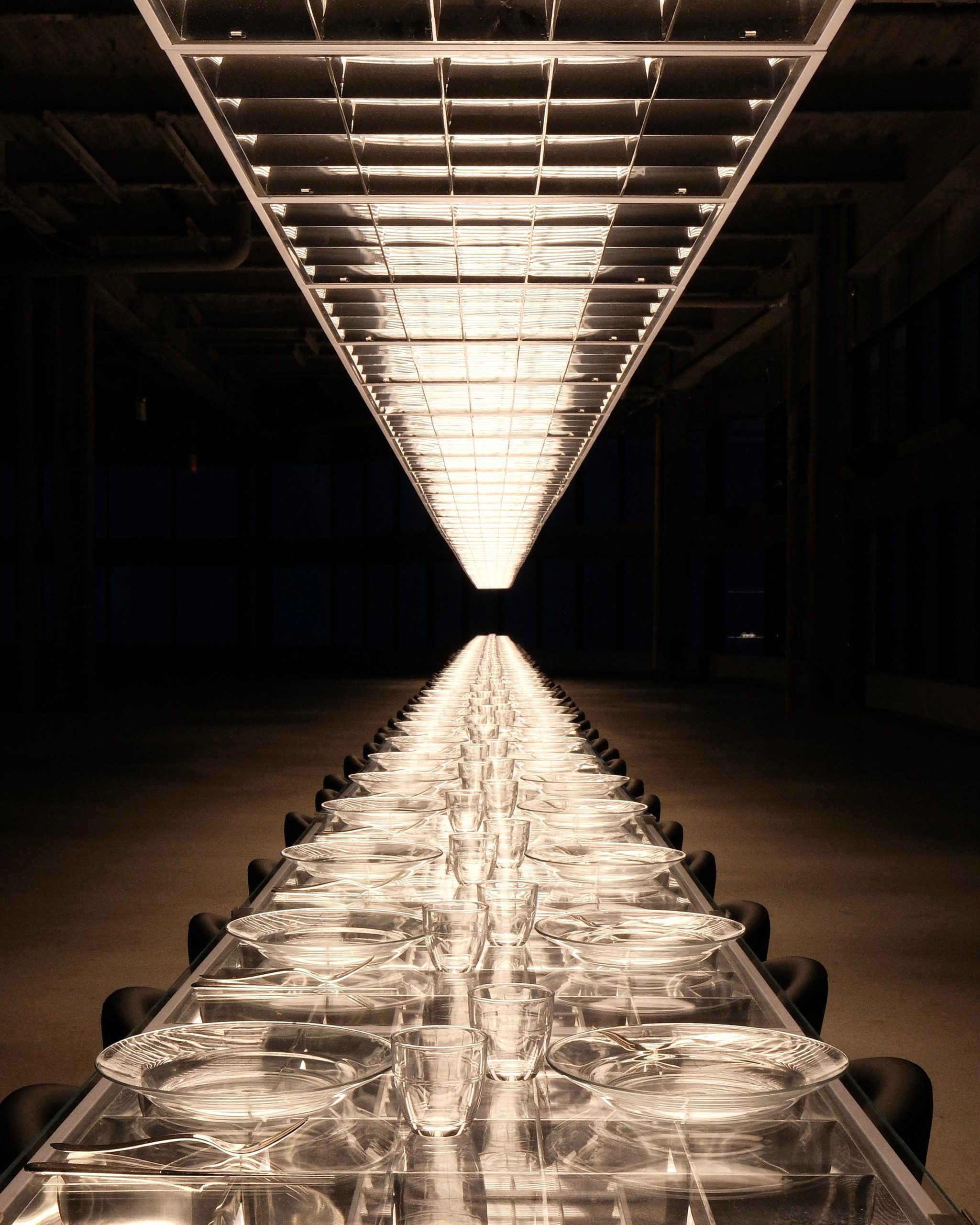
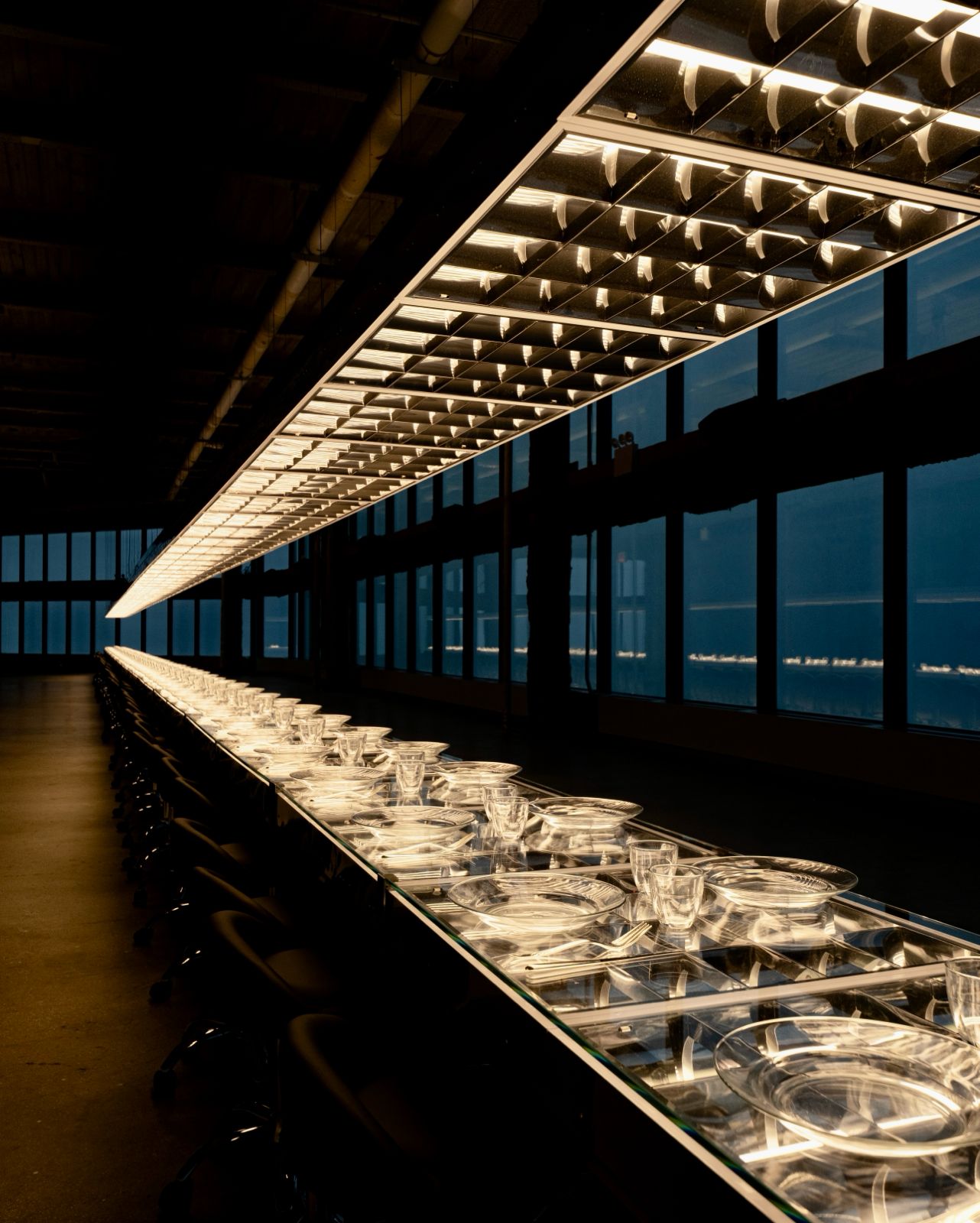
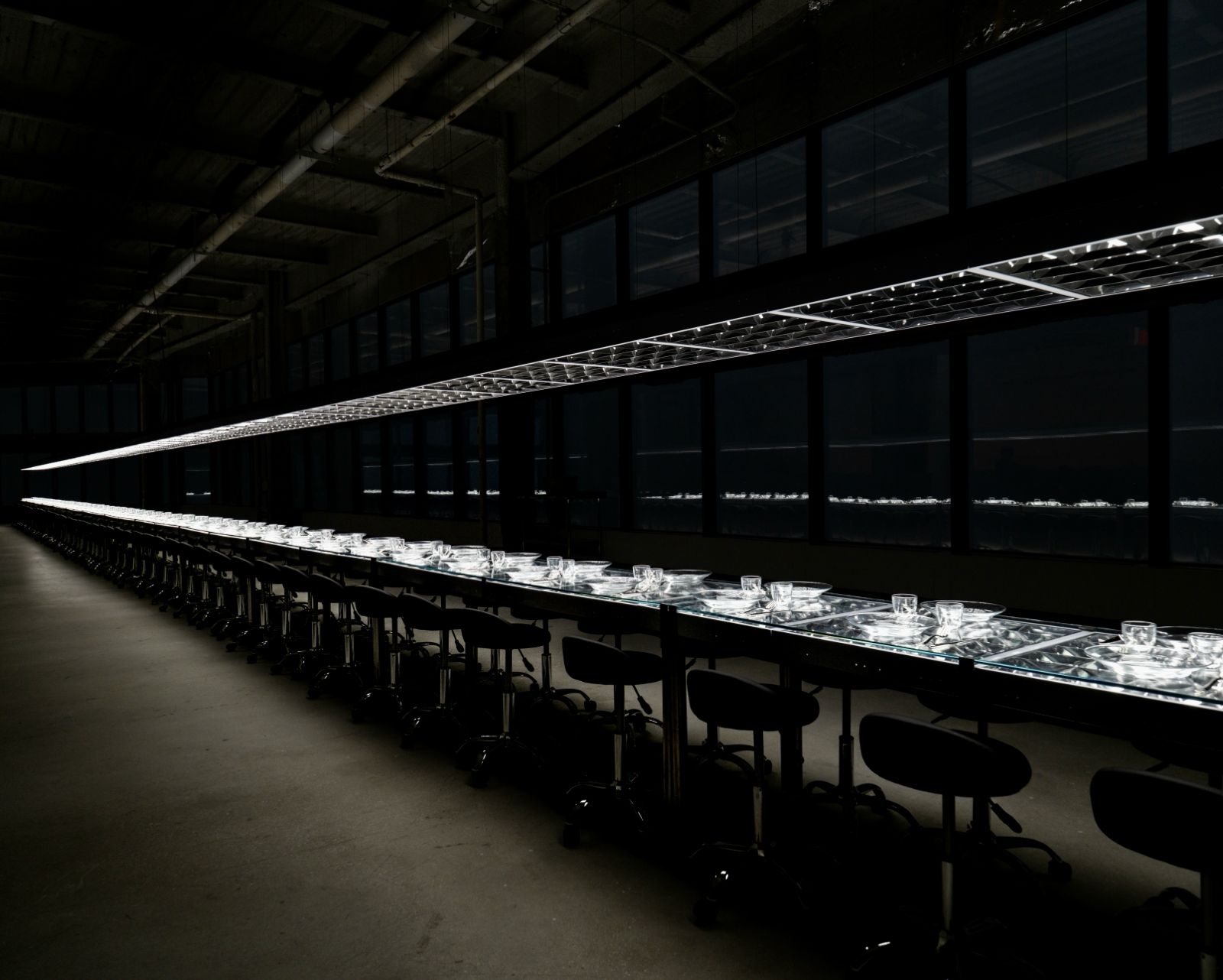
This complicates the idea of immersion. Are you there to experience the collection, or to be seen experiencing it? The distinction is not always clear. The dinner promises intimacy, but it is also staged for visibility, designed to be captured and redistributed. What is being consumed, then, is not just the meal or even the collection, but access itself, the brief, visible proof of being inside something others can only watch from a distance.
In St. Moritz, a collaboration between ADR Agence and Maison Margiela moves in the opposite direction, reducing the environment until is almost disappears. The table sits against snow, with white linen blending into the ground and ceramics fading into the same surface. Edges soften rather than sharpen. Light flattens the tableware, and the chairs seem to dissolve into their coverings.
The space recedes rather than asserts itself. It requires a slower kind of attention, aligning with Maison Margiela’s long-standing interest in reduction and anonymity, where meaning emerges through what has been removed rather than what has been added. At the same time, the setting is designed to be seen again through images, its near-invisibility translating into something clean, controlled and easily circulated.
Across these examples, dinner begins to function as more than an extension of the runway. It operates as a parallel format, allowing a collection to exist in another state, slower, more immersive, but also more dependent on the audience to take shape.
That dependence introduces a tension that becomes harder to ignore the longer you sit with it. A garment persists. It can be worn again, reinterpreted, folded back into daily life, accumulating meaning over time. A dinner operates differently. It is constructed with the same precision, but it is designed to end almost as soon as it begins.
What remains is not the object itself, but the memory of having experienced it. And memory does not distribute weight evenly. It holds on to fragments, the atmosphere, the rhythm, the sensation of being placed inside something carefully arranged, while allowing other elements to recede. The clothes, which were meant to anchor the experience, begin to compete with something more immediate, something harder to replicate once it has passed. The clothes can be revisited. The experience cannot, and that imbalance is exactly what gives it power.
As these environments become more elaborate, that imbalance stops feeling incidental. You do not always leave with a clearer understanding of the collection. You leave with a sharper impression of the experience that surrounded it. Over time, that shift accumulates, and the hierarchy begins to tilt. The object is no longer the sole centre of attention. It shares that position with something less stable, but often more compelling.
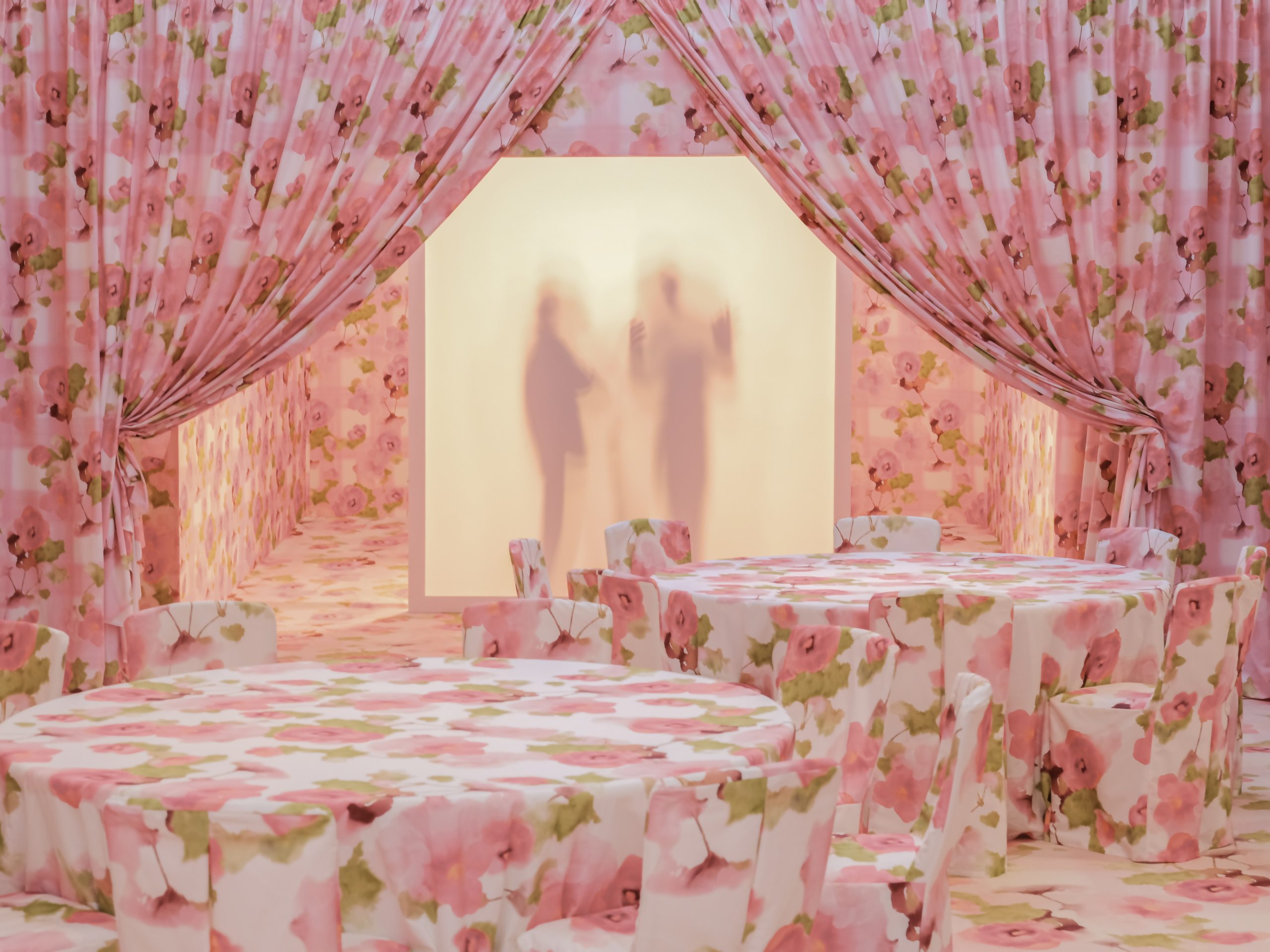
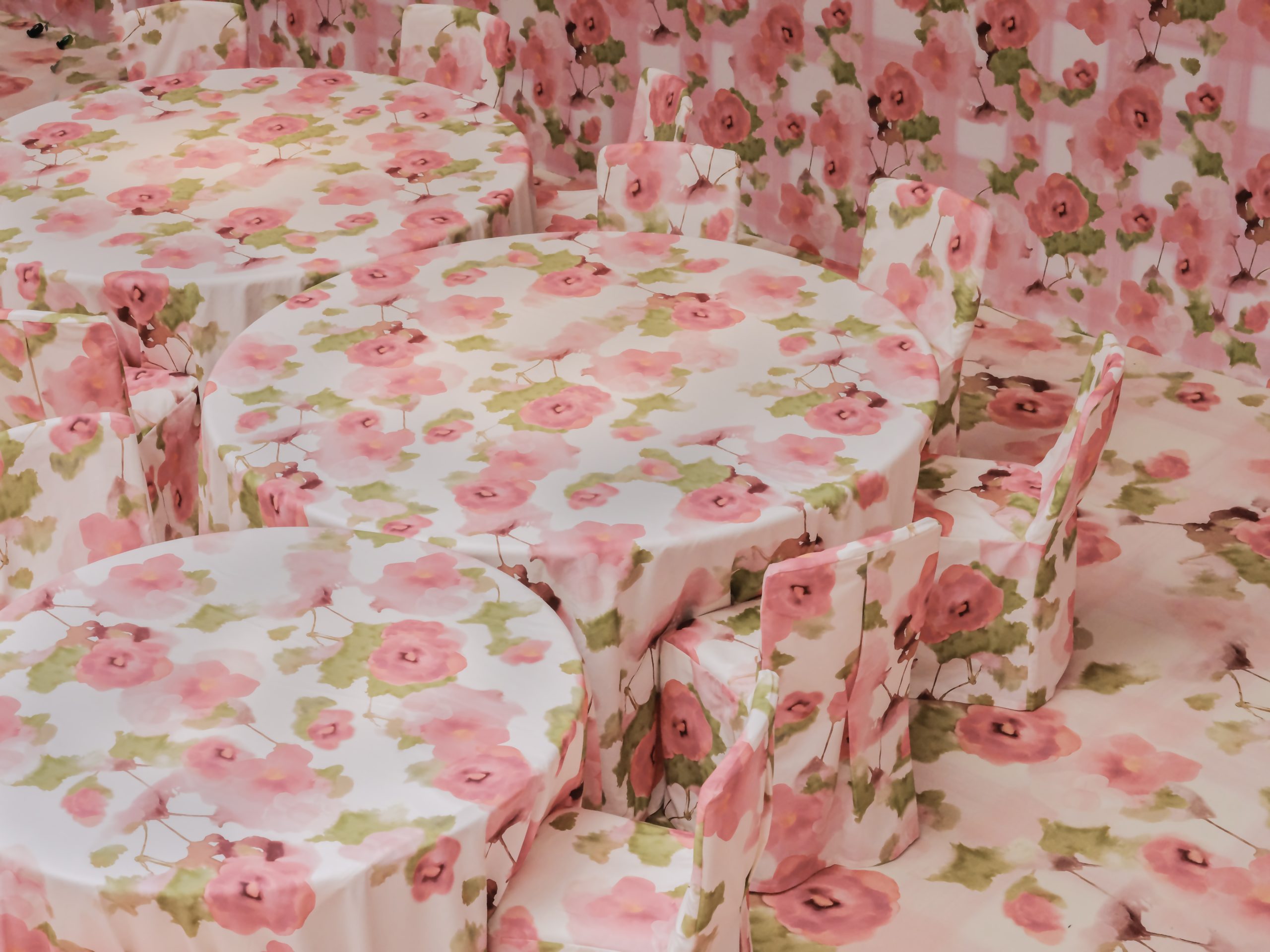
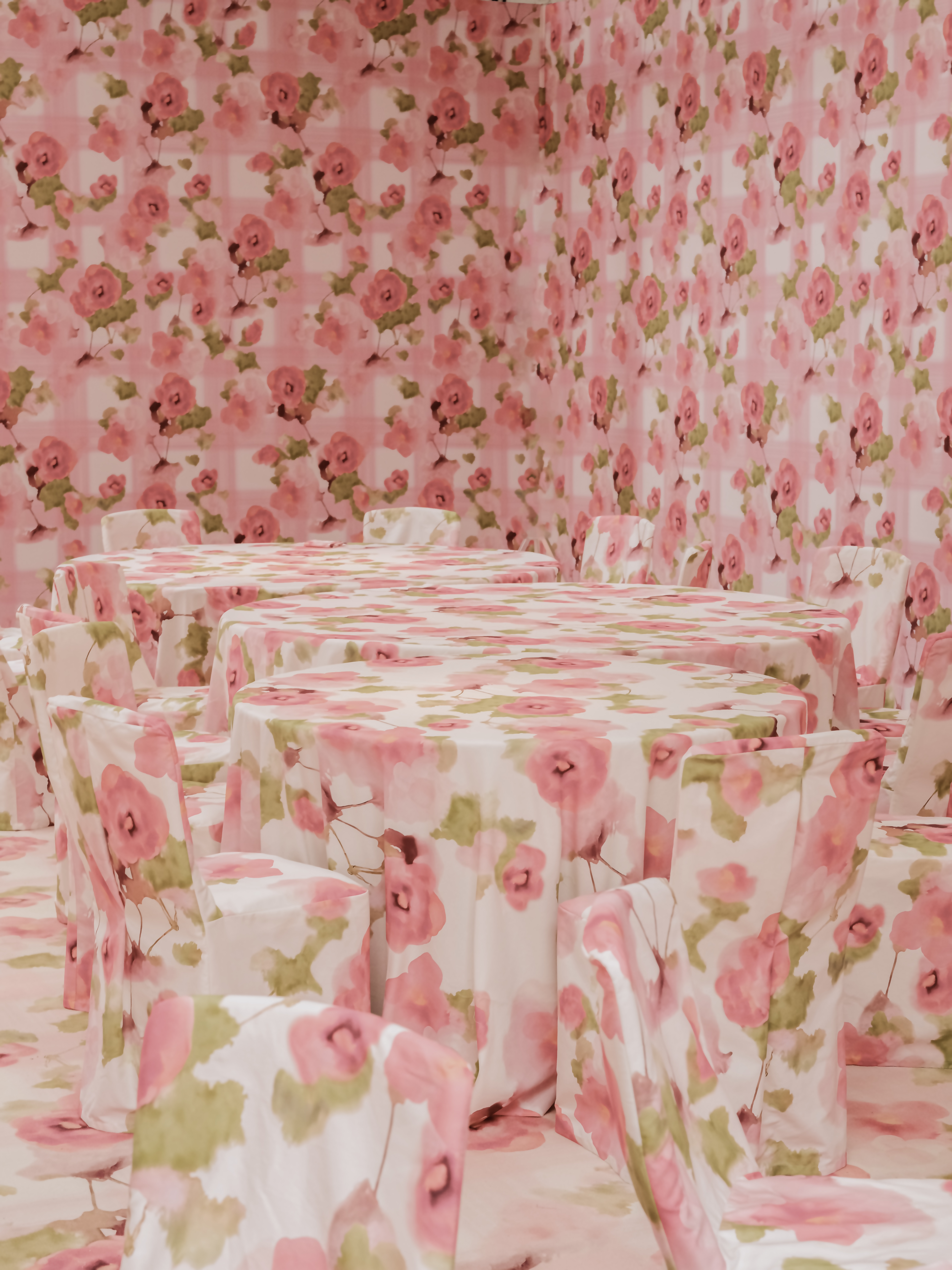
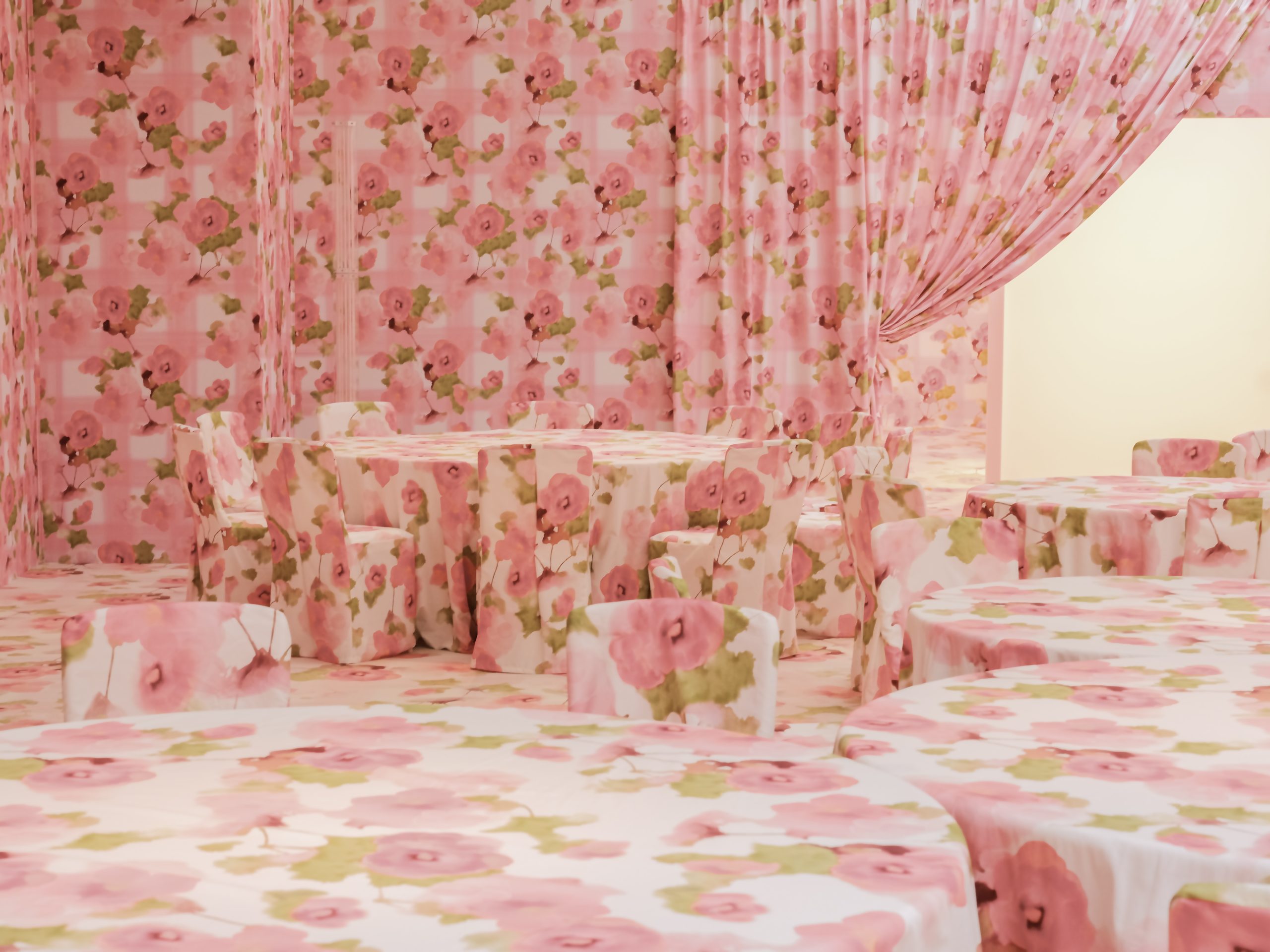
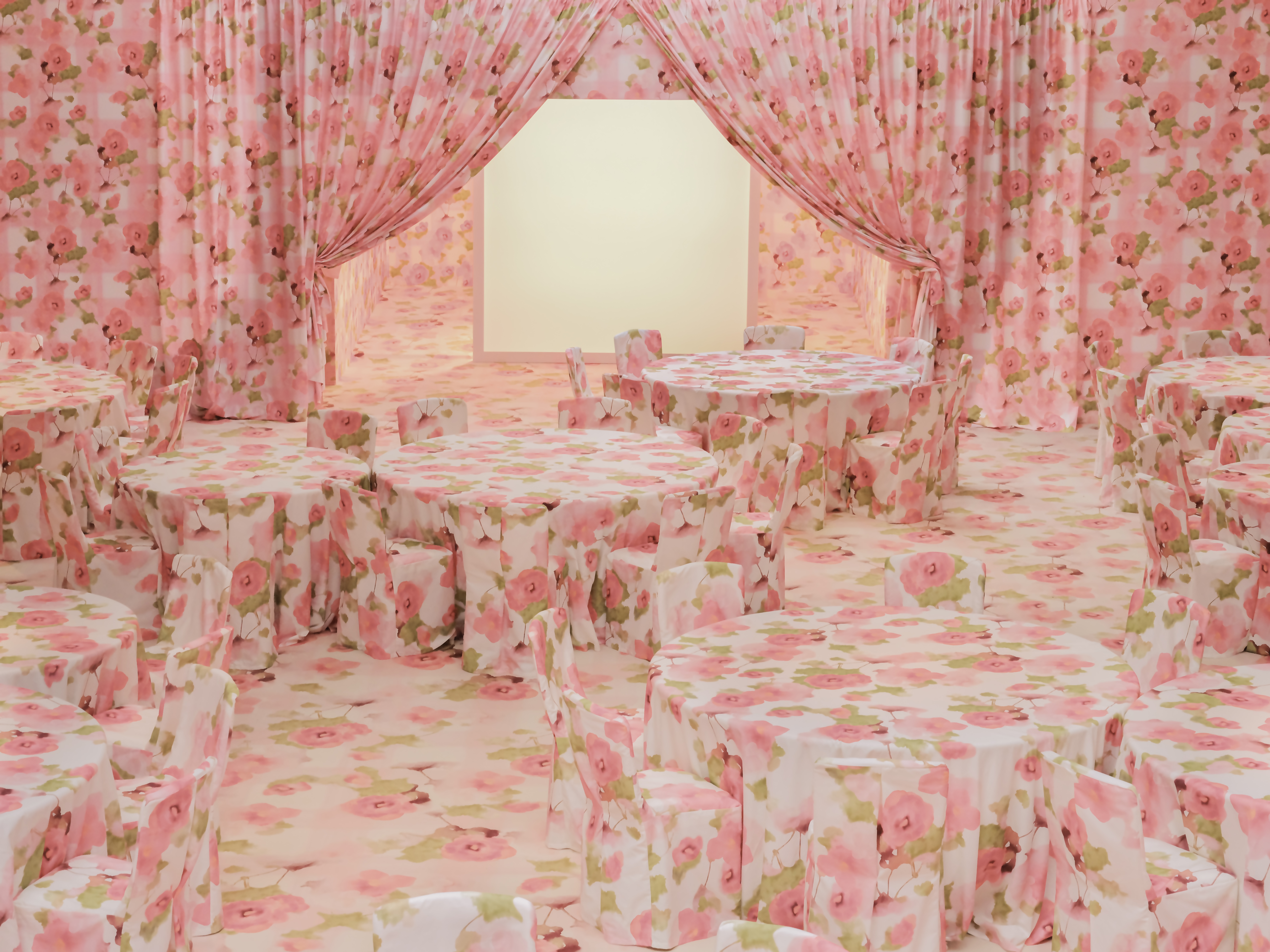
What makes it difficult to resolve is that the experience does not just extend the collection. It changes how it is received. It prioritises presence over permanence, sensation over structure, immediacy over longevity. In doing so, it aligns fashion more closely with consumption than with possession. You do not leave with something. You leave having been inside that something.
Fashion’s appetite has expanded beyond the object, reaching into environments that invite a deeper, more immersive form of engagement. But immersion is not neutral. It shifts attention. It redistributes meaning.
When fashion becomes something that you can sit within, taste and move through, it no longer asks only to be seen or worn. It asks to be experienced, and in doing so, it changes what is remembered and what is allowed to matter.
The question is no longer whether these dinners work. It is whether fashion is moving toward something you do not keep, but something you had to be there for, and what it becomes once that moment is gone.
Once you are done with this story, click here to catch up with our latest issue.