Mirror, mirror on the wall, who’s the most radical designer of them all? Every era has its fashion mavericks, those designers who take the silhouette apart and put it back together slightly askew. Duran Lantink’s particular trick is to do much the same to the body. When the Dutch designer sent models down the runway wearing silicone breasts, exaggerated abs and anatomy that looked as though it had been ordered from a rather unhinged catalogue of human parts, the Internet did what the Internet does best: lose its mind. Some called it grotesque, others called it offensive, while plenty simply thought it was ugly. For a fashion industry that routinely applauds the strange, the response was surprisingly conservative. Fashion likes to think of itself as the place where convention goes to die, but apparently only when the resulting corpse is still good-looking.
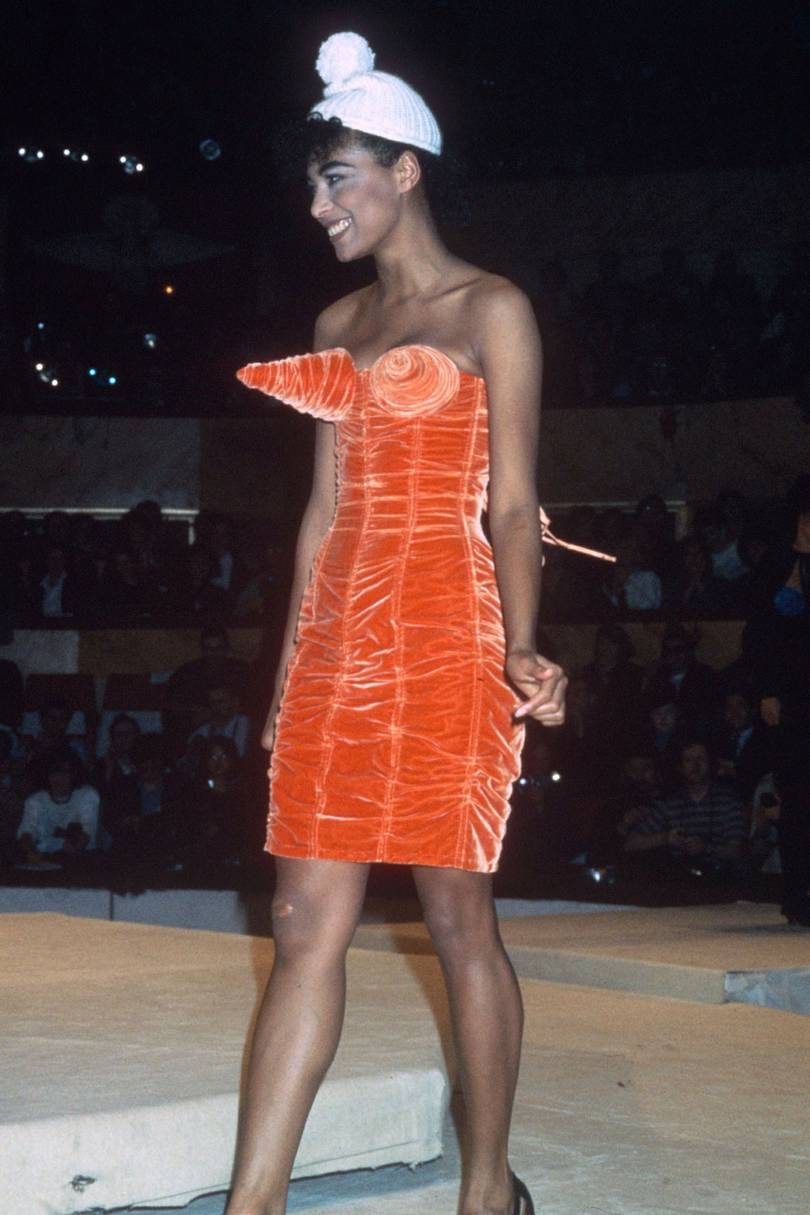
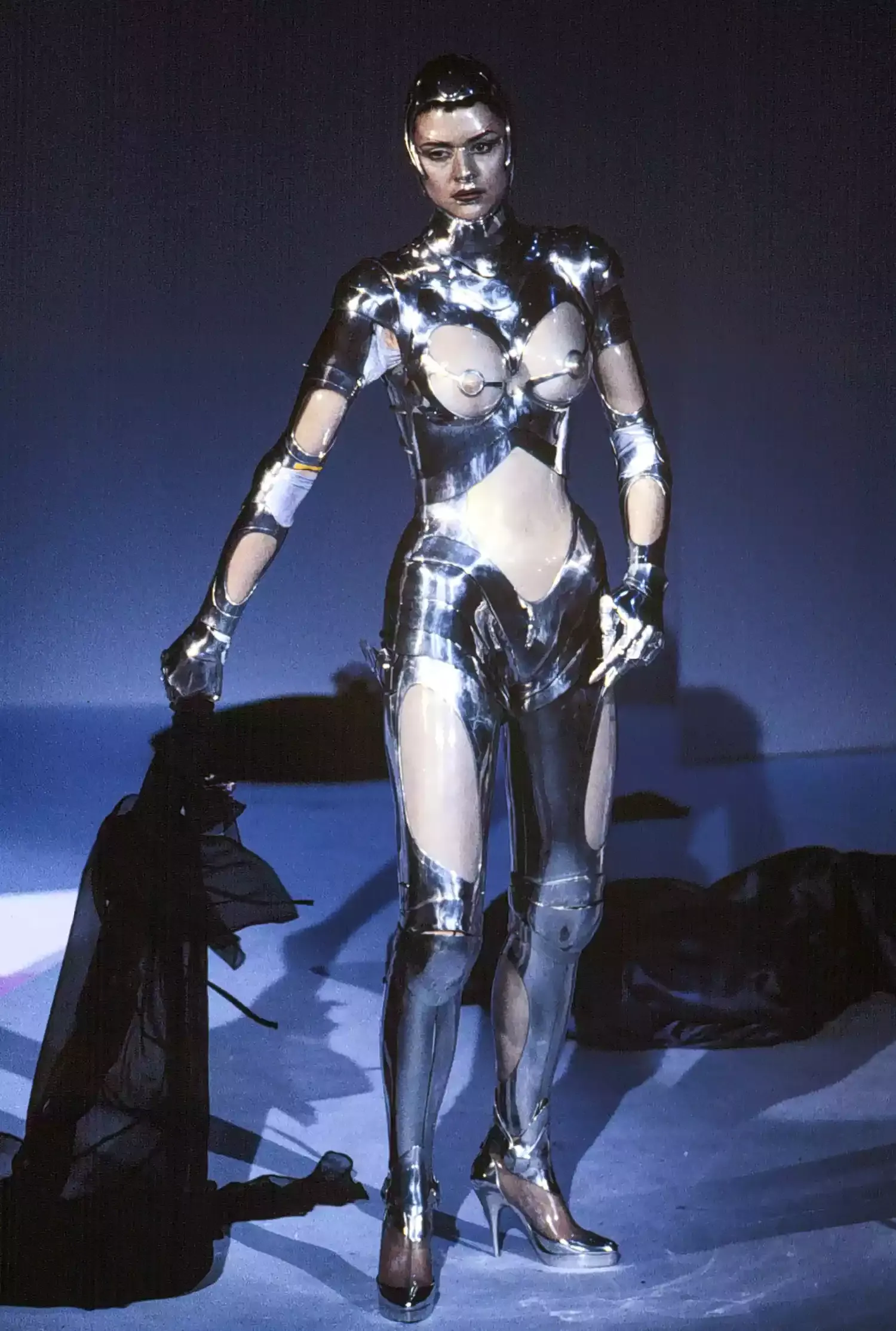
That is what makes the whole thing interesting. Fashion has spent decades making the body bigger, smaller, sharper, taller and stranger. Jean Paul Gaultier gave women conical breasts. Thierry Mugler turned them into chrome-plated goddesses. Alexander McQueen sent out creatures who looked part human, part myth, part beautiful nightmare. Fashion has never been particularly reverent towards the natural body. It has always been more interested in what the body might become, and for much of its history, that transformation came with a fairly simple promise: become more powerful, more beautiful, more desirable.
Even the most extreme transformations usually remained safely inside the realm of fantasy. Gaultier’s cone bra was absurd, but it was also sexy. Mugler’s women looked like goddesses. McQueen’s monsters were terrifying precisely because they were beautiful. Lantink’s bodies offered a less flattering proposition. They looked less like fantasies and more like bodies being worked on. Instead of presenting some heightened ideal from another universe, the collection made the materiality of the body impossible to ignore, showing flesh being padded, stretched, manipulated and rearranged in plain sight. Fashion has always lied about the body. It just used to be more flattering about it.
That probably explains some of the hostility. The moment impossible bodies stop being beautiful and start looking strange, everyone suddenly discovers they prefer classics. Not every act of provocation deserves applause, either. Fashion has no shortage of designers who mistake shock for substance, and some of the criticism directed at Lantink’s earlier work came from precisely that concern. Radicalism without rigour is just noise. His debut for Jean Paul Gaultier divided audiences partly because, at times, it felt as though controversy itself had become the point. There is only so long you can throw a grenade into the room before someone asks what exactly you were trying to blow up.
Still, dismissing the fascination with bodily transformation as another fashion gimmick misses the stranger thing happening around it. Lantink’s collection arrived at a curious moment, when the body has become one of culture’s favourite construction sites. We filter our faces before we post them. We reshape bodies through injectables, surgery and pharmaceutical interventions. We generate AI versions of ourselves that supposedly look “better” than the people who uploaded them. Entire online identities are revised, calibrated, and repackaged on a near-daily basis. We have turned the self into a project with no obvious completion date.
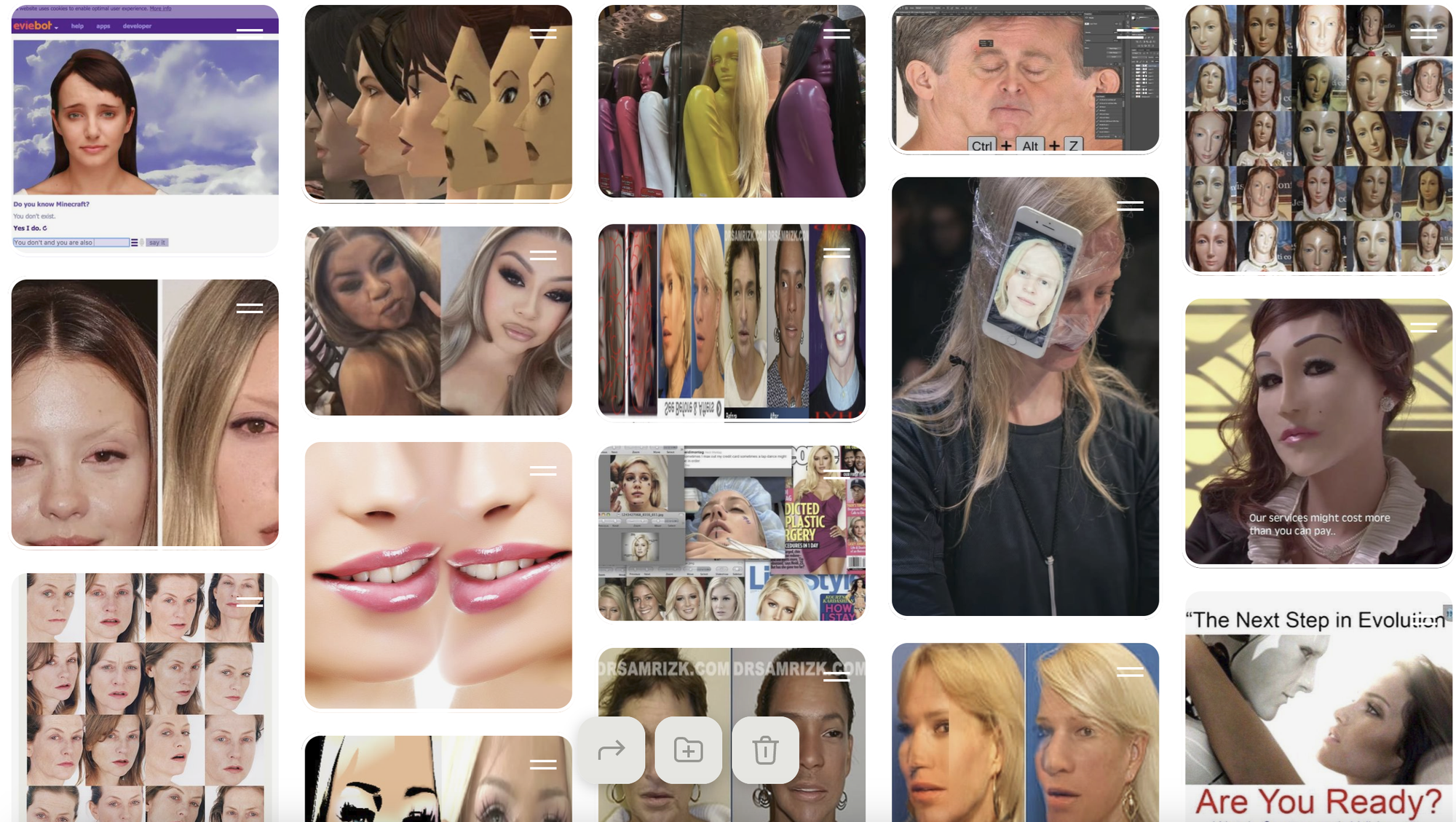
Fashion has never been particularly interested in leaving the body alone. What has changed is our relationship to the evidence. We are perfectly happy with transformation when it can pass for something else: good genetics, good skincare, good lighting, good luck. A face is tweaked here, a body altered there, a photograph cleaned up before anyone sees it. The intervention is acceptable so long as the result looks effortless. The best cosmetic work is the work nobody can quite prove happened. The ideal is not simply to become different. It is to make the difference look as though it was always there.
Lantink does something much less polite. He strips away that alibi of effortlessness and makes the intervention itself the image. The silicone breast announces that it has been manufactured. The padded hip does not pretend to be natural. It practically dares you to ask where the body ends and the construction begins. Lantink, rather inconveniently, makes the work visible. What unsettles people is not transformation itself. Fashion has been transforming bodies for centuries. It is the visibility of the artifice behind it, the part that contemporary beauty culture is usually very good at hiding. We want the freedom to remake ourselves. We are simply less comfortable when someone makes us look at the remaking.
Fashion did not invent any of this. It simply absorbed the emerging vernacular of self-modification and gave it a runway. Everyone talks about authenticity. Curiously, nobody seems particularly interested in looking like themselves. The body increasingly feels less like something we inherit and more like something we manage. The language around it is revealing: glow-up, tweak, maintenance, a little work. Each phrase makes alteration sound almost incidental, as though the body simply happened to improve itself while nobody was looking. Three decades after Death Becomes Her joked about defeating ageing with a bottle of immortality, the premise feels less fantastical. The neurosis remains; only the vocabulary has become more palatable.
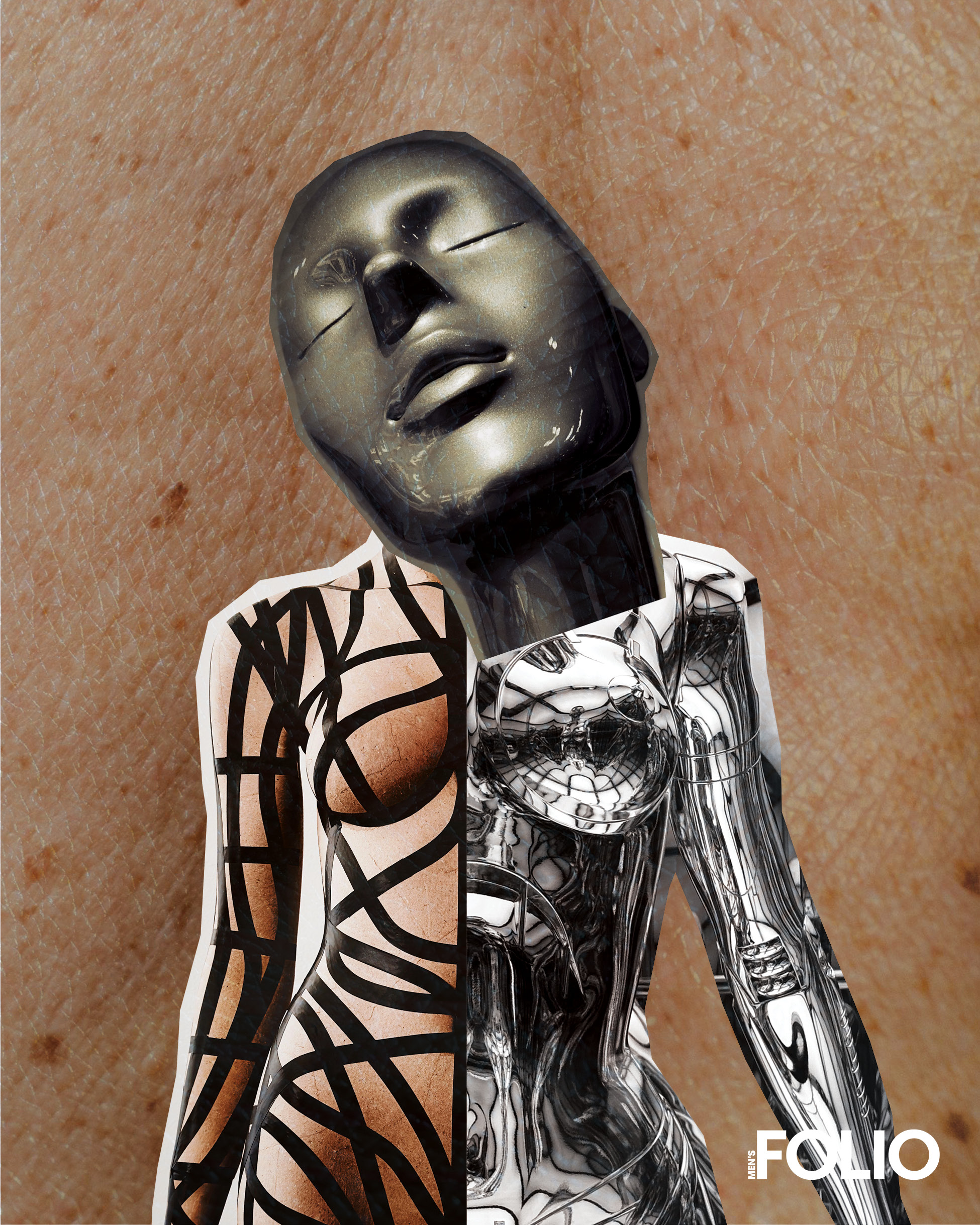
Adam Geczy put the larger shift like this: “In the humanist age, Pinocchio wanted to become human; in the post-human age, humans aspire to become Pinocchio.” The line sounds almost ridiculous until you look around and realise how much contemporary culture is devoted to overcoming the limitations of the body. For centuries, artificial bodies stayed safely on the outside. Dolls, mannequins, and automata were objects onto which people projected their fears, desires and fantasies. Now the direction seems to be reversing. There was once just the doll. Increasingly, we want to become the doll. The dream is no longer authenticity. The dream is editability.
You can see that desire everywhere, from AI-generated avatars and virtual influencers to filtered faces that barely resemble the person underneath. We have reached a point where Black Mirror barely needs to invent the premise anymore. The digitally perfected self has arrived, just without the courtesy of a futuristic soundtrack. Most of us are already carrying around several versions of ourselves anyway: the LinkedIn version, the Instagram version, the finsta version, the one that never leaves the drafts. We were promised that this ability to reinvent ourselves would feel liberating, but the results have been rather less convincing. We have never had more tools to alter our appearance, yet satisfaction remains strangely elusive.
The trouble with optimisation is that it never really ends. Perfection is a moving target, and every improvement creates another problem to solve. There is always another wrinkle, another contour, another treatment, another allegedly imperfect feature waiting to be corrected. What begins as the freedom to change can quietly become an obligation to keep changing. The body that was meant to be liberated starts to feel like a job. Even “maintenance” gives the game away: if something always needs maintaining, it was never finished in the first place.
Fashion has traditionally sold escape. Better taste, better status, better versions of ourselves. What makes Lantink’s transformed bodies so unsettling is that they refuse to provide much of an escape all. The exaggerated breast, the swollen hip, the uncanny prosthetic drag attention back to the corporeal body, not the idealised one but the stubbornly human body that sweats, ages, aches and eventually disappears. Coralie Fargeat’s The Substance (2024) understands the same anxiety from a different direction. Its horror comes from watching the fantasy of becoming better turn against the person who wanted it. Luxury is supposed to help us forget the limits of the body for a while. These bodies do not want to play along.
Then again, fashion loves calling this liberation. And sometimes it is. Fashion has spent decades loosening the codes around gender, beauty and identity, allowing people to alter, exaggerate, disguise, and transform themselves in ways previous generations could not. But fashion has a funny way of turning freedom into homework. The freedom to become anyone can quietly become the pressure to become someone better, while self-expression starts to resemble self-improvement. The body you once accepted as a starting point suddenly looks like a draft.
This is why conversations around Lantink rarely stay on the runway for long. The argument is not really about a silicone breast or an exaggerated hip. It is about the cultural conditions that make those objects legible in the first place. His collection arrived in a moment when self-modification has become so ordinary that we barely call it modification any more. The backlash, then, is less a rejection of transformation than a discomfort with seeing its mechanics laid bare.
There is another problem, too. Fashion cannot survive entirely on nostalgia. Some of the criticism directed at Lantink ultimately came from an expectation that Jean Paul Gaultier should continue looking like Jean Paul Gaultier: the cone bra, the sailor stripes, the corsetry, the shock value, neatly preserved and reheated for another season. Reheated nachos are only thrilling for the first bite. If creative directors are expected to spend eternity reproducing the archive, fashion houses stop behaving like living things and start behaving like museums with better lighting. The challenge is not whether designers should transform the body. They should. Fashion has always done exactly that. The real question is whether they have anything meaningful to say when they do.
Fashion has always been fascinated by metamorphosis. The possibility of becoming someone else sits at the heart of its appeal. We buy clothing not simply for what it is but for what it allows us to imagine about ourselves. A suit can suggest authority, a leather jacket can suggest rebellion, and a dress can suggest a version of the person wearing it that perhaps did not exist five minutes earlier. Luxury itself functions as a promise of reinvention. Fashion has never merely sold garments. It sells potential.
What feels different now is the scale of that promise. The body itself has become part of the proposition. We are no longer simply being invited to change our clothes. We are being invited to reconsider our faces, our physiques, our identities and, increasingly, our relationship to reality itself. That is why Lantink’s collection travelled so far beyond the runway. It touched something people were already thinking about, whether they wanted to admit it or not. At a moment when much of contemporary culture is built around self-modification, his exaggerated anatomies are less like fantasy than diagnosis.
We have become remarkably comfortable with transformation as long as it is flattering. Show the finished face, the polished body, the seamless image, and nobody asks too many questions. Show the process and suddenly it becomes grotesque. We want the result without the construction site, the new face without having to think about the face that came before it. The artifice is perfectly acceptable, provided it stays discreet.
That is the real conundrum at the centre of the new flesh. Contemporary culture tells us the body is ours to redesign, yet we still recoil when someone makes that redesign impossible to ignore. Prosthetic bodies, digital avatars and exaggerated anatomy expose something fashion has always understood: identity is partly performance, partly fantasy and partly construction. The difference is that the fantasy is becoming harder to separate from reality. Fashion may not be becoming less human after all. It may simply be revealing how uncomfortable contemporary culture has become with the limits of being human. We can edit the image, alter the face and redesign the body with remarkable precision, but there remains something stubbornly analogue underneath it all. The flesh still ages, changes and refuses complete mastery.
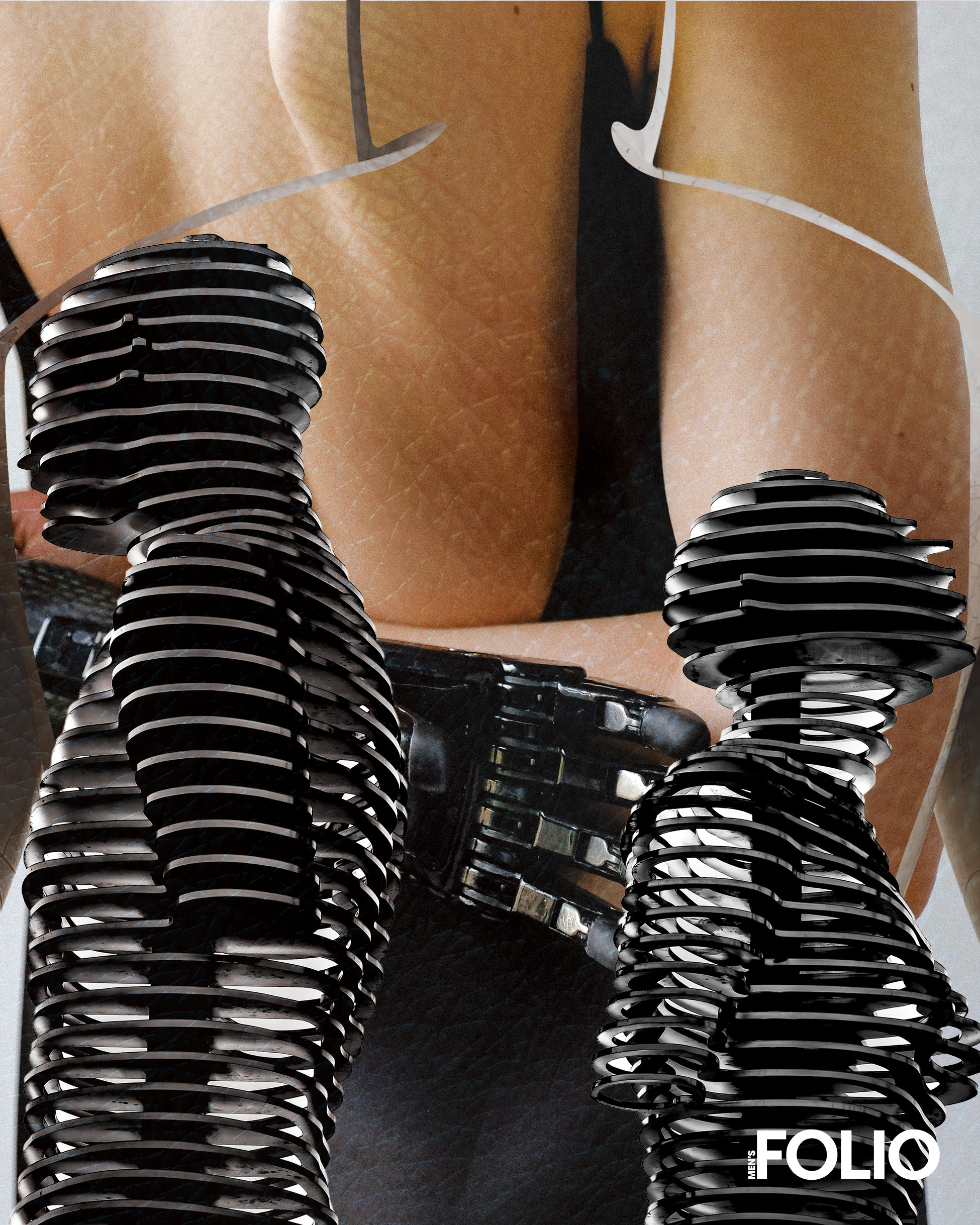
That, more than any silicone breast or exaggerated hip, may be what Lantink’s bodies have exposed. The future of the body is increasingly editable. The body itself is not.
Once you are done with this story, click here to catch up with our latest issue.