Nobody actually looks at the clothes during Fashion Week anymore. It’s just a fact of our current digital physics. As designers have pivoted into the realm of public IP — becoming celebrities whose personal lore often outpaces their pattern-making — the narrative arc of the “Creative Director” has routinely flattened the actual output on the runway alongside the celebrities gathered to campaign for its algorithmic success. We are living in an era of the Great Flattening, where the garment is merely the physical residue of a marketing campaign.
Fashion used to at least maintain the delusion that the clothes were the point. Shows were predictive; they suggested a future. Now — in 2026 where we’re all suffering from “brainrot” induced by a constant stream of high-gloss, AI-generated content that demands nothing from us — the garments on runways have started to feel like mere afterthoughts. They behave like props in an attention economy where culture is the only currency and clothes are just a vessel for stable value.
The result is a seasonal fashion week cycle that feels more predictable, and sometimes exhausting, than it needs to be. Show notes have devolved into vibes-based word salads. Celebrities walking the runway becomes the status quo, as if a desperate bid for a 15-second spike in the algorithm. Genuine attention becomes increasingly scarce. Yet, if you ask anyone what they’re actually waiting for, the answer remains predictable: Prada. Not because the brand is louder or better at chasing the feed, nor do we insists their clothes are better designed than others, but because Miuccia Prada and Raf Simons still seem to believe that clothes should be worth a second glance — even as the rest of the industry treats garments as mere visual support for content.
This raises the only question worth asking: How do you make clothes worth looking at when everything is being compressed into short forms? When culture increasingly mistakes instantaneity for intelligence? Prada’s ongoing dialogue and recent collections suggests an answer that feels almost oppositional to our default: Ambiguity.
Since the merger of the two creative giants at Prada, their collections haven’t behaved like the kind of slogans we’re used to seeing. Instead, they feel like interruptions. Think of SS21’s fractured tailoring with its raw, unfinished seams — clothes that refused to be “done.” Or FW22, which unsettled proportion with rigid skirts and knits that resisted the ease we’ve been conditioned to expect. By SS24, the dresses were clinging and slipping in ways that felt uncomfortably lived-in, carrying a history the wearer was forced to invent on the fly. Nothing in these collections were explained, nor did they have a clear line of intention because, frankly, there was no reason to.
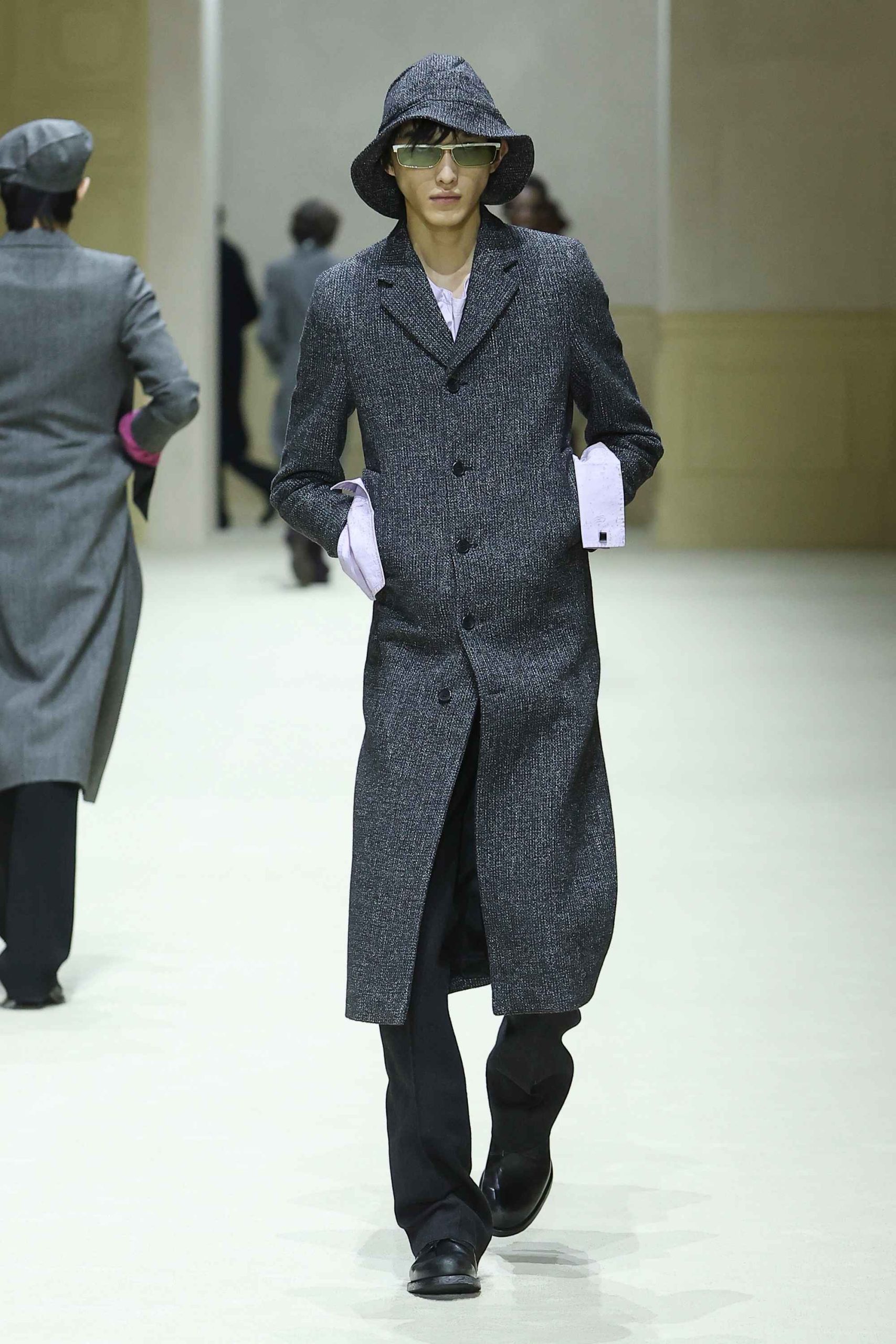
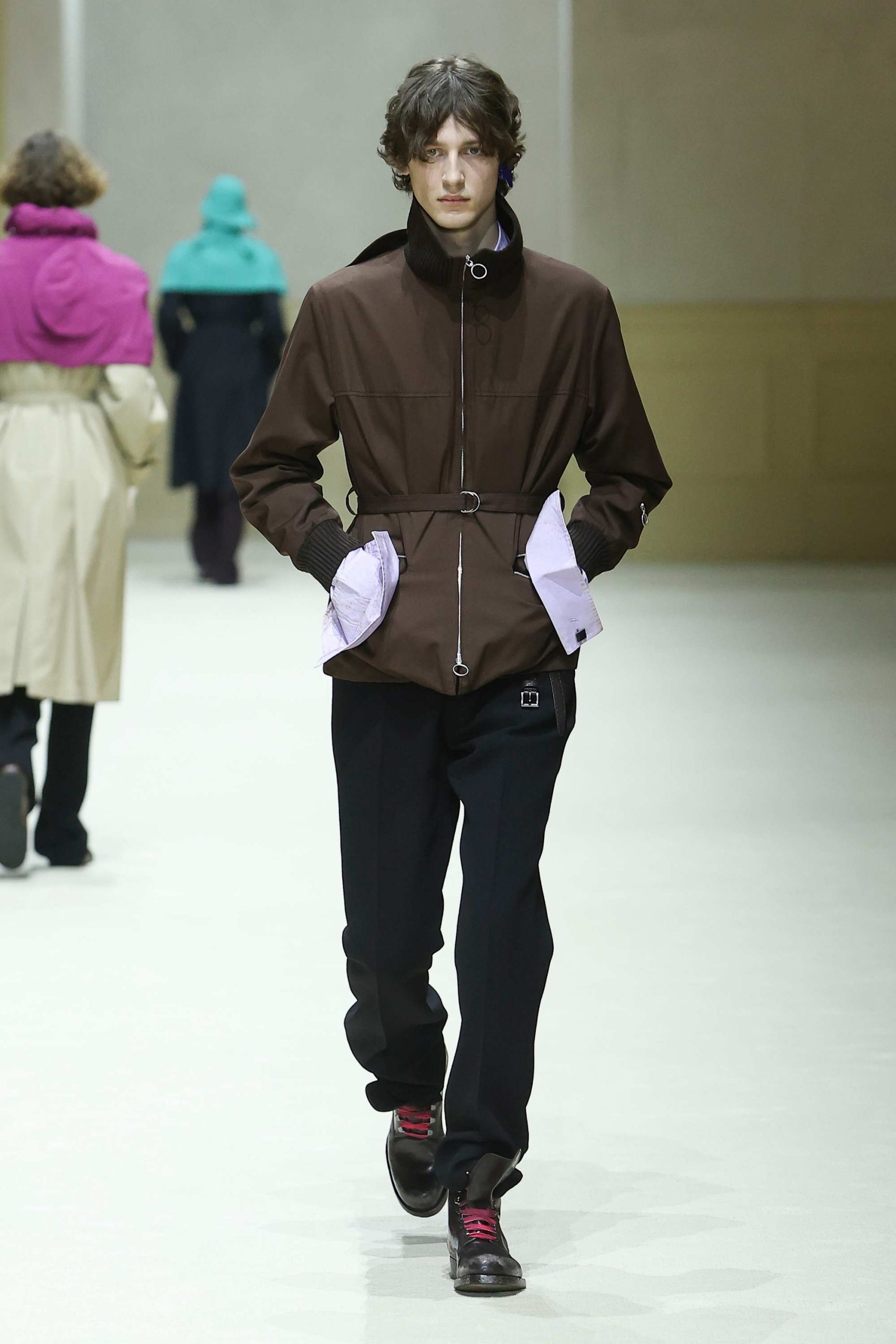
For the Prada FW26 men’s collection, the house offers the same refusal to pivot. It sharpened its commitment to ambiguity through a deliberately uneasy dialogue between nostalgia and the masculine status quo. The result is a textural “glitch” that interrupts the eye, asking it to pause and negotiate contradiction rather than absorb the work as atmosphere alone.
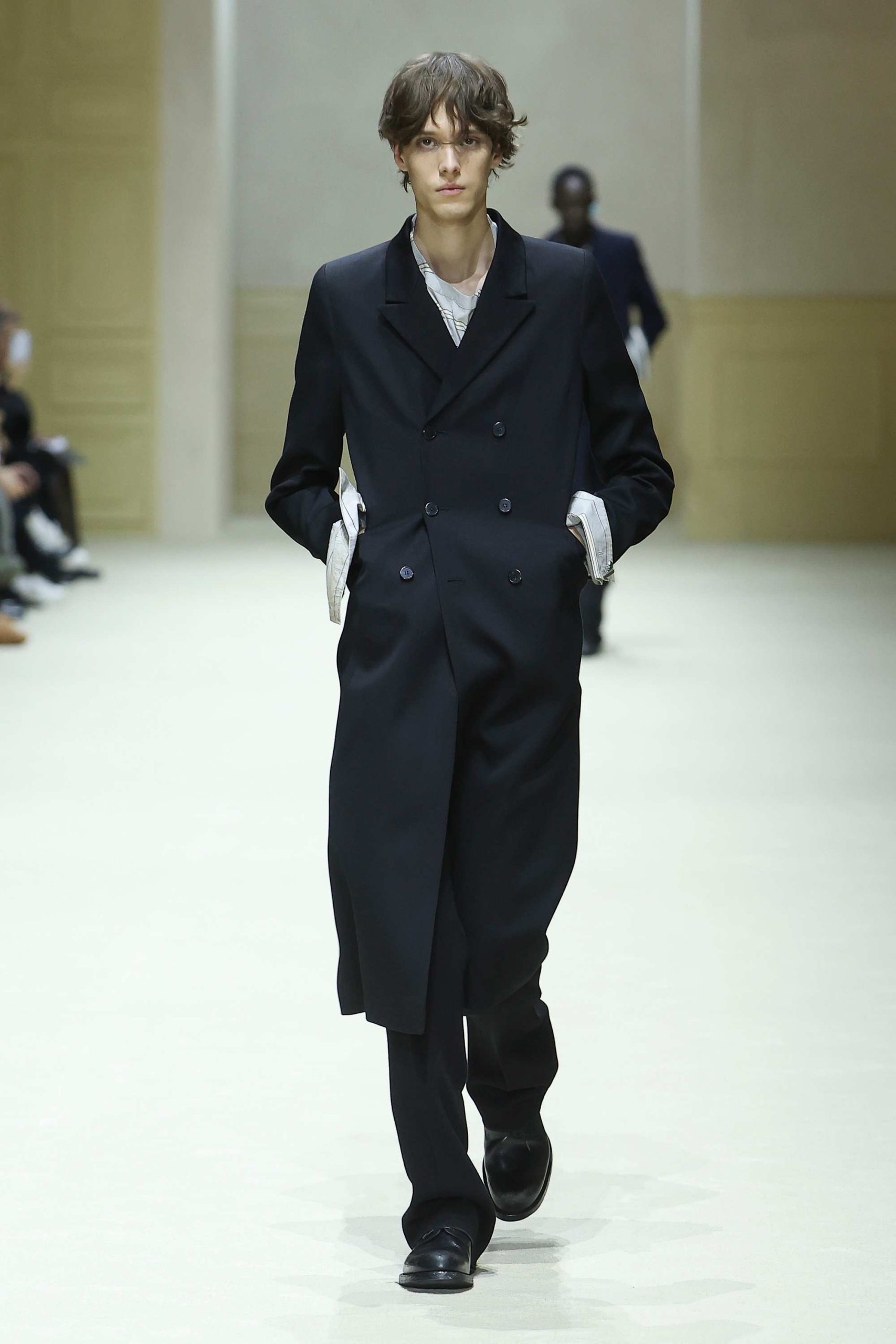
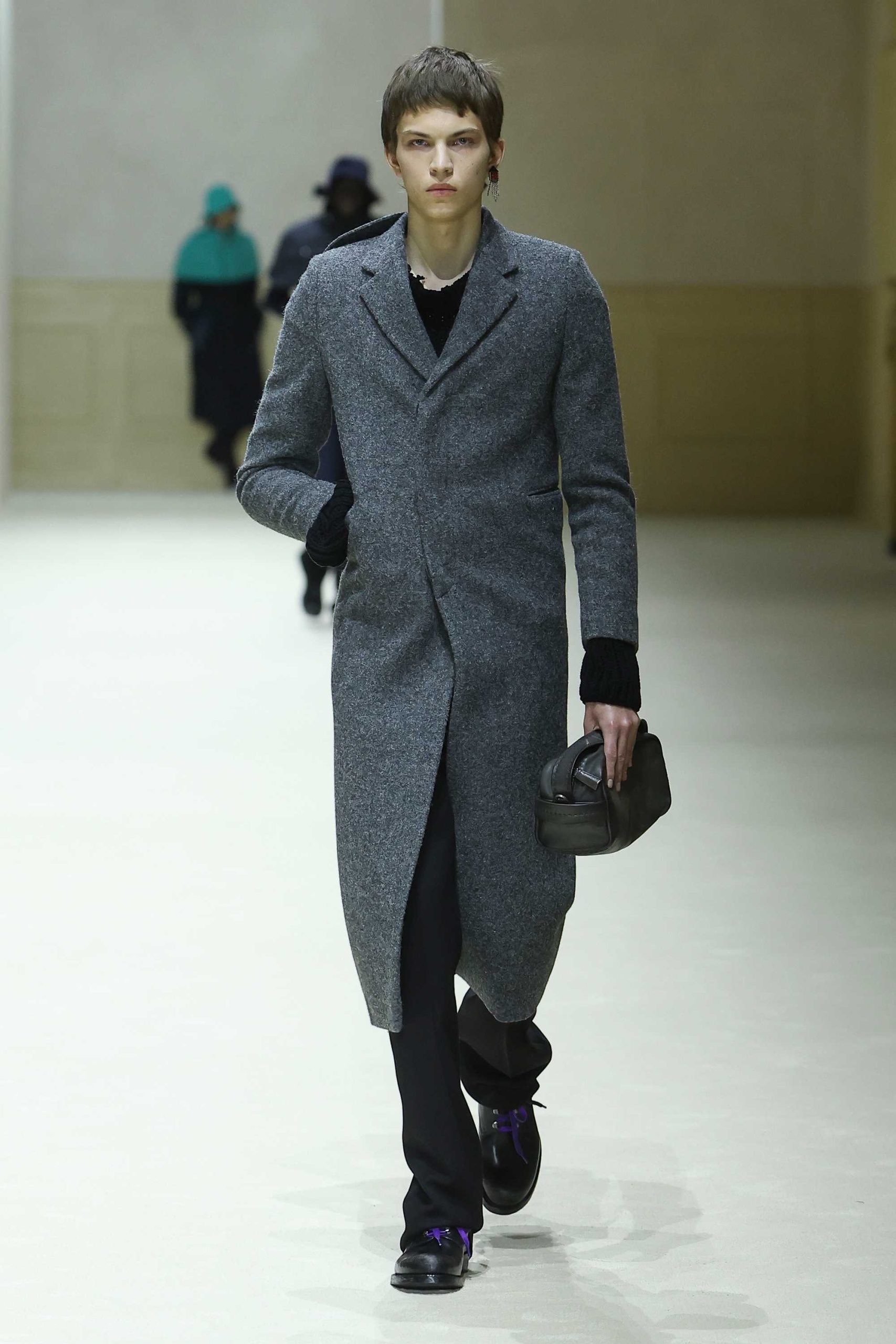
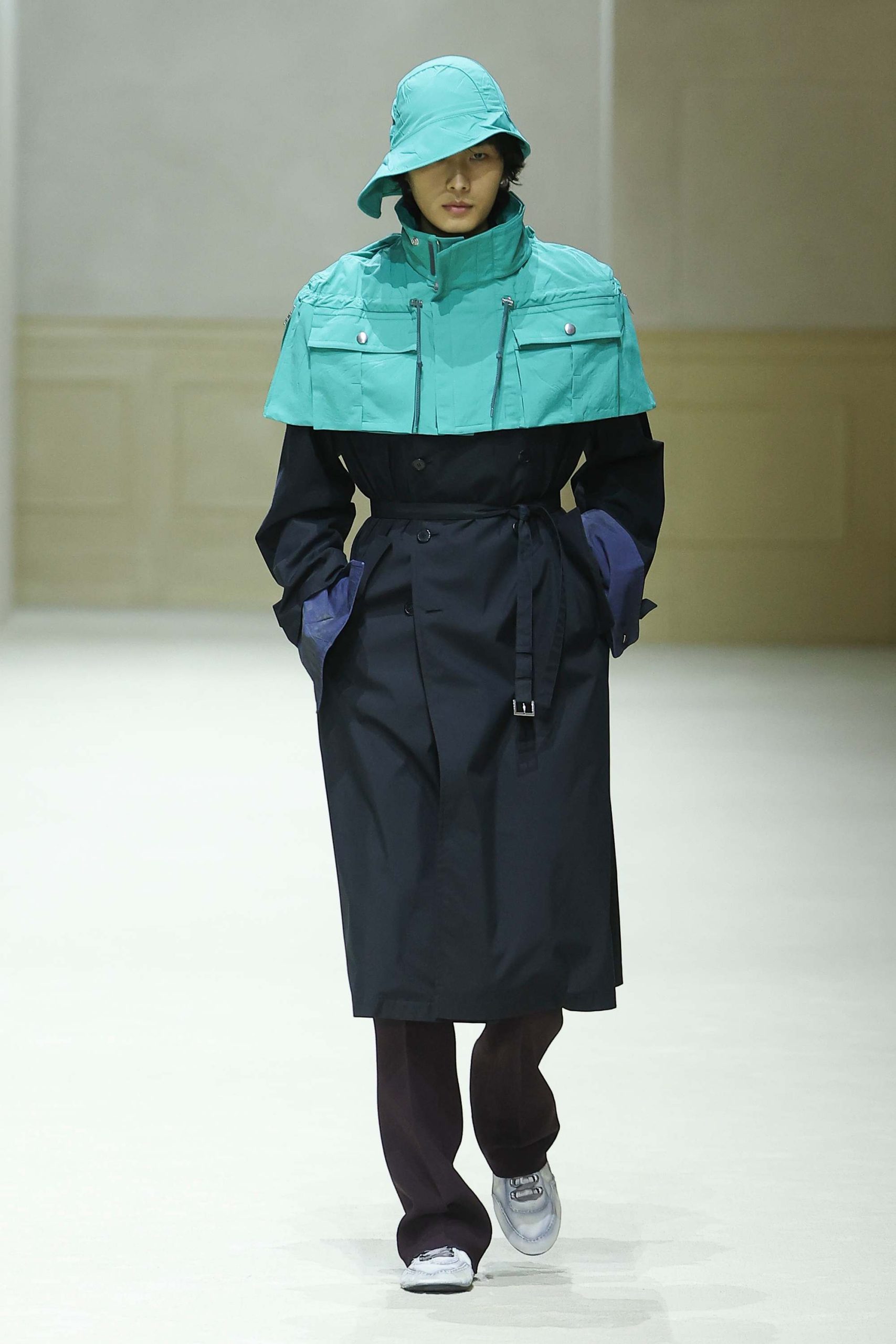
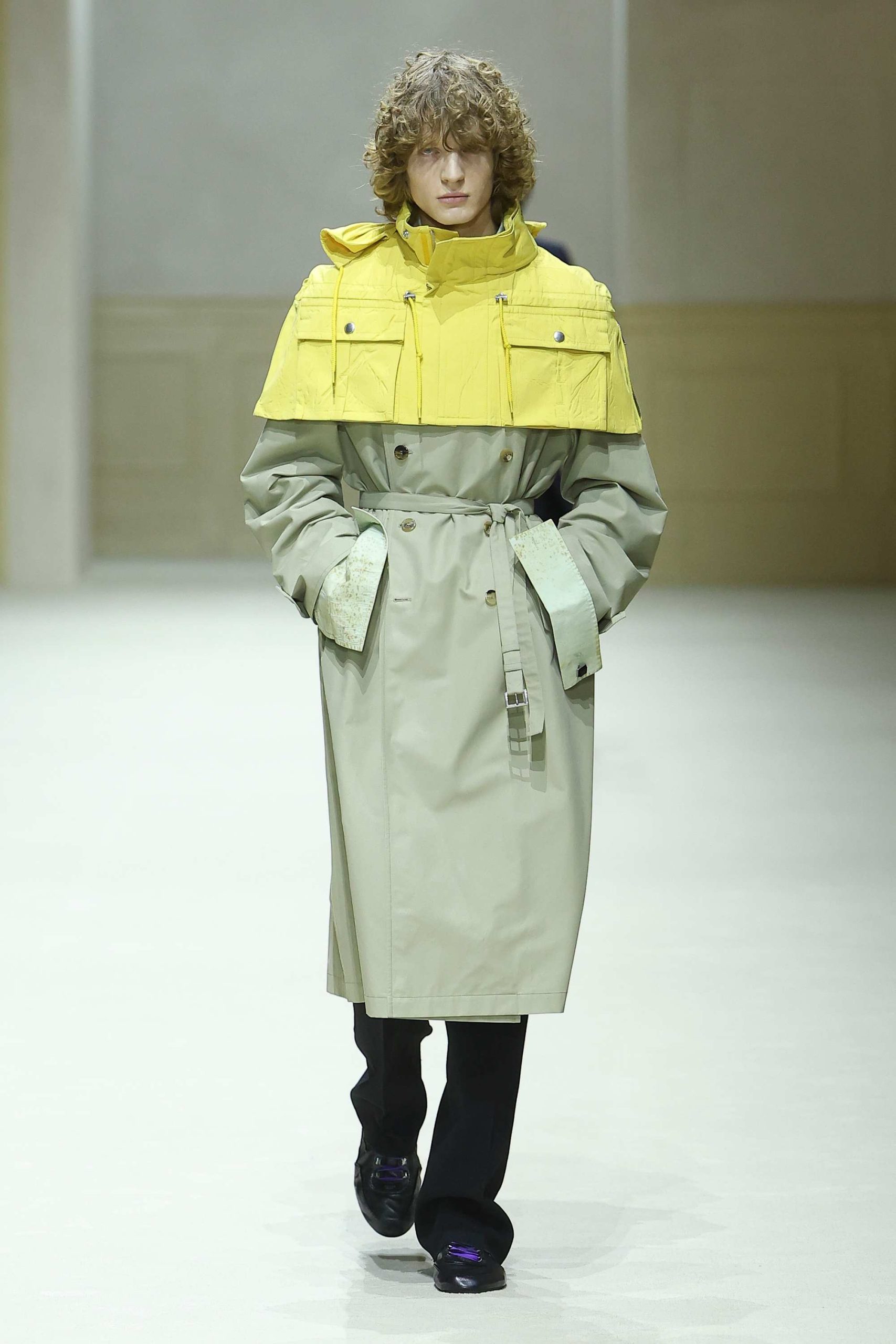
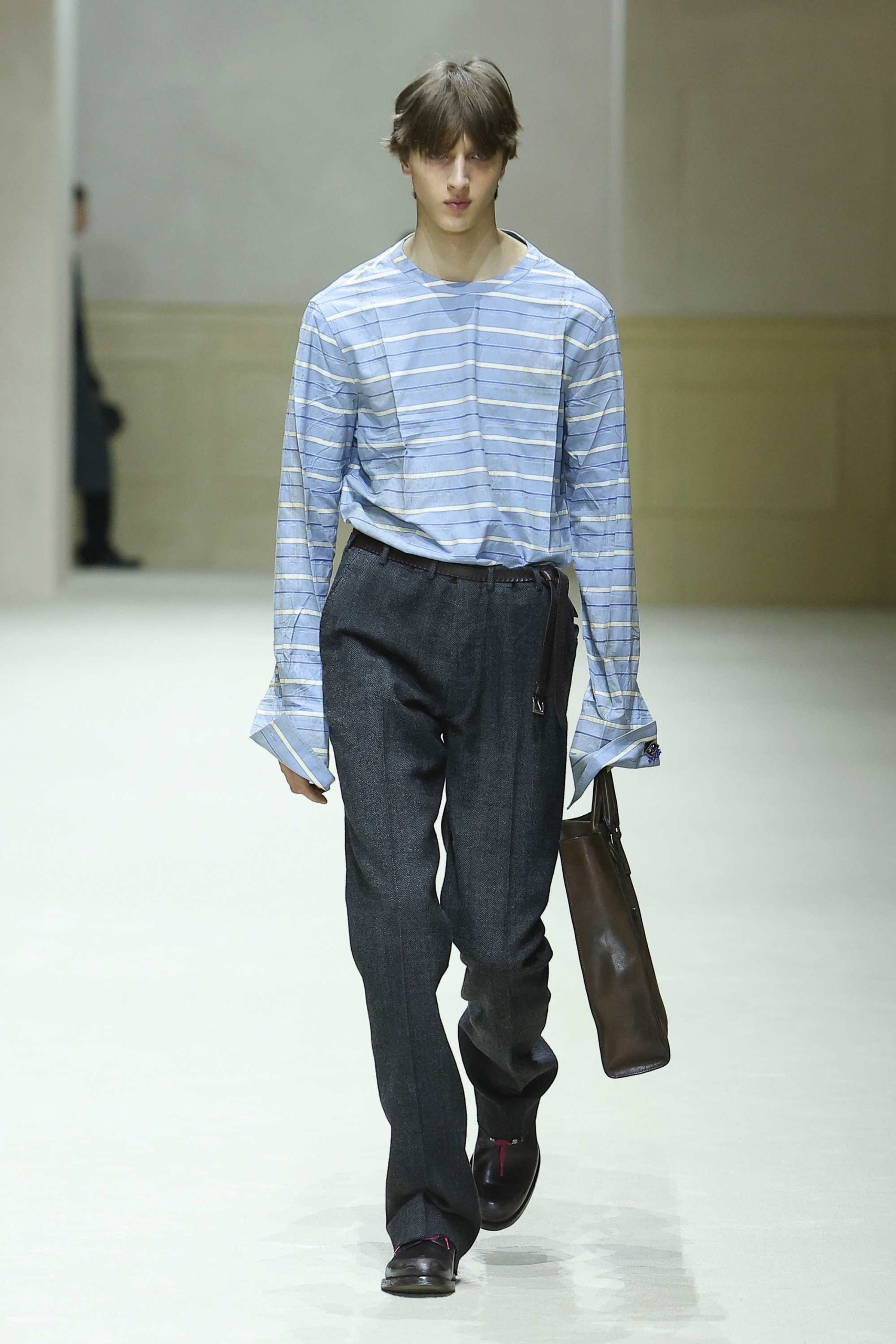
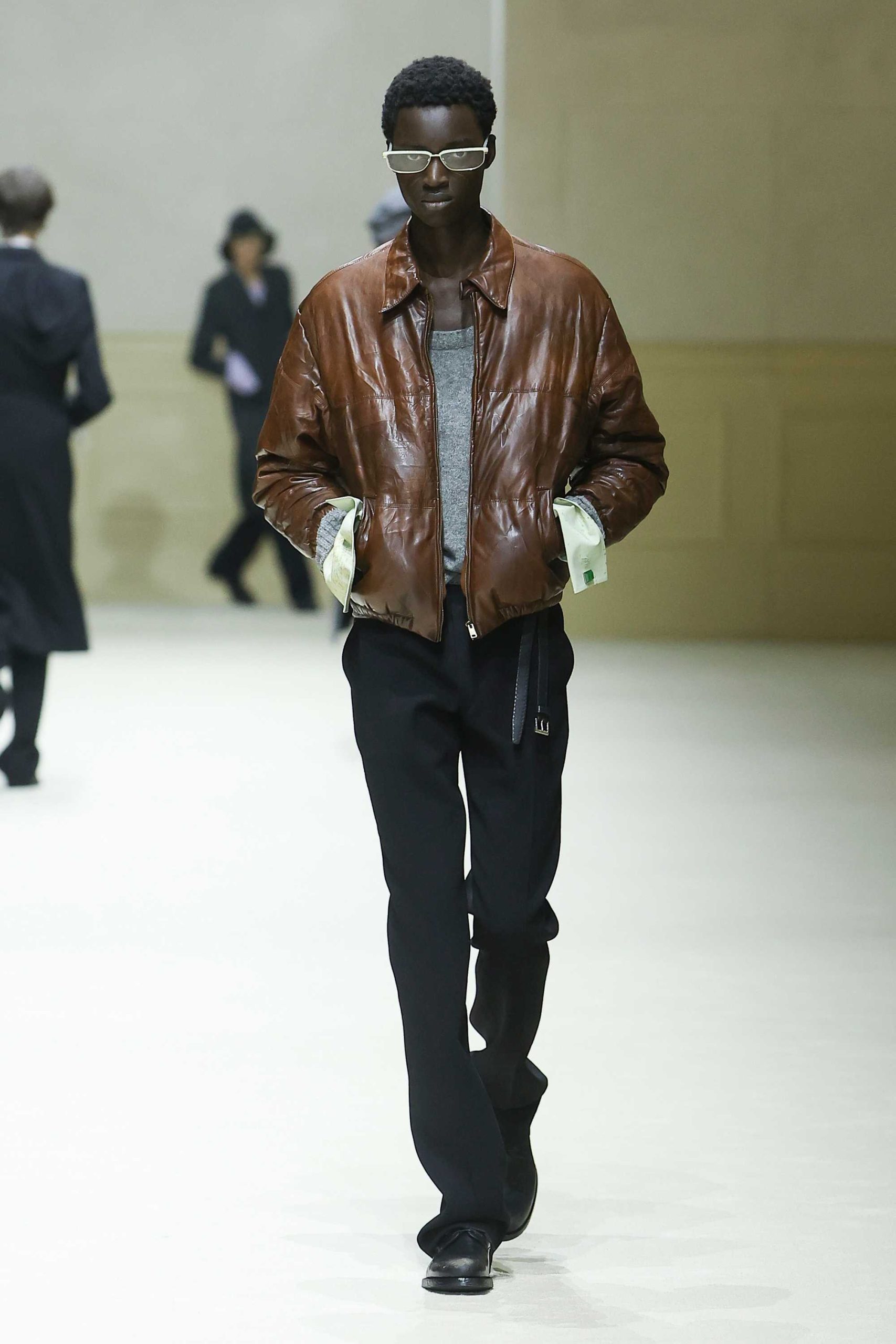
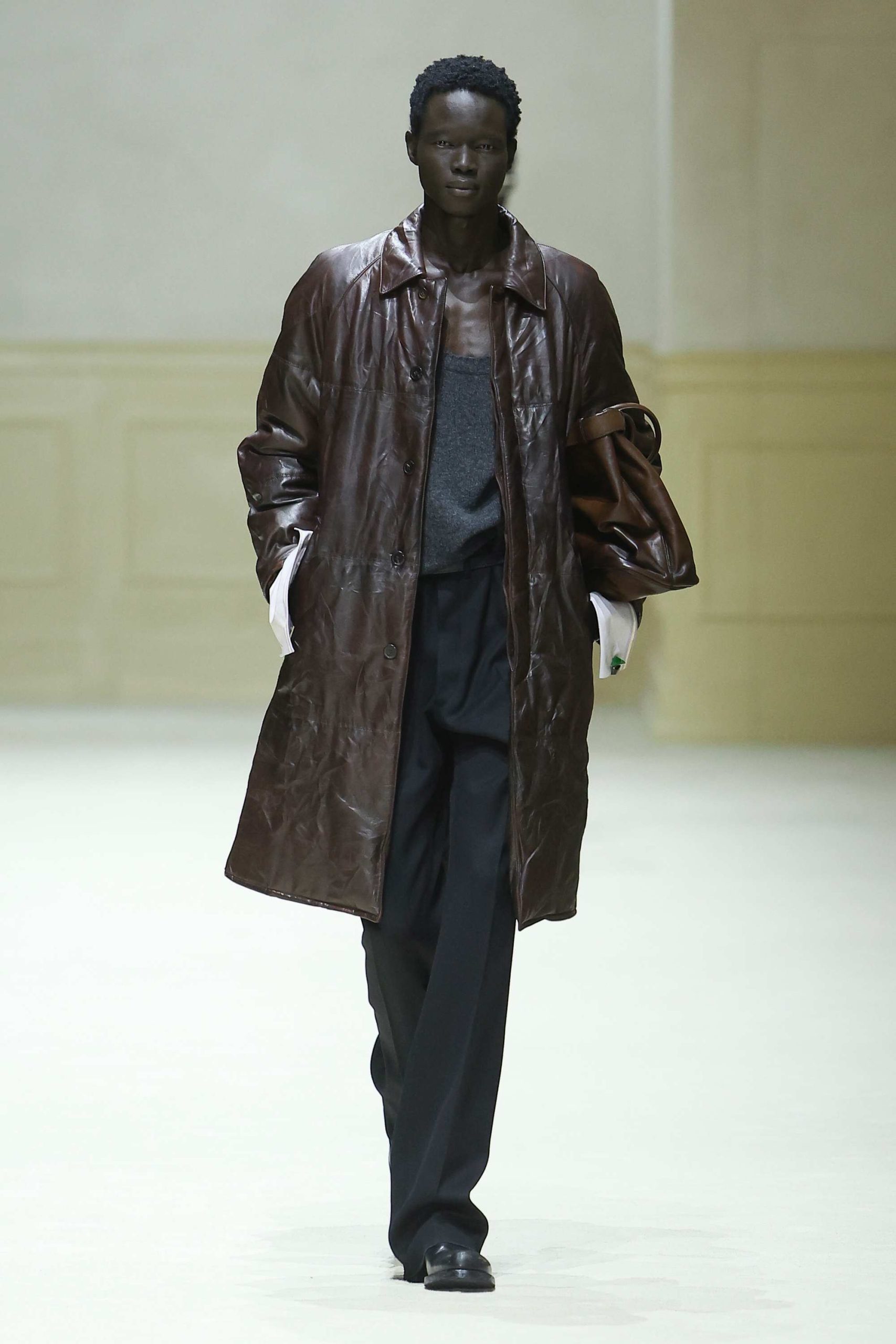
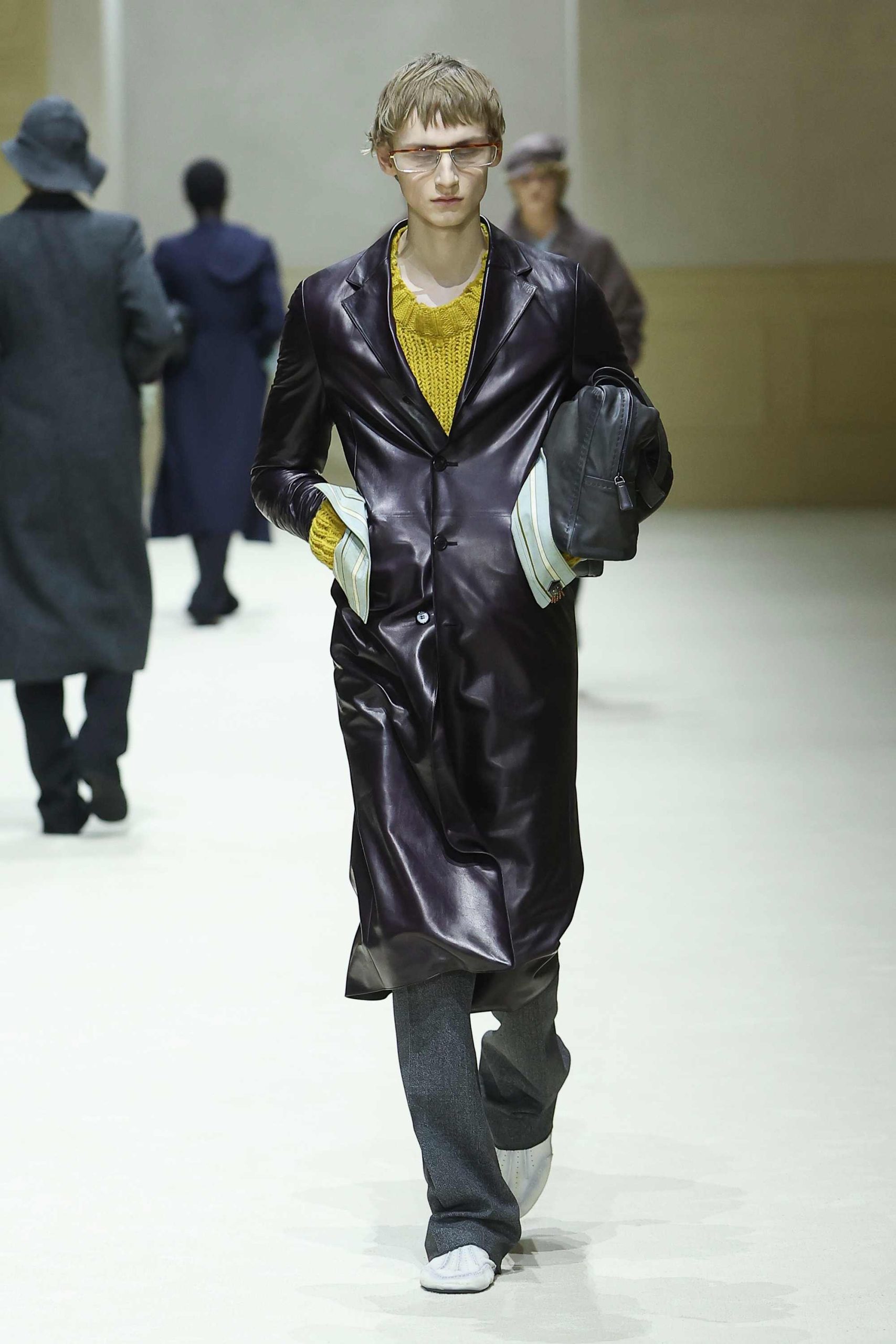
Instead of indulging the algorithm’s hunger for saturation, the Prada FW26 palette settles into institutional greys, punctured by flashes of neon concealed in shirt cuffs (the collection’s quiet thesis) or buried beneath layered knits. These moments of colour function less as accents than as barriers, withholding immediate gratification and keeping the casual scroller at a deliberate distance.
That resistance extends to the distorted garments that refuse to resolve themselves in a single thumbnail or looping clip. Familiar Prada archetypes feel faintly inhospitable. Shoulders sit uncomfortably tight, knits cling more closely and more lightly than expected, silhouettes hover just off balance. Nothing declares itself as radical, yet nothing settles into comfort — a feat we expect of Prada now.
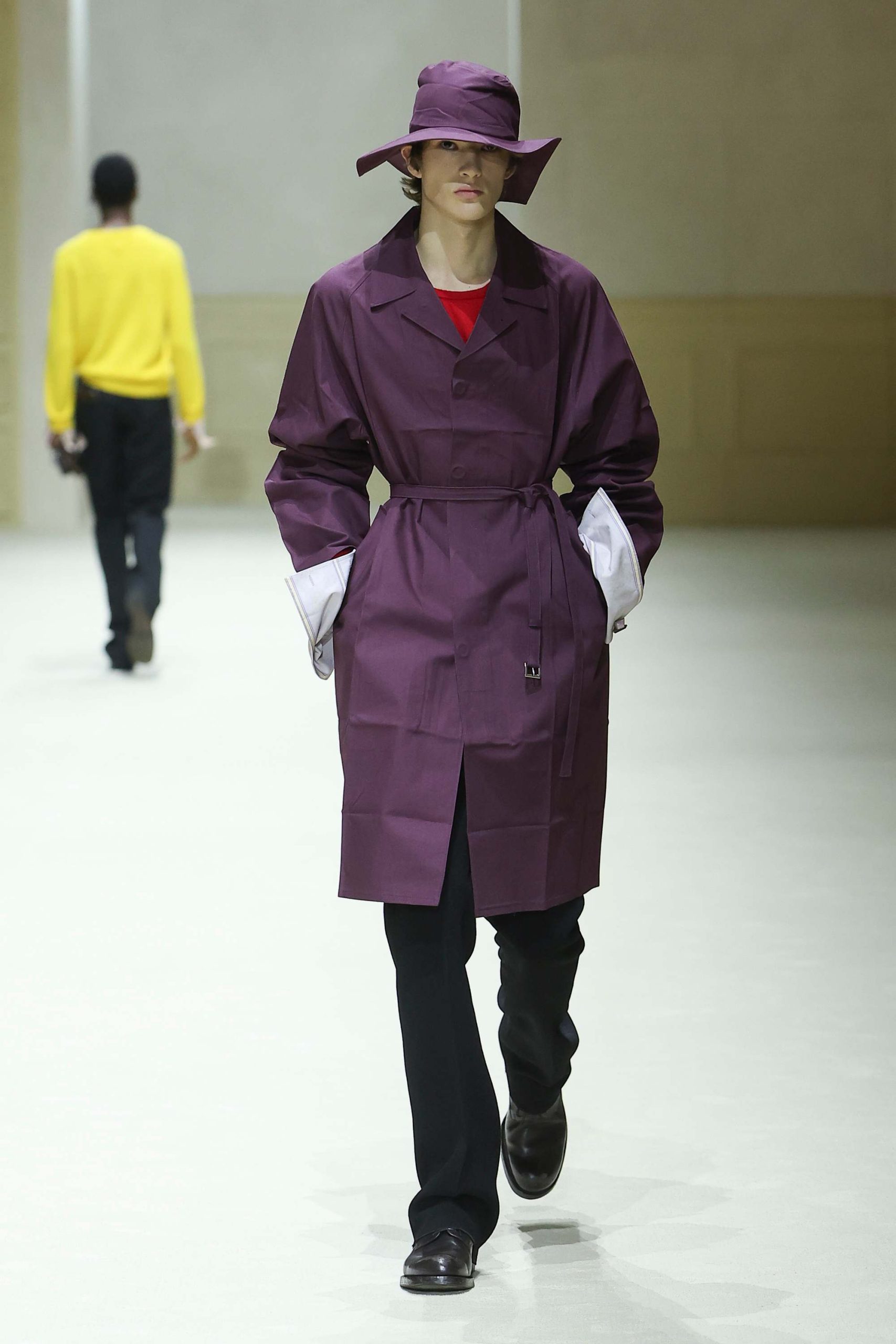
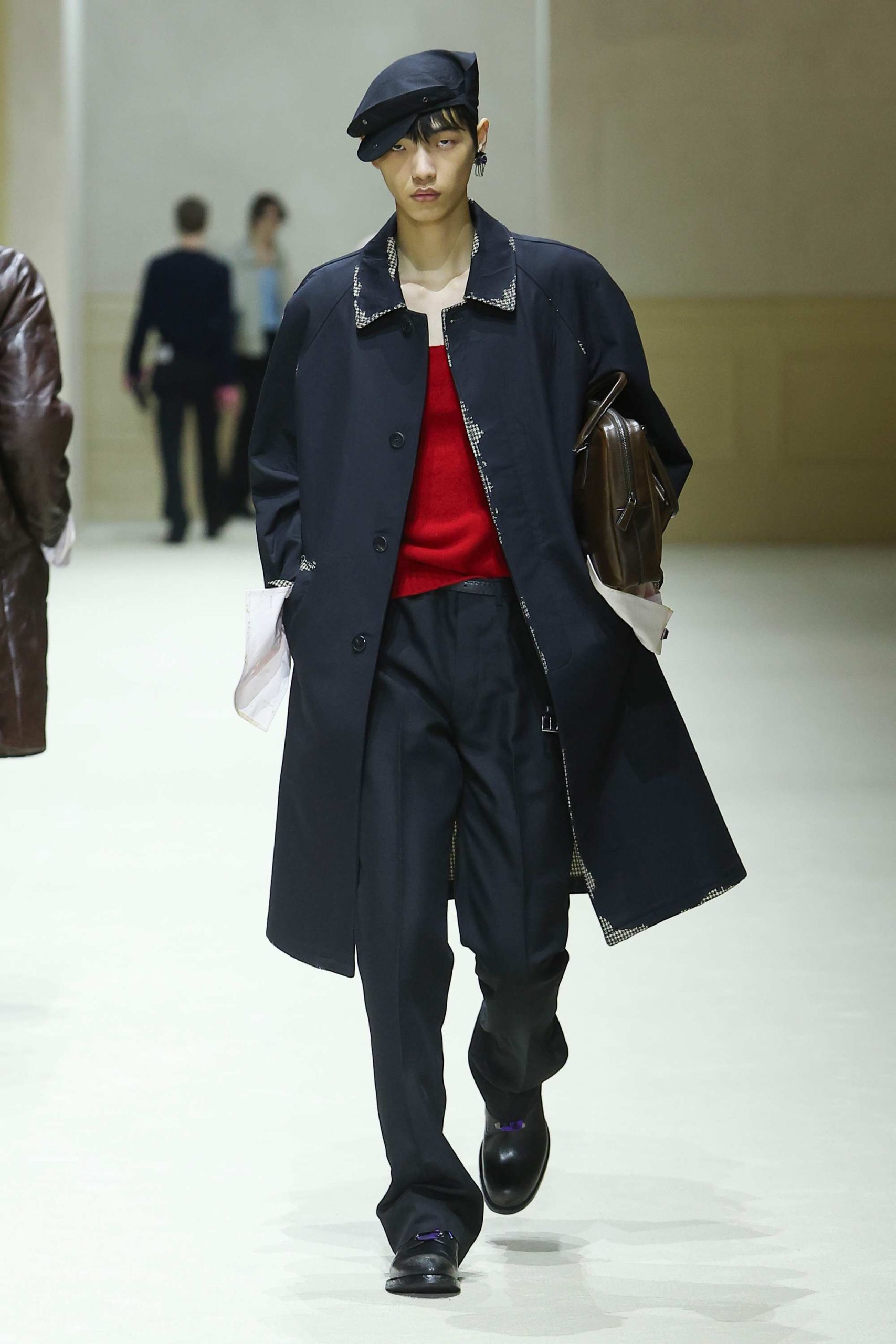
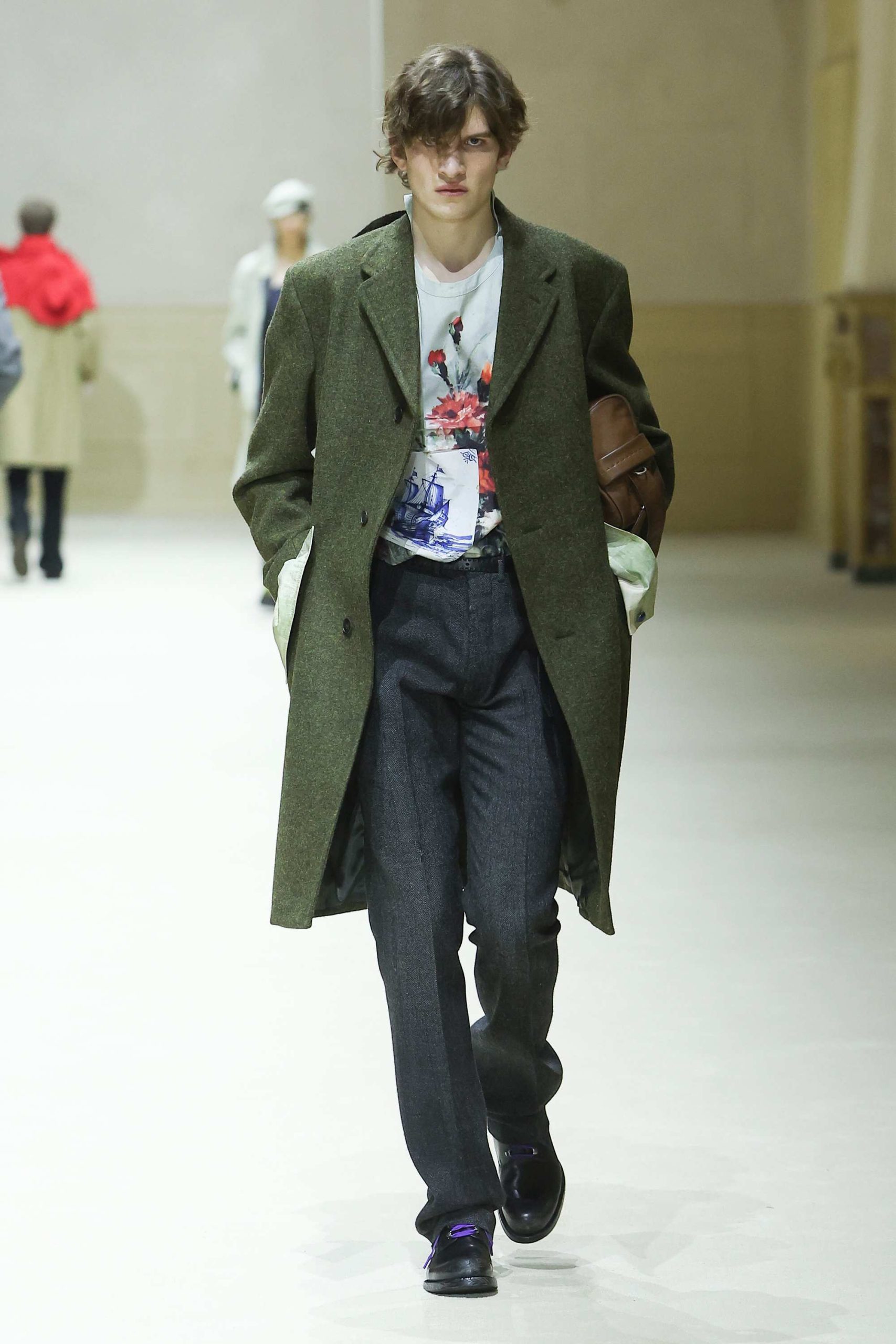
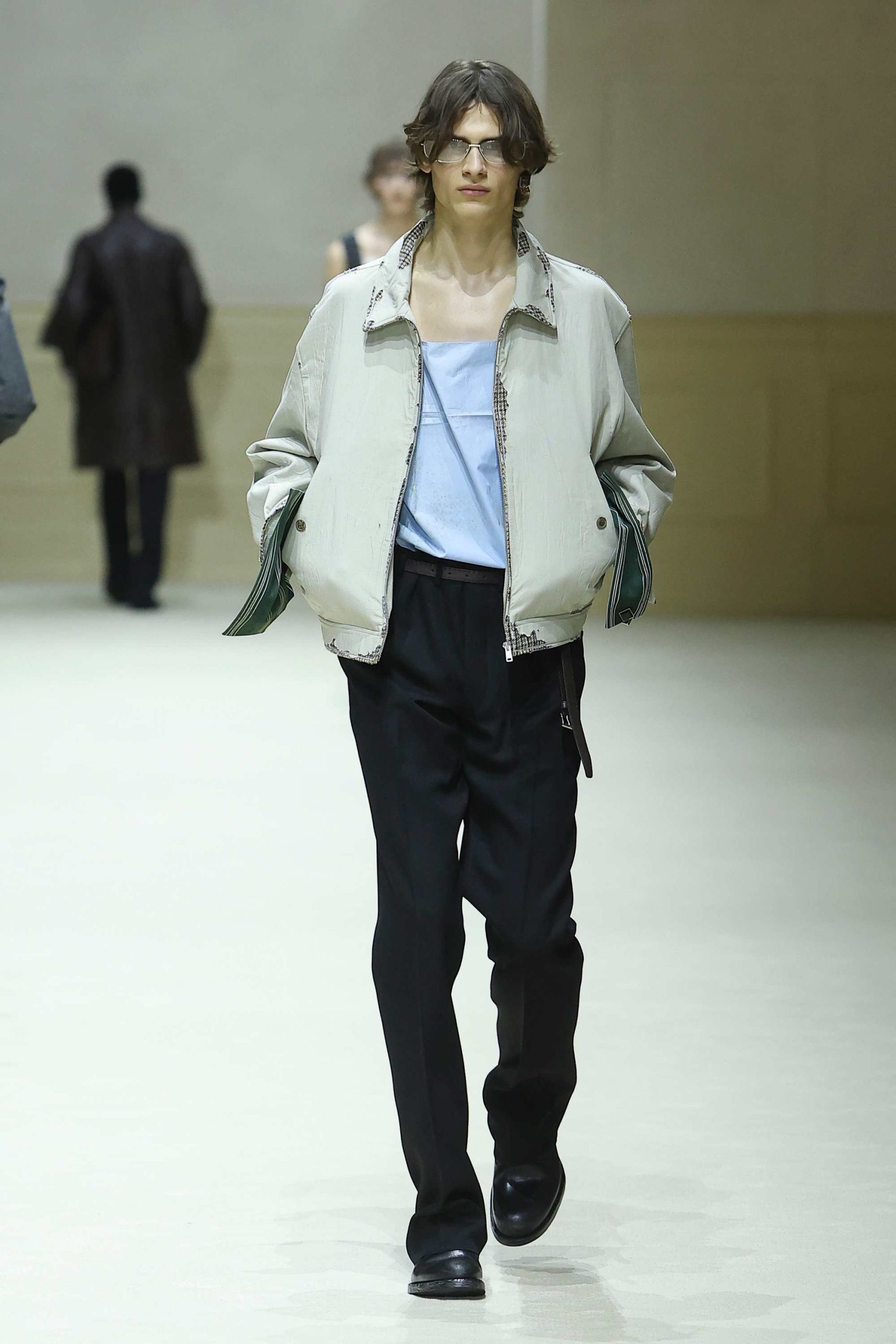
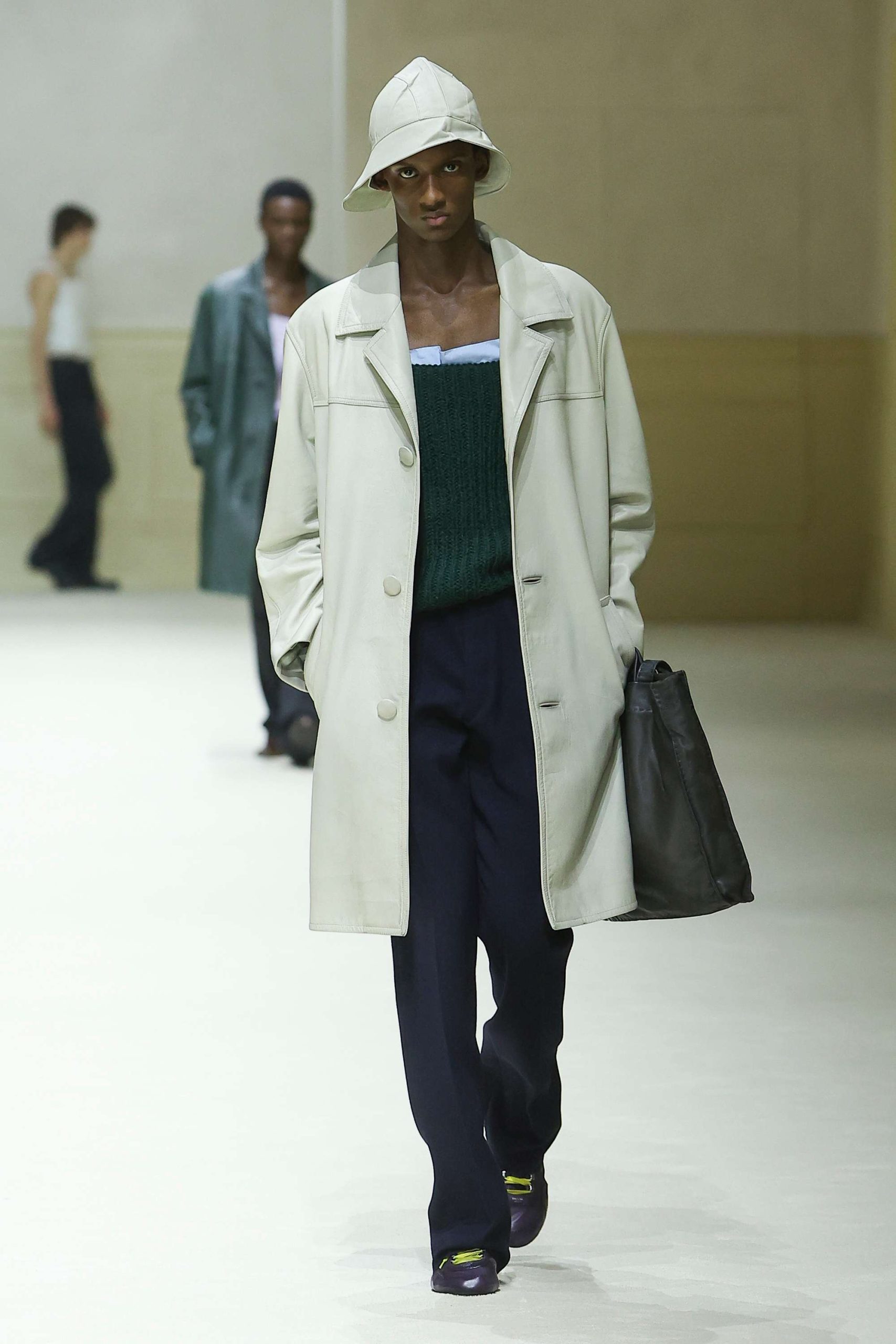
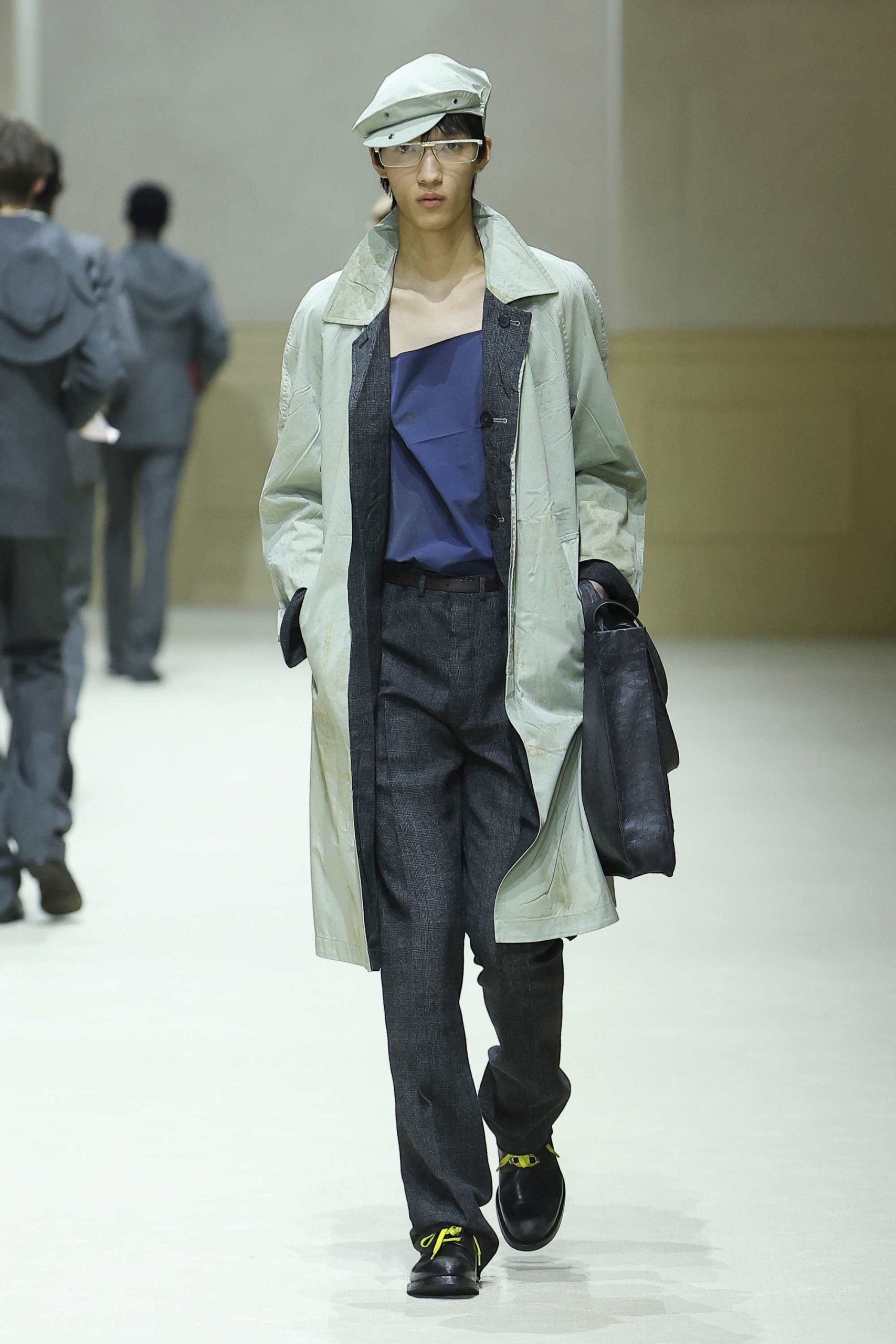
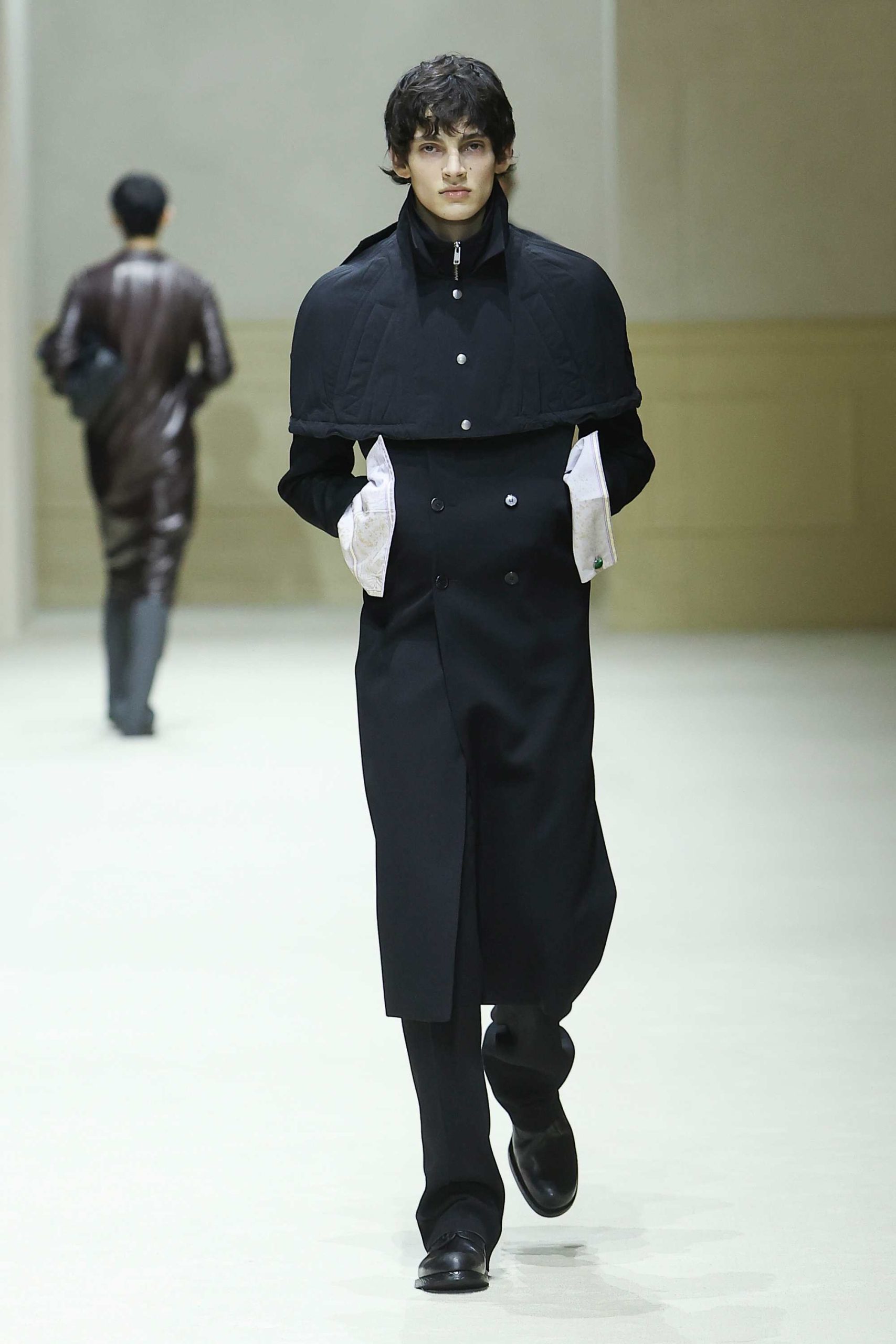
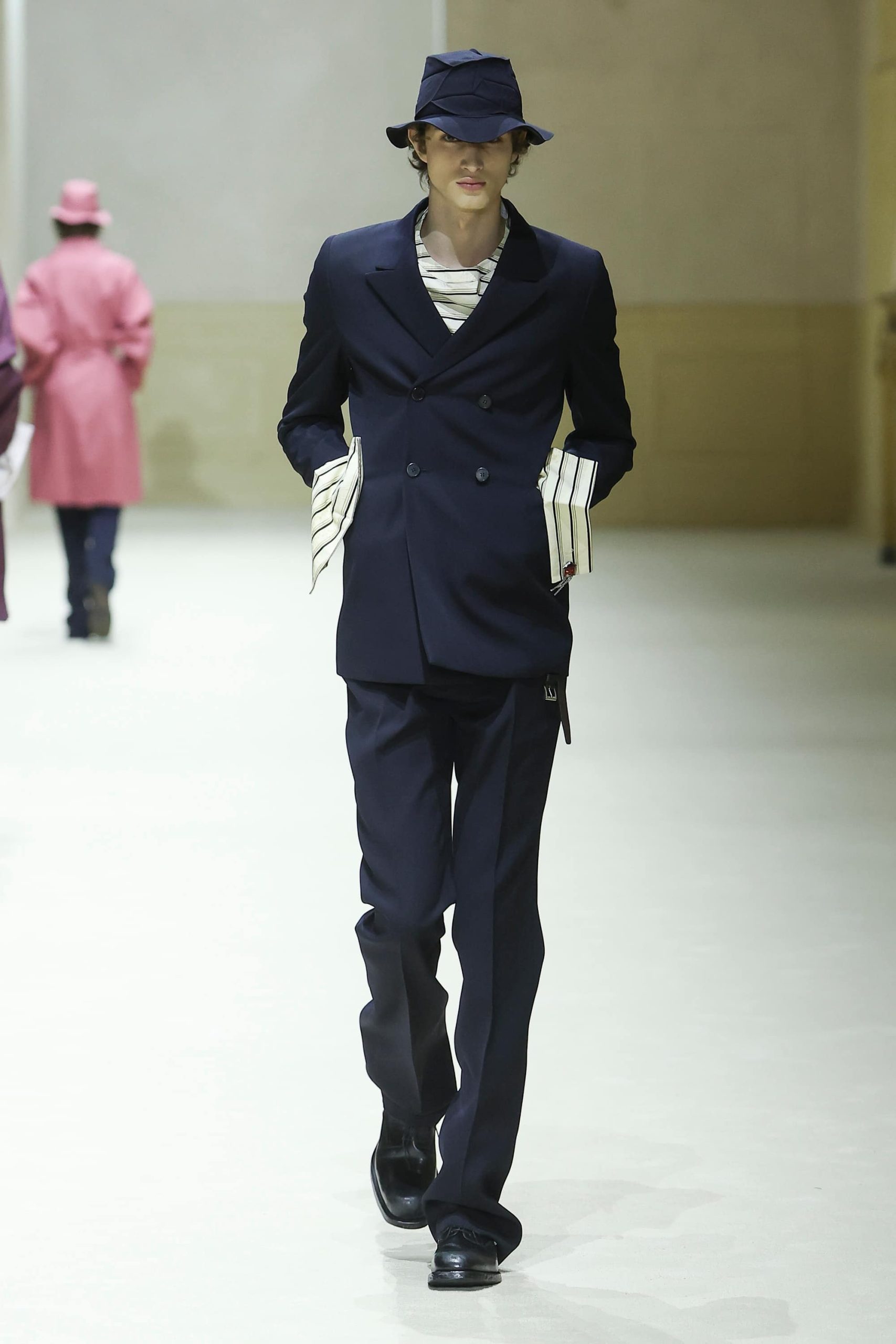
This choice now feels particularly acute. As we retreat from AI-generated content and the “TikTok-fication” of the industry, a return to demanding narratives feels inevitable. This is “advanced dressing” that refuses to be ignored. Prada — a house defined by its opposition to the status quo — hasn’t been proposing grand ideas, but small ones that invites you to appreciate slower, more satisfying forms of consumption in an era where depth is becoming extinct.
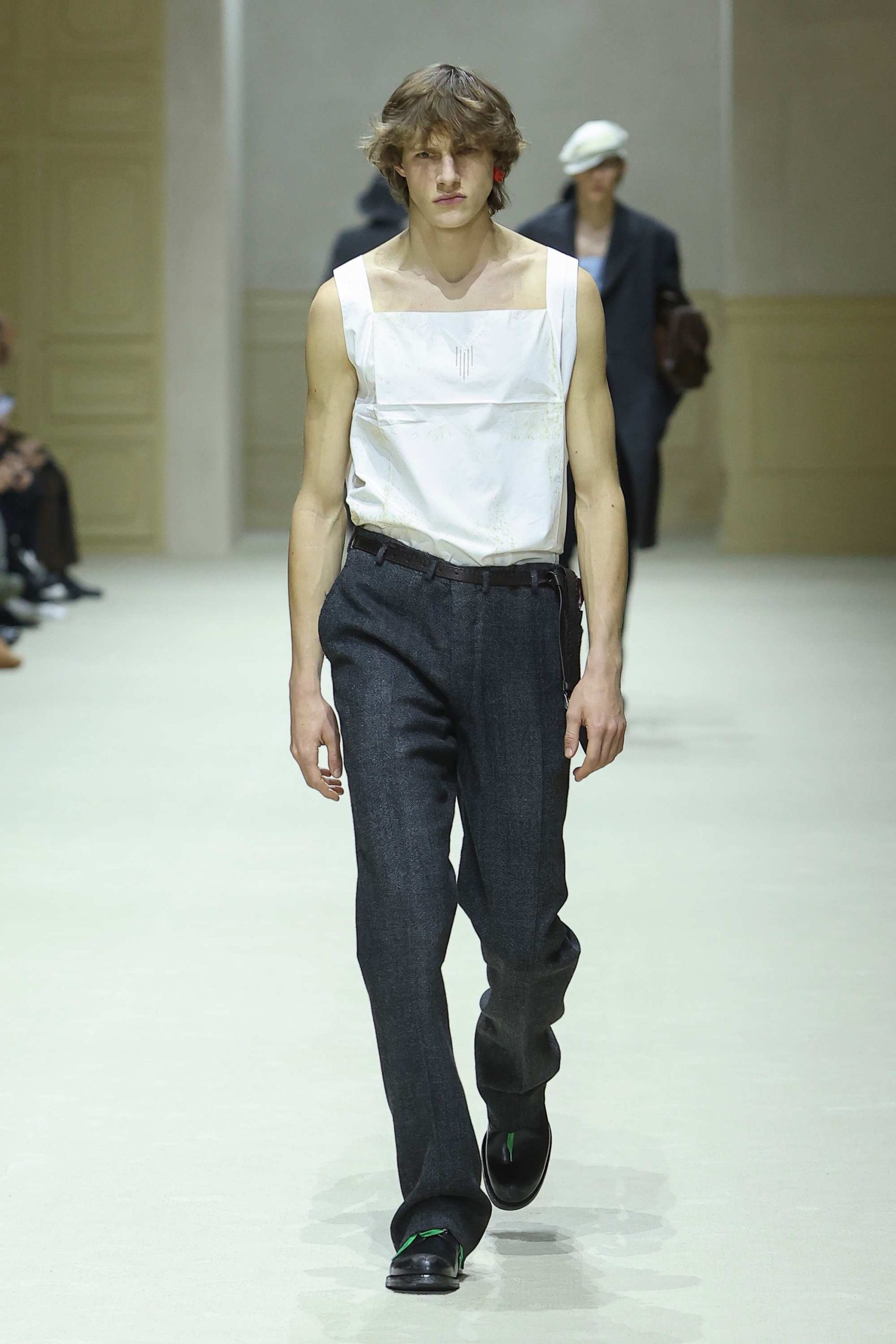
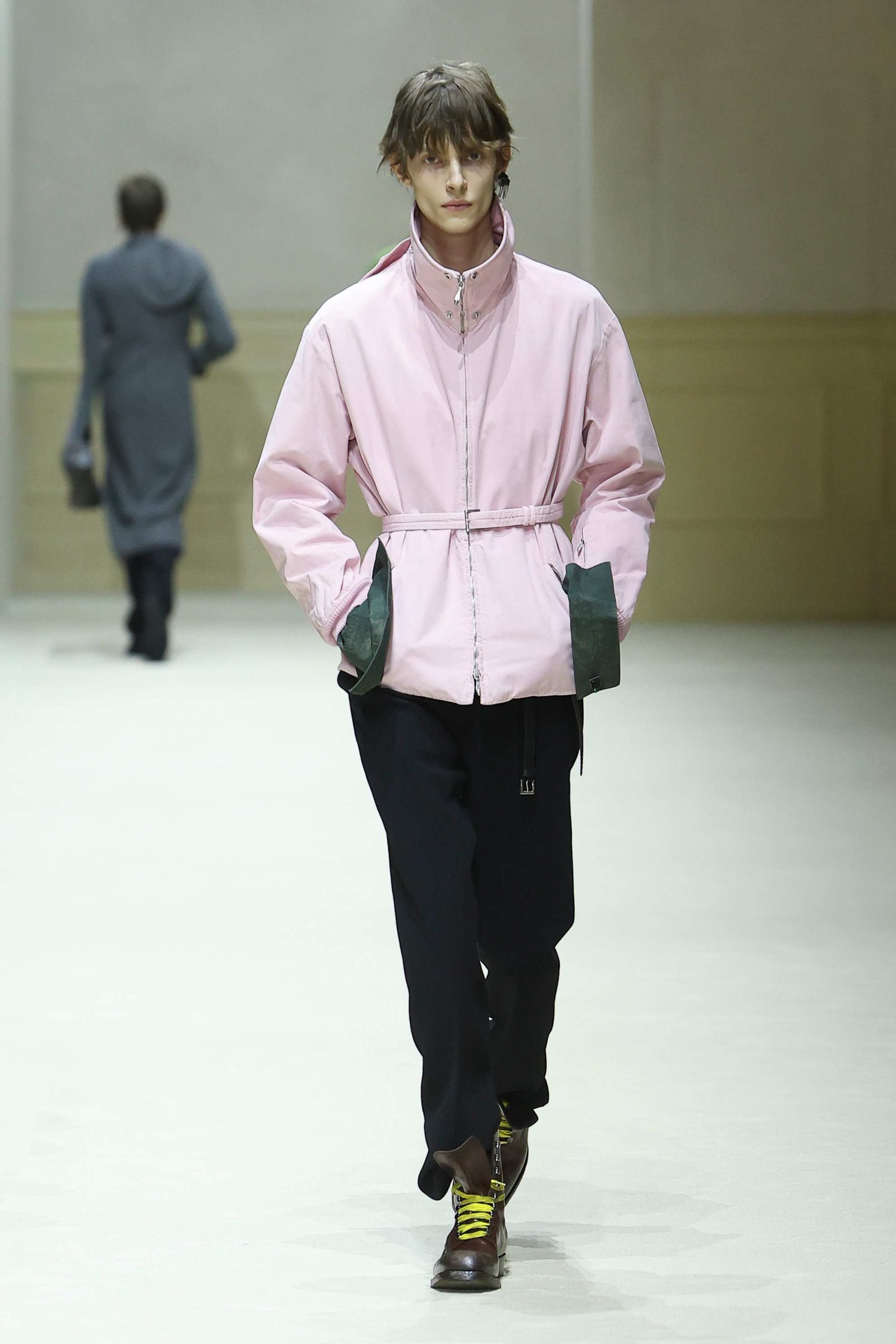
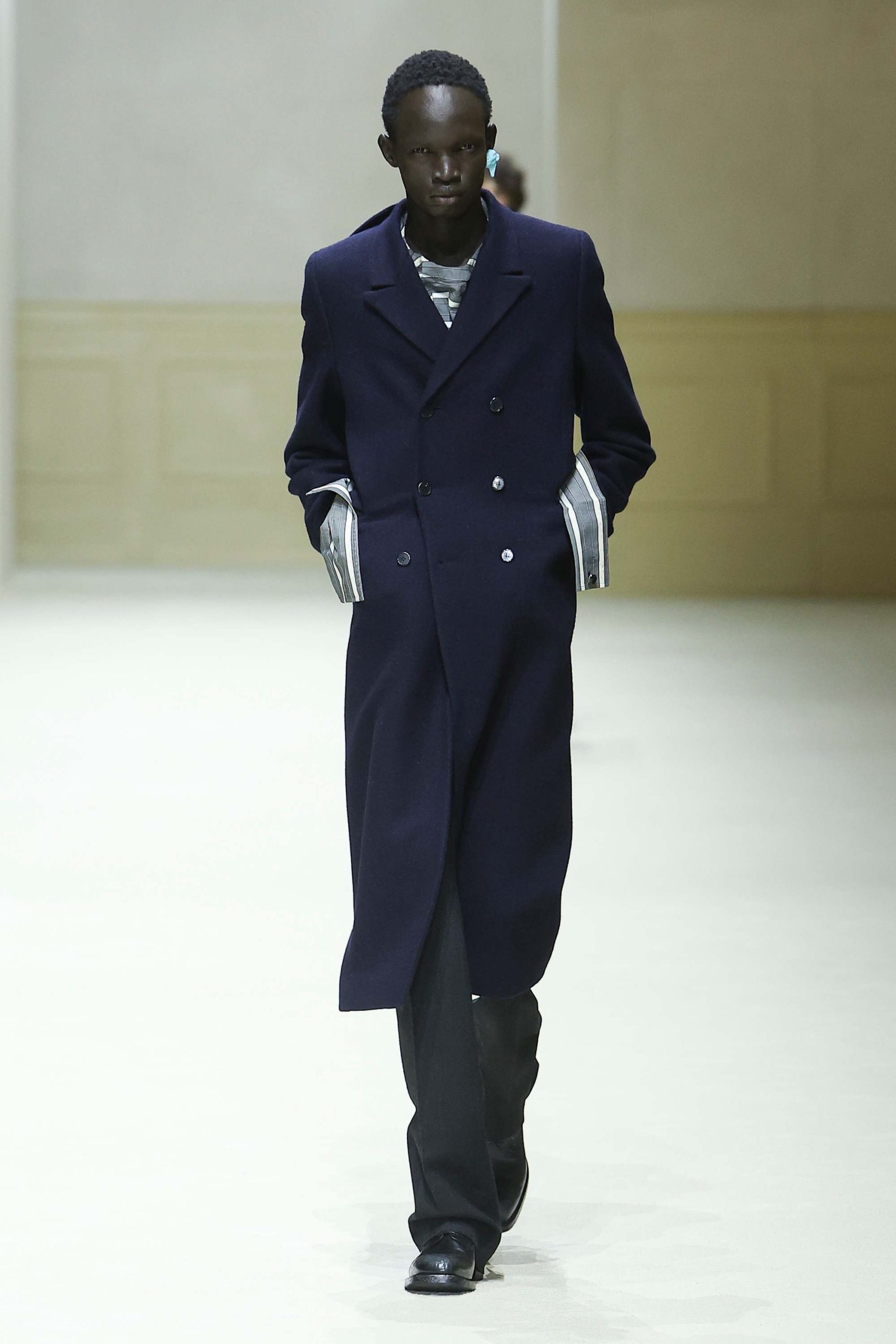
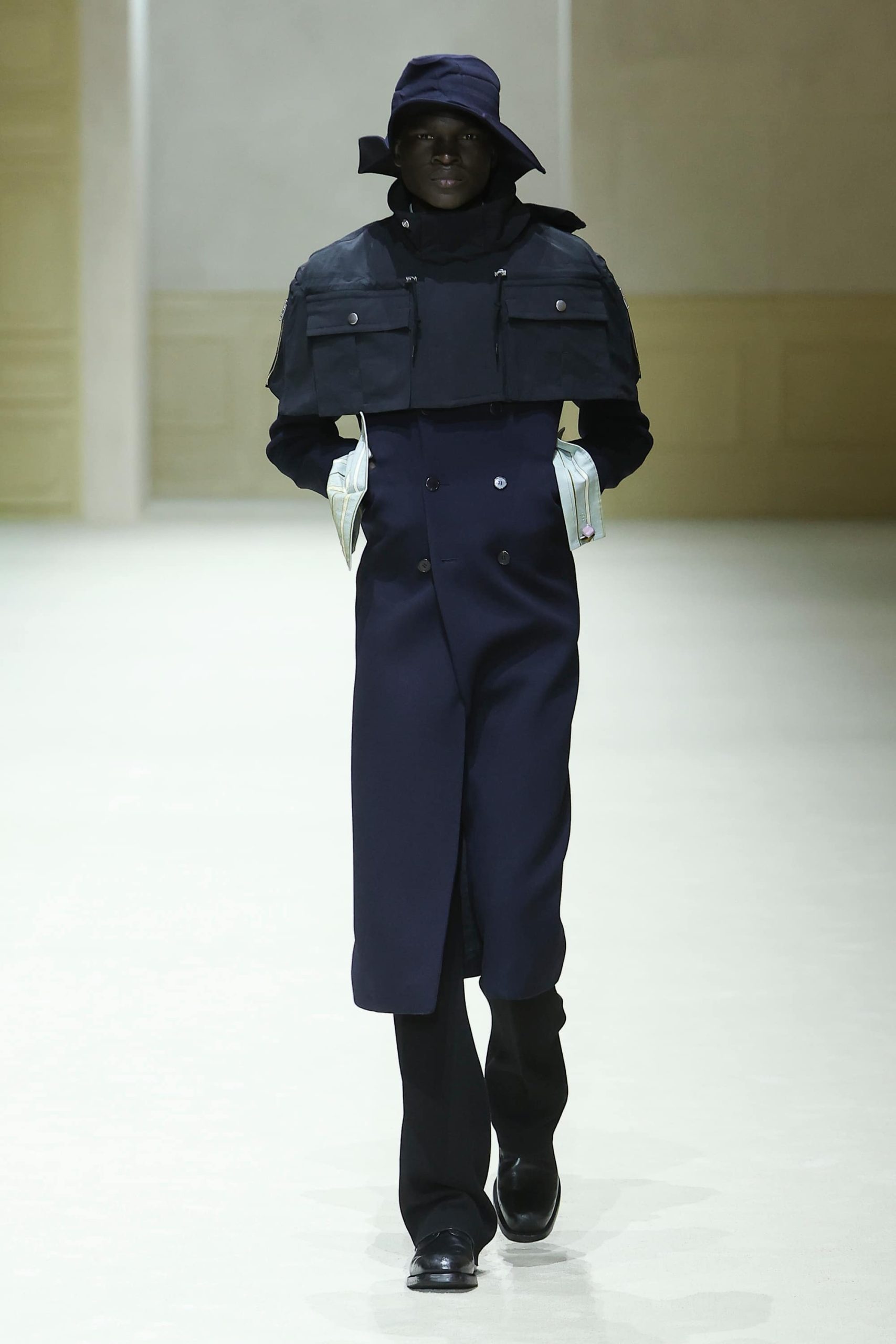
After all, slowness is the point where thinking begins. When a garment fails the algorithm and doesn’t wrap itself up in a tidy bow for the camera, it disrupts your expectation and holds you there. Why? Because meaning takes time — a fact we often forget in the rush to identify a trend or claim a certain “core.” Art plays by the same rules too: when Duchamp put a urinal in a gallery, the provocation wasn’t the porcelain; it was the pause. He didn’t tell you how to feel; he left you to decide if it mattered. Prada operates in that same register.
In a system addicted to immediacy, legibility, and the constant need for an explainer video, Prada still insists on a delay. These clothes don’t explain themselves, and they certainly don’t care if you catch up. Ambiguity isn’t comforting, and that’s why it works. It’s a method. Rather than standing apart from the present, the house is resisting its worst instincts — acknowledging that our attention is a finite resource and responding not with more noise, but with the rarest thing in the feed: a reason to look again.
Once you are done with this story, click here to catch up with our latest issue.