The visual storytelling and immersiveness of art have always lived in complexity and raw emotion. When mediums fuse, they open new ways of communicating and reshape how we experience creativity. Each practice offers what the other cannot — when the body becomes a canvas, the story finds completion in the hands of another artist. In doing so, this feature celebrates the storytelling born from art–fashion collaborations, serving as a reminder of why their narrative presence remains vital to the future of both worlds.
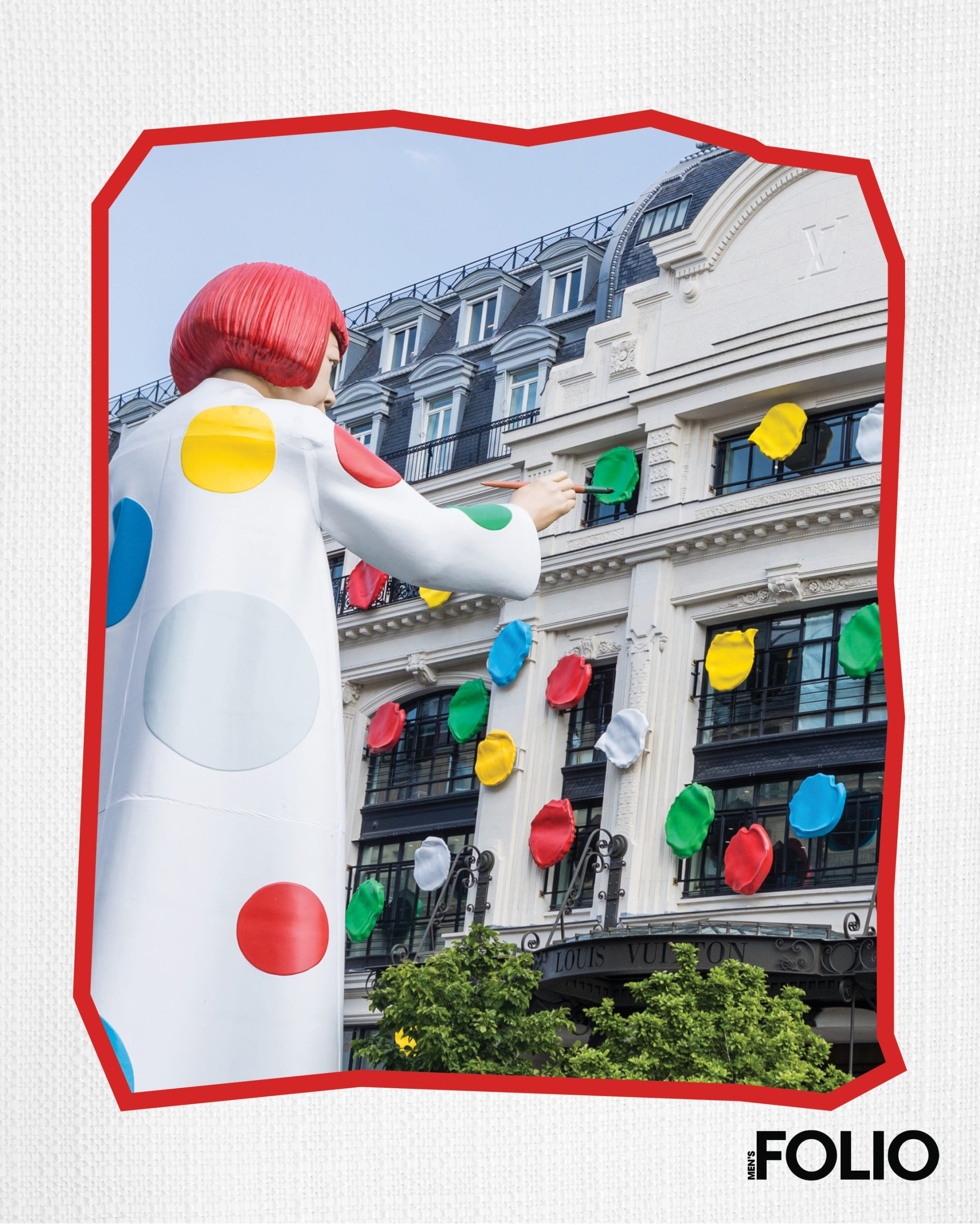
Louis Vuitton and Yayoi Kusama
When Louis Vuitton first partnered with Yayoi Kusama in 2012, the fashion world witnessed more than a meeting of art and luxury; it was the merging of two obsessions: the pursuit of infinity and the desire for permanence. Kusama’s polka dots, born from her lifelong hallucinations and mirrored installations, spread across Louis Vuitton’s monogram canvas in rhythmic repetition, transforming handbags and accessories into hypnotic portals of pattern and colour.
A decade later, the dialogue reignited. This time, the collaboration felt less nostalgic and more eternal, as if Kusama’s universe had swallowed the brand whole. From window displays to mannequins painted in dots, Kusama became omnipresent, dissolving the distinction between product and performance.
Her famous dots have always symbolised self-obliteration — the artist’s attempt to lose herself within infinity. When cast across Louis Vuitton’s surfaces, they became a meditation on desire and obsession with how we, too, disappear into the things we covet. It is rare for a collaboration to feel spiritual, yet this one did, through reminding us that art, like luxury, is a kind of devotion. And through Kusama’s eyes, even the endless repetition of dots can feel like an act of salvation.
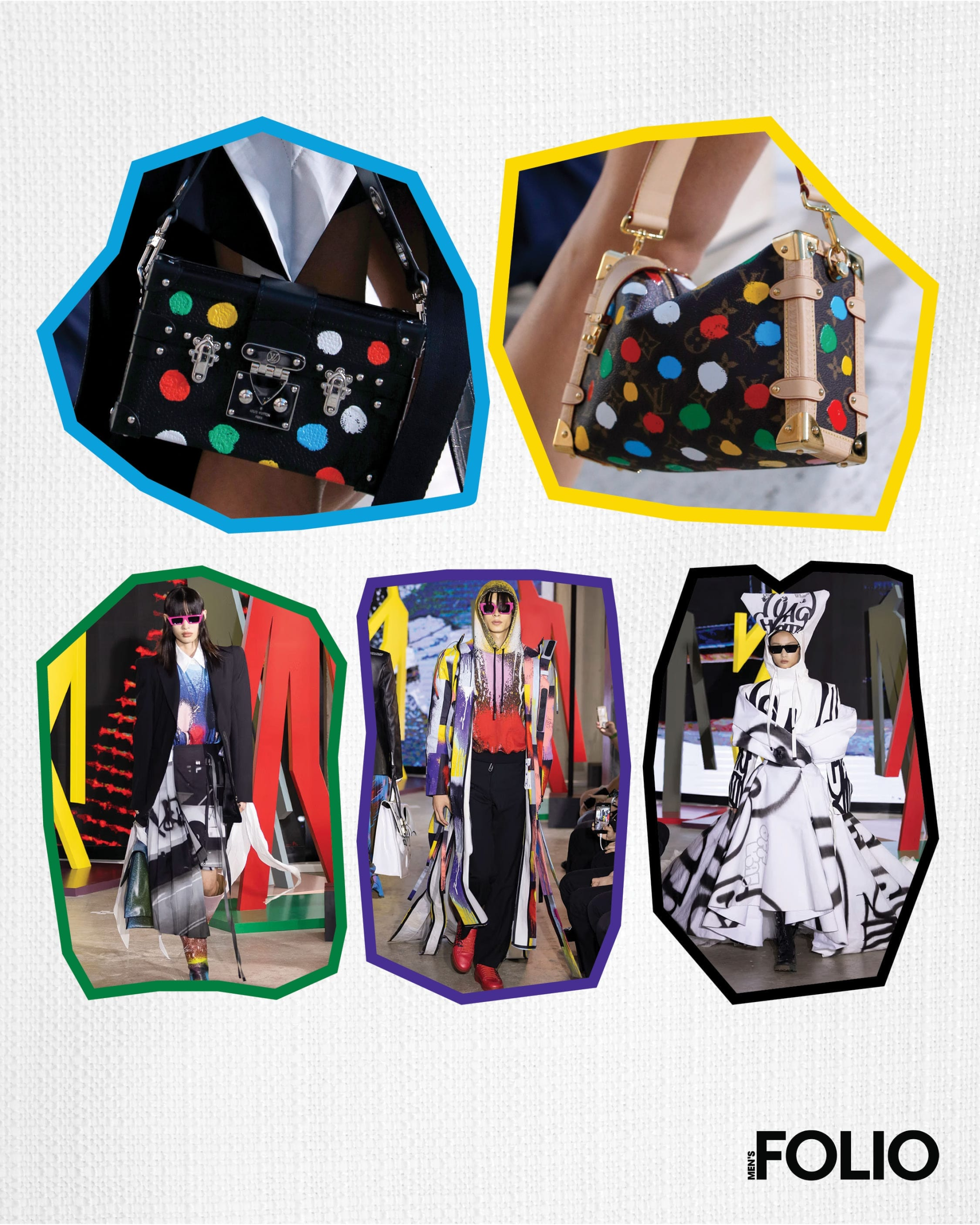
Off-White and KATSU
If Virgil Abloh’s Off-White stood for cultural disruption, then his partnership with KATSU, the enigmatic graffiti artist and digital provocateur, was disruption incarnate. The OFFKAT collaboration blurred the limits of what fashion could be — a fusion of street rebellion and digital anarchy.
KATSU, known for defacing billboards with drone-painted tags and creating AI-generated graffiti, operates at the edge of technology and subversion. His work questions authorship, surveillance, and control, the very systems Abloh loved to play with. The collection itself became an extension of that ideology, with clothes marked by abstract spray patterns, digital motifs, and a sense of unfinished defiance. Even the launch — part runway, part performance, part video game, refused to stay in one dimension.
Together, Abloh and KATSU turned fashion into a living act of rebellion. They challenged the sanctity of the luxury garment, replacing polish with chaos, perfection with possibility. The OFFKAT project tested the limits of creativity in fashion and what happens when graffiti leaves the wall and fashion leaves the catwalk, colliding somewhere in the code.
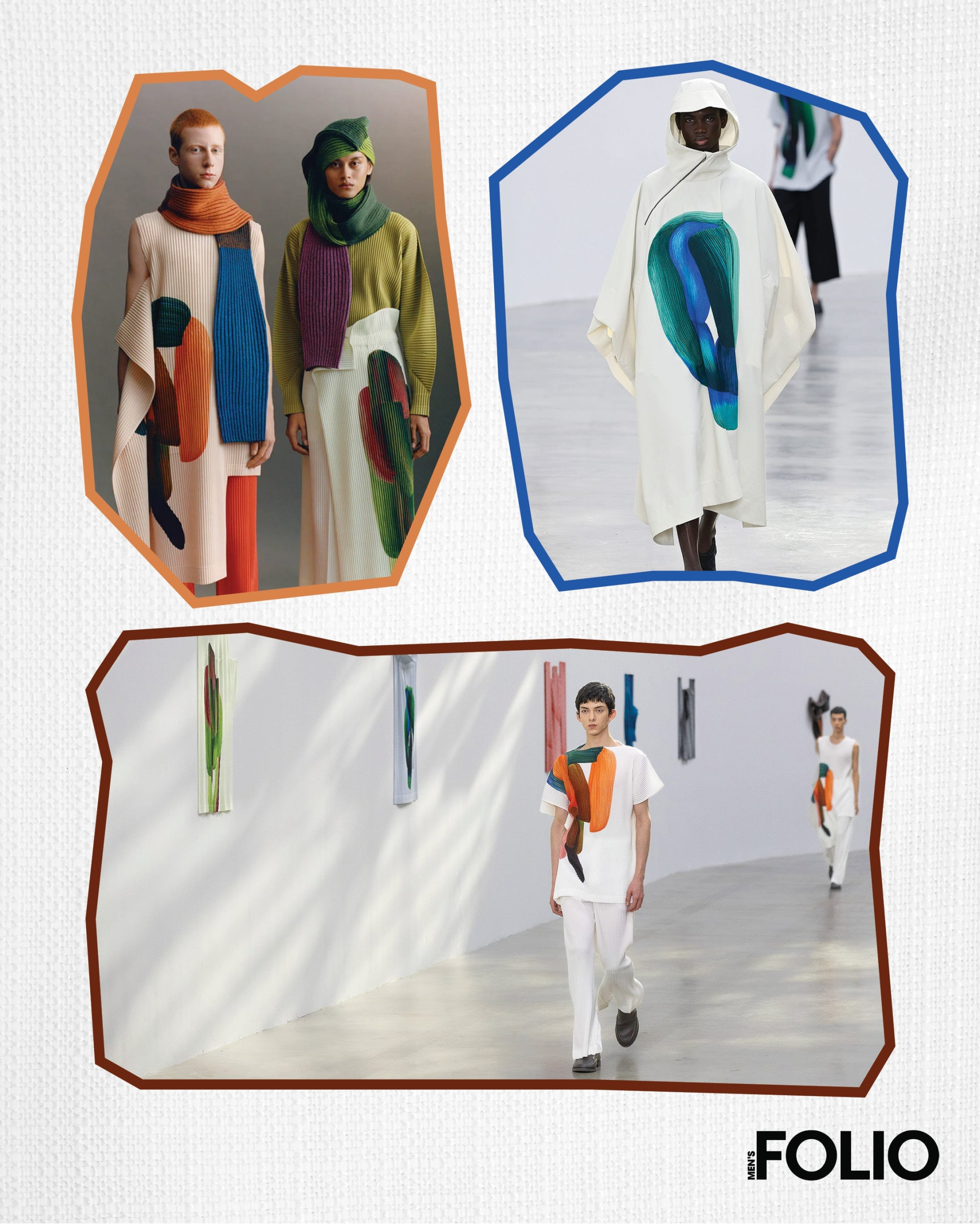
Issey Miyake and Ronan Bouroullec
Some collaborations whisper rather than shout. In the union of Issey Miyake and Ronan Bouroullec, the fashion world witnessed a study in restraint — a meditative dialogue between textile and line, form and flow. Bouroullec, celebrated for his delicate abstract drawings, translated his felt-tip meditations into the structured folds of Miyake’s Homme Plissé line.
His strokes — rhythmic, organic, endlessly patient — found new life in the pleated garments, which seemed to move as though the drawings themselves had inhaled. The result was a rare harmony through art that did not merely decorate fashion but became it. Bouroullec’s work has always thrived on variation, the slow accumulation of beauty through precision — an ethos deeply shared with Miyake’s lifelong study of movement and structure.
Their collaboration felt like a rejection of fashion’s noise in favour of simplicity that breathes. Each garment was a gesture — a stroke of calm in a world overwhelmed by spectacle. Together, they transformed fabric into poetry, proving that innovation does not always demand disruption, and that sometimes, it resides in the rhythm of a single, unwavering line.
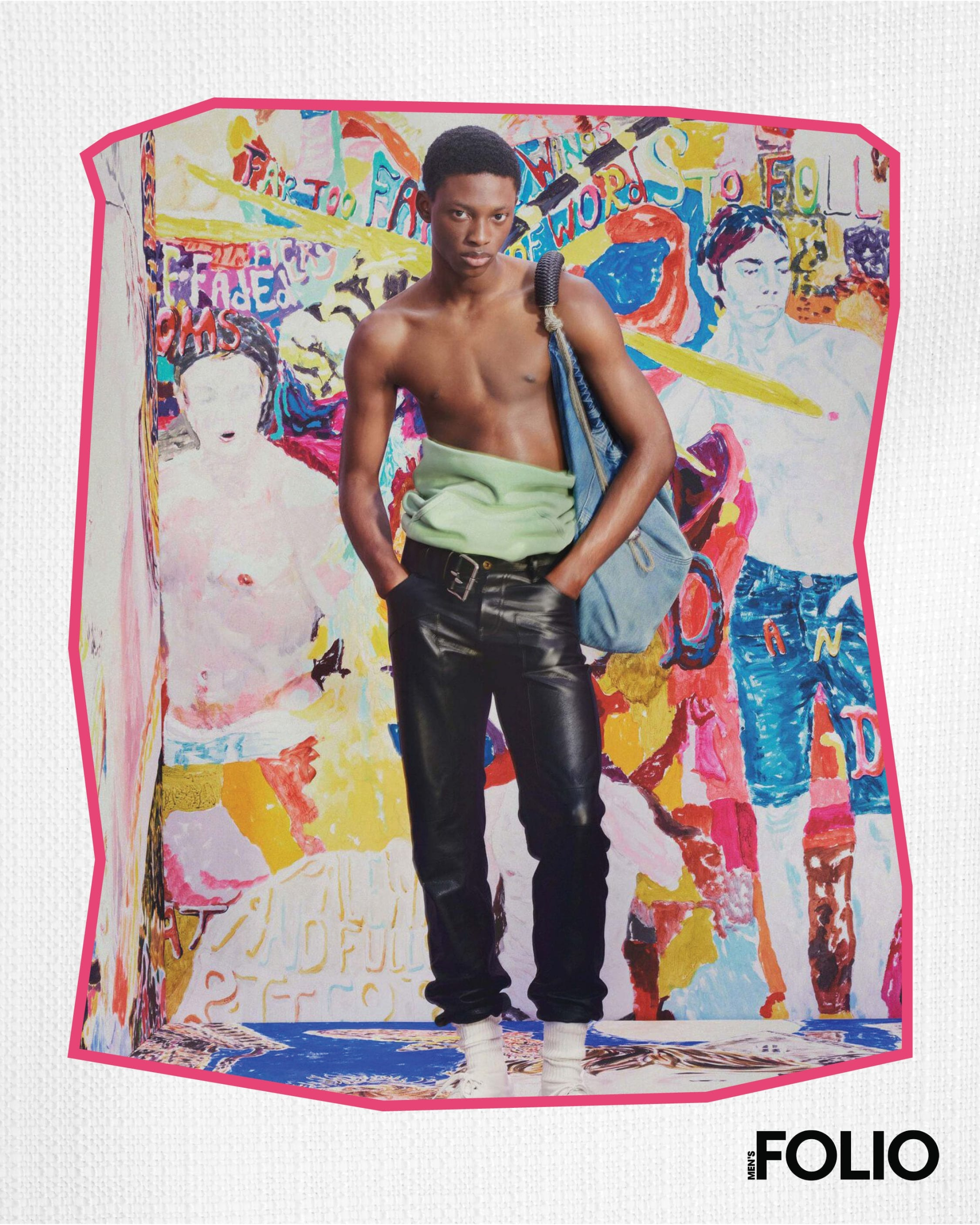
Loewe and Richard Hawkins
Under Jonathan Anderson’s direction, Loewe had become a house fluent in the duality of craft and chaos, intellect and sensuality. The brand’s 2024 collaboration with American artist Richard Hawkins embodied all of that and more. Hawkins, known for his contemporary collages that splice classical statuary with pop culture, celebrity and eroticism, turned Loewe’s runway into a fragmented mirror of desire.
His layered compositions were seductive, cerebral, and unashamedly provocative, becoming both the backdrop and the narrative for the collection. The collaboration oozed a sense of collision between antiquity, the body, and its image.
Anderson and Hawkins shared a fascination with masculinity’s evolving language — how identity can be sculpted, edited, and undone. Their collaboration redefined fashion as a kind of collage itself, a reconstruction of fragments into fleeting beauty. On that runway, perfection was irrelevant. What mattered was the vulnerability of exposure — the raw, unfiltered act of being seen.
Once you are done with this story, click here to catch up with our latest issue.