At first, the new MacBook Pro doesn’t seem that different — the same polished black finish, the same crisp 14.2-inch display. But after a day of working with Men’s Folio’s Art Director, Danessa, the difference became obvious. Every tool responded faster, every edit felt effortless. Side by side with an old Intel MacBook Pro, it was like jumping a few years into the future — one where technology quietly fades into the background so the ideas can take centre stage.
The engine: M5 chip and the AI pivot
Here’s the real star of the show — Apple’s new M5 chip. It’s built with ten cores: four that go all out, and six that quietly keep things running efficiently in the background. Apple calls it the fastest core on the planet. We can’t confirm that, but using it, it definitely feels like it.
Apple says it’s 20 percent faster than the M4, all while using the same amount of power. That might sound like a small bump, but you feel it in every edit and export. A 10-minute 4K video that once took just over five minutes to render on the M4 now wraps up in about four. Not groundbreaking on paper, but in practice, that’s one less minute waiting and one more spent actually creating.
On paper, the M5 boasts up to 20% faster CPU performance, 45% faster graphics, and a 3.5x boost in AI tasks. But the numbers only tell part of the story. The real magic is in what that means day to day: no more spinning wheels, no more “just a sec.”
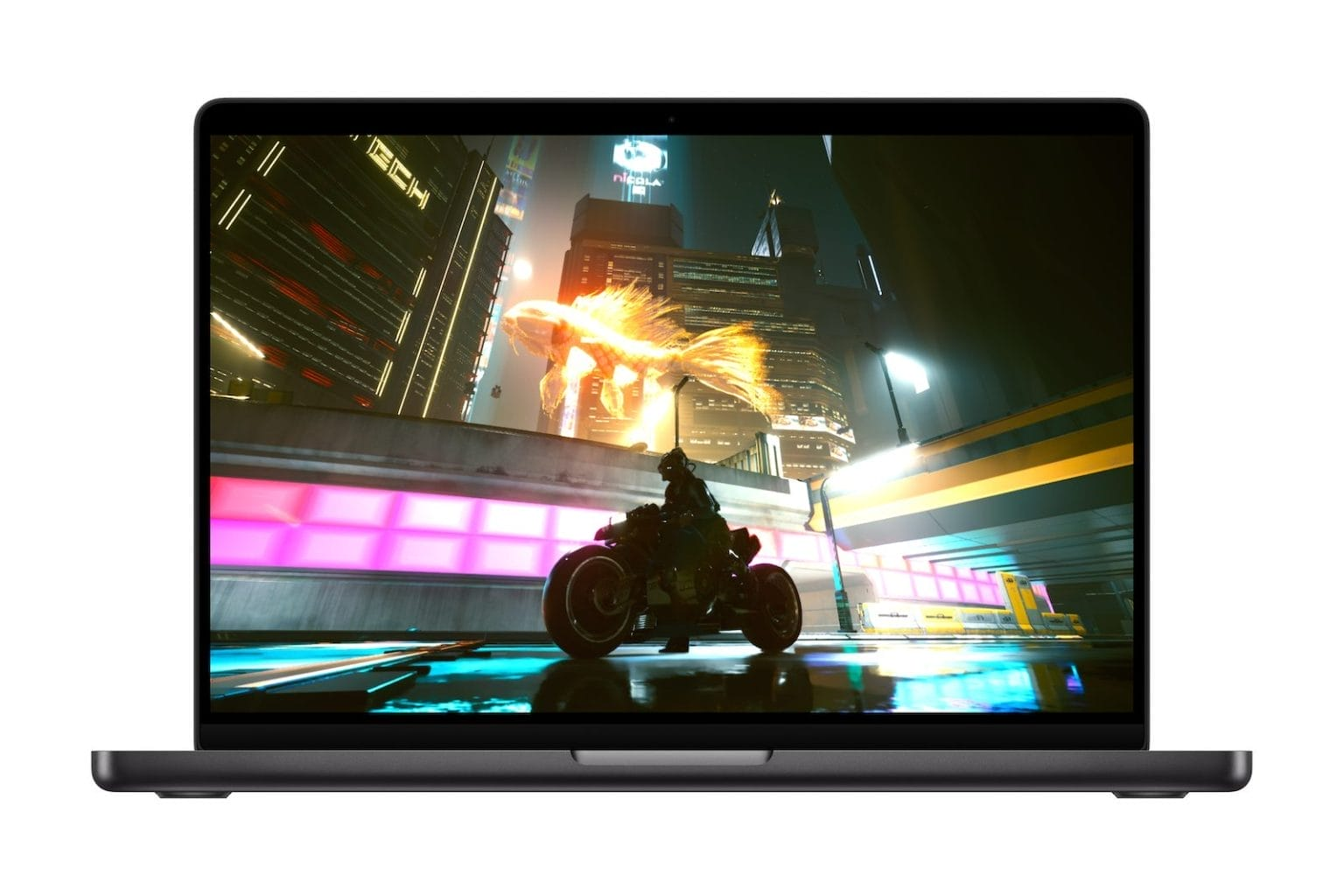
We watched it in action with Danessa, Men’s Folio’s Art Director. On her old Intel machine, a 4K timeline with colour-grading, noise reduction, and a few nested sequences was a stuttering nightmare — she’d hit export, plug in her charger, and go get coffee. With the M5, it’s instant. Scrolling, scrubbing, layering filters — all buttery smooth. Those tiny moments saved, over and over again, add up to hours by the end of the week. Hours she now spends on design, not delays.
But the real leap forward isn’t just about speed; it’s about how smart the M5 has become. Its GPU cores now include built-in Neural Accelerators, designed specifically for AI tasks. That means anything powered by AI, from local language models to smart tools in creative apps, now runs with remarkable ease.
AI upscaling that once took minutes? Done in seconds. Smart masking that used to lag behind your brush? It now feels almost telepathic. Even the CPU joins in, with its own Neural Accelerators handling quick tasks like voice recognition and background assistance.
The AI revolution is local
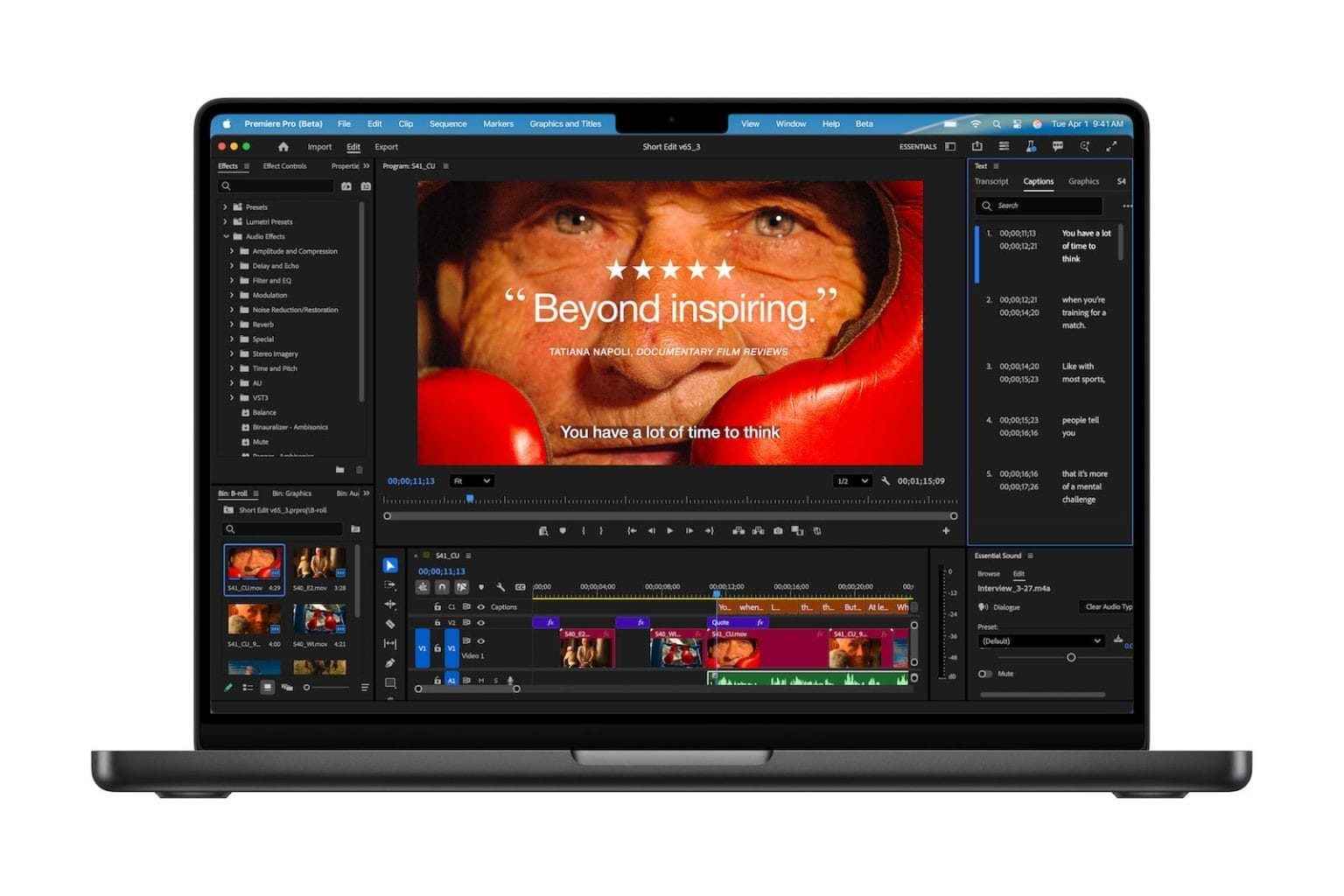
This is the most exciting part for us. The M5’s new Neural Accelerators on every GPU core make AI-powered tools a standard feature, not just a bonus. Running AI noise reduction in Topaz Video or using advanced AI masking and object removal in Premiere or Resolve is now handled locally, up to 7.7 times faster than on the M1.
This isn’t just a small improvement. It turns features that were once too slow to use into essential parts of her creative process. She can generate complex image variations in apps like Draw Things in seconds. This kind of creative iteration used to require a large, hot desktop PC.
The right tools: ports that do the job

After years of minimalist design, Apple seems to have listened to the people who actually use its machines. The new MacBook Pro brings back all the ports professionals have been missing — and honestly, it’s a relief.
You get three Thunderbolt 4 (USB-C) ports that handle lightning-fast transfers and charging, plus the beloved MagSafe 3 connector. That magnetic click isn’t just nostalgic; it’s practical. If someone trips over the cable, it pops out harmlessly — something Danessa, our Art Director, wishes had existed back when she lost a laptop to a studio mishap.
Then there’s the SDXC card slot — fast, reliable, and a quiet love letter to photographers and videographers who just want to import their media without juggling dongles. The HDMI port makes external displays effortless, supporting 4K up to 240Hz or 8K at 60Hz, perfect for dual-monitor setups that creative work often demands. Even the humble headphone jack gets an upgrade, adjusting voltage to handle professional-grade headphones with ease.
Between Wi-Fi 6E and Bluetooth 5.3, everything connects seamlessly whether it’s a wireless drawing tablet, speakers, or just your phone. It’s the kind of setup that feels considered, not just designed. For Danessa, it means one less adapter, one less cable, and one less thing to think about.
How it feels in real workflows

In Adobe Lightroom, RAW imports that used to crawl now fly by in seconds. Batch edits, proofs, and complex filters process effortlessly, freeing her to focus on mood and tone instead of progress bars.
In Photoshop, tools like Neural Filters and Content-Aware Fill now work almost instantly. What used to take patience now just flows. She’s experimenting more, trying bolder edits, because the tech finally feels like it’s keeping up.
DaVinci Resolve, too, finally runs without protest. Multiple effects, live colour grading, smooth transitions all in real time. It’s a shift that changes how she works. No more tethering to a charger, no more compromising quality on the go. She can colour, cut, and finish from anywhere and trust the laptop to keep up. To us, this isn’t just about having something that’s faster; it’s having a sense of freedom.
Should you upgrade?
If you’re still on an Intel MacBook Pro, this isn’t just an upgrade but a liberation. The difference is night and day: cooler, quieter, and astonishingly faster. You’ll wonder how you ever put up with the old one.
For M3 or M4 users, the leap is smaller but still meaningful. Expect 15–20% gains across CPU and GPU performance, plus a significant boost in AI power. If your work leans heavily into AI-driven workflows, you’ll feel it immediately. If not, you can probably wait for the M5 Pro or Max — Apple’s already pushing toward that horizon, though we can’t confirm it at this point.
Once you are done with this story, click here to catch up with our latest issue.