Imagine this, your close friend, or worse still, your boss, signed you up for a whisky tasting session, and you are freaking out because you know nuts about it. On the other end of the spectrum, you are enjoying whisky already, but are not sure how to dive deeper into it.
Whisky can be daunting and is often misunderstood, given how it is perceived: masculine, complex and high-browed. Its flavour profile is not the most welcoming to thanks to its high alcohol content, but hidden deep within its amber and coppery hue is a world of flavours waiting to be unlocked and discovered.
A tasting session sets the mood and is the best setting to explore and learn more about whisky. You are not there to binge and down shots, but instead sip and savour the spirit. With that in mind, here is a short guide on whisky tasting to help you along.
Types of whisky
Scotch Whisky
Perhaps the most commonly known of the lot, Scotch whisky is whisky made in Scotland. It must be distilled and matured for a minimum of three years in oak casks and bottled at 40% ABV, minimum. The general ingredients are water, malted barley and yeast.
Bourbon Whiskey
Bourbon Whiskey is made in America primarily from corn. It must be matured in new, charred oak barrels and bottled minimally at 40% ABV. Unlike other whiskies, it does not have a minimum maturing duration, except straight bourbon (minimum 2 years).
Tennessee Whiskey
Tennessee Whiskey has stricter regulations compared to bourbon. It must be produced solely in the state of Tennessee under the same process as bourbon. However, it goes through an extra filtering step known as the Lincoln County Process prior to maturing.
Canadian Whisky
As its name suggests, Canadian whisky is made in Canada from corn. Rye grain is also a notable component of its mash bill, hence “Canadian whisky” and “rye whisky” are used interchangeably. It must be matured for a minimum of three years, bottled minimally at 40% ABV and may contain flavouring.
Irish Whiskey
Irish whiskey must be distilled and matured on the island of Ireland (Republic of Ireland and Northern Ireland) for a minimum of 3 years before bottling minimally at 40% ABV. Its mash bill comprises a mix of malted and unmalted barley (may include oats, rye, wheat, or even corn). Unlike Scotch, peat is rarely used during malting, and it is distilled three times.
Japanese Whisky
Apart from geography, Japanese whisky mirrors the Scotch whisky-making process, with predominantly malted barley often imported from Scotland. With the recent boom in Japanese whisky, Japanese whisky regulations were tightened in 2024 after errant bottlers imported, bottled, branded and sold Scotch as Japanese whisky to unassuming customers. The new regulations require saccharification, fermentation, and distillation to be carried out at a distillery in Japan. The water used for the production must be extracted in Japan, and plain caramel colouring (E150) may be used. The whisky must mature for at least three years and be bottled in Japan, minimally at 40% ABV.
Equipment
Glassware
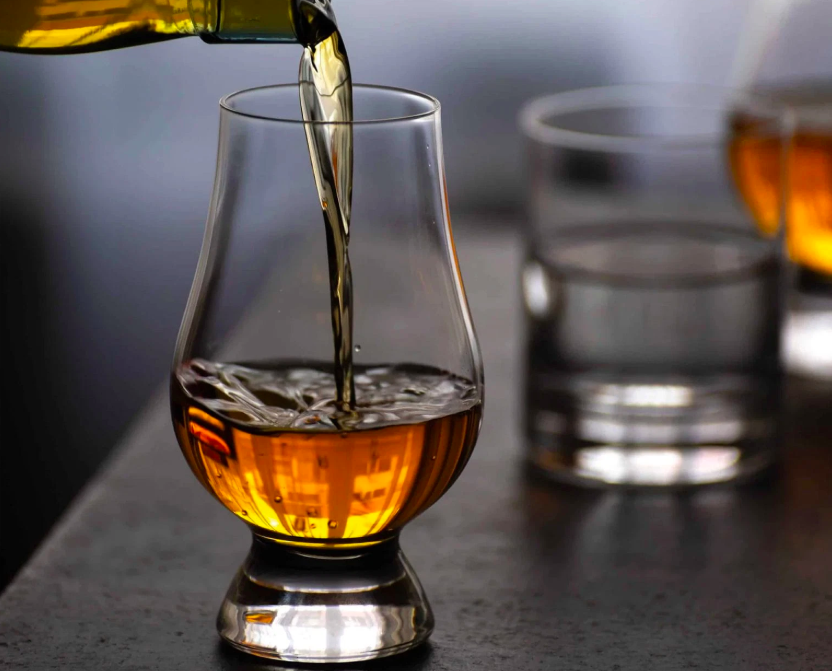
Just as wines have their own sets of drinking glasses, whisky also has its own for tasting, known as the Glencairn glass. It has a narrow opening which opens to a wide bulbous base to hold adequate whisky volume. The narrow opening concentrates the aromas for nosing. The more elegantly shaped tulip glass may also be used for tasting.
Dropper
Droppers are excellent tools to introduce precise amounts of water to open up flavours without making a mess.
Lighting
Light plays an important role when observing a whisky’s colour and observing its “legs”. If the environment does not allow for a well-lit setting, having a white light lamp can be helpful.
Whisky tasting step-by-step
Start with the visual aspect of the whisky by noticing its colours and legs. The former ranges from pale gold to dark amber and typically hints at the type of barrels used for maturation. Darker colour generally suggests deeper flavours and vice versa for light colours.
In layperson’s terms, legs are a whisky’s viscosity. Give the glass a slight swirl and observe its legs trickling downwards. The general school of thought suggests that lighter whiskies have more rapidly moving legs, while heavier whiskies will have thicker and slower-moving legs. This effect will be replicated in the mouth.
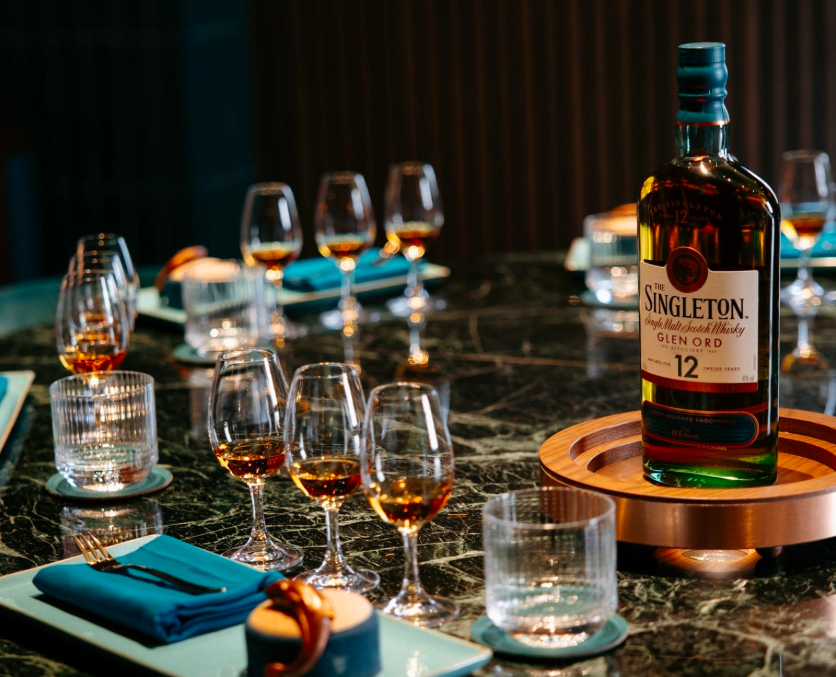
Next, nose the whisky. Part your lips slightly, bring the glass to your nose and inhale slowly. Repeat two more times and observe the differences. The first nosing primes your nasal passage for the strong alcohol fumes, while the subsequent nosings will start to reveal the whisky’s true aromatic composition. Consider using retronasal breathing for whiskies of higher ABV to avoid nasal burns. Inhale with your mouth, hold it for a moment before exhaling with your mouth again.
Note down some of the aromas you managed to pick up and compare them against the official notes provided by the distillery. Spicy, woody, vanilla, fruity, caramel and smoky are the more common notes. There are no right or wrong answers, as everyone’s sense of smell is different and unique. However, the nose can be trained over time to identify different notes.
Finally, it is time to taste the whisky. Start with a small sip to allow your palate to adjust to the initial burn. Coat as much of your mouth as possible with the whisky. Take another slightly bigger sip after and hold it longer in your mouth, and at this point, start noticing four distinct facets of the whisky: intensity, flavour, mouthfeel and finish. Here’s a tip before the first sip: have a mouthful of ice water to cleanse your palate and prep your tongue for the burn.
After a few sips, you may consider adding a drop of water or two to the whisky with the dropper. Water opens up its flavour profile that might be previously muted when served neat. An ice cube works is a viable alternative, as it gives the whisky a different dimension.
Final notes
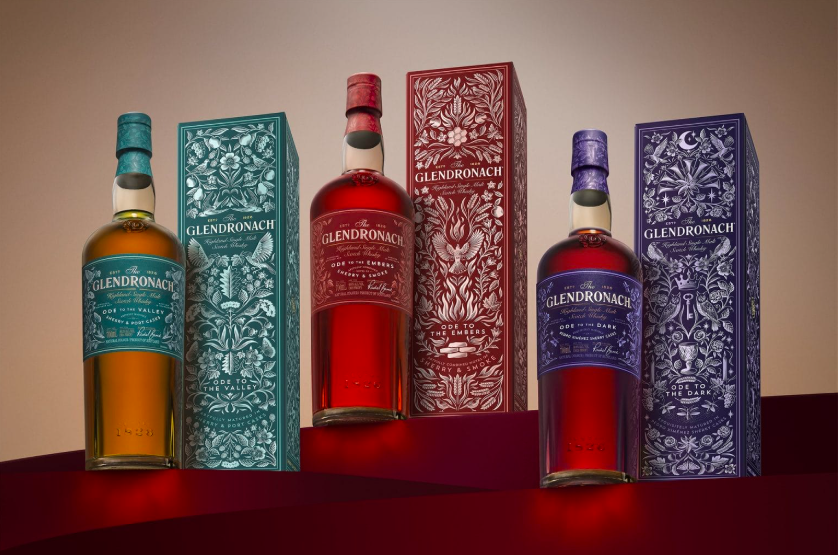
Read up on some of whisky’s lexicons to better understand whisky. Terms such as cask strength, ABV, ex-cask, and whisky types (single malt, single cask, blended) are common terms used in a tasting session.
Explore, explore, explore. Try as many types of whisky as you can if the spirit is right up your alley. Organised sessions by retailers or distillers are your best bet to sample a range of whiskies from core to rare bottles, while informal BYOB sessions could make things lighthearted.
Once you are done with this story, click here to catch up with our latest issue.