Lynchian. That’s a newly (by that, first documented in 1984) coined adjective to join the ranks of other literary descriptors such as Lovecraftian and Kafkaesque. But for good reason. Named after late, great David Lynch, it’s perhaps the most overused phrase by cinephiles — to describe juxtapositions of the mundane and the grotesque, or simply, a body of work has semblance or characteristics of his own.
David Lynch’s impact runs far and deep. From launching and catapulting the careers of now legendary actors such as Laura Dern, Kyle Maclachlan, Naomi Watts among the likes, to influencing an entire console generation of video games like Silent Hill, Persona, and Fatal Frame, to being regarded as one of the most influential and greatest filmmakers in the history of cinema.
He was the great American surrealist, a cultural titan in the industry that who’s works were one of the many attributes to what was considered high culture in pre-2000s. The mastermind behind several iconic films and TV shows, like Twin Peaks, Mulholland Drive, and Blue Velvet to name a few, David Lynch was a force to be reckoned with. His imagination ranged from revealing the hellish underbellies of picturesque American suburbia, to producing abstract, disturbing drawings, lithographs and sculptures that revealed his rawest creative core.
Men’s Folio celebrates the legacy of David Lynch, one year after his passing. His influence remains deeply embedded in contemporary art and culture, and we speak to several young creatives from Singapore and Malaysia who continue to draw inspiration from his work. Read down below.
Khy, 24, Artist and Sculptor
What’s the first ever David Lynch film that you fell in love with?
Pożar (fire), his animated short film. I came across it one day after seeing that he uploaded it onto David Lynch Theater, and watched it over and over. He drew everything himself, and the piece is then animated by Noriko Miyakawa. I think that Pożar is as Lynchian as it gets. It is a visually stunning film, the high contrast monochromatic illustrations made me very uneasy upon my first watch, but I was entranced. I let the beauty seep out as I watched it again, it is demanding and captivating. It is severe. You can see his love for art and filmmaking pouring through the screen. He loved art so much. I saw this short film when I was making my first ever abstract short film, titled io, which I could only make after seeing Pożar, as it wouldn’t have been possible, if I hadn’t been so struck by the art of filmmaking, the process of creation. The haunting score by Marek Zebrowski also inspired me when scoring my short. I fell in love with filmmaking because of David Lynch, and I fell in love with artmaking because of Pożar.
What do you miss most about David Lynch, and the impact that he’s had the film industry?
His unapologetic process of making art the way he wanted, the fact that if he wanted to do something it was enough proof that it needed to be done. His love. That it inspired young new filmmakers and artists.
What’s the most Lynchian photo that you have in your gallery?
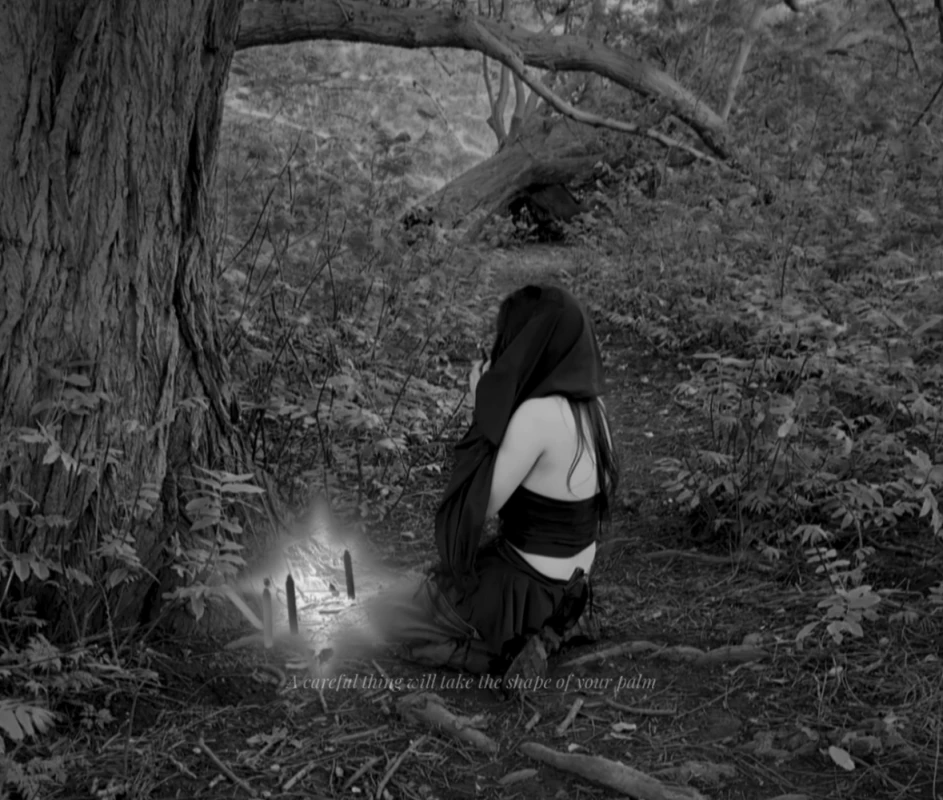
Evan, 20, Student
Which character do you most resonate with in all of Lynch’s work?
I’d say Laura Palmer from Twin Peaks because she holds a powerful contradiction at her core. Though she appears fragile and idealized, she carries an immense inner strength, choosing to resist the darkness (BOB) rather than be consumed by it. Laura embodies pain, love, and defiance all at once, that tension between how she is seen and who she truly is feels deeply human. Her refusal to surrender her soul, even under great torment, makes her one of Lynch’s most powerful figures, and I find myself drawn to that same strange mix of vulnerability, strength, and coolness, an archetype I strongly aspire towards.
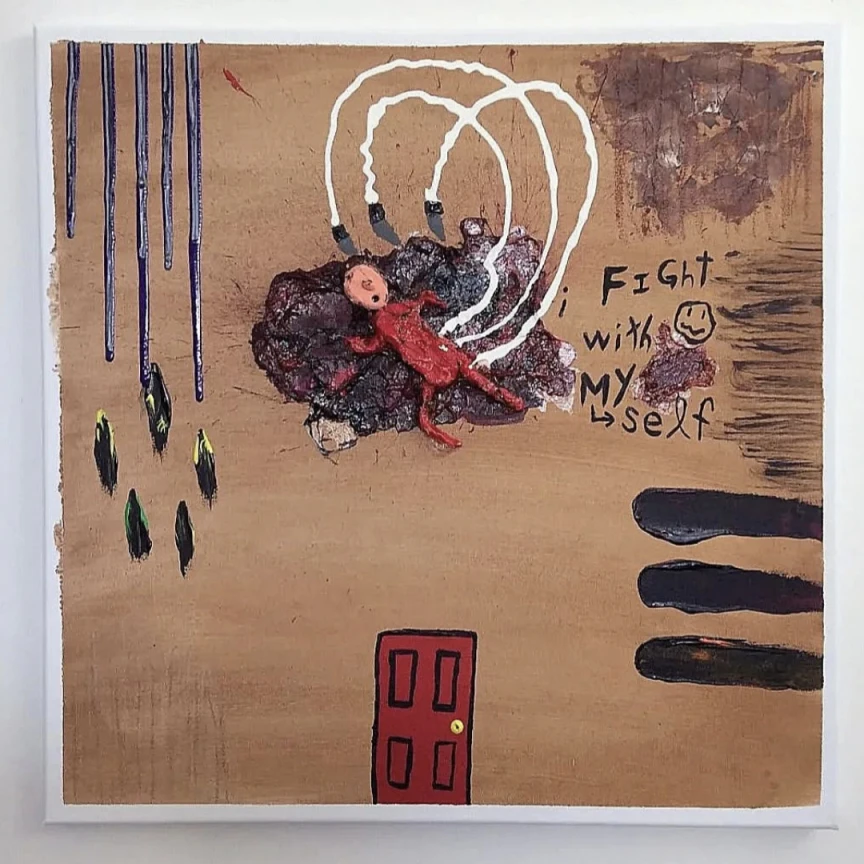
A painting of mine influenced by David Lynch’s visual language, particularly his painting Fight With Myself from 2013. What draws me to Lynch as a painter is how his work carries the same psychological unease and surreal intensity as his films, closer to an emotional state than a narrative. His use of raw materials, heavy textures, and distorted figures echoes the way Francis Bacon turns the human body into a site of conflict and vulnerability. My own painting was an attempt to translate that inner turbulence into form, using distortion and material to suggest a mind struggling with itself rather than a literal image.
Salam, 20, Student
Which character do you most identify with in all of David Lynch’s work?
I’m Andy on a good day, and Laura when I’m having a shitty day.
What do you miss most about David Lynch, and the impact that he’s had the film industry?
What interests me most about Lynch is his singularity. It is impossible to think of any other artists like him, much less operating on the same wavelength as him. But most of all, I find his work in Transcendental Meditation to be illuminating and reflective of the capacity he has for love — which is evident throughout his filmography and life as an artist. In the most parasocial way possible, reading up on his approach taught me that there is more value found in the process versus the outcome.
Saskia, 22, Masters Student
What’s the first ever David Lynch film that you fell in love with, and why?
The first David Lynch film that I fell in love with was the first one I watched — Blue Velvet. Going into it, I knew that Lynch was known for the surreal quality in his work but didn’t know much else about the plot, pacing, or themes of his movies. During and immediately after watching it, I understood that while his work is surreal, it also can’t be categorised. I loved the way he seamlessly blended the macabre with the mundane and that no matter how dark Blue Velvet got, you could still tell that it was made by a person who possesses a lot of love.
For first time/new fans of David Lynch, what’s one piece of advice you would give to them?
You don’t need to fully understand what’s happening; with David Lynch it’s more about feeling and experiencing.
Is there a film still from a movie that you feel most impacted by?
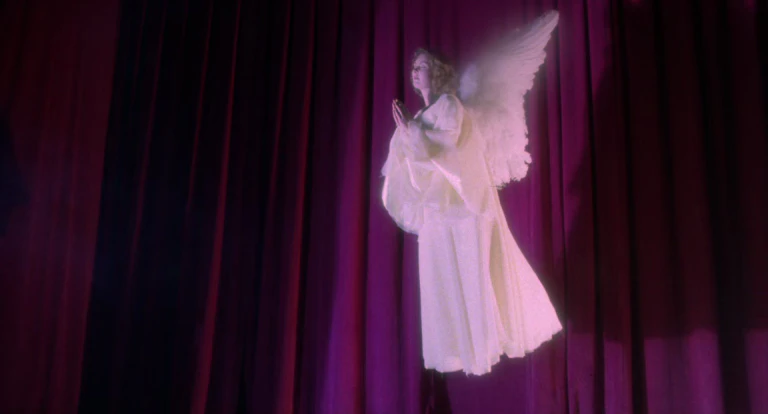
Jude, 19, Student
What’s the first ever David Lynch film that you fell in love with?
Blue Velvet. It proved to me love is capable of being unconditional and that it persists in everything that you do.
Which character do you most identify with in all of David Lynch’s work?
The background characters in Blue Velvet, when they’re in the house singing Roy Orbison. Sometimes you’re a bare witness to something so unnervingly passionate that you have to believe they think they’ve already gotten what they wanted.
What’s the most Lynchian photo that you have in your gallery?

Aqil, 21, Student
Which film still from a movie do you feel most impacted by?

What do you miss most about David Lynch, and the impact that he’s had the film industry?
I miss how he just did his own thing. His films are strange, but they still feel deeply human, and he made it feel normal for filmmakers to lean into that kind of surreal style.
Zaid, 21, Student & Aspiring Writer
What’s the first ever David Lynch film that you fell in love with?
For most people, it would be Blue Velvet or Mulholland Drive, but for me, I fell in love with Lost Highway. While directing a play, I found myself wondering: is my job to give the audience all the answers, or to leave them standing on a ‘dark highway,’ questioning which version of the story was real?
I found the dirty jazz sound Lynch uses to build mood frantically genius. We all love music, and even more so jazz. Fred playing jazz becomes a symbol of his mental state. The Mystery Man is another fascinating figure, a character you hate for being too real. He feels like an unreliable narrator, often seen holding a video camera that captures the raw, ugly reality Fred’s mind is trying to escape.
The Mystery Man is most famously associated with psychology. In psychology, the Heinz Dilemma is a litmus test for moral development, asking whether a man should steal a drug to save his dying wife. But in Lynch’s nightmare, Fred faces a far darker crossroads. Where the traditional dilemma pits law against love, Fred’s crisis pits his fragile ego against his distorted reality. Unlike Heinz, who acts to preserve life, Fred acts to preserve control. When he suspects Renée’s infidelity, he doesn’t seek a moral resolution — he chooses the most extreme, immoral exit: murder.
Because Fred cannot reconcile his self-image as a victim with the reality of being a killer, his mind undergoes a psychogenic fugue. He creates ‘Pete’ to reset the dilemma, attempting to live in a world where he is an innocent man caught in someone else’s web, rather than the architect of his own ruin.
There’s also a striking, almost haunting connection between Lynch and Wong Kar-wai. They feel like lost twins of cinema, both obsessed with the aftertaste of a scene rather than the facts of the story. I like to imagine Fred and Pete as parallel-universe versions of Cop 223 and Cop 663 from Chungking Express. Both directors use saturated colors, urban loneliness, and a thickness of mood to depict characters trapped not by walls, but by their own unfulfilled desires.
In the end, I couldn’t help but wonder: if we all found ourselves at Heinz’s crossroads, would we have the courage to face the Mystery Man — or would we just keep driving?
What’s one piece of advice you would give to first time fans of David Lynch?
Always watch his films twice. Always watch it at night and remember that his films is not for everyone.
Sayang, 21, Bartender
Which character do you most identify with in all of David Lynch’s work?
I see myself a lot in Dale Cooper from Twin Peaks. He’s an oddball. An eccentric man with great determination. His near-stoicism in the face of any bizarre situation makes it seem as though nothing phases him. He accepts the absurd and lives with it; to him, the extraordinary is ordinary.
I admire his ability to be intelligently introspective while still maintaining a sense of humour. I love how he never quite addresses the quirks around him, as if they’re simply part of everyday life. Like, yes, this is weird, but he’s also a weird guy. He’s insanely charismatic too, and I can only hope I’m perceived that way as well.
This is a short film I created. I played around with the colours of the lighting like David did. The still shots and the framing of characters were very inspired by Lynch. The surrealism as well as the ambiguity of the messaging too that’s all thanks to him. The fantasy but also the familiar themes.
Syed Abdullah, 27, Creative
What’s the David Lynch film that you first in love with?
The first David Lynch film I truly fell in love with was Mulholland Drive.
I remember finishing it and just sitting there in silence: confused, unsettled, but weirdly emotional. It didn’t feel like a film that wanted to be ‘understood.’ It felt like a dream that didn’t care whether you made sense of it or not.
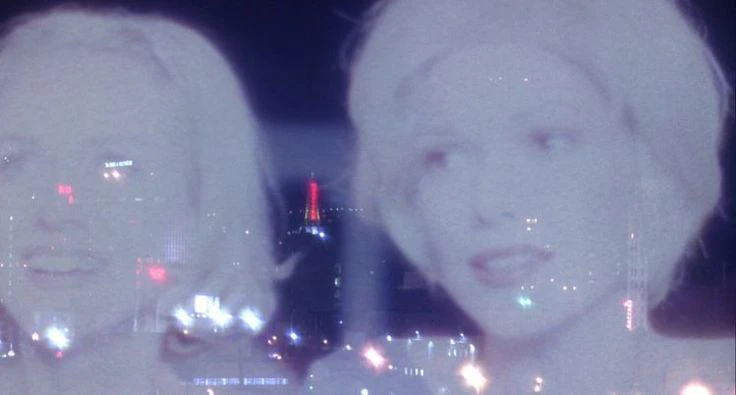
What pulled me in wasn’t the mystery, but the mood. The way Los Angeles felt hollow and haunted. The way identities slipped and fractured. It made me realise cinema didn’t always have to give answers. It could simply make you feel something lingering, like a memory you’re not sure is yours.
David Lynch didn’t inspire my thesis film in a literal or aesthetic sense. His influence came through learning to trust feeling over explanation. I kept returning to his films, especially his short works, as a way of understanding that instinct matters more than clarity.
Watching Lynch taught me that fear, confusion, and beauty don’t need to be resolved for an audience. They can exist simultaneously. In Beauty Behind The Madness, I wasn’t interested in constructing a clean narrative or delivering a clear moral. Instead, I wanted to reflect the internal chaos of the creative process, where doubt, anxiety, and imagination collide. That sense of permission came directly from Lynch.
What resonated most was his understanding of darkness — not as something to erase, but something to move through. Like his films, my project embraces discomfort, silence, and unresolved emotion. Ambiguity is intentional. Some feelings are left suspended. To me, that isn’t a flaw; it’s honesty.
Lynch also shaped how I approached atmosphere. Sound design, pacing, and stillness became as important as image. I learned that what remains unseen or unsaid can carry more weight than dialogue or exposition. The ‘madness’ in my film isn’t shock-driven chaos, but a quiet, internal unrest that underlies creativity and self-expression.
Ultimately, Lynch taught me that art doesn’t need to explain itself to be meaningful. It only needs to be felt.
Tara, 24, Creative Director
What’s the most Lynchian photograph in your photo gallery?
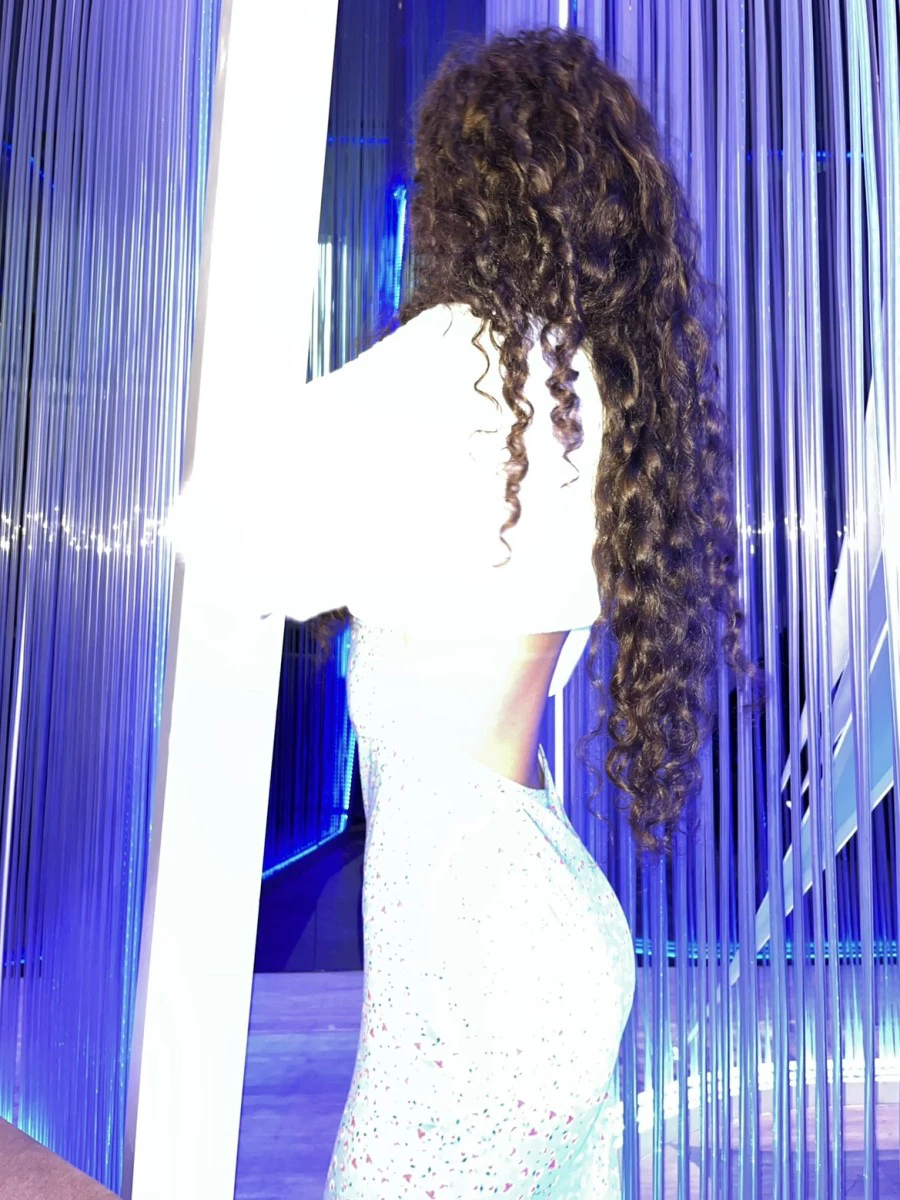
Which character do you most identify with in David Lynch’s cinematic universe?
I resonate most with Diane Selwyn from Mulholland Drive. I feel things intensely, holding deep belief in meaning and love, and sometimes relying on imagination as a form of coping. Diane embodies the disorientation that sets in when reality fails to reflect those beliefs. To me, she represents a longing to be seen for one’s true essence, without being hardened or distorted by the world.
Iman, 21, Film Student
For first time/new fans of David Lynch, what’s one piece of advice you would give to them?
You should start with Blue Velvet or Eraserhead, as most people do. They’re great entry points into the strangest edges of his world, while still leaving room to explore the rest of his work. I’d also highly recommend his animated shorts like Dumbland and The Alphabet — they’re short, but leave a quite an impression!
What’s the most Lynchian photograph in your photo gallery?
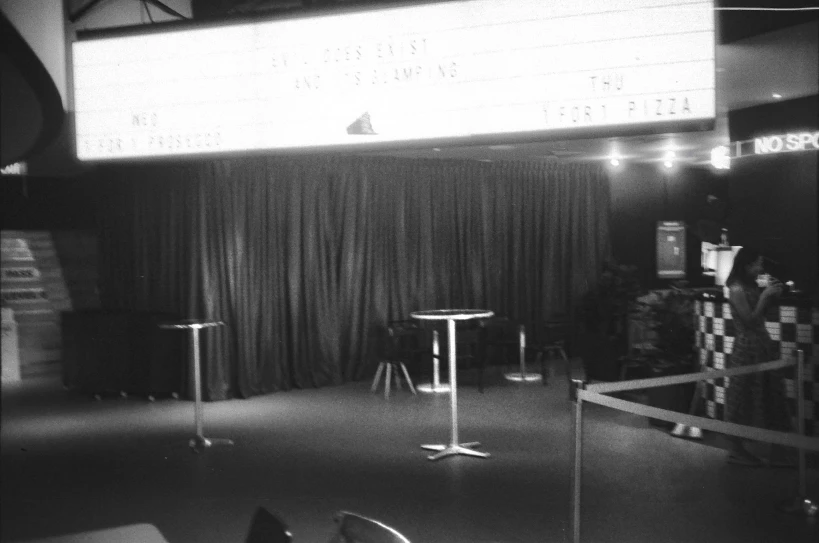
What do you miss most about him?
I miss his weather reports. He was so candid and silly and you just couldn’t find anyone else as unique and cheerful as he is. Where cinema is so cynical and honestly for the worst, his loss was really just painful.
Once you are done with this story, click here to catch up with our latest issue.