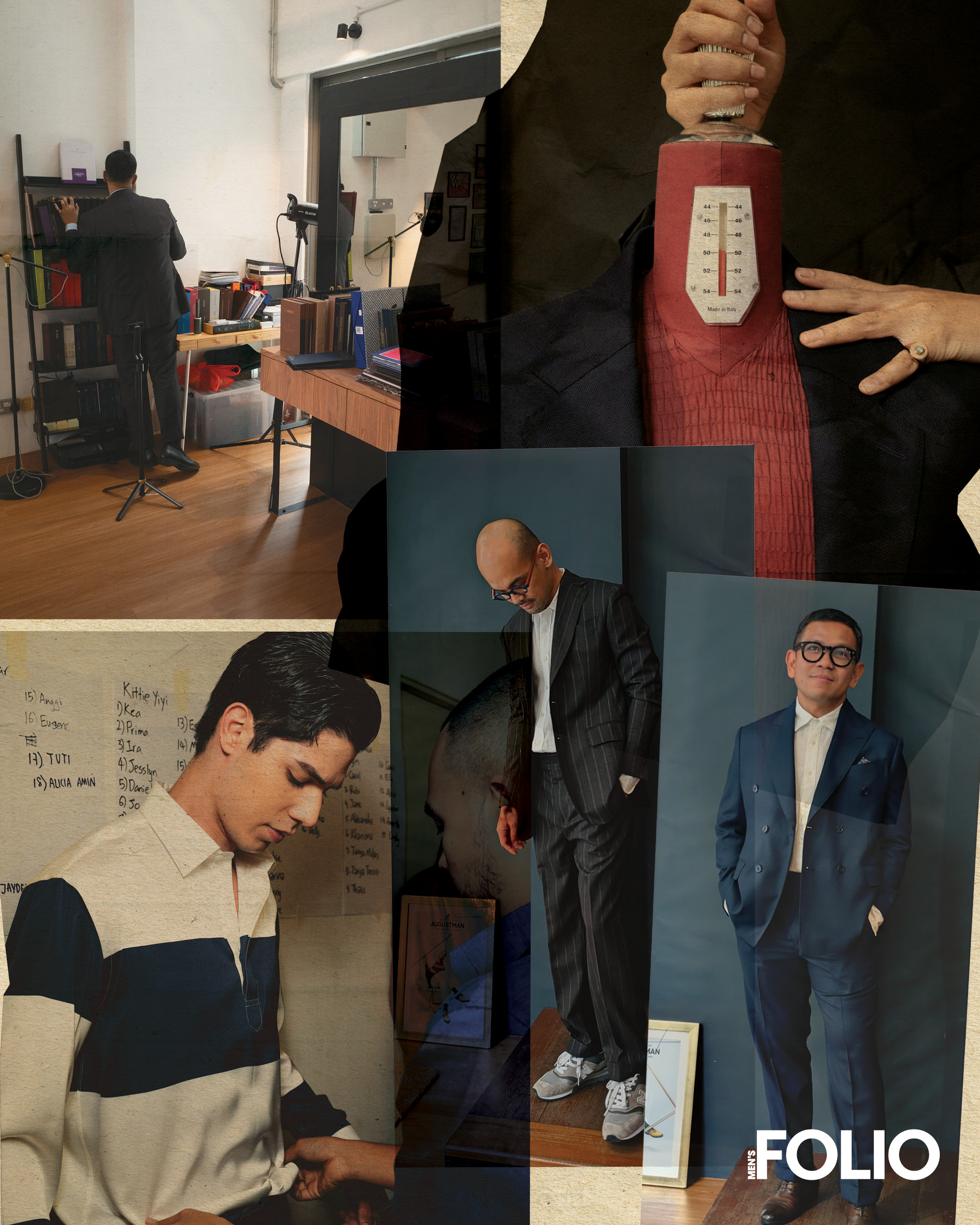
As culture evolves, a few elements stand as enduring marks of masculinity —beyond just emotional maturity —say, a defined jawline, a muscular build and a tailored suit. You might have attended high school prom or graduation with the fast fashion matching blazer and trouser set, but there comes a time when a milestone calls for something more bespoke. Men’s Folio speaks to London-trained Shahrin Bahar, who runs his eponymous tailoring label, S Bahar, on the different considerations involved when it comes to picking out your first custom suit.
What’s the perfect occasion?
According to Shahrin, most of his clients begin the journey of making their first suit when they are commemorating a momentous occasion. “They’re either getting married, receiving a promotion or starting a new job. Some start new relationships with different tailors because they want to experience the different house styles other ateliers have to offer.” The house style for S Bahar specifically features soft, structured shoulders and alternatives to a fully lined suit, catering to more versatile uses in ourhot and humid climate.
“We started our business because we observed a gap in the market where tailors from parts of Europe, the U.K. and Japan all had their signature cuts. Customers would visit certain Savile Row or Italian tailors for specific designs, whereas most of our local tailors are more service-oriented and cater to whatever their consumers want.” A signature S Bahar suit looks like a two-piece suit consisting of a single-breasted, two-button blazer that features a lapel that goes for about 3.5inches across, minimum.
Trained in Menswear at the London College of Fashion and having worked in denim and sportswear brands like Nike, Shahrin approaches tailoring with a focus on function. “Menswear has always been rooted in utility and precision, asit is meant to perform. Everything needs to serve a purpose, and good design will help answer these questions,” he shares.
Can I not just get one off the rack?
“Ready to wear caters to everyone, but no one in particular,” says Shahrin. As off-the-rack pieces are created to accommodate a wide range of wearers through generic sizing, it actually becomes more of a rarity for something to fit perfectly. Once you enter the realm of tailoring, you could either explore Made to Measure (MTM) or bespoke to make your first suit.
MTM involves getting one’s measurements done before adapting it to a few blocks of sizing for a tailored fit, while bespoke is the ultimate form of customisation, with a pattern made from scratch. What tailoring offers is a chance for you to truly find theperfect fit based on your preferred silhouette, materials, colours, among other elements to your specification.
What makes a good suit?
“You can always tell from the back of the suit —it should lie smooth and flat —because there are a lot of components involved. The appearance of a slumped shoulder or a humped back can be corrected with well-made tailoring, while ready-to-wear is not able to, resulting in the look of excess fabric,” explains Shahrin. The devil is in the details, as a good suit can be ascertained from how the chest pocket falls and how the lapels drape the torso. The cuff of the shirt should peek out at least half an inch or a centimetre away from the cuff.
“The breadth of your shoulders should be reflected in how the trousers look. Aconventionally masculine silhouette consists of broad shoulders and a slightly tapered waist —so with suiting, we want to elongate the silhouette, rather than overly exaggerating it with tight, slim trousers that result in a downturned triangle,” he adds. In essence, a good suit is not about a tight, body-contouring fit, but more about complementing one’s proportions.
How do you pick out a silhouette?
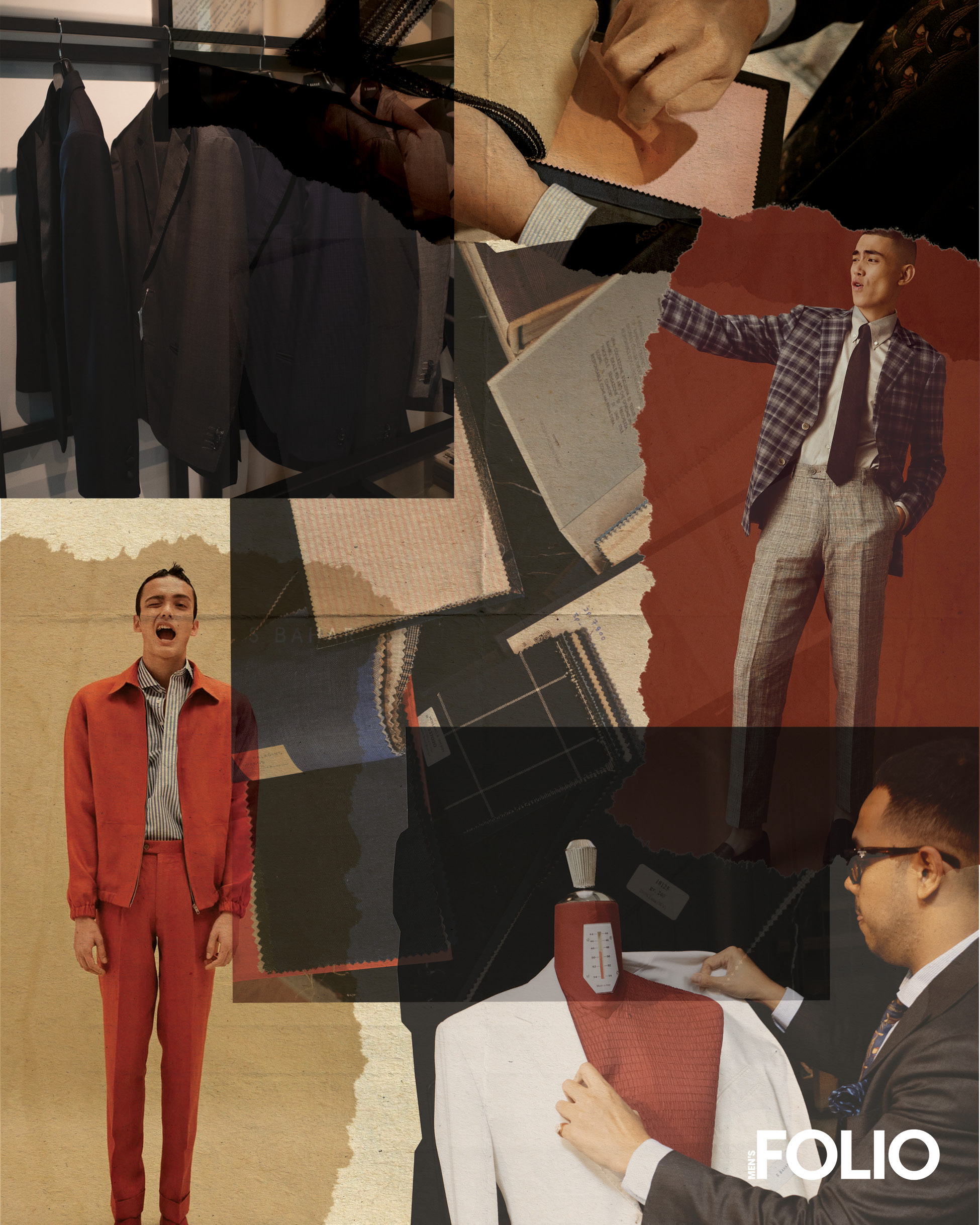
Given the ever-changing nature of the fashion landscape, even tailoring has gone through different eras. Recall the tight, cropped suits of Topman and Dior Man suits under the direction of Kris Van Assche and Hedi Slimane of the past to the voluminous silhouettes of Saint Laurent and Soshiotsuki in the present. How does conventional tailoring, as opposed tothese fashion-led brands, react to the changing demands of consumers and, in turn, recommend a silhouette that works for the individual?
“If you come to us and ask for a Soshiotsuki-style suit, then it feels like you’re asking us to do a bad rendition of their designs. From a tailor’s perspective, what we can do is really make recommendations based on what we think will look best on you,” the tailor explains. Noting that now tailors have taken a more designer-like approach to their work, where each of them offers a specific style, it is good to explore their Instagram page to understand previous work before reaching out for a consultation. From there, picking out a silhouette comes down to use case and the budget in mind.
How do you choose the right colour?
Shahrin does not recommend one’s first suit to be black due to its lack of versatility. “A navy or a charcoal suit allows you to explore different coloured leather shoes,” Shahrin explains. The navy blazer can then be paired with grey, charcoal or tan trousers. The following investment in a dark grey suit opens up a capsule wardrobe where the user can now easily mix and match their pieces. The only piece of advice? “Don’t pair your navy suit with brown or tan shoes. Keep them for your brown suits only.” A dark brown suit is also another underrated contender for those who are after something timeless, but a little less common. In a business attire setting, having suits in these hues would allow you to effortlessly style them with a range of dress shirts, from pastel blues and pinks to stripes and beyond.
What is it made of?
Fabric plays a big part in determining how the suit looks, too. “For larger men, I recommend a heavier fabric so it clings to the body less and does not emphasise bulges.” Given the different weightage and composition of the fabric, to think that linen suits are always casual and wool suits are always formal is an oversimplification of ideas. A linen suit could look authoritative, as a Fresco wool suit could look as casual. Albeitpolyester has gotten a bad rep for being “cheap”, the introduction of technical fabrics has allowed suits to adapt to modern use cases. “British fabric supplier Holland & Sherry, too, has introduced a wool polyester blend that makes machine washing possible; while there are other high-quality wools that are coated with resin to repel water,” he shares.
However, for longevity, Shahrin still recommends natural fibres for their performance. “We don’t know how specific polyester fibres will last, and how they affect the fabric’s shrinking. When you pass these suits down to your grandkids, you know it will still maintain its integrity, whereas we aren’t sure about how a polyester suit will hold up.” For those who are more prone to sweating, a mix of natural fibres and a breathable lining allow the suit to be breathable. “Wool is that one universal fabric that can be altered to different weights and weaves —how the yarns are connected, so it’s actually the ultimate performance fabric,” Shahrin explains. He likes the fabric of his suits to be at least 260 grams in weight, because anything below will drape like a summer suit. “Also, there’s no need to drive with your jacket on.”
What is it like working with your tailor?
When meeting your tailor, it helps to know what you want and the use case for these suits. If it is for work, this is a great opportunity to help your tailor understand how many suits you have in your rotation, and what types they are, so your first tailored suit can build on your capsule wardrobe, allowing you to mix and match with current pieces or set the tone for upcoming purchases.
Upon picking out the specifications of the suit, the tailor will then proceed with measurements. This is when their expertise comes in, recommending clients with specific adjustments to create a flattering silhouette, while honouring the original vision. The client then returns on a later date for a fitting to further refine the suit.
Considerations for different body types
Especially for grooms-to-be who often go on diets to try and look their best, how do tailors accommodate these changes? “About 8 outof 10 say that, but come back looking exactly the same,” he laughs. Citing a memorable instance where a groom lost 18 kilograms in six months, his team was able to witness the transformation upon a final fitting alongside emotional family members —solidifying suitmaking as a form of artistry that transcends craft.
Under normal circumstances, a tailor can easily alter a blazer up or down by one dress size. “Every 7 kilograms you lose, you drop one dress size. For pants, however, we can go up to three inches of waist size,” shares Shahrin.
How much should it cost?
Rather than looking at it as a budget, he wants his clients to look at it as investments —for work, or whatever purpose the suits are meant to serve. Once that figure is set aside, they get tofilter down to what works. “Your first tailored suit should cost as much as your monthly salary. If you make RM10,000 a month, then your capsule should be RM10,000, created from two suits that cost around RM4,500 each. For those who make RM200,000 a year,creating a set of suits that are maybe worth RM5,000 to RM7,000 would serve the client well through their different needs.” All his suits come with a complimentary white dress shirt to complete the look.
How long does it take?
Shahrin recommends a timeline of 4-6 weeks, minimum.
How do you take care of your suit?
Only dry clean it 2-3 times a year, as the harsh chemicals from dry cleaning will break down the integrity of the fabric. Freshen the suit with Fabreeze or a light steam. Ensure the suit is well ventilated before storing it back in the closet with a proper suit hanger. With natural fibres, one could easily notice that the wrinkles will smooth themselves.
Making the most of your suit also means styling it properly. While socks should match the trousers in hue, one should never use matching ties and pocket squares. The width of ties should also not be significantly wider than the size of the lapel and the collar. He also is not a fan of matching leather shoes and belts of different shades, as it breaks up the harmony of the whole look.