Remember clothes-shopping with your mother as a kid, her fingertips like K9 detectors for polyester? Before it became the norm, that delicate “Made in China” label was somehow synonymous with visual clichés that sent one clear message: lower quality, lack of originality, counterfeit; and our fingertips were taught to know.
Despite the abundance of that label today, we haven’t seemed to move on just yet. Amidst rapid urbanisation, the only way for early Chinese markets to keep up was to borrow, recreate or copy Western mass production and consumerism. Limited exposure of prior Eastern aesthetics meant that the chic, coveted, and curated became synonymous with secular taste — everything that fell out of line was excessive, tactless, or ‘other’ — early internet’s rampantly globalised culture didn’t help avoid these stereotypes either.
But what of these run-down convenience store signs? Of the hand-etched paintings against low-pixel banners, spiky hair, eating treats from red-lidded jars in borderline-neon New Year’s clothes, or poorly-edited motivational PNG’s your auntie sends to the family group chat? That nostalgia, no matter how silly, how unsophisticated or tacky, has to count for something.
One cultural, aesthetic phenomenon scarcely covered is The Too Cool Movement.
‘Made in China’
Trends of the 2020’s have been characterised by rapid-fire glimpses of the past we refuse to let go of — whether or not its core gets diluted for the name of the game — and the Y2K we know and emulate becomes a game of parody; a cherry-picked ideal.
Yet, Too Cool challenges the dominant narrative of aesthetics from the East as a knock-off derivative. Trickling its way into the Malaysian content sphere, it pushes dismissed elements into taking on personalities of their own and at times, even suggesting that the parody-ing itself can be a form of creativity, evolving into visual outcomes that can only emerge from the unexpected.
It is not that serious
The term is a phonetic translation of “土酷” (tǔ kù), translating to ‘dirt’ and ‘cool’ into an almost-oxymoron, like the inherent irony within the aesthetic. It reinvents the eccentricity once popular during the 2000s — eccentricity considered ‘rural’ or outdated — almost as a satire. The ‘Tu’ here is significant, challenging derogatory connotations into lighthearted expression, whilst basking in the excess.
Its photography style is just that: excess, with a DIY quality to it all. From campy poses to high-saturation editing and old-school magazine makeup. The subject usually incorporates theatrical references of the new and old, like certificate stickers, leopard print and hot-glued diamonds against plum blossoms, waterfalls, temples, even Buddhist figures, and who could forget rainbow-ombré text slathered across the screen?
The attraction to satirical creativity didn’t spawn from nothing, and something we tend to avoid talking about was the time blip of the pandemic. Kids were suddenly teenagers, and teenagers suddenly had a developed frontal lobe. Instead of talking, we tried to prove ourselves — that we could be taken seriously, as if we matured at an ordinary pace with ordinary life experiences — whether this took the form of our words or what we wore; but now? We’re burnt out. We just want to giggle and be just a bit unserious. Too Cool exists as the product of a generation that wants less of the polished, refined outcomes and more lighthearted, random things we just happen to like.
Too cool for school
A prominent figure amidst this satirical fashion sphere is style icon and designer Liu Min, better known as Butterfly MinMin online (@butterfly.minmin). Her style incorporates a mix of embellished traditional garments, sheer fabrics overloaded with miscellaneous graphics, and backdrops ranging from idyllic spots, to old city stores, to highly-edited landscapes. Her brand, Butterfly Princess (@hu_die_gong_zhu), also embraces the aesthetic’s sarcastic wit and charm.
Several photographers and brands have explored similar stylistic approaches, leading to a resurgence of kitschy, excessive elements.
The aesthetic had also entered mainstream consciousness in 2020 when Balenciaga channelled a similar energy for the Qixi Festival. The campaign was controversial and sparked accusations of appropriation — with many netizens also criticising Balenciaga for contributing to the crude and unsophisticated portrayals that give Chinese Internet and consumer culture a bad rap — but with the recent shift in attitudes meant that the idea of personal style and what it means to be ‘sophisticated’, it is undeniable that the rigid labels of prim and proper no longer circulate as much in the creative zeitgeist today. Or, at the very least, its counterpart now holds just as much weight.
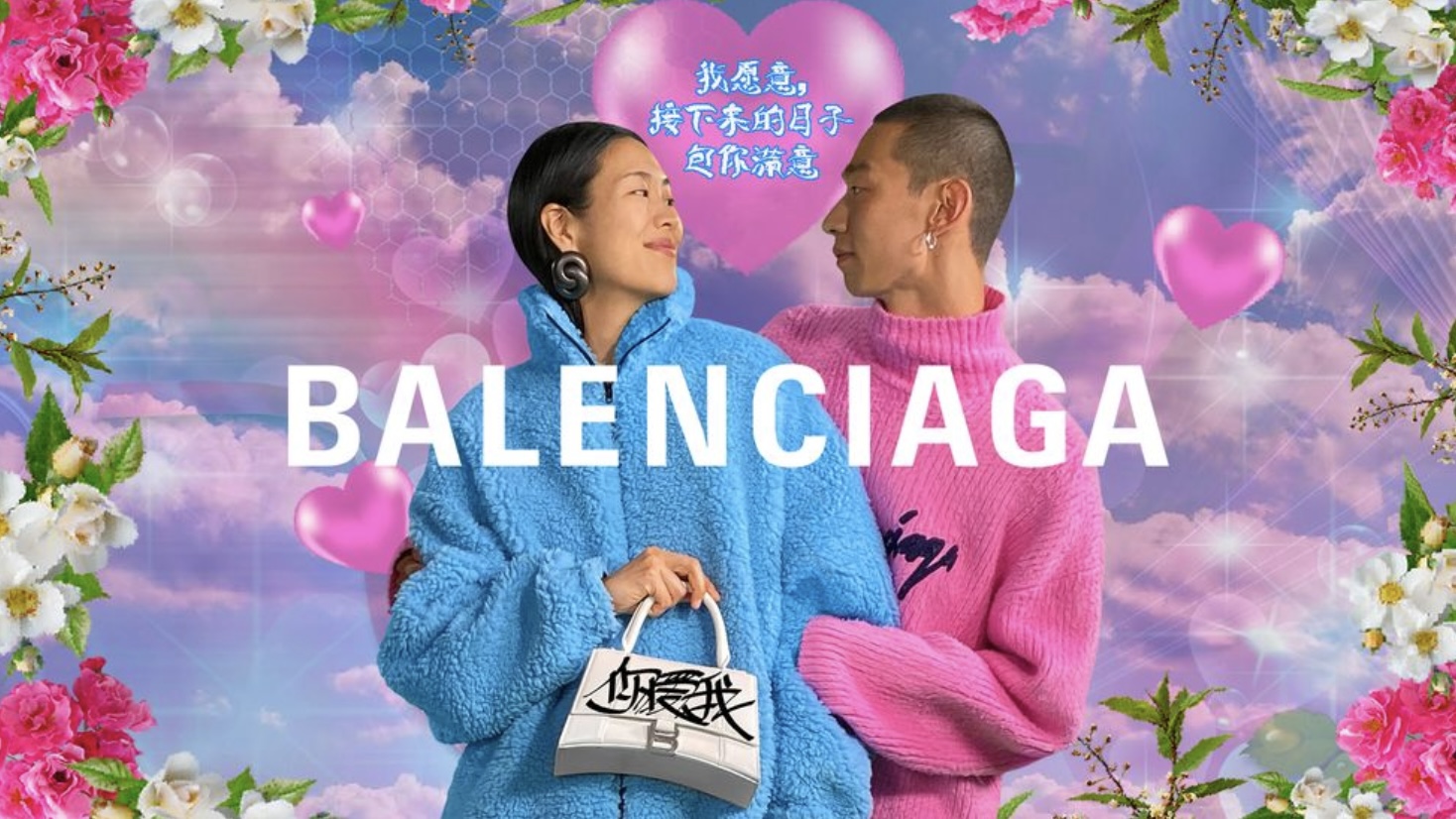
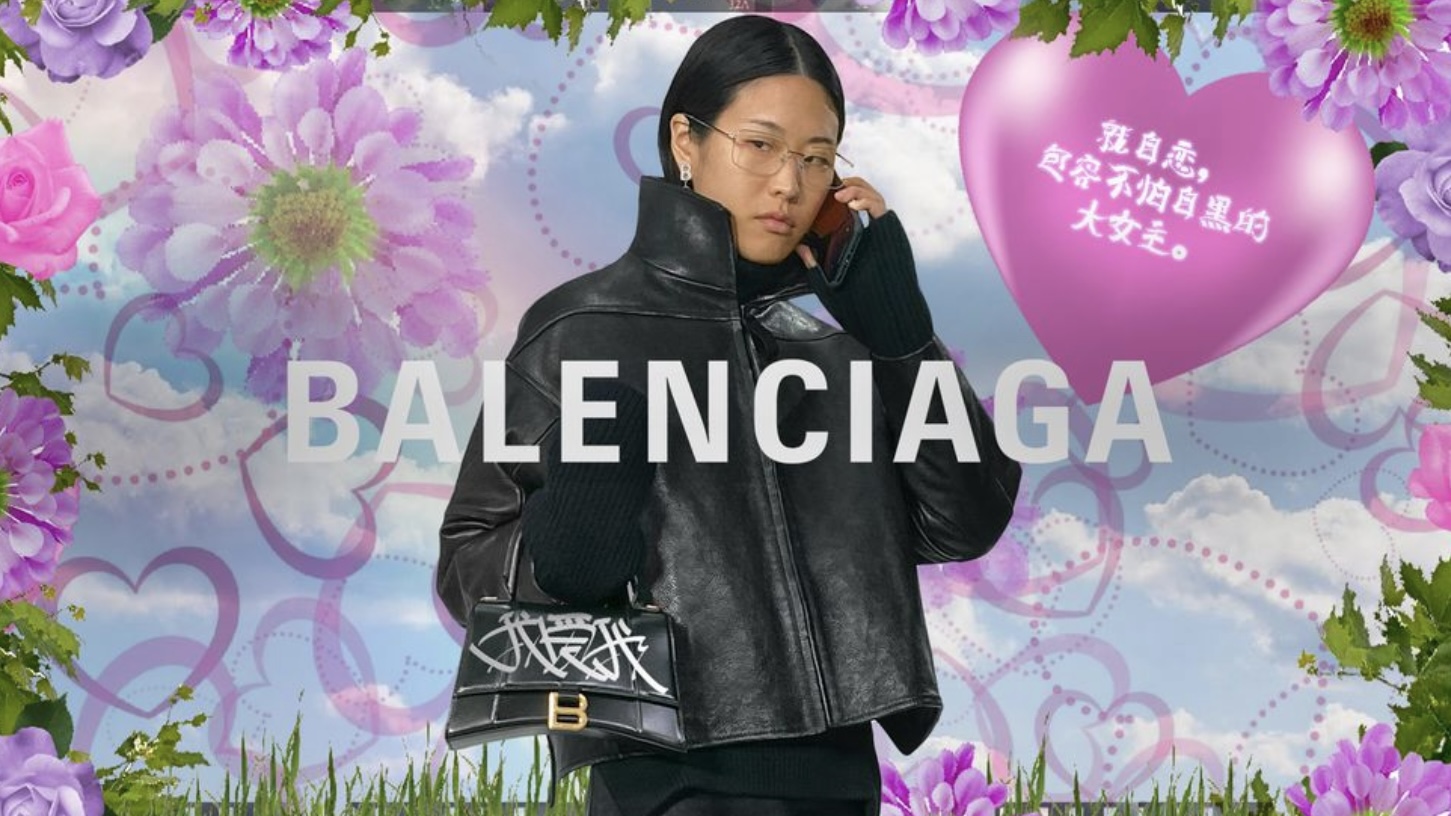
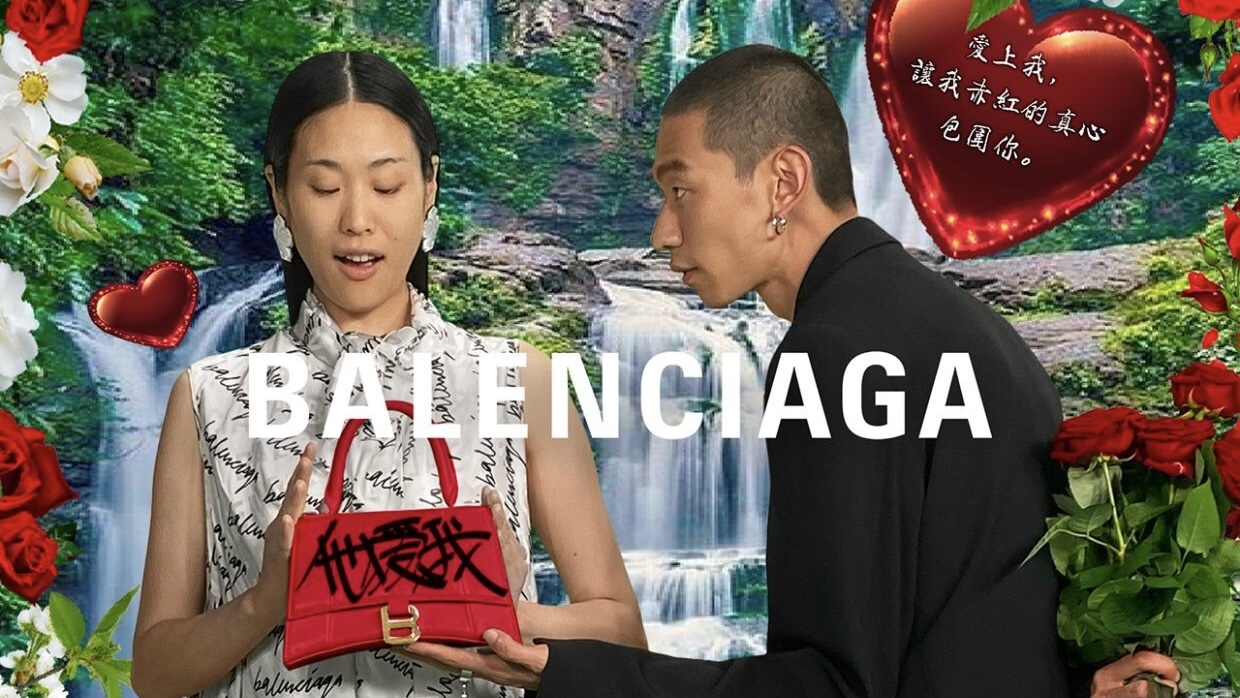
A pendulum always swings back and forth, and the minimalist-maximalist debate is one that has us all hypnotised; but one thing that won’t be put to sleep just yet is the somewhat cringy, somewhat inelegant, but deeply original bits of nostalgia that fought its way back into our mainstream periphery. It is the butterfly (princess) emerging from the long shackled cocoon of our rapidly-gentrified, increasingly-ephemeral fashion landscape, and having fun while doing it.
Once you are done with this story, click here to catch up with our latest issue.