It seems improbable that a late 1920s design, just shy of a century old, looks as relevant (and good) today as it did 95 years ago, but it shouldn’t surprise. For that has been the narrative behind not just the Cartier Tank à Guichets but also the Cartier Privé collection at large. While archival references and inspirations form most of the playbook at Cartier’s watch division, the Cartier Privé collection dials it up a notch to an almost one-to-one reproduction. We are talking about levels that border on the Japanese jean maker’s obsession with vintage Levi’s, where weaving tensions, yarn counts and sewing widths are studied to achieve a similar look and feel. The Cartier Privé collection, now in its ninth instalment, is one of the most hotly anticipated annual releases during the Watches & Wonders circuit. Reviving an old design seems to be the most layperson way of summing up the collection’s direction; however, for Cartier purists and collectors, it is a way of connecting with Monsieur Louis Cartier himself.

Where designs of bygone eras might lack reliability and durability compared to present-day technological advancements, they compensate with charm and nuances absent in modern-day watchmaking. The maison has breathed new life into emblematic archive designs with the Cartier Privé collection, ranging from the Tank Asymétrique to the Cloche de Cartier and last year’s Tortue. This year, Cartier revisits one of its richest collections, the Tank and, more specifically, the Tank à Guichets iteration.

“Six years after the debut of the Tank Louis Cartier, Louis Cartier took his quest for simplicity even further with the Tank à Guichets. Time is revealed solely through two minimal openings, with the traditional dial replaced by a streamlined, all-gold case defined by clean lines and perfect proportions. A jumping hour mechanism and a dragging minute display embody Cartier’s commitment to refined watchmaking, where technical mastery always serves aesthetic excellence,” shares Pierre Rainero, Cartier Image, Style and Heritage Director.
In 1928, Louis Cartier brought the Tank à Guichets sketch to life with the vision to simplify time reading to a glance. The motivation stemmed from a more hectic lifestyle thanks to the industrialisation and mainstream proliferation of cars and trains. His solution was to remove the watch hands and digitally display the hours and minutes in two separate apertures that gave the watch its namesake (guichet means window in French). The resulting timepiece’s design was way beyond its time, thoroughly modern during that era but quintessentially timeless even by today’s standards. Over the decades, different versions of the Tank à Guichets have been homologated in various ways, the latest being the 2005 Collection Privée Cartier Paris (affectionately known as CPCP) edition before a 20-year hiatus ensued.
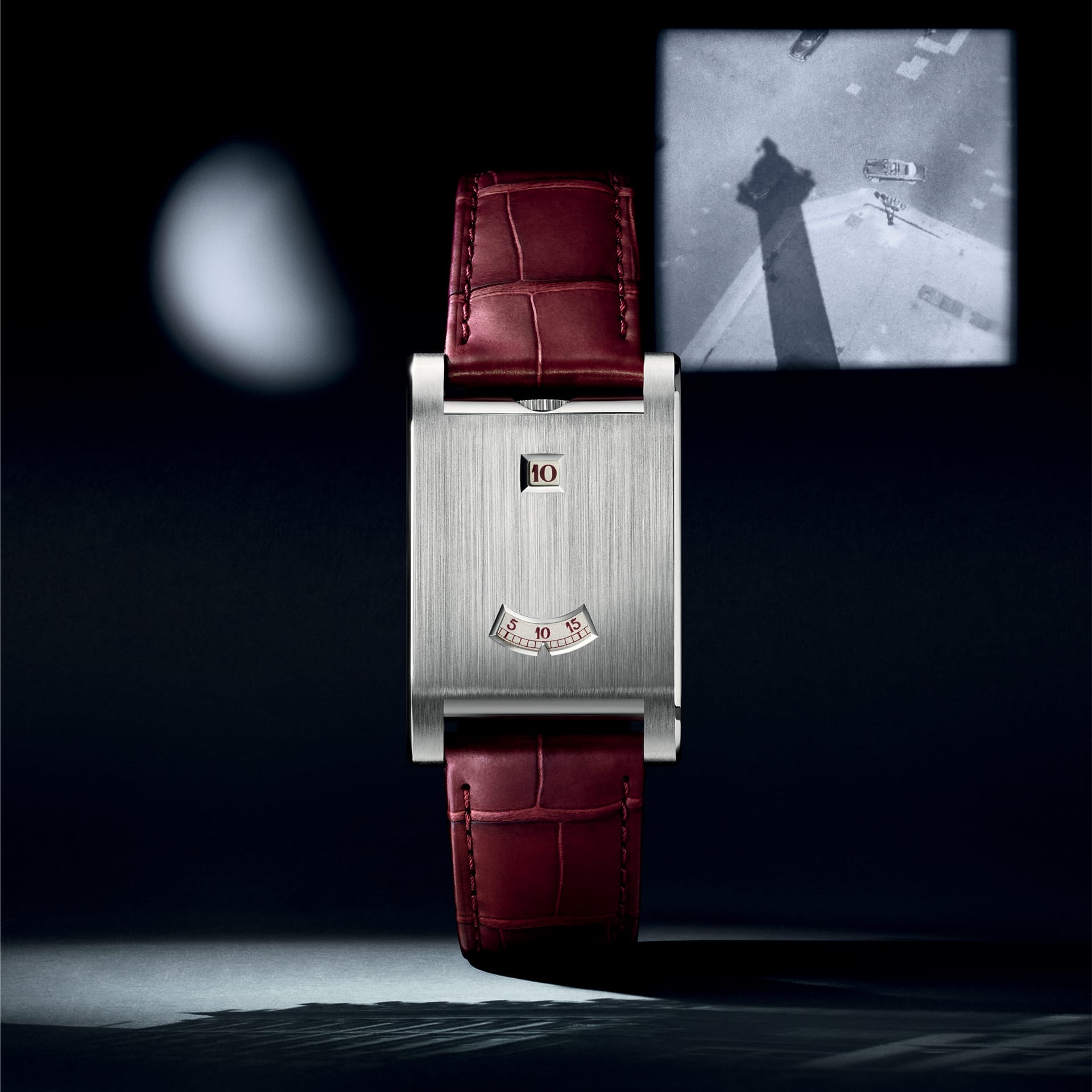
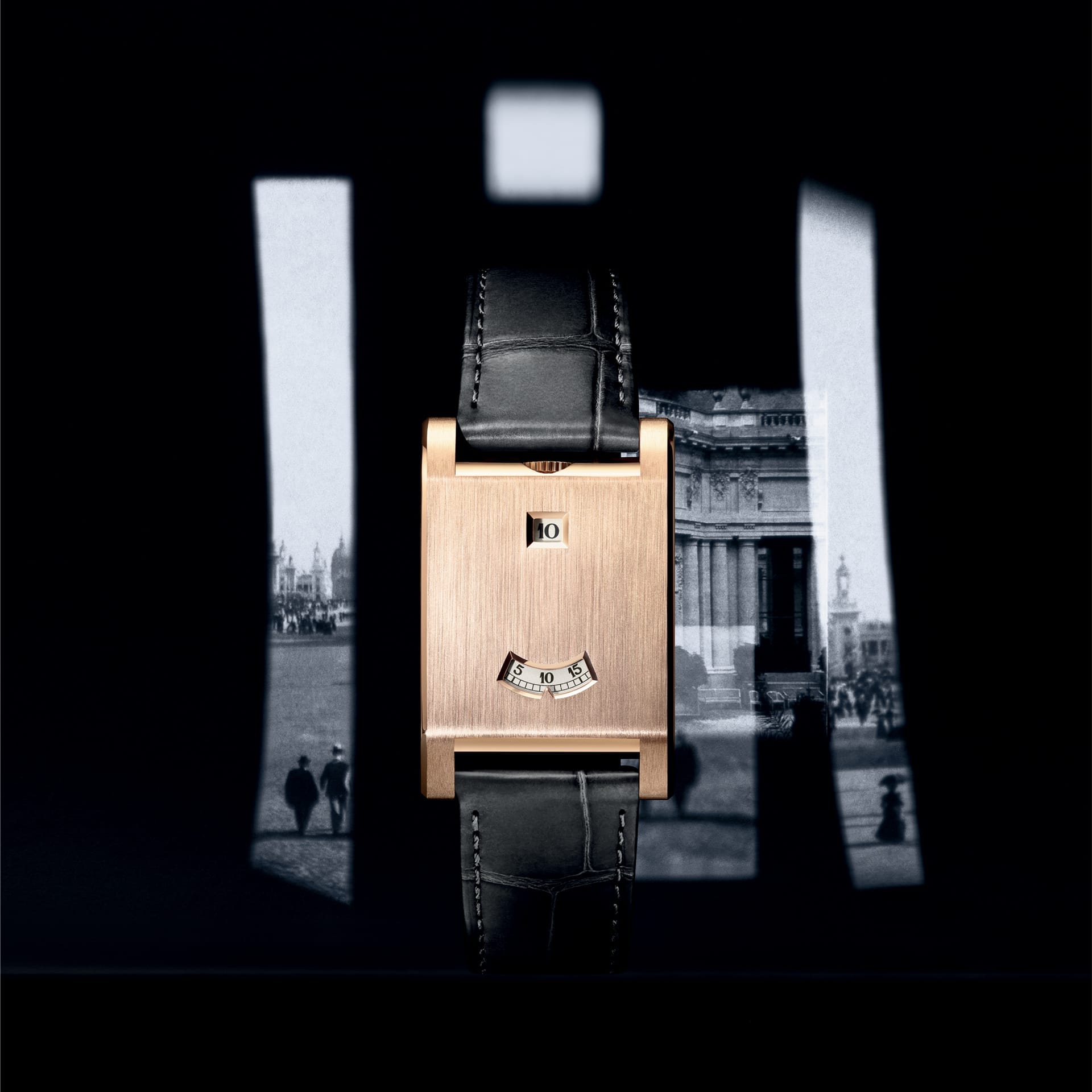
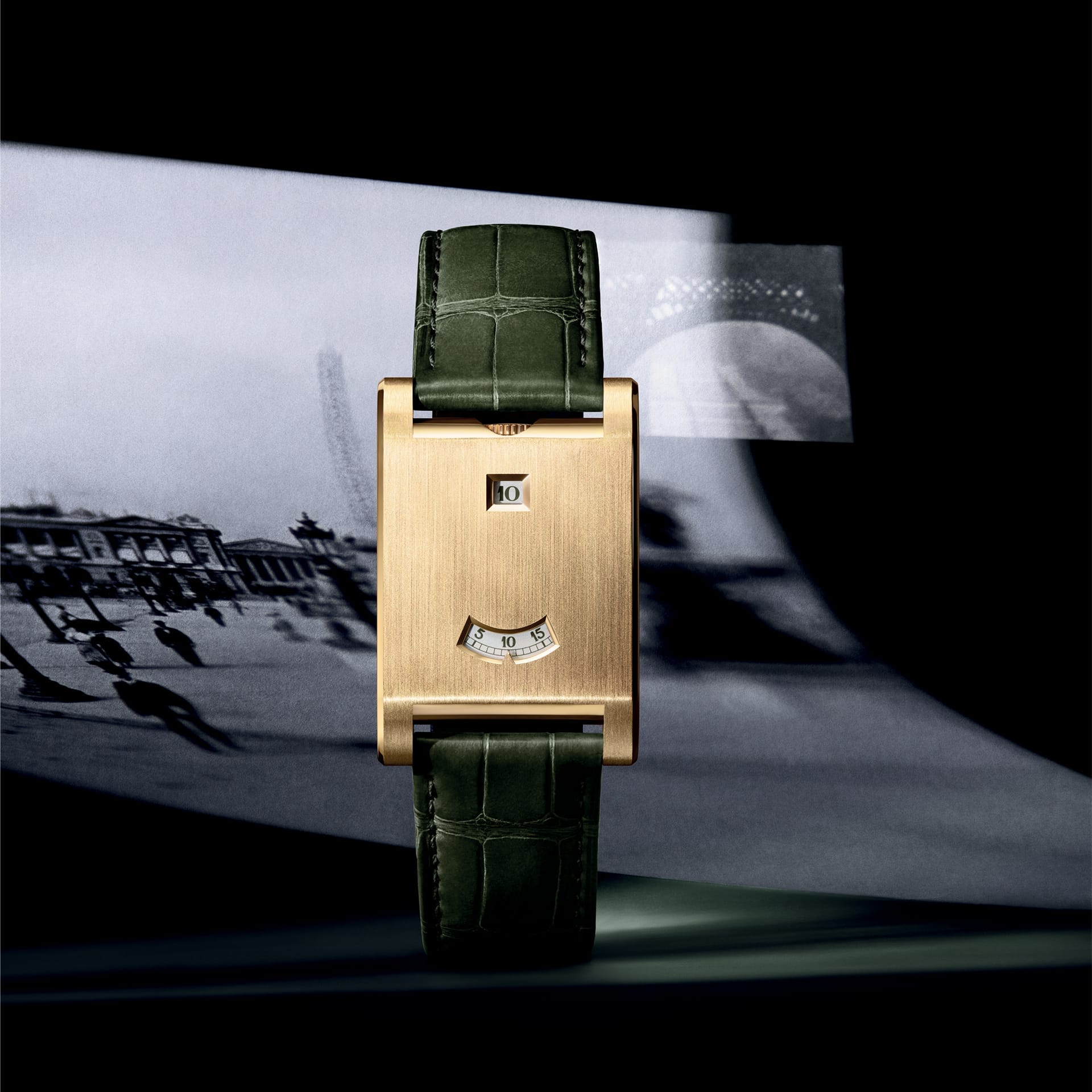
This year’s Cartier Privé revival sees a quartet of the Cartier Tank à Guichets presented in platinum, yellow and rose gold. Instead of mirror polishing the case, Cartier went about with the idiosyncratic — a brushed finish. The Cartier Tank was, after all, inspired by the Renault FT-17 French tank, and the brush finishing perhaps was an ode to capture the armament’s brutalist and utilitarian nature. While this year’s Tank à Guichets’ elements have changed, its formula remains largely untouched thanks to Cartier’s deep respect to form. Three pieces with nearly identical execution and hour and minute aperture placements at twelve and six o’clock are faithful homages to their 1928 predecessor. Subtle points of interest pepper the watches. A hint of high polish glint in the apertures contrasts against the vertical brushed case surface. The typefaces are coloured differently — dark grey for the rose gold, green for the yellow gold and burgundy for the platinum case. Those in the know can immediately connect the dots between the latter most combination — Cartier’s platinum case watches are paired with a ruby cabochon, which is absent in this edition, to integrate the crown at 12 o’clock.

A slight hint of playfulness is afforded to the fourth and 200-piece limited edition platinum “outlier”, which stands out from its three siblings with an asymmetrical aperture arrangement. Looking at the watch sums up Cartier’s mastery — conceptualisations stem from nuances that capture the essence of a design where a single brilliant detail instantly creates a new classic. Dimension-wise, all four models share the same measurements: 37.6mm by 24.8mm by 6mm thick. Given its svelte and dainty size, it disappears under a cuff or rests on the wrist as an unassuming monolith that wields the same design ingenuity Louis Cartier sketched almost a century ago.
Once you are done with this story, click here to catch up with our latest issue.